
FELLOWSHIP IN PEDIATRIC OPHTHALMOLOGY
With our clinical Postgraduate Diploma program, explore the realm of FELLOWSHIP IN PEDIATRIC OPHTHALMOLOGY. Our course provides practical instruction and knowledgeable mentoring, making it ideal for medical professionals who are keen to succeed in diagnostics.
Batch starts on
Jan to Dec/ May to June
Course Duration
12 Months
Learining Formate
Online Mode
Flexible payment
financing options available
Fellowship in Pediatric Ophthalmology
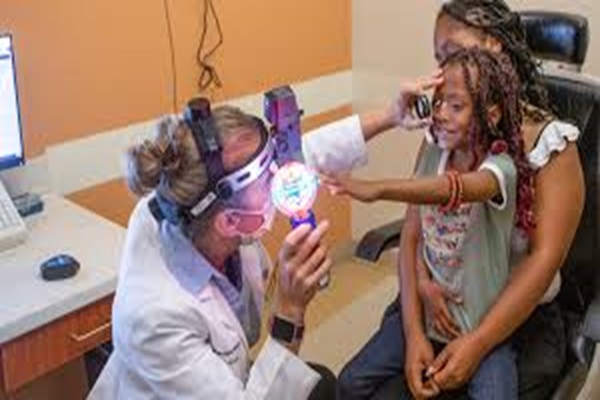
The Fellowship in Paediatric Ophthalmology & Strabismus at Medical Global Academy is perfect for ophthalmologists looking to gain expertise in diagnosing and treating children’s eye diseases. Children’s eye care is not the same as adult eye care it demands an understanding of the development of vision, early diagnosis and early treatment to avoid lifelong visual disability. This curriculum aims to build professional and surgical skills in addressing issues like strabismus, amblyopia, congenital cataracts, paediatric glaucoma and retinal diseases. Rather than viewing these diseases in isolation, the programme focuses on a structured approach, with a long-term view of diagnosis, treatment and visual rehabilitation. The programme is structured around the real workflows on how a child is assessed for eye disease, how they are diagnosed, how surgery may be planned and how surgery and post-operative care is performed. You learn how to manage not only the eye disease, but also the challenges of working with children, where teamwork, timing and coordination are crucial.
Key areas of focus include:
- Vision and refraction testing and early screening in children
- Strabismus diagnosis and management, surgical and non-surgical
- Treatment of amblyopia and visual rehabilitation
- Treatment of congenital eye diseases like paediatric cataracts, glaucoma and retinal pathologies
- Paediatric eye imaging and diagnostic skills
- Experience in strabismus surgery, paediatric cataract surgery and ocular trauma
- Education in new technologies like artificial intelligence-based diagnostic tools, imaging and regenerative medicine
The vision is straightforward at the end of the fellowship, you should be able to examine, diagnose and manage a broad spectrum of paediatric eye diseases independently, accurately, effectively and compassionately.
How This Fellowship Transforms Your Practice
As you start to practice paediatric ophthalmology, your practice style becomes more systematic, active and goal-oriented. Early identification and proactive treatment become your key strengths.
This manifests in:
- Enhanced ability to diagnose early childhood eye diseases
- Improving the management of strabismus and amblyopia in terms of visual efficacy
- Greater confidence in performing various paediatric ophthalmic surgeries
- Management of complex congenital and developmental eye disease
- Improved communication with parents and guardians for improved compliance and outcomes
Over time you will become a paediatric ophthalmologist, a specialist with a precision and focus on early diagnosis and treatment that translates into a lifetime of good vision for children.
Where This Fellowship Positions You
On completion, you join a niche yet growing field of ophthalmology where there is a demand but a lack of expertise.
Career pathways include:
- Paediatric eye centres, tertiary care and specialty clinics
- Specialisation in paediatric ophthalmology and strabismus eye misalignment
- Special interest in paediatric retina, neuro-ophthalmology or ocular oncology
- Collaboration with other specialists in the care of complex paediatric patients
- Teaching, research and education in academia
- Engagement in cutting-edge research in fields such as AI, genetics and regenerative ophthalmology
What you'll learn

Foundations of Pediatric Ophthalmology

Clinical Pediatrics and Basic Interventions

Advanced Pediatric Ophthalmology and Surgical Techniques

Multidisciplinary Approach and Research
Clinical Rotations and Community Outreach

Pediatric Uveitis and Inflammatory Disorders
Key Features
- Attending /Non-Attending Classes
- Free Study Material with recorded lectures
- Best Faculties (Super Specialists) of India
4. Library Access & Question & Answer Session
5. 1 Year of Mentorship
6. Updated Curriculum
Course Curriculum
- Eye development and anatomy in children
- Infant and childhood visual development
- Childhood eye diseases: congenital cataracts, retinopathy of prematurity (ROP) and glaucoma
- Refractive errors in different age groups
- Ophthalmic imaging in children (ultrasound, OCT, fundus photography)
- Different types of strabismus in children (esotropia, exotropia, hypertropia, hypotropia)
- Testing for strabismus: cover test, prism cover test, eye movements, and Hirschberg test
- Treatment of accommodative and non-accommodative esotropia
- Surgery for strabismus: when, how, and aftercare
- Orthoptic exercises, prisms, botulinum toxin injections
- Manage complications of pediatric strabismus surgery
- Case studies and review of challenging strabismus cases
- Etiology and types of pediatric cataracts (congenital, traumatic, metabolic)
- Surgical techniques, timing, and complications in treatment of congenital cataracts
- Use of intraocular lenses (IOLs) in children
- Techniques for managing other eye conditions: anterior segment dysgenesis, microphthalmia
- Postoperative care and visual rehabilitation
- Amblyopia, cataracts and refractive error
- ROP: Pathophysiology, staging and grading
- Guidelines for screening and follow-up of premature babies
- Treatment of ROP (laser, anti-VEGF injections, surgery)
- Childhood retinal dystrophies, retinal hemorrhages and other retinal diseases
- Retinal imaging in children (fluorescein angiography, OCT, widefield retinal imaging)
- Strabismic, refractive, and deprivation amblyopia
- Screening for amblyopia and refractive errors in infancy and childhood
- Approaches to treatment: patching, atropine, glasses, and orthoptics
- Surgical management of amblyopia (for amblyopia secondary to strabismus)
- Outcomes and follow-up
- Pathophysiology and types of glaucoma in children (primary congenital, juvenile, secondary)
- Testing: tonometry, pachymetry, gonioscopy and optic nerve evaluation in children
- Surgical treatment: trabeculotomy, trabeculectomy and tube shunts
- Glaucoma treatment in children (prostaglandins, beta-blockers, carbonic anhydrase inhibitors)
- Long-term follow-up and visual outcome prediction
- Childhood optic neuropathies and optic nerve hypoplasia
- Childhood cranial nerve palsies and vision
- The use of neuroimaging in pediatric eye diseases
- Pediatric brain tumors and vision loss
- Emergencies in pediatric neuro-ophthalmology: sudden visual loss, papilledema and neuro-ocular trauma
- Strabismus surgery: muscle recessions, reinsertions, and augmentations
- Pediatric cataract surgery: lens extraction, IOL placement and anterior vitrectomy
- Surgery for congenital ptosis and other eyelid diseases
- Surgery for pediatric ocular trauma
- Surgical care and complications in children
- Review of literature in pediatric ophthalmology and strabismus
- Designing studies, clinical trials and interpretation of data
- Ethics of research in pediatric ophthalmology
- Communications and presentations: research writing and talks
- Interdisciplinary and global networking in pediatric eye care
- Machine learning for diagnosing congenital and acquired eye disease
- Predictive models for progression of amblyopia and strabismus
- Artificial intelligence for pediatric retinal imaging (OCT, fundus AI)
- Robotic surgery to assist pediatric eye surgery
- Ethical and regulatory aspects of AI in medicine
- Genome sequencing for pediatric eye diseases
- Gene-specific treatments for inherited retinal diseases
- CRISPR for gene therapy in pediatric ophthalmology
- Pharmacogenomics in pediatric ophthalmology
- Therapeutic approaches for congenital eye diseases in children
- Electronic vision restoration in children
- Brain-computer interfaces (BCI) for rehabilitation of child blindness
- Cortical prostheses and artificial visual pathways
- Nanotechnology-based vision enhancement
- Neural prosthetics for children: ethical concerns
- Machine learning for complex strabismus surgery
- Robotic microsurgery for pediatric eye disorders
- Precision robotic adjustable and re-adjustable sutures
- Real-time artificial intelligence (AI) guidance during surgery
- Augmented reality (AR) surgical assistance for children’s surgeries
- Stem cell implantation to regenerate optic nerve
- 3D printed cornea and retina tissues
- Exosomes for childhood retinal and optic nerve diseases
- Induced pluripotent stem cells (iPSC) in congenital eye diseases
- Clinical trials and future applications of regenerative ophthalmology
- High-resolution retinal imaging of children using quantum optics
- Adaptive optics for cellular imaging of the pediatric retina
- Optical coherence tomography angiography (OCT-A) to detect disease
- Multimodal imaging for pediatric neuro-ophthalmology
- Mapping the visual pathways in children with fMRI
- Next-gen immunotherapy for retinoblastoma
- CAR-T cells for childhood eye cancer
- Nanodrug delivery to the eye for pediatric cancers
- Proton beam therapy and other radiation oncology innovations
- Liquid biopsy and molecular testing in children’s eye cancers
Fill Form Our Team Will Contact Soon
Choose medicalglobalacademy as your trusted partner for medical education and elevate your expertise to new heights.
Frequently Asked Questions
To apply, visit the course page of your interest and click on the ‘Apply Now’ button. Follow the instructions to complete your application. You may need to submit relevant documents and a resume.
Yes, all our courses are accredited by recognized medical and educational institutions. Details of accreditation can be found on each course page.
Yes, we offer a variety of online courses to provide flexibility for our students. Check the course descriptions for information on whether a course is available online.
You can contact our support team via email at support@medicalglobalacademy.com or call us at [+919310027474]. Our support team is available Monday to Friday from 9 AM to 6 PM.
Which Post-MBBS Course Format Is Right for You?
Answer three quick questions and we'll match you to the format that fits your goals — Certificate, PG Diploma, or Fellowship.