
FELLOWSHIP IN PEDIATRIC ECHOCARDIOGRAPHY
Develop advanced expertise in pediatric cardiac imaging with the Fellowship in Pediatric Echocardiography at Medical Global Academy (MGA). Designed for medical professionals, this fellowship covers pediatric echocardiography, congenital heart conditions and cardiac imaging through online training, expert mentorship, LMS access, CPD certification and one year of academic support. Strengthen your diagnostic knowledge and confidence in pediatric cardiac care.
Batch starts on
Jan to Dec/ May to June
Course Duration
12 Months
Learning Formate
Online mode
Flexible payment
financing options available
Fellowship in Pediatric Echocardiography Programme Overview
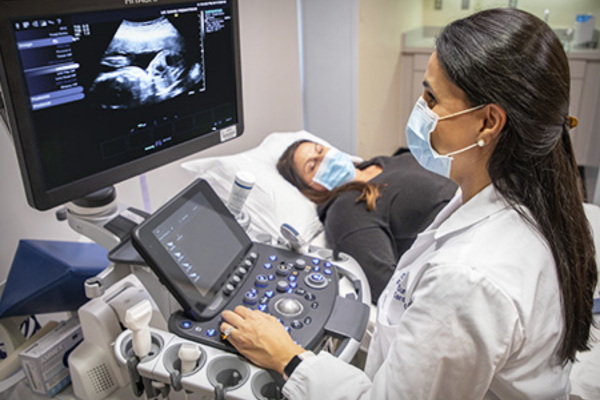
Accurate cardiac imaging is essential for diagnosing congenital and acquired heart conditions in children. The Fellowship in Pediatric Echocardiography at Medical Global Academy (MGA) is designed for medical professionals seeking advanced knowledge in pediatric cardiac imaging, echocardiographic techniques and image interpretation.
The programme covers pediatric cardiac anatomy, congenital heart defects, Doppler studies, cardiac function assessment, neonatal echocardiography and advanced imaging techniques. Participants develop knowledge of echocardiographic findings and their clinical relevance for pediatric cardiovascular care.
The fellowship includes online training, LMS access, CPD certification and one year of expert mentorship, supporting continuous learning and professional development.
Clinical Skills You’ll Develop
- Understanding pediatric cardiac anatomy and congenital heart conditions
- 2D echocardiography, M-mode, Doppler and colour flow imaging
- Evaluation of common congenital heart defects
- Understanding tissue Doppler, strain imaging and 3D echocardiography
- Neonatal and pediatric cardiac imaging
- Assessment of cardiac function, pulmonary hypertension and valvular conditions
- Understanding echocardiographic findings during pediatric cardiac procedures
- Integration of cardiac MRI and other imaging methods
- Clinical interpretation of echocardiographic findings
- Evidence-based decision-making and multidisciplinary pediatric cardiac care
Career Opportunities
After completing the fellowship, participants may explore opportunities in:
- Pediatric cardiology departments
- Children’s hospitals and cardiac centres
- Neonatal and pediatric intensive care units
- Congenital heart disease imaging programmes
- Cardiac imaging and non-invasive cardiology services
- Academic institutions and teaching programmes
- Clinical research in pediatric cardiovascular imaging
- Multidisciplinary pediatric cardiac teams
Why Choose This Fellowship?
The Fellowship in Pediatric Echocardiography combines online training, structured learning, expert mentorship and case-based image interpretation to strengthen your understanding of pediatric cardiac imaging.
Key features include:
- Comprehensive pediatric echocardiography curriculum
- Evidence-based learning
- Case-based image discussions
- Expert faculty guidance
- LMS access and recorded learning resources
- CPD certification
- One year of expert mentorship
- Focus on diagnostic accuracy and patient-centred cardiac care
Whether you want to strengthen your expertise in Pediatric Echocardiography or advance your knowledge of pediatric cardiac imaging, this fellowship provides a structured pathway for professional development.
What you'll learn
Foundations of Pediatric Echocardiography

Congenital Heart Disease

Acquired Heart Disease in Children

Advanced Echocardiographic Techniques

Pediatric Cardiac Hemodynamics

Clinical Integration and Case Management
Key Features
- Attending /Non-Attending Classes
- Free Study Material with recorded lectures
- Best Faculties (Super Specialists) of India
4. Library Access & Question & Answer Session
5. 1 Year of Mentorship
6. Updated Curriculum
Course Curriculum
- Review of pediatric cardiovascular anatomy (embryology to adult anatomy).
- Pediatric cardiovascular physiological differences vs. adults.
- Fundamentals of cardiac pathophysiology in children.
- Laws of ultrasound.
- Overview of pediatric echocardiography equipment.
- Introduction to 2D, Doppler and M-mode echocardiography in children.
- Case studies of normal anatomy of the heart in pediatrics and variations.
- 3D echocardiography and its applications in congenital heart disease (CHD).
- Tissue Doppler and strain imaging in children.
- Comparison and contrast of echocardiography and its application in the diagnosis of intracardiac shunts.
- Clinical training in acquiring high-quality images in pediatric patients.
- Use of pediatric-specific probes and transducers.
- Protocols for standard echocardiographic views (parasternal, apical, suprasternal).
- Thorough examination of CHD, such as atrial septal defects (ASD), ventricular septal defects (VSD), tetralogy of Fallot, transposition of the great arteries, coarctation of the aorta, and hypoplastic left heart syndrome.
- Knowledge of complex congenital abnormalities and echocardiographic appearances.
- Echocardiographic results in each congenital condition analyzed in detail.
- Doppler findings interpretation of CHD.
- Applications of echocardiography in the pre-operative and post-operative evaluation of CHD.
- Pediatric cardiomyopathies (dilated, hypertrophic, restrictive).
- Kawasaki disease and the impacts on coronary arteries.
- Rheumatic heart disease: evaluation of mitral valve and aortic valve.
- Arrhythmias in children and their echocardiographic presentation.
- Use of echocardiography in progression monitoring and treatment.
- Post-operative testing of heart defects.
- The management of pericardial effusion and endocarditis by echocardiography.
- Comprehensive concepts of Doppler ultrasound, such as pulsed-wave, continuous-wave, and color Doppler.
- Doppler assessment of valvular heart diseases: mitral stenosis, aortic regurgitation, and pulmonary hypertension.
- Measurement of blood flow velocities, pressure gradients, and cardiac output, in a quantitative manner.
- Clinical training and case study analysis of Doppler pattern interpretation among children.
- A higher level of interpretation of myocardial performance index (MPI) and other Dopplerderived indices.
- Children heart failure etiology and pathophysiology.
- Echocardiographic evaluation of heart failure patients.
- Cardiac evaluation of the heart in children, both pre and post-transplant.
- Role of echocardiography in the assessment of myocardial infarction (Myocardial infarction)
- Use of 3D echocardiography and Tissue Doppler in the management of heart failures.
- Early diagnosis and screening of critical congenital heart disease (CCHD).
- Problems with the echo cardiography of neonates and infants.
- Methods of imaging small and acutely ill infants.
- Observation and care of critically ill children in the cardiac ICU.
- Application of echocardiography in intensive care unit: evaluation of the fluid status, cardiac output and post-surgery complications.
- The use of echocardiography in the management of post-operative patients of congestive heart surgery.
- The use of echocardiography in assessing surgical candidates.
- Use of echocardiography to guide catheter-based interventions (e.g., balloon valvuloplasty, stenting).
- Imaging after surgery to evaluate such complications as residual lesions or dysfunction of the valves.
- Hybrid procedures and fusion imaging in children cardiac surgery.
- Pathophysiology of pediatric PH and the effect of this condition on the right heart.
- Children-specific causes and risk factors, such as congenital heart defects, chronic lung diseases, and idiopathic pulmonary hypertension.
- Measurement of pulmonary artery pressures with Doppler and calculation of the pulmonary vascular resistance.
- Right ventricular imaging parameters such as the size, function, and the tricuspid annular plane systolic excursion (TAPSE).
- Case-based learning in the interpretation of the echocardiographic findings of pulmonary hypertension in infants, neonates and older children.
- MRI imaging principles and its complementary echocardiography.
- The strengths and weaknesses of MRI in the diagnosis of congenital heart disease, particularly in the complex cases.
- Combination of echocardiographic and MRI imaging to evaluate better.
- Use of CT and MRI in imaging of large vessel abnormalities, complicated congenital heart defects and postoperative evaluations.
- Application of MRI in assessing myocardial infarction and myocardial ischemia in children with coronary anomalies or in those who have been treated with Kawasaki disease.
- The most frequent arrhythmia in children is supraventricular tachycardia (SVT), ventricular arrhythmias, and bradyarrhythmias.
- Arrhythmia mechanisms and the use of echocardiography in the identification of structural heart disease in arrhythmias.
- Echocardiography of children with arrhythmias (atrial and ventricular size and function).
- The cardiac conduction system in congenital arrhythmia patients.
- Practical demonstrations in echocardiography to assess arrhythmogenic right ventricular cardiomyopathy (ARVC), long QT syndrome and Wolff-Parkinson-White syndrome.
Fill Form Our Team Will Contact Soon
Choose medicalglobalacademy as your trusted partner for medical education and elevate your expertise to new heights.
Frequently Asked Questions
To apply, visit the course page of your interest and click on the ‘Apply Now’ button. Follow the instructions to complete your application. You may need to submit relevant documents and a resume.
Yes, all our courses are accredited by recognized medical and educational institutions. Details of accreditation can be found on each course page.
Yes, we offer a variety of online courses to provide flexibility for our students. Check the course descriptions for information on whether a course is available online.
You can contact our support team via email at support@medicalglobalacademy.com or call us at [+919310027474]. Our support team is available Monday to Friday from 9 AM to 6 PM.
Which Post-MBBS Course Format Is Right for You?
Answer three quick questions and we'll match you to the format that fits your goals — Certificate, PG Diploma, or Fellowship.