
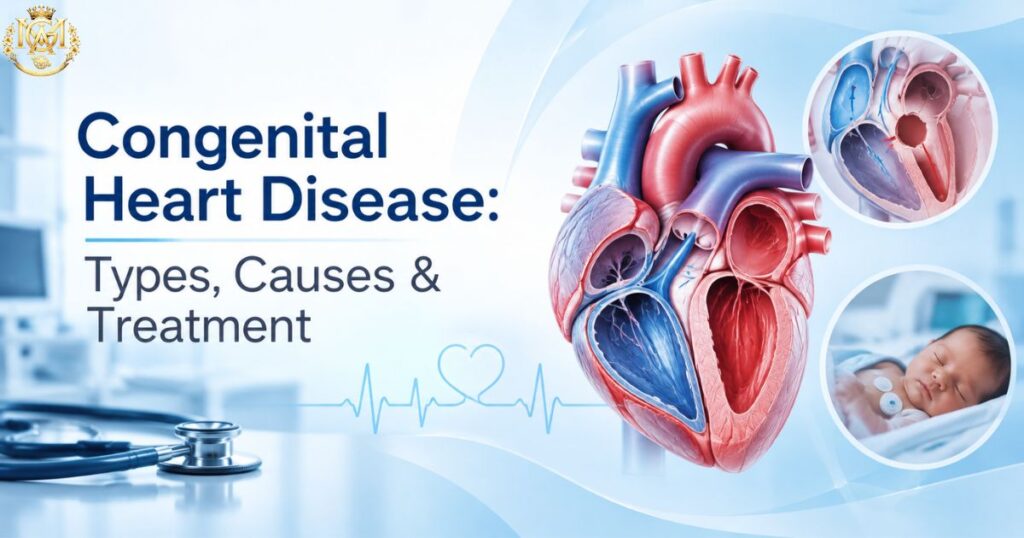
Congenital heart disease refers to structural abnormalities of the heart that are present from birth. These defects occur when the heart doesn't form correctly during fetal development. They range from simple defects that may never need treatment to complex, critical defects that require surgery soon after birth. Congenital heart disease is broadly classified as cyanotic or acyanotic, depending on whether the defect causes reduced oxygen levels in the blood.
Congenital heart disease is one of the most common types of birth defects worldwide. Unlike heart disease that develops later in life from lifestyle or age-related factors, congenital heart disease is present at birth. It results from how the heart forms during the first weeks of pregnancy.
This guide covers what congenital heart disease actually is, how it's classified, what causes it, how it presents, and what treatment and long-term outlook typically look like.
CHD: Congenital or Coronary? Clarifying a Common Mix-Up
The abbreviation "CHD" causes genuine confusion, and it's worth clearing up early. CHD can stand for either Congenital Heart Disease or Coronary Heart Disease. These are entirely different conditions.
Congenital heart disease is a structural defect present from birth. Coronary heart disease, by contrast, develops over time when the arteries supplying the heart become narrowed, typically due to lifestyle and age-related risk factors in adulthood. This article covers congenital heart disease specifically. If you're looking for information on coronary artery disease, that's a distinct topic with different causes, symptoms, and treatment.
Types of Congenital Heart Disease
Congenital heart disease is broadly classified into two categories, based on whether the defect affects blood oxygen levels.
These defects reduce the amount of oxygen-rich blood circulating in the body, often causing a bluish tinge to the skin and lips (cyanosis). Examples include Tetralogy of Fallot, transposition of the great arteries, and tricuspid atresia. These are generally more complex and often require earlier intervention.
These defects don't significantly reduce blood oxygen levels, though they can still affect how the heart functions. Examples include atrial septal defect (ASD), ventricular septal defect (VSD), and patent ductus arteriosus (PDA). Some of these are mild enough to require only monitoring.
Among these, ventricular septal defect is generally considered the most common congenital heart disease diagnosed in children. Defects also vary enormously in complexity, ranging from simple, isolated defects to critical congenital heart defects. Critical defects require intervention within the first days or weeks of life.
What Causes Congenital Heart Disease?
In most cases, no single cause is identified. Congenital heart disease is generally understood to result from a combination of genetic and environmental factors during early pregnancy, not one or the other exclusively.
Genetic factors include chromosomal conditions such as Down syndrome, which is associated with a higher rate of congenital heart defects. A family history of congenital heart disease can also raise the likelihood in some cases. Environmental factors during pregnancy include maternal diabetes, certain infections such as rubella during early pregnancy, and exposure to specific medications or substances. In many individual cases, doctors are unable to pinpoint an exact cause, even after genetic and environmental factors are considered.
Signs and Symptoms
Symptoms vary widely depending on the specific defect and its severity. Some congenital heart defects cause no noticeable symptoms and are only detected incidentally, sometimes not until adulthood. Others present clearly in the newborn period.
In babies, signs that may point to congenital heart disease include a bluish tinge to the skin, lips, or nail beds, rapid or difficult breathing, poor feeding or tiring quickly during feeds, and poor weight gain. In older children, symptoms can include shortness of breath during activity, fatigue, and swelling in the legs, abdomen, or around the eyes. Not every child with a congenital heart defect shows obvious symptoms, which is exactly why routine newborn examination and appropriate screening matter.
Diagnosis and Treatment
Diagnosis typically starts with a physical examination, often prompted by an abnormal heart sound (murmur) or visible symptoms. Echocardiography is the primary diagnostic tool, allowing direct visualisation of the heart's structure. Additional tests such as pulse oximetry, chest X-ray, and in some cases fetal echocardiography during pregnancy can also contribute to diagnosis.
Treatment depends entirely on the specific defect and its severity. Some minor defects, particularly certain acyanotic ones, may only need monitoring, since they can close on their own over time. Others require intervention, which broadly falls into two categories: catheter-based procedures, which are minimally invasive and used for certain defect types, and surgical repair, which is necessary for more complex or critical defects. Some children require staged surgeries performed over months or years, particularly with complex cyanotic defects.
Treatment planning for congenital heart disease is highly individualised. It depends on the exact anatomical defect, its severity, and the child's overall health. General information here should never substitute for assessment by a pediatric cardiologist.
Can Congenital Heart Disease Be Prevented?
Not all congenital heart disease is preventable, since a specific cause often can't be identified. That said, certain steps during pregnancy can reduce risk. These include good management of maternal diabetes, avoiding known harmful substances during pregnancy, ensuring rubella immunity before conception, and attending regular prenatal care. Early detection through fetal echocardiography in higher-risk pregnancies allows clinicians to counsel families and prepare for postnatal management before delivery. Genetic counselling may also be appropriate for families with a known history of congenital heart defects.
Living With Congenital Heart Disease
Outcomes for congenital heart disease have improved substantially with advances in pediatric cardiac surgery and long-term care. Many people with mild to moderate defects live full, active lives into adulthood, often with no more than periodic cardiology follow-up. Outlook for complex or critical defects varies considerably and depends on the specific anatomy, how early treatment begins, and ongoing care.
What matters most for long-term outlook is consistent follow-up care, even after successful treatment. Many people with congenital heart disease, including those treated in childhood, need ongoing monitoring into adulthood. This has led to a growing subspecialty focused specifically on adult congenital heart disease.
Frequently Asked Questions
Recognising and managing congenital heart disease confidently takes structured, focused training. MGA's Fellowship in Pediatric Cardiology helps eligible doctors build this expertise as a skill-focused complement to their existing qualification.
Explore Fellowship in Pediatric CardiologyThis article provides general educational information on cardiac defects as of September 2026. It is not a substitute for clinical assessment, diagnosis, or treatment advice from a qualified pediatric cardiologist. Specific treatment decisions and long-term outlook depend entirely on individual patient anatomy and clinical circumstances. No specific medication or dosing information is included, and none should be inferred from this article.
Which Post-MBBS Course Format Is Right for You?
Answer three quick questions and we'll match you to the format that fits your goals — Certificate, PG Diploma, or Fellowship.