
Medical Global Academy

February 19, 2026

AI and Digital Health in Reproductive Medicine: Clinical Trends in 2026
Learning blogs

AI and Digital Health in Reproductive Medicine: Clinical Trends in 2026

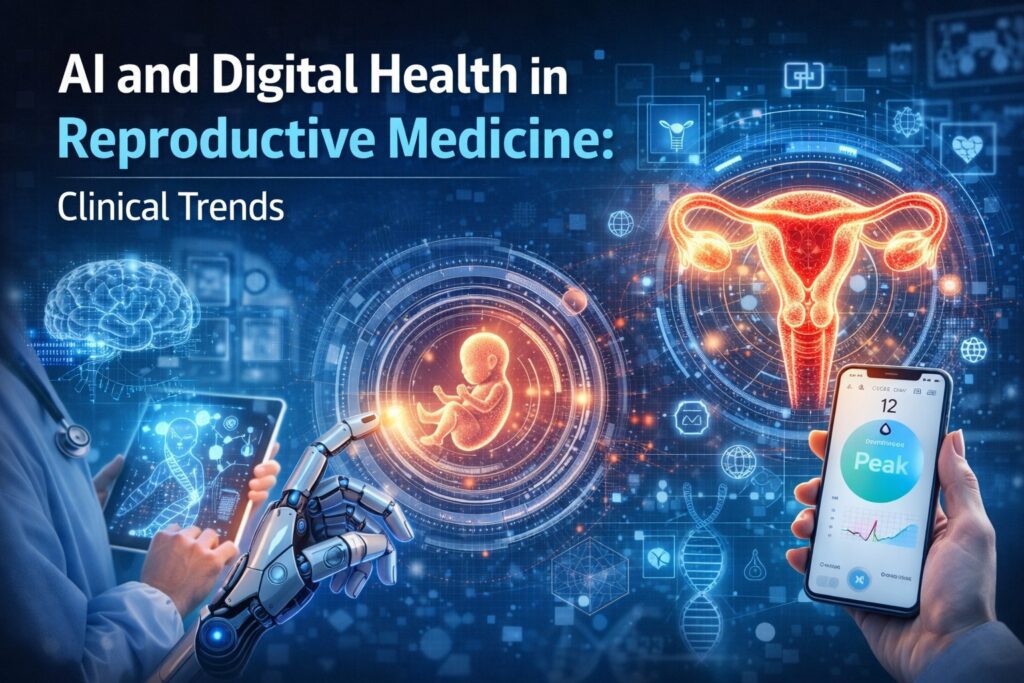
Introduction The paradigm shift in reproductive medicine exists. In 2026, AI and digital health technologies are not going to be the objects of the future, but will already actively change the practices and diagnostics of clinics, as well as the care of patients. Clinicians are also getting more accurate and resourceful in delivering individual and evidence-based reproductive care through AI-based platforms to maximize the IVF cycles, hold telemedicine visits, etc. These trends no longer represent a choice to reproductive endocrinologists, specialists in infertility, and clinical embryologists. In this paper, the change in reproductive medicine as an AI and digital health, clinical justification of their use, and how it can be practiced in everyday life will be discussed. The Current Landscape of Reproductive Medicine Historically, reproductive medicine has been focused on the manual activities, clinical experience of the clinicians and lab skill to affect the intervention of IVF, IUI and fertility preservation. Despite the fact that these techniques remain basic, there has been a tremendous surge in the desire to receive individualized and data-driven care. Recent challenges include: Making the maternal age larger and the fertility rate of the world smaller. Massive variation in success rates of IVF in clinics. Expanding patient pressure on immediate, accurate and individualized care plans. Integration of complex laboratory data, genomics and predictive markers with clinical decisions.. AI and digital health are in the best position to address such challenges to enhance the decision-making process, workflow optimization, and patient outcomes. AI in IVF and Fertility Prediction 1. Embryo Assessment and Selection Evaluation of embryos in traditional techniques is qualitative and prone to inter-observer error. The time-lapse, morphokinetics, and genetic data are now analyzed using the AI algorithms to determine the viability of the embryo and the likelihood of implantation. Clinical studies have demonstrated the AI-assisted embryo selection to be: Improves the implantation rate by 1015 percent compared to manual analysis. Reduces the risk of numerous pregnancies of a female by promoting the use of single embryos. Enhances uniformity and repeatability of the grade of embryos. The AI systems combine the data of the historical cycle with imaging to create predictive scores, which guide embryologists to embryos that have the highest possible viable birth. 2. Predictive Analytics for IVF Outcomes Predictive modeling is being done on a growing scale using machine learning models: Probability of successful fertilization. Risk of cycle cancellation. The results of the live births depend on the specifics of the patients There is now increased capability by clinicians to customize the stimulation protocols and dynamically optimize the interventions to improve efficiency and reduce the emotional and financial burden on patients. Digital Health in Reproductive Medicine 1. Telemedicine and Remote Monitoring With the help of digital platforms, reproductive specialists are able to: Do virtual sessions during the gathering of the first fertility tests and follow-up. Follow-up ovarian response and devices and patient outcomes which are directly related. Improve communication and adherence to treatment.. Telemedicine will ensure that care is more accessible to patients that live in geographically remote areas, reduce missed visits, and enhance interaction with patients throughout the treatment process. 2. Patient-Centric Apps and Data Portals Digital health tools are useful because they provide patients with: Cycle monitoring and learning materials applied to individuals. Entire access to lab reports and the growth of embryos. Peaceful ways of interaction with clinicians. These platforms form organized and real-time data streams in the case of doctors, promoting the clinical decision-making process and proactive intervention. Integration of Genomics and AI Genetic screening, polygenic risk scores and non-invasive embryo testing are beginning to have a larger role in the area of contemporary reproductive medicine. Genomic data, when use with clinical parameters, can be processe by AI algorithms to: Identify patients who are susceptible to implantation or miscarriage. Direct preimplantation genetic testing (PGT). Intimidate on a one-on-one basis. As genomics comes to be adopted into AI-based decision-making, reproductive medicine is turning to precision fertility care, where the intervention becomes tailored to the biological profile of the individual patient. Clinical Applications Across the Fertility Workflow Pre-Cycle Planning AI uses past IVF experiences, ovarian reserves indicator and time to predict the most successful stimulation programs, ovarian reserves indicator, and patterns of individual hormones. Embryology Laboratory AI-assisted embryo grading: Regular quality evaluation. Reduction in human error. Rapid decision making in selection of embryo transfer. Patient Counseling and Outcome Prediction AI predictive reports help the clinicians provide evidence-based counseling regarding the opportunities of achievement, risk factors, and individual interventions in order to increase transparency and trust. Benefits for Clinicians and Patients Greater Outcomes: Higher implantation and live births. Efficiency: More efficient operations will reduce the workload in the laboratories and visits clinics. Precision Medicine: Patient-centered medicine. Patient Satisfaction: Enhanced communication through health technologies online. Data-Driven Decisions: Current data analytics lead to evidence-based interventions. Challenges and Considerations Although AI and digital health have a tremendous potential, clinicians have to deal with: Patient health records privacy and security issues. Checking the AI algorithms and its standardization. Companies have difficulties when integrating with their existing EMR and lab systems. Education of personnel to read and respond to AI-based insights. It is important to be aware of these constraints because without them, adoption is unlikely to be safe, ethical, and effective in clinical practice Future Directions in Reproductive Medicine AI-Driven Predictive Fertility Counseling: AI models that provide a patient with a specific prognosis prior to the cycles of IVF in real time. Remote IVF Laboratories and Tele-Embryology: Cloud-computer solutions that can facilitate the evaluation of embryos at different locations. Connection to Wearable and IoT Devices: Hormones, ovulation, and compliance data into AI algorithms. High-tech Genomic and Multi-Omics Analysis: Individualized therapy based on combined genomic, proteomic and metabolomic information. The innovations are direct at an entirely digitalize, data-driven fertility ecosystem, where clinicians optimize the outcomes of each step with the use of AI. Conclusion Towards 2026, reproductive medicine will no longer be a manualized and low-tech method of IVF arrangement. The use of digital health tools and AI

Medical Fellowship Courses Booming in India 2026
Learning blogs

Medical Fellowship Courses Booming in India 2026

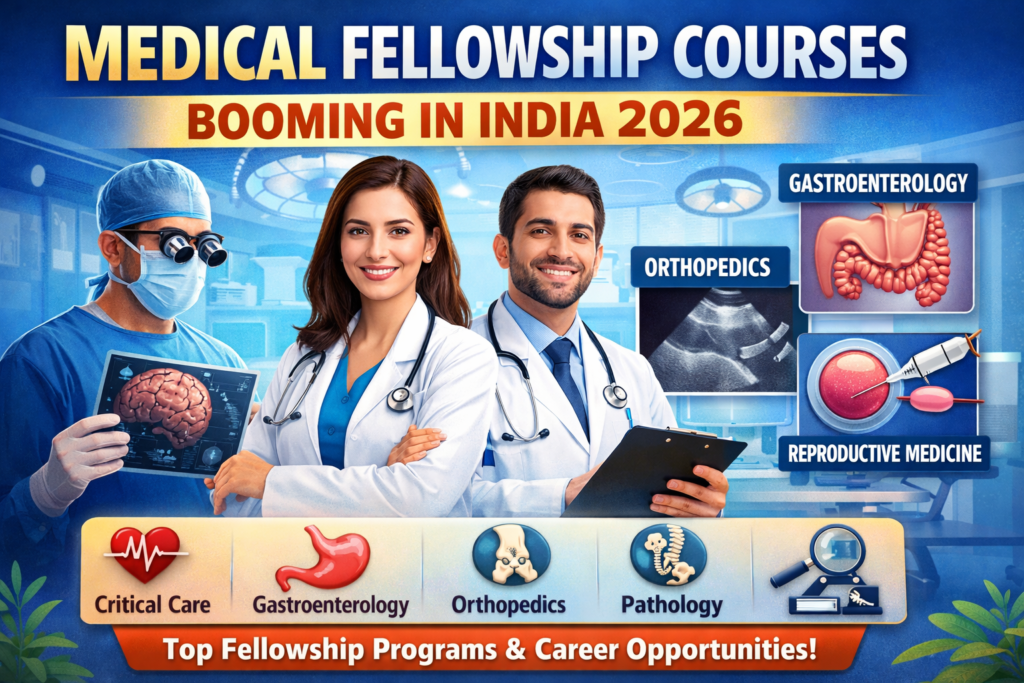
Medical fellowship courses in India are increasing more than ever. The healthcare sector is growing, there are emerging technologies and the demands of the patients are increasing. This has led to an increase in the number of doctors enrolling in further clinical training programs, specialization in certain fields and the ability to enhance their career prospects through a fellowship program. Doctors pursuing special training after MBBS, MD, MS, BDS, or similar degrees can take short training programs called medical fellowships to specialize in a specific area. Such programs offer real-world training, exposure to real patients, and advanced knowledge that enable the physicians to become the best in their specialty of choice. Medical Fellowship Courses in India are on Fire. 1. Growth of the Demand of Special Doctors. The population of India is on the rise, and the demand for specialized medical care increases. Hospitals are now favoring the doctors that have fellowship training in certain fields like critical care, gastroenterology and reproductive medicine. Experts are able to come up with superior diagnosis, progressive therapy, and enhanced patient results. 2. Shorty Long-term Compared with Super Specialization. Super specialization courses such as DM and MCh last 3 years whereas fellowship programs last 6 months to 2 years. This renders fellowship courses a more viable and expeditious choice to doctors who would rather update their skills within a short time. 3. Improved career and increased wages. Fellowship trained doctors usually receive: Higher salary packages Improved employment in hospitals. Corporate hospital opportunities. International professional opportunities. Specialization in private practice. The hospitals are willing to hire the fellowship-trained physicians due to their advanced knowledge. 4. Expansion of health and infrastructure of private hospitals. The healthcare infrastructure of India is growing fast. New hospitals, diagnostic and specialty clinics are opening in the country. These facilities need fellowship trained experts in such specialties as critical care, pathology, orthopedics, and pain management. 5. Medical Technology Progress. In modern healthcare, sophisticated equipment is utilized, including ultrasound, minimal access surgery, robotic surgery, and sophisticated diagnostics. Fellowship programs educate the doctors to apply such technologies. This equips the doctors to be more competent and qualified in the medical field. Very popular medical fellowship courses in India (2026) The following are some of the most requested fellowship programs in India: Clinical and Diagnostic fellowships. Fellowship in Pathology – This specializes in diagnosing disease through laboratory techniques. Fellowship in Musculoskeletal ultrasound – Training ultrasound of bones, joints, and muscles. Fellowship in Pediatric Dermatology – Specialty in skin diseases in children. Fellowship in Ophthalmology – Further training in eye diseases and treatment. Surgical and Procedural Based Fellowships. Fellowship in Neurosurgery – Specializes in the surgery of the brain and spine. Fellowship in Minimal Access Surgery – Minimal invasive surgery and laparoscopic surgery training. Fellowship in orthopedics – specializes in bones, joint and musculoskeletal care. Fellowship in Arthroplasty – Specialty in joint replacement surgeries. Dental Specialization and Pediatric Specialization. Fellowship in Pediatrics Endocrinology – Specializes in children and hormonal disorders. Fellowship in Pedodontist – Special dental treatment of children. Subspecialty Fellowships and Medicine. Fellowship in Gastroenterology – Specializes in problems of the digestive system. Fellowship in Gastrology – Specializes in stomach diseases. Fellowship in Reproductive Medicine – Fertility and reproductive health training. Fellowship in Addiction Medicine – Treatment of substance abuse and addiction. Fellowships in Critical and Emergency Care. Fellowship in Critical Care – specializes in emergency care and the management of the ICU. Fellowship in Pain Management – Treatment and relief of chronic pain. Advantages of Medical Fellowship Courses. Skill Enhancement Fellowship programs are offered as a practical training and clinical experience. Career Advancement Physicians are able to specialize and master their field of choice. Better Job Opportunities Hospitals and healthcare institutions prefer physicians who are trained in a fellowship program. Practice Opportunity to Specialized Practice. After a fellowship training, physicians are able to establish special clinics. Who is to do Medical Fellowship Courses. Medical fellowship programs are appropriate in: MBBS graduates MD/MS doctors BDS graduates Physicians who wish to be specialized. Physicians seeking overseas professional placement. Future of Medical Fellowship Courses in India. Medical fellowship programs in India have a very bright future. As the demand of healthcare and technological development rises as well as the healthcare sector demand specialized care, the fellowship-trained doctors will be essential in the healthcare system. Fellowship courses will become a normal process among the doctors that wish to grow their careers and specialization in 2026 and later. Conclusion In 2026, medical fellowship courses are soaring in India due to the speed of specialization and improved career prospects together with the enhanced clinical skills. The programs enable physicians to be specialists in certain areas of medicine and enhance the quality of patient care. Physicians who are trained as fellows are in demand with the rapid development of healthcare facilities. Such institutions as Medical Global Academy are taking a significant part in that, providing the industry-specific fellowships, work training, and career-oriented education, the doctors are developing successful and specialty medical careers in India and worldwide. Frequently asked questions 1. What is a medical fellowship course? A medical fellowship course is a brief course specialization of physicians after passing MBBS, MD, MS, or BDS. It is specialty oriented and offers a high level of clinical expertise and practice. 2. How long are the medical fellowship programs? The medical fellowship programs in India are spread across 6 months to 2 years, depending on the specialization and institute. 3. Is it possible to do a fellowship following MBBS? Yes, there are numerous fellowship programs that one can undertake after MBBS. Nevertheless, there are more advanced fellowships, which can be admitted only to MD or MS. 4. Better than MD or MS is a fellowship? Postgraduate degrees are MD/ms, whereas fellowship is a post-MBBS or post-MD/MS specialization course, which is not a replacement but an extra qualification that increases opportunities. 5. Do you have medical fellowship courses? The reputed institutes, hospitals, and academies have many fellowship programs, which are well recognized and

Scroll to Top
Chat on WhatsApp