
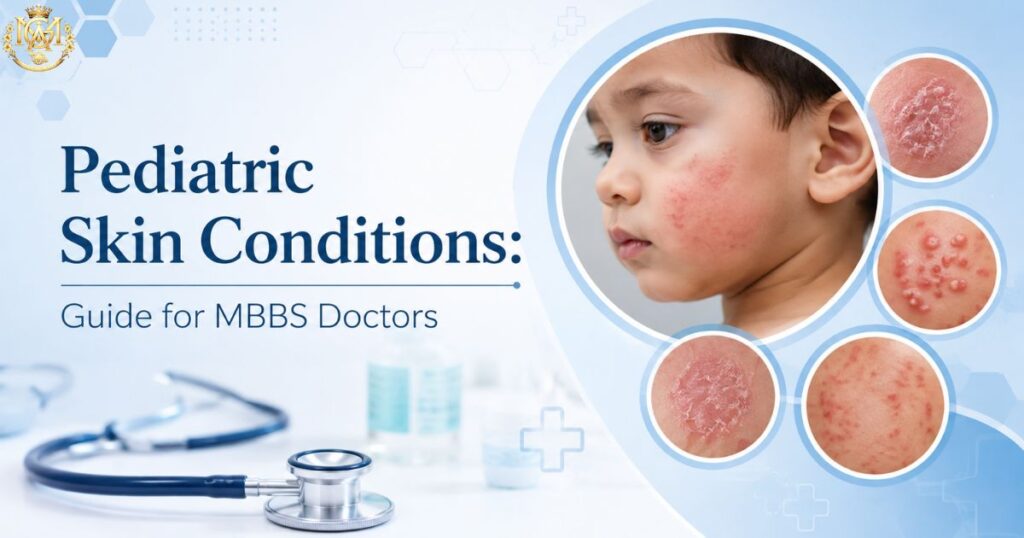
Atopic dermatitis, miliaria (heat rash), diaper dermatitis, viral warts, insect-bite reactions, and nutritional-deficiency dermatoses are among the most frequently seen pediatric skin presentations in Indian general practice.
Most respond well to basic measures. A smaller but important subset — rapidly spreading disease, signs of secondary infection, or atypical presentations — warrants pediatric dermatology referral.
A child's skin doesn't behave like an adult's, and treating it as though it does is one of the more common sources of misdiagnosis in general practice. Children present with a distinct set of conditions, at distinct ages, with distinct patterns — and parents bring a level of anxiety to a skin complaint that rarely accompanies an adult visiting with the same rash.
This guide is a quick-reference for the pediatric dermatoses MBBS graduates and family physicians see most often in Indian OPDs, organised by what they look like, how they're generally managed, and — critically — when they warrant a referral rather than continued primary management.
Why Pediatric Skin Presentations Need a Different Lens
Children's skin is structurally different from adult skin in ways that matter clinically. It's thinner, has a higher surface-area-to-body-weight ratio, and its barrier function is still maturing — particularly in infants. This means the same irritant or infection that would cause a mild, localised reaction in an adult can spread faster or present more diffusely in a child.
Age matters more in pediatric dermatology than in almost any other area of skin presentation. A rash that's a normal, self-limiting finding in a two-week-old neonate can be an entirely different diagnosis in a five-year-old. Building a mental map of which conditions cluster at which ages — neonatal, infant, toddler, school-age — is one of the most useful diagnostic habits a general physician can develop.
Finally, parental anxiety is a real clinical factor, not a distraction from the "real" medicine. A skin condition that's medically minor can still generate significant parental distress, and how a doctor communicates about it — timeline, expected course, what to watch for — shapes whether the family returns for appropriate follow-up or seeks multiple opinions out of worry.
Atopic Dermatitis in Infants & Children
Atopic dermatitis is the most common chronic skin condition seen in pediatric practice, and its presentation shifts meaningfully with age.
Age-pattern differences
In infants, atopic dermatitis typically appears on the face, scalp, and extensor surfaces of the limbs — a different distribution from the flexural pattern (elbows, knees) more familiar from adult and older-child presentations. As children grow, the distribution gradually shifts toward the flexural pattern seen in older children and adults.
General management principles
Consistent moisturising with a fragrance-free emollient is the foundation of management at any age, since barrier repair reduces flare frequency more reliably than treating flares alone. Identifying and minimising specific triggers — harsh soaps, wool fabric, prolonged hot baths — helps many families reduce flare frequency without additional intervention.
When to refer
Refer when atopic dermatitis is extensive, unresponsive to basic measures, or shows signs of secondary bacterial infection — oozing, honey-coloured crusting, or fever accompanying a flare. Persistent sleep disruption from itching in a young child is also a reasonable trigger for earlier specialist involvement, given the impact on the child's wellbeing and family quality of life.
Miliaria & Diaper Dermatitis: Managing the Basics
Miliaria (heat rash)
Extremely common in Indian infants given the climate, miliaria results from sweat duct obstruction and presents as small clear or red bumps, typically on the neck, chest, and skin folds. It's generally managed with cooling measures — lighter clothing, reduced overheating, staying in ventilated spaces during peak heat — rather than active treatment. It usually resolves once the underlying heat and sweating trigger is addressed.
Diaper dermatitis
Most diaper dermatitis is irritant contact dermatitis from prolonged exposure to moisture and friction, and responds to basic hygiene measures — frequent diaper changes, gentle cleansing, and adequate drying time between changes.
The distinction worth knowing is candidal diaper dermatitis, which presents differently: a bright red, well-demarcated rash with characteristic satellite lesions (small separate red spots surrounding the main rash) extending into the skin folds. This pattern suggests a fungal component rather than simple irritation and generally needs a different management approach than basic hygiene alone.
Diaper dermatitis that doesn't improve with consistent basic hygiene measures after a reasonable trial, or that shows the satellite-lesion pattern, is a reasonable point to reconsider the diagnosis rather than simply continuing the same approach.
Viral Warts, Insect Bites & Common Infections
Viral warts
Common in school-age children, viral warts (caused by HPV) present as rough, well-defined papules, most often on the hands and feet. They're generally self-limited over time but can persist for months to years and can spread to adjacent skin through scratching or contact. Most cases don't require urgent referral, though persistent, spreading, or cosmetically distressing warts are reasonable candidates for dermatology input.
Insect bite reactions (papular urticaria)
Papular urticaria — recurrent, itchy papules from insect bites, often from fleas or mosquitoes — is common in Indian children, particularly in households with pets or in warmer, humid regions. Lesions often appear in crops, sometimes with a delayed hypersensitivity reaction that makes the timing between exposure and rash confusing for parents. Reassurance and basic itch management are usually sufficient; persistent or unusually severe reactions warrant a closer look.
Common infections to recognise
A few infections show up often enough in Indian pediatric OPDs to warrant quick recognition: impetigo (bacterial, honey-coloured crusted lesions, typically around the nose and mouth), scabies (intensely itchy, often affecting web spaces of fingers and worse at night, frequently presenting as a family cluster rather than an isolated case), and tinea (fungal, presenting with the ring-shaped, active-border pattern covered in our companion guide on eczema, psoriasis, and fungal rash differentiation). Recognising the pattern — and asking whether other family members have similar symptoms, particularly for scabies — speeds up accurate diagnosis considerably.
Nutritional-Deficiency Skin Signs Doctors Often Miss
Nutritional-deficiency dermatoses are easy to overlook because they're less commonly taught with the same emphasis as infectious or allergic skin conditions, yet they remain clinically relevant in parts of India where nutritional deficiency is still prevalent.
Presents with a distinctive periorificial and acral (hands, feet) dermatitis — sometimes resembling acrodermatitis enteropathica in severe cases. Worth considering in children with poor growth or chronic diarrhoea alongside the skin finding.
Can present with phrynoderma — rough, follicular papules typically on extensor surfaces of the limbs — alongside other signs of deficiency such as poor night vision.
Classic pellagra-pattern dermatitis is rare in well-nourished children but worth considering in the context of significant malnutrition or restricted diets.
Less a distinct dermatosis and more a set of associated signs — pallor and koilonychia (spoon-shaped nails) — worth noting in a child with chronic or recurrent skin complaints and a broader nutritional history.
A brief nutritional history — dietary diversity, growth trajectory, any restrictive feeding patterns — is a low-cost addition to the workup for any child with a chronic or unusual skin presentation that isn't explained by a more obvious cause.
Red Flags: When to Refer to Pediatric Dermatology
Most pediatric skin complaints are manageable in general practice. A defined subset, however, benefits from earlier specialist involvement.
- Rapidly spreading or severe atopic dermatitis that isn't responding to consistent basic management
- Signs of secondary bacterial infection with systemic symptoms — fever, lethargy, or spreading redness beyond the original lesion
- Suspected genetic or congenital skin disorders — extensive blistering, unusual scaling patterns, or skin fragility present from birth or early infancy
- Concerning pigmented lesions or birthmarks — rapid growth, irregular borders, or bleeding in a congenital lesion
- Recurrent or unusually severe infections that may suggest an underlying immune concern rather than routine childhood exposure
- Diagnostic uncertainty with significant impact on the child's comfort, sleep, or the family's quality of life
None of these red flags require the referring physician to have a confirmed diagnosis before referring — the point of specialist involvement in these situations is precisely to resolve that uncertainty.
Frequently Asked Questions
Recognising and managing the full range of pediatric skin conditions — and knowing exactly when to refer — is a skill that develops with structured training. MGA's Fellowship in Pediatric Dermatology helps doctors build this expertise for confident, comprehensive OPD practice.
This article is intended for medical professionals and provides general educational information on common pediatric skin presentations. It does not constitute clinical advice, treatment protocols, or diagnostic recommendations, and does not include medication dosing or prescribing guidance. Specific management decisions should be based on individual patient assessment, and any child with diagnostic uncertainty or red-flag features should be referred to a qualified pediatric dermatologist.
Which Post-MBBS Course Format Is Right for You?
Answer three quick questions and we'll match you to the format that fits your goals — Certificate, PG Diploma, or Fellowship.