
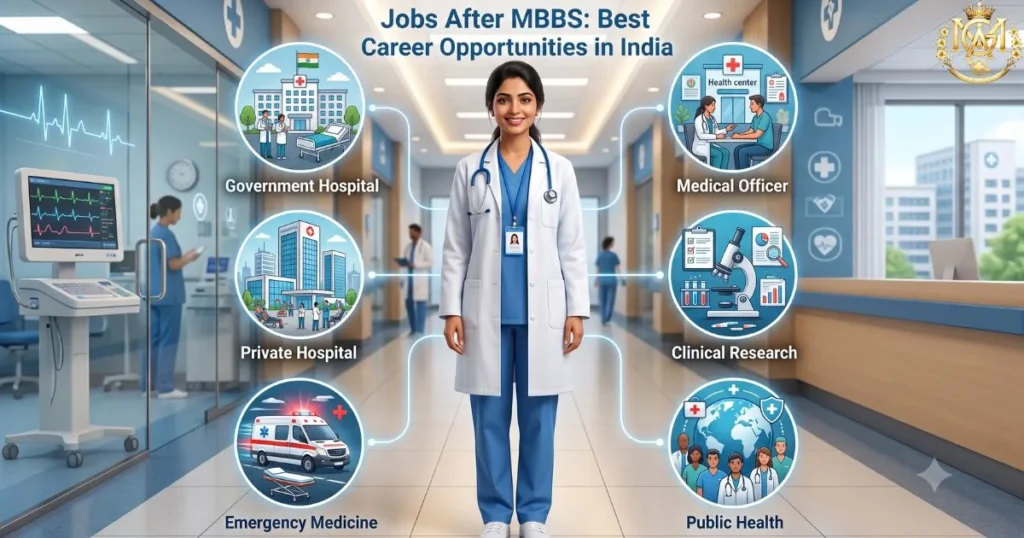
Jobs After MBBS: A Complete Career Guide for MBBS Doctors in India (2026 Guide)
Jobs After MBBS: Career Opportunities for MBBS Doctors in India (2026 Guide) Completing an MBBS degree is a major milestone, but it also marks the beginning of an important career decision. Many graduates ask themselves, “What are the best jobs after MBBS?“ While some doctors prepare for NEET PG and postgraduate specialization, others choose to start working immediately to gain clinical experience, become financially independent, or explore different areas of medicine. Today, MBBS graduates have access to a wide range of employment opportunities across government hospitals, private healthcare institutions, emergency medicine, diagnostic centers, public health organizations, research, and non-clinical sectors. The growing demand for qualified doctors in India, driven by expanding healthcare infrastructure and increasing patient needs, has created multiple career pathways beyond traditional clinical practice. Whether your goal is to work as a Medical Officer, join a leading hospital, prepare for higher studies while gaining experience, or pursue a non-clinical medical career, understanding the available job opportunities can help you make a well-informed decision. In this guide, you’ll learn about the different types of jobs available after MBBS, eligibility requirements, work environments, career prospects, and practical steps to strengthen your employability in today’s healthcare industry. What Job Opportunities Are Available After MBBS? An MBBS degree opens doors to diverse career opportunities in both the public and private healthcare sectors. Depending on your interests, career goals, and future plans, you can begin practicing clinically, join government healthcare services, explore corporate healthcare roles, or build expertise through advanced medical training. Broadly, jobs after MBBS can be categorized into five major career pathways. Clinical Jobs Clinical jobs involve direct patient care and are often the preferred choice for newly graduated doctors who wish to strengthen their practical skills before pursuing specialization. Common clinical roles include: Junior Resident Doctor Medical Officer Duty Medical Officer Emergency Medicine Doctor ICU Resident General Physician (under supervision) Hospital Resident Doctor These positions provide valuable hands-on experience in diagnosis, treatment planning, patient management, and multidisciplinary collaboration. Government Jobs Government healthcare services offer stable employment, structured career progression, and opportunities to serve diverse communities across India. Popular government employment options include: State Government Medical Officer UPSC Combined Medical Services (CMS) ESIC Hospitals National Health Mission (NHM) Railway Medical Services Armed Forces Medical Services Many MBBS graduates choose government jobs because they provide extensive clinical exposure, job security, and opportunities to work in public healthcare systems. Private Sector Jobs Private hospitals and healthcare organizations provide excellent opportunities for doctors seeking advanced infrastructure, exposure to modern medical technology, and multidisciplinary practice. Private employment options include: Corporate Hospitals Multi-specialty Hospitals Specialty Clinics Diagnostic Centers Day Care Hospitals IVF and Fertility Centers Emergency Care Centers These roles often expose young doctors to complex clinical cases while allowing them to work alongside experienced specialists. Non-Clinical Jobs Not every MBBS graduate chooses direct patient care. Several healthcare industries value medical knowledge and offer rewarding non-clinical careers. Examples include: Clinical Research Medical Writing Pharmacovigilance Healthcare Management Health Insurance Medical Advisor Roles Public Health Programs Medical Coding and Documentation These careers combine medical expertise with research, administration, communication, or healthcare policy. International Career Opportunities Many MBBS graduates also explore employment opportunities abroad after completing the required licensing examinations and registration processes. Countries offering opportunities include: United Kingdom Australia United States Canada United Arab Emirates New Zealand Working internationally often requires additional licensing examinations, language proficiency requirements, and regulatory approvals, but it can provide broader clinical exposure and global career development. Comparison of Major Job Categories After MBBS Career Path Primary Work Environment Direct Patient Care Ideal For Clinical Jobs Hospitals, Emergency Departments, Clinics Yes Doctors interested in practical clinical experience Government Jobs Government Hospitals, Public Health Centers Yes Those seeking stable employment and public service Private Sector Jobs Corporate Hospitals, Specialty Centers Yes Doctors looking for advanced infrastructure and faster learning Non-Clinical Jobs Research Organizations, Healthcare Companies Limited Professionals interested in research, management, or healthcare consulting International Opportunities Overseas Hospitals and Healthcare Systems Yes Doctors planning a global medical career Best Clinical Jobs After MBBS Clinical practice remains one of the most valuable career paths immediately after MBBS. Working directly with patients helps doctors strengthen diagnostic reasoning, improve clinical decision-making, develop procedural skills, and gain confidence before pursuing postgraduate education or specialization. The following clinical roles are among the most common and rewarding job opportunities for MBBS graduates. Junior Resident Doctor A Junior Resident Doctor works under the supervision of senior consultants and specialists in teaching hospitals and multi-specialty healthcare institutions. This role provides intensive exposure to inpatient care, emergency cases, ward management, and multidisciplinary teamwork. Key responsibilities include: Examining and assessing patients Preparing treatment plans under supervision Monitoring admitted patients Assisting during medical procedures Maintaining clinical documentation Participating in ward rounds and case discussions This role is ideal for doctors preparing for postgraduate entrance examinations while continuing to build strong clinical experience. Medical Officer Medical Officers play a vital role in delivering primary and secondary healthcare services in government hospitals, community health centers, private hospitals, and industrial healthcare facilities. Typical responsibilities include: Diagnosing common illnesses Managing outpatient departments (OPD) Providing emergency medical care Supervising healthcare teams Promoting preventive healthcare Managing public health programs Medical Officer positions offer diverse clinical exposure and are often considered one of the most stable employment options after MBBS. Emergency Medicine Doctor Emergency departments require doctors who can make quick, evidence-based decisions while managing critically ill or injured patients. Doctors working in emergency medicine commonly manage: Trauma cases Cardiac emergencies Stroke patients Poisoning cases Acute respiratory emergencies Medical and surgical emergencies The role demands excellent communication, rapid clinical judgment, and the ability to perform effectively in high-pressure environments. ICU and Critical Care Resident Critical care units provide an excellent learning environment for doctors interested in managing seriously ill patients. Responsibilities include: Monitoring critically ill patients Interpreting laboratory and imaging findings Managing ventilated patients Performing emergency procedures Coordinating multidisciplinary patient care This experience builds a strong foundation for future specialization in critical care, emergency medicine, anesthesiology, and internal medicine. Hospital Duty Doctor