
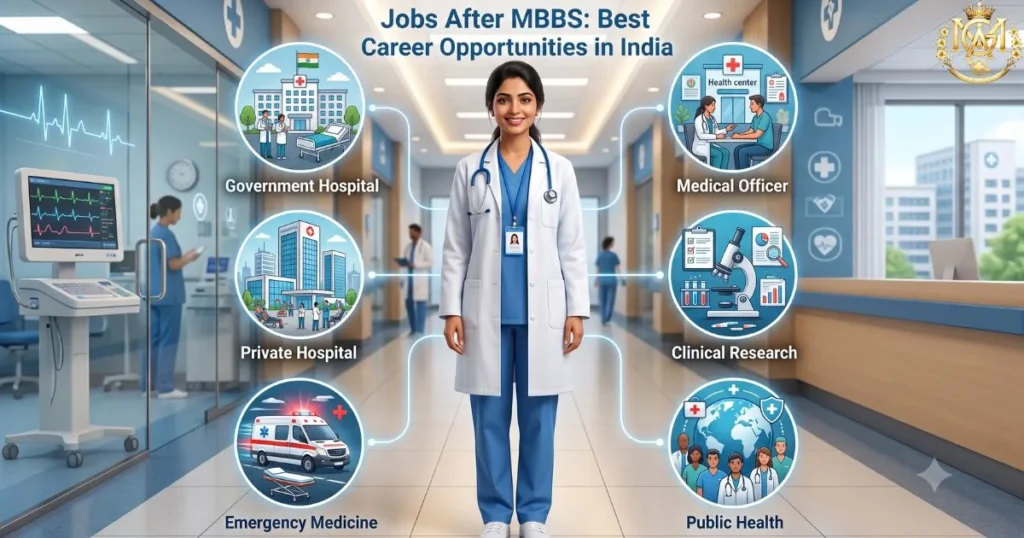
Jobs After MBBS: Career Opportunities for MBBS Doctors in India (2026 Guide)
Completing an MBBS degree is a major milestone, but it also marks the beginning of an important career decision. Many graduates ask themselves, “What are the best jobs after MBBS?“ While some doctors prepare for NEET PG and postgraduate specialization, others choose to start working immediately to gain clinical experience, become financially independent, or explore different areas of medicine.
Today, MBBS graduates have access to a wide range of employment opportunities across government hospitals, private healthcare institutions, emergency medicine, diagnostic centers, public health organizations, research, and non-clinical sectors. The growing demand for qualified doctors in India, driven by expanding healthcare infrastructure and increasing patient needs, has created multiple career pathways beyond traditional clinical practice.
Whether your goal is to work as a Medical Officer, join a leading hospital, prepare for higher studies while gaining experience, or pursue a non-clinical medical career, understanding the available job opportunities can help you make a well-informed decision.
In this guide, you’ll learn about the different types of jobs available after MBBS, eligibility requirements, work environments, career prospects, and practical steps to strengthen your employability in today’s healthcare industry.
What Job Opportunities Are Available After MBBS?
An MBBS degree opens doors to diverse career opportunities in both the public and private healthcare sectors. Depending on your interests, career goals, and future plans, you can begin practicing clinically, join government healthcare services, explore corporate healthcare roles, or build expertise through advanced medical training.
Broadly, jobs after MBBS can be categorized into five major career pathways.
Clinical Jobs
Clinical jobs involve direct patient care and are often the preferred choice for newly graduated doctors who wish to strengthen their practical skills before pursuing specialization.
Common clinical roles include:
- Junior Resident Doctor
- Medical Officer
- Duty Medical Officer
- Emergency Medicine Doctor
- ICU Resident
- General Physician (under supervision)
- Hospital Resident Doctor
These positions provide valuable hands-on experience in diagnosis, treatment planning, patient management, and multidisciplinary collaboration.
Government Jobs
Government healthcare services offer stable employment, structured career progression, and opportunities to serve diverse communities across India.
Popular government employment options include:
- State Government Medical Officer
- UPSC Combined Medical Services (CMS)
- ESIC Hospitals
- National Health Mission (NHM)
- Railway Medical Services
- Armed Forces Medical Services
Many MBBS graduates choose government jobs because they provide extensive clinical exposure, job security, and opportunities to work in public healthcare systems.
Private Sector Jobs
Private hospitals and healthcare organizations provide excellent opportunities for doctors seeking advanced infrastructure, exposure to modern medical technology, and multidisciplinary practice.
Private employment options include:
- Corporate Hospitals
- Multi-specialty Hospitals
- Specialty Clinics
- Diagnostic Centers
- Day Care Hospitals
- IVF and Fertility Centers
- Emergency Care Centers
These roles often expose young doctors to complex clinical cases while allowing them to work alongside experienced specialists.
Non-Clinical Jobs
Not every MBBS graduate chooses direct patient care. Several healthcare industries value medical knowledge and offer rewarding non-clinical careers.
Examples include:
- Clinical Research
- Medical Writing
- Pharmacovigilance
- Healthcare Management
- Health Insurance
- Medical Advisor Roles
- Public Health Programs
- Medical Coding and Documentation
These careers combine medical expertise with research, administration, communication, or healthcare policy.
International Career Opportunities
Many MBBS graduates also explore employment opportunities abroad after completing the required licensing examinations and registration processes.
Countries offering opportunities include:
- United Kingdom
- Australia
- United States
- Canada
- United Arab Emirates
- New Zealand
Working internationally often requires additional licensing examinations, language proficiency requirements, and regulatory approvals, but it can provide broader clinical exposure and global career development.
Comparison of Major Job Categories After MBBS
| Career Path | Primary Work Environment | Direct Patient Care | Ideal For |
| Clinical Jobs | Hospitals, Emergency Departments, Clinics | Yes | Doctors interested in practical clinical experience |
| Government Jobs | Government Hospitals, Public Health Centers | Yes | Those seeking stable employment and public service |
| Private Sector Jobs | Corporate Hospitals, Specialty Centers | Yes | Doctors looking for advanced infrastructure and faster learning |
| Non-Clinical Jobs | Research Organizations, Healthcare Companies | Limited | Professionals interested in research, management, or healthcare consulting |
| International Opportunities | Overseas Hospitals and Healthcare Systems | Yes | Doctors planning a global medical career |
Best Clinical Jobs After MBBS
Clinical practice remains one of the most valuable career paths immediately after MBBS. Working directly with patients helps doctors strengthen diagnostic reasoning, improve clinical decision-making, develop procedural skills, and gain confidence before pursuing postgraduate education or specialization.
The following clinical roles are among the most common and rewarding job opportunities for MBBS graduates.
Junior Resident Doctor
A Junior Resident Doctor works under the supervision of senior consultants and specialists in teaching hospitals and multi-specialty healthcare institutions. This role provides intensive exposure to inpatient care, emergency cases, ward management, and multidisciplinary teamwork.
Key responsibilities include:
- Examining and assessing patients
- Preparing treatment plans under supervision
- Monitoring admitted patients
- Assisting during medical procedures
- Maintaining clinical documentation
- Participating in ward rounds and case discussions
This role is ideal for doctors preparing for postgraduate entrance examinations while continuing to build strong clinical experience.
Medical Officer
Medical Officers play a vital role in delivering primary and secondary healthcare services in government hospitals, community health centers, private hospitals, and industrial healthcare facilities.
Typical responsibilities include:
- Diagnosing common illnesses
- Managing outpatient departments (OPD)
- Providing emergency medical care
- Supervising healthcare teams
- Promoting preventive healthcare
- Managing public health programs
Medical Officer positions offer diverse clinical exposure and are often considered one of the most stable employment options after MBBS.
Emergency Medicine Doctor
Emergency departments require doctors who can make quick, evidence-based decisions while managing critically ill or injured patients.
Doctors working in emergency medicine commonly manage:
- Trauma cases
- Cardiac emergencies
- Stroke patients
- Poisoning cases
- Acute respiratory emergencies
- Medical and surgical emergencies
The role demands excellent communication, rapid clinical judgment, and the ability to perform effectively in high-pressure environments.
ICU and Critical Care Resident
Critical care units provide an excellent learning environment for doctors interested in managing seriously ill patients.
Responsibilities include:
- Monitoring critically ill patients
- Interpreting laboratory and imaging findings
- Managing ventilated patients
- Performing emergency procedures
- Coordinating multidisciplinary patient care
This experience builds a strong foundation for future specialization in critical care, emergency medicine, anesthesiology, and internal medicine.
Hospital Duty Doctor
Duty Doctors are responsible for ensuring continuous patient care during assigned shifts in hospitals.
Their daily responsibilities often include:
- Conducting patient assessments
- Managing emergency admissions
- Coordinating referrals
- Monitoring admitted patients
- Communicating with consultants
- Maintaining medical records
This role helps young doctors develop confidence, independence, and efficient decision-making skills.
Clinical Job Roles After MBBS – Quick Comparison
| Job Role | Primary Responsibilities | Clinical Exposure | Suitable For |
| Junior Resident Doctor | Ward management, patient care, consultant support | High | Doctors preparing for postgraduate training |
| Medical Officer | OPD, emergency care, community health services | High | Doctors seeking stable clinical practice |
| Emergency Medicine Doctor | Acute and emergency patient management | Very High | Doctors who perform well under pressure |
| ICU / Critical Care Resident | Management of critically ill patients | Very High | Doctors interested in intensive care medicine |
| Hospital Duty Doctor | Inpatient care, emergency response, shift-based practice | High | Graduates wanting broad hospital experience |
Government Jobs After MBBS
Government healthcare services remain one of the most preferred career choices for MBBS graduates in India. These positions offer structured career progression, job stability, extensive clinical exposure, and the opportunity to contribute to public healthcare. Doctors working in government institutions often manage a wide variety of medical conditions, making these roles valuable for strengthening clinical skills and gaining practical experience.
Unlike private healthcare settings, government hospitals frequently serve large patient populations, allowing doctors to develop confidence in diagnosis, emergency care, preventive medicine, and public health management.
Whether you are preparing for postgraduate studies or looking to establish a long-term medical career, government service provides a strong professional foundation.
Medical Officer (State Health Services)
Medical Officer positions are among the most common government jobs available after MBBS. These doctors are responsible for delivering primary and secondary healthcare services in government hospitals, community health centres (CHCs), primary health centres (PHCs), district hospitals, and urban health facilities.
Typical responsibilities include:
- Diagnosing and treating common medical conditions
- Managing outpatient departments (OPDs)
- Providing emergency medical care
- Supervising nursing and paramedical staff
- Implementing preventive healthcare programs
- Maintaining patient records and clinical documentation
Medical Officers often gain experience across multiple specialties, making this role ideal for young doctors seeking comprehensive clinical exposure.
UPSC Combined Medical Services (CMS)
The Combined Medical Services (CMS) Examination is one of the most recognized recruitment pathways for MBBS graduates interested in central government healthcare services.
Doctors selected through this route may work in various government medical organizations where responsibilities include:
- Providing outpatient and inpatient medical care
- Conducting medical examinations
- Managing occupational healthcare services
- Participating in preventive healthcare initiatives
- Supporting administrative medical functions
These positions offer long-term career stability along with opportunities for professional advancement.
ESIC Hospitals
Hospitals under the Employees’ State Insurance Scheme provide healthcare services to insured workers and their families.
Working in these hospitals allows MBBS doctors to:
- Manage outpatient and inpatient cases
- Handle occupational health-related illnesses
- Participate in emergency care
- Work with multidisciplinary medical teams
- Develop expertise in comprehensive patient management
The structured clinical environment makes ESIC hospitals a popular choice among newly qualified doctors.
National Health Mission (NHM)
The National Health Mission recruits MBBS doctors for strengthening healthcare delivery across urban and rural communities.
Doctors working under NHM commonly participate in:
- Maternal and child healthcare programs
- Immunization initiatives
- Disease surveillance
- Community outreach activities
- Emergency healthcare services
- Preventive medicine programs
These positions help doctors understand public health systems while contributing to community healthcare development.
Railway Medical Services
Healthcare facilities associated with the railway sector employ MBBS doctors to provide medical care for employees and their families.
Responsibilities generally include:
- General medical consultations
- Occupational health assessments
- Emergency treatment
- Periodic health examinations
- Preventive healthcare programs
These positions combine clinical practice with organized healthcare administration.
Armed Forces Medical Services
Doctors interested in serving the nation may consider opportunities within the Armed Forces Medical Services.
Working in military healthcare offers exposure to:
- Trauma management
- Emergency medicine
- Preventive medicine
- Disaster response
- Aviation and field medicine
- Multidisciplinary clinical care
Apart from clinical responsibilities, doctors also develop leadership, teamwork, and crisis management skills.
Popular Government Job Opportunities After MBBS
| Government Sector | Primary Work Setting | Main Responsibilities | Best Suited For |
| State Health Services | PHCs, CHCs, District Hospitals | OPD, inpatient care, emergency medicine | Doctors seeking broad clinical exposure |
| UPSC CMS | Central Government Healthcare Services | Medical care, administration, occupational health | Long-term government career aspirants |
| ESIC Hospitals | Employee Healthcare Facilities | Clinical care, emergency services | Doctors interested in organized hospital practice |
| National Health Mission | Community Health Programs | Public health, preventive medicine | Doctors passionate about community healthcare |
| Railway Medical Services | Railway Hospitals | Employee healthcare and emergency care | Doctors preferring institutional practice |
| Armed Forces Medical Services | Military Hospitals | Trauma care, emergency medicine, preventive health | Doctors interested in defence healthcare |
Why Many MBBS Graduates Prefer Government Jobs
Government healthcare positions continue to attract MBBS graduates because they provide more than just stable employment. These roles expose doctors to a broad spectrum of clinical cases while allowing them to build practical experience in diverse healthcare settings.
Some of the major advantages include:
- Structured career progression
- Diverse patient exposure
- Opportunities to work in multidisciplinary teams
- Better understanding of public healthcare systems
- Continuous clinical learning
- Opportunities to participate in national healthcare initiatives
- Professional development through government training programs
For many doctors, government service also serves as an excellent platform before pursuing postgraduate education or advanced clinical training.
Private Sector Jobs After MBBS
India’s private healthcare industry has expanded significantly over the past decade, creating a growing demand for qualified MBBS doctors. Corporate hospitals, specialty centres, diagnostic facilities, and multi-specialty healthcare institutions actively recruit young doctors to support outpatient services, inpatient care, emergency departments, and intensive care units.
Private sector jobs often provide exposure to advanced medical technologies, modern treatment protocols, multidisciplinary teams, and structured clinical workflows. For doctors looking to strengthen practical skills while working alongside experienced specialists, private hospitals can be an excellent starting point.
Corporate Hospitals
Corporate hospitals offer one of the most dynamic working environments for MBBS graduates.
Doctors commonly gain experience in:
- Emergency medicine
- Internal medicine
- Critical care
- Diagnostic services
- Preventive health check-ups
- Patient counselling
Working in large hospitals also helps doctors become familiar with electronic medical records, multidisciplinary case discussions, and evidence-based treatment protocols.
Multi-Specialty Hospitals
Multi-specialty hospitals expose doctors to a wide variety of clinical departments within a single healthcare setting.
Advantages include:
- Rotational learning across specialties
- Exposure to complex medical conditions
- Collaboration with senior consultants
- Faster clinical skill development
- Better understanding of multidisciplinary patient care
These institutions are ideal for graduates who are still exploring their future specialization.
Specialty Clinics
Specialty clinics focus on specific medical disciplines such as cardiology, dermatology, gastroenterology, endocrinology, fertility medicine, orthopedics, or pain management.
Working in these settings allows doctors to:
- Observe specialty-specific patient management
- Assist consultants during procedures
- Understand referral-based healthcare
- Build knowledge before pursuing advanced specialization
Diagnostic Centres
Modern diagnostic centres require MBBS doctors for clinical evaluation, reporting support, preventive health assessments, and patient consultations.
Doctors may work alongside imaging specialists, laboratory medicine teams, and preventive healthcare professionals, gaining valuable experience in diagnostic decision-making.
Day Care and Emergency Centres
Many private healthcare facilities now operate dedicated emergency and day-care centres that require round-the-clock medical supervision.
Doctors working here often develop expertise in:
- Emergency assessment
- Initial patient stabilization
- Minor procedures
- Observation medicine
- Trauma management
- Rapid clinical decision-making
These roles are particularly beneficial for graduates interested in emergency medicine or critical care.
Government vs Private Jobs After MBBS
| Comparison Factor | Government Healthcare | Private Healthcare |
| Patient Volume | Usually higher | Moderate to high depending on hospital |
| Clinical Exposure | Broad spectrum of diseases | Exposure to advanced procedures and specialty care |
| Infrastructure | Varies by institution | Modern equipment and advanced technology |
| Career Progression | Structured promotion pathways | Performance and experience based |
| Learning Opportunities | Public health and community medicine | Specialty-focused clinical exposure |
| Work Environment | Public healthcare system | Corporate and multidisciplinary healthcare |
| Best For | Long-term government service and community healthcare | Skill development, advanced clinical exposure, and specialty training |
Private and government healthcare systems each offer unique learning opportunities. Rather than choosing one solely based on employment preferences, MBBS graduates should evaluate factors such as clinical exposure, mentorship, future specialization plans, work environment, and long-term professional goals.
Non-Clinical Jobs After MBBS
An MBBS degree is not limited to hospital practice alone. The healthcare industry has evolved significantly over the past decade, creating numerous opportunities where medical knowledge is highly valued beyond direct patient care. Many doctors choose non-clinical careers to explore research, healthcare management, medical communication, public health, digital healthcare, and pharmaceutical sciences.
These roles are ideal for professionals who enjoy analytical thinking, research, healthcare policy, education, or administration while continuing to contribute to the medical field.
Although these careers involve less direct patient interaction, they play an equally important role in improving healthcare systems, advancing medical research, and supporting evidence-based clinical practice.
Clinical Research
Clinical research is one of the fastest-growing healthcare sectors. MBBS graduates contribute to designing, monitoring, and evaluating clinical studies that assess the safety and effectiveness of new drugs, medical devices, and treatment protocols.
Key responsibilities include:
- Coordinating clinical trials
- Patient screening and recruitment
- Medical documentation
- Data collection and reporting
- Regulatory compliance
- Research ethics monitoring
Doctors interested in evidence-based medicine, innovation, and research methodology often find this field professionally rewarding.
Medical Writing
Medical writing combines clinical knowledge with scientific communication. Doctors prepare educational, scientific, and regulatory content for healthcare professionals, researchers, and medical organizations.
Common responsibilities include:
- Writing medical articles
- Preparing research summaries
- Clinical documentation
- Continuing Medical Education (CME) content
- Patient education materials
- Scientific publications
This career suits doctors with strong communication skills and an interest in medical education.
Pharmacovigilance
Pharmacovigilance focuses on monitoring the safety of medicines after they become available for clinical use.
MBBS graduates may work on:
- Adverse drug reaction reporting
- Drug safety evaluation
- Medical case review
- Risk assessment
- Regulatory reporting
- Signal detection
This field plays an essential role in ensuring patient safety and improving medication practices.
Healthcare Management
Doctors with an interest in healthcare operations, hospital administration, and organizational leadership often explore healthcare management roles.
Responsibilities may include:
- Hospital administration
- Quality improvement initiatives
- Healthcare planning
- Clinical operations management
- Patient experience programs
- Resource coordination
Medical knowledge allows doctors to bridge the gap between clinical practice and healthcare administration.
Public Health
Public health professionals work toward improving the health of entire communities rather than individual patients.
Areas of work include:
- Disease prevention
- Health promotion
- Vaccination programs
- Maternal and child health
- Epidemiology
- Community healthcare planning
Doctors working in public health contribute to healthcare policies and large-scale health initiatives that improve population health outcomes.
Medical Advisor Roles
Medical advisors provide scientific and clinical expertise to healthcare organizations, pharmaceutical companies, and medical technology teams.
Their responsibilities often involve:
- Reviewing medical literature
- Supporting product development
- Conducting scientific training
- Developing educational resources
- Collaborating with healthcare professionals
These roles require a strong understanding of clinical medicine and evidence-based healthcare.
Clinical vs Non-Clinical Careers After MBBS
| Feature | Clinical Careers | Non-Clinical Careers |
| Patient Interaction | Direct patient care | Limited or indirect |
| Work Environment | Hospitals, Clinics, Emergency Departments | Research, Healthcare Organizations, Medical Companies |
| Primary Focus | Diagnosis and Treatment | Research, Communication, Administration, Policy |
| Skill Requirements | Clinical examination, procedures, patient management | Analytical thinking, research, communication, documentation |
| Career Progression | Specialization, Consultant Roles | Research Leadership, Healthcare Management, Medical Affairs |
| Best For | Doctors passionate about patient care | Doctors interested in broader healthcare systems |
Can You Get a Job After MBBS Without NEET PG?
One of the most common concerns among MBBS graduates is whether they can start a successful career without immediately clearing NEET PG. The answer is yes.
While postgraduate specialization opens additional career opportunities, it is not the only pathway available after MBBS. Thousands of doctors begin their professional careers immediately after internship, gaining valuable clinical experience before deciding on higher studies.
Working before pursuing specialization offers several advantages:
- Strengthens practical clinical skills.
- Builds confidence in patient management.
- Provides financial independence.
- Helps doctors identify their area of interest.
- Improves decision-making before choosing a specialty.
Many healthcare institutions actively recruit MBBS graduates for clinical and hospital-based roles, making it possible to begin practicing while planning future academic goals.
Career Options Available Without NEET PG
Doctors who choose not to pursue postgraduate studies immediately may consider opportunities in:
Clinical Practice
- Junior Resident Doctor
- Duty Medical Officer
- Emergency Medicine Doctor
- ICU Resident
- Hospital Medical Officer
These positions provide valuable hands-on experience and strengthen clinical competence.
Government Healthcare Services
Several government healthcare programs recruit MBBS graduates directly for medical officer and community healthcare positions.
These roles allow doctors to:
- Serve rural and urban communities
- Participate in public health initiatives
- Develop broad clinical experience
- Build strong professional foundations
Private Healthcare Institutions
Private hospitals continue to recruit MBBS graduates for:
- Emergency Departments
- General Medicine
- Observation Units
- Critical Care Support
- Preventive Health Services
These positions expose doctors to advanced healthcare systems and multidisciplinary clinical practice.
Fellowship and Skill-Based Medical Training
Many doctors choose to enhance their practical skills through structured Fellowship Programs or PG Diploma courses before pursuing long-term specialization.
Advanced clinical training can help doctors:
- Develop specialty-specific expertise
- Improve procedural skills
- Increase confidence in patient care
- Enhance professional credibility
- Expand future career opportunities
Medical Global Academy offers practical-oriented Fellowship and PG Diploma Programs designed to help medical professionals strengthen their clinical knowledge through expert-led training and hands-on learning. These programs support doctors who wish to build specialized skills while continuing their professional development.
Practical Tips to Improve Your Employability After MBBS
Finding the right job involves much more than completing an MBBS degree. Employers increasingly value doctors who demonstrate strong clinical competence, effective communication, and a commitment to continuous learning.
To improve your career prospects:
- Build confidence in history taking and clinical examination.
- Strengthen emergency and critical care skills.
- Stay updated with current clinical guidelines.
- Participate in workshops, CMEs, and hands-on training programs.
- Develop communication and patient counselling skills.
- Maintain accurate medical documentation practices.
- Learn to work effectively within multidisciplinary healthcare teams.
- Continue upgrading your knowledge through Fellowship or PG Diploma Programs in your area of interest.
Practical Ways to Strengthen Your Career Profile
| Career Development Activity | How It Helps |
| Gain Hospital Experience | Builds confidence in patient care and clinical decision-making |
| Attend Clinical Workshops | Improves procedural and practical skills |
| Pursue Fellowship or PG Diploma Training | Develops specialty-focused knowledge and clinical expertise |
| Participate in CMEs | Keeps doctors updated with current medical practices |
| Strengthen Communication Skills | Enhances patient interaction and teamwork |
| Build a Professional Portfolio | Demonstrates continuous learning and professional growth |
Which Jobs Offer the Best Career Growth After MBBS?
Every MBBS graduate has a unique career vision. Some doctors aspire to become specialists, while others seek stable government service, build successful private practices, or contribute to healthcare through research and administration. Therefore, the “best” job is not necessarily the one with the highest salary—it is the one that aligns with your interests, strengths, learning goals, and long-term professional aspirations.
The early years after MBBS should focus on gaining practical experience, improving clinical competence, and identifying the medical field that best matches your career objectives. Jobs that offer diverse patient exposure, mentorship from experienced consultants, opportunities to perform clinical procedures, and continuous learning generally provide stronger long-term career growth.
Jobs That Offer Strong Career Progression
The following career paths provide excellent opportunities for professional development:
- Junior Resident Doctor – Ideal for strengthening clinical knowledge before pursuing postgraduate education.
- Medical Officer – Offers broad exposure to patient care, preventive medicine, and healthcare administration.
- Emergency Medicine Doctor – Develops rapid clinical decision-making and acute patient management skills.
- ICU and Critical Care Resident – Builds expertise in managing critically ill patients using advanced monitoring and treatment techniques.
- Government Medical Officer – Provides long-term career stability with opportunities for promotions and specialized training.
- Corporate Hospital Doctor – Enables exposure to advanced diagnostics, multidisciplinary teams, and modern treatment protocols.
Doctors who continue learning through Fellowship Programs, PG Diploma courses, Continuing Medical Education (CME), workshops, and clinical training often experience greater professional growth than those who rely solely on routine clinical practice.
Career Growth Comparison Across Different Job Roles
| Job Role | Clinical Learning | Skill Development | Long-Term Career Growth | Suitable For |
| Junior Resident Doctor | Excellent | High | Excellent | Doctors preparing for specialization |
| Medical Officer | High | High | Very Good | Broad clinical experience and public healthcare |
| Emergency Medicine Doctor | Excellent | Excellent | Excellent | Acute and emergency care enthusiasts |
| ICU / Critical Care Resident | Excellent | Excellent | Excellent | Future specialists in critical care |
| Government Medical Officer | High | Good | Excellent | Stable long-term medical careers |
| Corporate Hospital Doctor | Excellent | High | Very Good | Advanced clinical exposure and specialty learning |
| Clinical Research Professional | Moderate | High | Good | Research-oriented medical professionals |
| Healthcare Management | Moderate | High | Good | Leadership and healthcare administration |
How Medical Global Academy Supports Doctors in Building Successful Careers
Building a successful medical career requires more than earning an MBBS degree. Today’s healthcare environment expects doctors to possess strong clinical judgment, practical procedural skills, and a commitment to lifelong learning.
Medical Global Academy supports medical professionals by offering practical-oriented Fellowship and PG Diploma Programs that bridge the gap between theoretical education and real-world clinical practice. The curriculum is designed to help doctors strengthen specialty-specific knowledge while developing practical skills through structured academic learning and clinical exposure.
Doctors can benefit from:
- Practical-oriented Fellowship Programs across multiple specialties
- Industry-relevant PG Diploma Programs
- Expert faculty with clinical experience
- Case-based and evidence-based learning
- Hands-on skill development
- Continuous professional education aligned with modern healthcare practices
Whether you are planning to strengthen your clinical expertise, prepare for specialization, or enhance your professional profile, advanced medical training can play a valuable role in long-term career development.
Final Thoughts
Completing MBBS is the beginning of a rewarding professional journey, not the final destination. Today’s healthcare sector offers numerous employment opportunities across hospitals, government healthcare systems, emergency medicine, research, diagnostics, public health, and non-clinical healthcare industries.
Rather than focusing only on finding your first job, concentrate on building the knowledge, clinical skills, and practical experience that will shape your long-term career. Every role—whether in a government hospital, corporate healthcare institution, research organization, or specialty clinic—offers valuable learning opportunities that contribute to your professional growth.
If you are planning to advance your clinical expertise, structured Fellowship and PG Diploma Programs can further strengthen your practical skills and prepare you for specialized medical practice. Medical Global Academy is committed to supporting doctors through career-focused, clinically relevant education that helps bridge the gap between medical graduation and advanced professional development.
Remember, the best job after MBBS is not simply the first opportunity you receive—it is the one that helps you grow as a competent, compassionate, and continuously evolving medical professional.
Frequently Asked Questions (FAQ)
What are the best jobs after MBBS?
Some of the most popular jobs after MBBS include Junior Resident Doctor, Medical Officer, Emergency Medicine Doctor, ICU Resident, Hospital Duty Doctor, Government Medical Officer, and Clinical Research Professional. The right choice depends on your career goals, clinical interests, and future specialization plans.
Can I get a government job after MBBS?
Yes. MBBS graduates are eligible to apply for various government positions, including Medical Officer roles, National Health Mission (NHM), ESIC hospitals, Railway Medical Services, Armed Forces Medical Services, and other state or central government healthcare organizations, subject to their recruitment criteria.
Can I work after MBBS without clearing NEET PG?
Absolutely. Many hospitals, healthcare institutions, and government organizations recruit MBBS graduates directly. Doctors can also gain valuable clinical experience while preparing for postgraduate entrance examinations or pursuing Fellowship and PG Diploma Programs.
Which job provides the best clinical experience after MBBS?
Junior Residency, Emergency Medicine, ICU, Medical Officer positions, and hospital-based clinical roles generally provide extensive hands-on experience in patient management, diagnosis, emergency care, and multidisciplinary clinical practice.
Are non-clinical jobs a good career option for MBBS graduates?
Yes. Non-clinical careers such as clinical research, pharmacovigilance, healthcare management, public health, medical writing, and medical advisory roles allow doctors to contribute to healthcare while working outside traditional hospital settings.
How can I improve my employability after MBBS?
You can strengthen your career prospects by:
- Gaining hands-on hospital experience
- Participating in workshops and Continuing Medical Education (CME)
- Developing strong communication and patient management skills
- Staying updated with current clinical guidelines
- Pursuing Fellowship or PG Diploma Programs to build specialty-specific expertise
Final Comparison: Which Job Path Is Right for You?
| Career Goal | Recommended Job Path |
| Build strong clinical skills | Junior Resident Doctor, Hospital Duty Doctor |
| Gain broad patient exposure | Medical Officer, Government Hospital |
| Work in high-acuity environments | Emergency Medicine, ICU |
| Pursue long-term government service | Medical Officer, NHM, ESIC, Railways |
| Explore healthcare beyond hospitals | Clinical Research, Public Health, Medical Writing |
| Prepare for specialization | Junior Residency with Fellowship or PG Diploma training |
| Develop specialty-specific expertise | Hospital practice combined with advanced Fellowship Programs |