
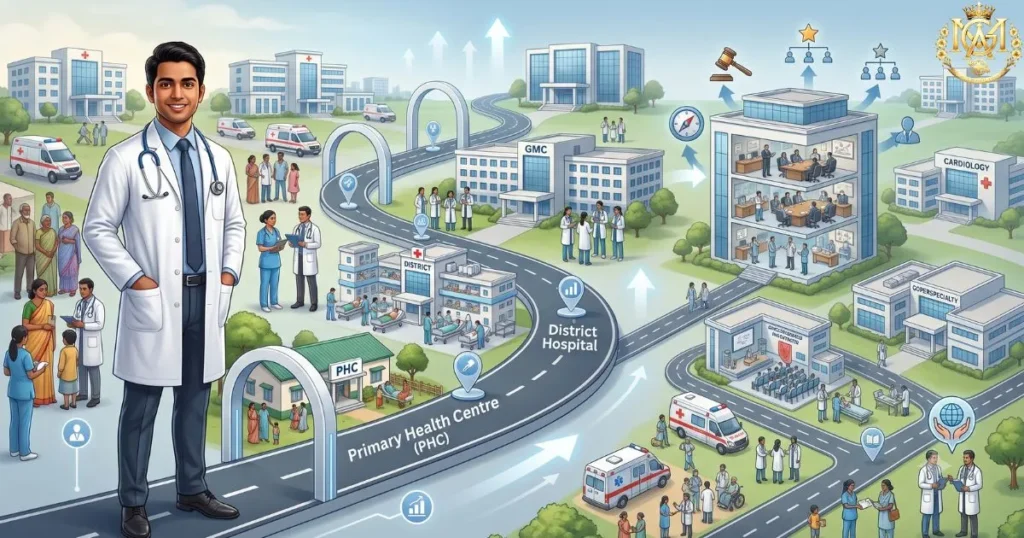
Government Jobs After MBBS in India: Full List & Guide (2026)
Government Jobs After MBBS: Complete Guide to Government Medical Careers in India Completing an MBBS is a significant milestone, but for many graduates, it also marks the beginning of an important career decision. While some doctors prepare for NEET PG, others enter private hospitals or start clinical practice. At the same time, a large number of MBBS graduates actively search for government jobs after MBBS because they are looking for something beyond an attractive salary—they want job security, structured career growth, diverse clinical exposure, and the opportunity to contribute to public healthcare. Government healthcare in India continues to be one of the largest employers of medical professionals. From Primary Health Centres (PHCs) and Community Health Centres (CHCs) to AIIMS, Railways, Armed Forces Medical Services, ESIC hospitals, and Central Health Services, doctors have access to multiple career pathways depending on their interests and long-term goals. These roles not only provide financial stability but also expose doctors to a wide variety of medical cases that strengthen clinical decision-making and professional confidence. However, one common misconception is that every government job follows the same recruitment process or offers identical career opportunities. In reality, each role has different eligibility criteria, selection procedures, responsibilities, and growth prospects. Understanding these differences helps doctors choose a path that aligns with their professional aspirations rather than simply applying for the first available vacancy. This guide explains how MBBS graduates can begin a government medical career, explores the major government job opportunities available in India, and provides practical insights to help doctors build a successful long-term career in public healthcare. Can You Start a Government Medical Career Immediately After MBBS? The short answer is yes. After completing your MBBS degree and compulsory rotating internship, you are eligible to apply for several government medical positions across central and state healthcare services. For many graduates, this becomes an excellent opportunity to gain structured clinical experience while earning a stable income. Before applying, there are a few essential requirements that every MBBS graduate should understand. Complete Your Internship Successfully The compulsory rotating internship is not merely a graduation requirement—it serves as your first exposure to independent patient care under supervision. During this period, doctors gain experience across multiple departments, develop clinical judgment, and become familiar with hospital protocols. Most government recruitment bodies require candidates to have successfully completed their internship before joining service. Obtain Permanent Medical Registration After internship completion, doctors must obtain permanent registration from the National Medical Commission (NMC) or the respective State Medical Council. This registration legally authorizes doctors to practice medicine in India and is mandatory for almost every government medical recruitment process. Without valid registration, applications for Medical Officer positions, UPSC Combined Medical Services (CMS), Armed Forces Medical Services, and many state-level recruitments are generally not accepted. Is NEET PG Required for Government Jobs? One of the biggest concerns among MBBS graduates is whether qualifying for NEET PG is necessary before entering government service. The answer is not always. Many government positions recruit doctors directly after MBBS without requiring postgraduate qualifications. Roles such as Medical Officer, General Duty Medical Officer (GDMO), contractual doctors under the National Health Mission (NHM), and several state health service positions primarily require an MBBS degree, internship completion, and valid registration. Postgraduate qualifications become increasingly important for specialist positions, teaching appointments, and higher administrative roles later in a doctor’s career, but they are not mandatory for many entry-level government jobs. Common Misconceptions About Government Medical Careers Many fresh graduates delay applying for government positions because of misinformation. Understanding the facts can help doctors make more informed career decisions. Common Misconception Reality Government jobs require an MD/MS degree. Many entry-level government roles recruit MBBS graduates directly. NEET PG is compulsory before joining government service. Several Medical Officer and public health positions only require MBBS and registration. Government hospitals provide limited clinical exposure. Government institutions often handle a high patient load, offering extensive hands-on clinical experience. Career growth is slow in government healthcare. Promotions, higher studies, administrative roles, and specialist positions provide multiple growth opportunities over time. Government Medical Career Pathways After MBBS Government healthcare offers multiple entry routes depending on your career interests. Some positions are recruited through national-level competitive examinations, while others are filled by state governments or healthcare institutions. Career Pathway Minimum Eligibility Recruitment Authority Typical Entry Role UPSC Combined Medical Services (CMS) MBBS + Internship + Registration Union Public Service Commission General Duty Medical Officer State Health Services MBBS + Registration State Public Service Commission Medical Officer National Health Mission (NHM) MBBS + Registration State NHM Authorities Medical Officer / Public Health Roles Armed Forces Medical Services (AFMS) MBBS + Registration Armed Forces Medical Services Commissioned Medical Officer AIIMS & Government Medical Colleges MBBS Individual Institutions Junior Resident / Medical Officer Recruitment criteria and vacancies may vary depending on the recruiting authority and official notifications. Career Insight Many MBBS graduates believe they must choose between preparing for postgraduate entrance examinations and starting a government job. In reality, these two goals are not always mutually exclusive. Several doctors gain valuable clinical experience through government service while simultaneously preparing for NEET PG or planning future specialization. Early exposure to diverse patient cases often strengthens both clinical confidence and long-term career planning. What Government Career Opportunities Are Available for MBBS Graduates? Government healthcare in India offers far more opportunities than many doctors initially realise. Beyond traditional Medical Officer roles, MBBS graduates can pursue careers in central government departments, defence services, public health programmes, premier teaching institutions, and specialised healthcare organisations. Choosing the right opportunity depends on your professional interests, preferred work environment, and long-term career goals. Medical Officer in State Health Services Medical Officer positions remain one of the most sought-after government jobs after MBBS. Doctors appointed as Medical Officers work in government hospitals, Primary Health Centres (PHCs), Community Health Centres (CHCs), district hospitals, and various public healthcare institutions. Their responsibilities include outpatient consultations, emergency care, inpatient management, preventive healthcare, and implementation of government health programmes. These roles provide exceptional clinical exposure because