
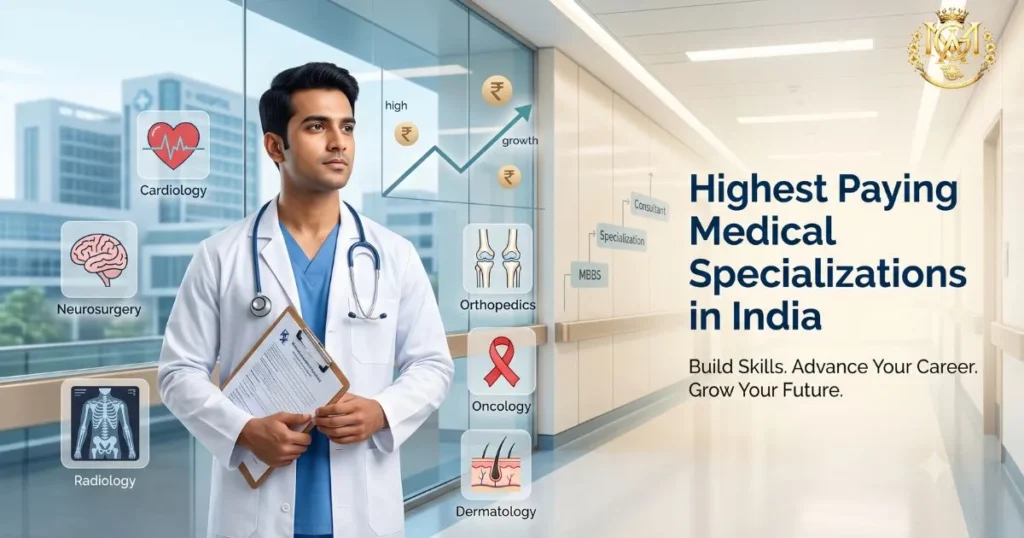
| # Specialization | Typical Annual Salary | Demand | Practice Type |
|---|---|---|---|
| 1Neurosurgery | ₹80L – ₹1Cr+ | Very High | Surgical |
| 2Cardiology | ₹60L – ₹80L+ | Very High | Medical + Procedural |
| 3Plastic & Cosmetic Surgery | ₹50L – ₹80L+ | High | Surgical + Aesthetic |
| 4Radiology | ₹40L – ₹60L+ | Very High | Diagnostic |
| 5Gastroenterology | ₹35L – ₹55L+ | High | Medical + Endoscopy |
| 6Orthopedics | ₹30L – ₹50L+ | Very High | Surgical |
| 7Urology | ₹30L – ₹50L+ | High | Surgical + Robotic |
| 8Oncology | ₹25L – ₹45L+ | Very High | Medical + Radiation |
| 9Dermatology | ₹20L – ₹35L+ | High | OPD + Aesthetic |
| 10Anesthesiology | ₹18L – ₹30L+ | High | Hospital-Based |
Salary figures above are based on publicly available industry reports and general market data as of mid-2026. Actual pay varies by state, institution, experience, and individual negotiation.
Salary is one factor — but the right specialization also depends on your clinical interests, lifestyle, and long-term career goals. See the complete medical specialization after MBBS guide for a full comparison of scope, demand, qualification pathways, and career fit.
Highest Paying Medical Specializations in India (2026 Guide)
Choosing a medical specialization is one of the most significant decisions in a doctor’s career. While passion, clinical interest, and patient care should always remain the primary factors, it’s equally reasonable to understand how different specialties vary in earning potential. After years of medical education, postgraduate training, and clinical practice, many doctors naturally want to know which fields offer stronger financial growth alongside professional satisfaction.
The truth is that there isn’t a single specialty that guarantees a high income. A doctor’s earnings depend on several factors, including clinical expertise, procedural skills, patient demand, reputation, workplace, and years of experience. Specialists who continuously upgrade their knowledge, perform advanced procedures, and build trust with patients often achieve higher earning potential regardless of their branch.
In this guide, we’ll explore the highest paying medical specializations in India, understand what influences a specialist’s income, and discuss how doctors can build a successful and financially rewarding medical career without losing sight of quality patient care.
What Makes Certain Medical Specializations More Profitable?
Not all medical specialties generate the same level of income because every field differs in complexity, patient demand, procedural work, and the expertise required to deliver care. While academic qualifications are essential, long-term earning potential is usually shaped by the value a specialist brings to patient care.
Highly specialized fields often require years of additional training, advanced clinical judgment, and the ability to perform complex procedures. These skills not only improve patient outcomes but also increase professional demand in hospitals, specialty clinics, and private practice.
At the same time, income should never be viewed as the only measure of a successful medical career. Doctors who combine strong clinical knowledge with ethical practice, continuous learning, and patient trust are generally more likely to build sustainable and rewarding careers.
Skills That Increase a Doctor’s Market Value
The medical profession is evolving rapidly, and today’s healthcare organizations look beyond academic degrees. Doctors who consistently develop advanced clinical skills often become more valuable to hospitals, healthcare institutions, and patients alike.
Some of the most valuable professional skills include:
- Strong clinical decision-making and diagnostic reasoning.
- Excellent communication with patients and multidisciplinary teams.
- Procedural and intervention-based expertise.
- Evidence-based clinical practice.
- Leadership and teamwork in complex healthcare settings.
- Adaptability to new medical technologies and treatment guidelines.
These competencies not only improve patient outcomes but also enhance professional credibility and create opportunities for career advancement.
Why Expertise Commands Higher Earnings
One of the biggest reasons certain specialists earn more is the level of expertise they develop over time. Doctors who perform advanced diagnostic or therapeutic procedures require years of structured training, clinical exposure, and continuous education before reaching independent practice.
Patients and healthcare organizations are willing to invest in specialists who consistently deliver accurate diagnoses, successful procedures, and high-quality patient care. As clinical expertise grows, so does professional reputation, referral volume, and opportunities to work in advanced healthcare settings.
Rather than chasing higher-paying specialties alone, doctors should focus on becoming experts in their chosen field. In medicine, long-term professional excellence often creates better financial opportunities than simply selecting a specialty based on income expectations.
Top 10 Highest Paying Medical Specializations in India
While every medical specialty plays a vital role in healthcare, some fields consistently offer higher earning potential because of increasing patient demand, procedural complexity, advanced technology, and years of specialized training. However, actual income varies depending on experience, city, hospital type, private practice, and professional reputation.
Below are some of the highest paying medical specializations in India and why they continue to remain among the most sought-after career paths for doctors.
Cardiology
Cardiology remains one of India’s highest-paying medical specializations due to the rising burden of cardiovascular diseases and the growing demand for advanced cardiac care. Cardiologists diagnose and manage conditions affecting the heart and blood vessels, while many also perform specialized procedures such as angiography, angioplasty, and cardiac interventions.
The specialty combines clinical expertise with procedural skills, making experienced cardiologists highly valued in multispecialty hospitals and cardiac centers. Doctors who pursue advanced fellowship or super-specialty training in cardiology often have excellent opportunities for professional growth, research, and private practice.
Neurosurgery
Neurosurgery is considered one of the most technically demanding medical specialties. Neurosurgeons manage complex disorders involving the brain, spine, and nervous system, including tumors, trauma, vascular diseases, and neurological emergencies.
Because these procedures require exceptional precision, years of specialized training, and advanced surgical expertise, experienced neurosurgeons are among the highest-paid medical professionals. The specialty also offers opportunities to work in tertiary care hospitals, academic institutions, and advanced neurosurgical centers.
Radiology
Radiology has become one of the fastest-growing and highest-paying specialties due to the increasing use of medical imaging in diagnosis and treatment planning. Radiologists play a crucial role in interpreting X-rays, CT scans, MRI, ultrasound, and other imaging studies that guide clinical decision-making across multiple specialties.
With the rapid adoption of advanced imaging technologies and interventional procedures, radiology continues to offer strong career opportunities in hospitals, diagnostic centers, and specialized imaging facilities. Doctors who develop expertise in areas such as Interventional Radiology or advanced imaging techniques often further enhance their professional value and earning potential.
Plastic & Cosmetic Surgery
Plastic and Cosmetic Surgery is one of the most financially rewarding specialties because it combines reconstructive procedures with aesthetic treatments. Plastic surgeons manage congenital abnormalities, trauma reconstruction, burn injuries, hand surgery, and cosmetic enhancements such as rhinoplasty, liposuction, and facial rejuvenation.
The growing demand for aesthetic medicine, minimally invasive cosmetic procedures, and reconstructive surgery has significantly increased opportunities in private hospitals and specialized cosmetic clinics. Surgeons with strong procedural expertise and an established reputation often build successful independent practices over time.
Gastroenterology
Gastroenterologists specialize in diagnosing and treating diseases affecting the digestive system, liver, pancreas, and gastrointestinal tract. The increasing prevalence of lifestyle-related digestive disorders has created strong demand for specialists in this field.
Advanced procedures such as upper GI endoscopy, colonoscopy, ERCP, and therapeutic endoscopic interventions contribute significantly to earning potential. Doctors who develop expertise in interventional gastroenterology often enjoy excellent career opportunities in tertiary hospitals and advanced digestive care centers.
Orthopedics
Orthopedic surgeons treat injuries and disorders involving bones, joints, muscles, ligaments, and the spine. From fracture management and sports injuries to joint replacement surgeries, orthopedics remains one of India’s busiest surgical specialties.
The combination of high surgical volume, increasing road traffic injuries, sports medicine, and an aging population has strengthened the long-term demand for orthopedic specialists. Those specializing in joint replacement, arthroscopy, or spine surgery often experience greater professional growth and earning opportunities.
Urology
Urology focuses on diseases affecting the urinary tract and male reproductive system. Urologists perform a wide range of diagnostic and minimally invasive procedures, including laser surgeries, endourology, robotic surgery, and treatment of kidney stones, prostate disorders, and urinary cancers.
Technological advancements and the increasing adoption of minimally invasive surgical techniques have made urology one of the fastest-growing specialties. The procedural nature of the specialty contributes significantly to its strong earning potential.
Oncology
Cancer care continues to expand rapidly due to the increasing global burden of cancer and advancements in diagnosis and treatment. Oncologists play a vital role in managing patients through chemotherapy, targeted therapy, immunotherapy, radiation planning, and multidisciplinary cancer care.
As oncology requires specialized knowledge, continuous research, and collaboration across multiple departments, experienced oncologists are highly valued in comprehensive cancer centers, academic hospitals, and research institutions.
Dermatology
Dermatology is often recognized for its combination of clinical practice and aesthetic medicine. Dermatologists diagnose and treat conditions affecting the skin, hair, and nails while also offering cosmetic procedures such as laser treatments, chemical peels, botulinum toxin injections, and anti-aging therapies.
The growing awareness of skin health and cosmetic dermatology has expanded career opportunities beyond hospitals into specialized skin clinics and private practice. Dermatologists who combine medical expertise with procedural skills often establish highly successful practices.
Anesthesiology
Although anesthesiologists usually work behind the scenes, they play an essential role in modern healthcare. Their responsibilities include administering anesthesia, monitoring patients during surgery, managing pain, and providing critical support in emergency and intensive care settings.
The increasing number of surgical procedures, critical care services, and pain management interventions has created sustained demand for skilled anesthesiologists. Those with expertise in cardiac anesthesia, neuroanesthesia, pediatric anesthesia, or pain medicine often pursue advanced clinical roles and specialized practice.
Where Do Specialist Doctors Earn the Highest Income?
A doctor’s specialization is only one factor influencing income. The healthcare setting in which they practice can have an equally significant impact on long-term earning potential.
Different practice environments offer varying opportunities for career growth, procedural exposure, research, patient volume, and financial rewards.
Corporate Hospitals
Large corporate hospitals generally provide specialists with access to advanced medical technology, multidisciplinary teams, and complex clinical cases. These institutions often offer structured salary packages, performance incentives, research opportunities, and leadership positions for experienced consultants.
Doctors working in reputed corporate hospitals also benefit from greater patient trust and exposure to high-volume specialty care.
Private Practice
Private practice offers one of the highest long-term income opportunities for specialist doctors. Unlike salaried positions, income depends largely on patient volume, reputation, referral networks, and the range of services offered.
Building a successful private practice takes time and requires consistent clinical outcomes, ethical patient care, and strong community trust. Specialists who develop a loyal patient base often achieve greater financial independence over the course of their careers.
Specialty Clinics
Many doctors choose to establish or join specialty-focused clinics that concentrate on specific areas such as cardiology, dermatology, gastroenterology, fertility, pain management, or aesthetic medicine.
These clinics allow specialists to deliver focused patient care while developing expertise in advanced procedures. As patient demand grows, specialty clinics can become an important source of professional recognition and sustainable income.
Academic Institutions
Medical colleges and teaching hospitals provide opportunities for specialists who enjoy teaching, research, and academic leadership. Although salaries may differ from private-sector practice, academic medicine offers professional stability, opportunities for scientific publications, mentoring future doctors, and participation in clinical research.
Many specialists successfully combine academic appointments with clinical consultation to expand both their professional experience and career opportunities.
International Opportunities
Doctors with recognized postgraduate qualifications, advanced fellowships, research experience, and appropriate licensing may also explore opportunities in international healthcare systems.
Countries experiencing physician shortages often seek specialists with strong clinical expertise, particularly in high-demand fields. However, international practice usually requires additional licensing examinations, regulatory approvals, and compliance with country-specific medical standards.
Perfect. This section is where we move beyond “what pays well” to “why some doctors consistently earn more.” I’ve also naturally integrated the concept of fellowships and advanced training so it aligns with Medical Global Academy’s offerings without becoming promotional.
How Does Experience Influence a Specialist Doctor’s Income?
Many doctors believe that experience alone guarantees a higher income. In reality, experience becomes valuable only when it is combined with clinical expertise, patient trust, and continuous professional development.
During the early years of practice, specialists usually focus on building clinical confidence, improving decision-making skills, and managing a wider variety of cases. As they gain experience, they become more efficient in diagnosis, treatment planning, and performing complex procedures.
However, in private practice, patients generally pay for the quality of care rather than the number of years a doctor has practiced. Similarly, hospitals evaluate specialists based on their clinical outcomes, procedural expertise, patient satisfaction, and contribution to the organization.
Experience certainly opens new opportunities, but long-term earning potential depends on how effectively doctors continue to develop their skills and reputation throughout their careers.
Why Do Some Specialists Earn More Than Others?
While specialization plays an important role, income differences among doctors often arise from factors beyond their medical degree. Specialists who consistently invest in clinical excellence, advanced training, and patient-centered care are more likely to build rewarding careers.
Advanced Clinical Skills
One of the biggest factors influencing a doctor’s earning potential is the ability to perform advanced clinical procedures confidently and safely.
Specialists who develop expertise in minimally invasive procedures, image-guided interventions, robotic surgery, advanced diagnostics, or complex therapeutic techniques often become valuable assets for hospitals and specialty centers.
Continuous skill development also allows doctors to handle more complex cases while improving patient outcomes and professional credibility.
Patient Demand
Demand for a specialist depends on disease prevalence, demographic changes, lifestyle-related disorders, and healthcare accessibility.
For example, increasing cases of cardiovascular disease, diabetes, cancer, musculoskeletal disorders, and chronic kidney disease have created sustained demand for specialists in these fields.
Doctors practicing in specialties with growing patient demand often experience higher consultation volumes and broader career opportunities across hospitals and private practice.
Procedure-Based Practice
Procedure-oriented specialties generally offer greater opportunities for professional growth because they combine clinical consultation with diagnostic or therapeutic interventions.
Examples include:
- Cardiac interventions
- Endoscopy
- Arthroscopy
- Interventional radiology
- Urological procedures
- Cosmetic procedures
- Pain interventions
Procedural expertise not only improves patient care but also expands the range of services a specialist can provide throughout their career.
Technology-Driven Specialties
Modern healthcare is increasingly driven by innovation.
Artificial intelligence, robotic surgery, advanced imaging systems, precision medicine, and digital health technologies are transforming patient care across multiple specialties.
Doctors who stay updated with evolving technologies and integrate evidence-based innovations into their clinical practice often remain more competitive in the healthcare industry.
Reputation and Referrals
Professional reputation remains one of the strongest drivers of long-term success.
Patients often choose specialists based on:
- Clinical outcomes
- Trust
- Communication
- Ethical practice
- Recommendations from other doctors
Similarly, referral networks developed through physicians, hospitals, and multidisciplinary teams contribute significantly to a specialist’s professional growth.
A strong reputation cannot be built overnight—it develops through years of consistent patient care, continuous learning, and professional integrity.
Which Emerging Medical Fields Offer High Income Potential?
Healthcare continues to evolve rapidly, creating demand for specialists with expertise in newer and highly focused areas of medicine. These emerging fields combine advanced technology, specialized clinical skills, and multidisciplinary care, making them promising career options for doctors seeking long-term professional growth.
Interventional Radiology
Interventional Radiology combines diagnostic imaging with minimally invasive procedures to treat a wide range of medical conditions.
Using ultrasound, CT scans, fluoroscopy, or MRI guidance, specialists perform procedures that often reduce surgical risks, shorten hospital stays, and improve patient recovery.
As hospitals increasingly adopt image-guided treatments, the demand for trained interventional radiologists continues to grow.
Fetal Medicine
Fetal Medicine focuses on monitoring and managing the health of the fetus during pregnancy, particularly in high-risk pregnancies.
Specialists use advanced ultrasound techniques, fetal imaging, prenatal diagnosis, and maternal-fetal assessment to identify congenital abnormalities and pregnancy-related complications.
Growing awareness of prenatal care has significantly increased the need for specialists trained in this field.
Pain Medicine
Pain Medicine has emerged as a dedicated specialty for managing acute, chronic, cancer-related, and musculoskeletal pain.
Modern pain specialists utilize multidisciplinary approaches, including medication management, rehabilitation, image-guided procedures, nerve blocks, radiofrequency ablation, and regenerative therapies.
As the burden of chronic pain increases worldwide, this specialty continues to expand rapidly.
Critical Care Medicine
Critical Care specialists manage patients with life-threatening illnesses requiring intensive monitoring and advanced life-support systems.
Their expertise includes ventilator management, organ support, sepsis care, trauma management, and multidisciplinary coordination within intensive care units.
The growing number of critically ill patients and expanding ICU infrastructure have strengthened the long-term demand for critical care physicians.
Aesthetic Medicine
Aesthetic Medicine is one of the fastest-growing areas within healthcare, driven by increasing awareness of cosmetic and minimally invasive treatments.
Doctors in this field perform procedures such as botulinum toxin injections, dermal fillers, laser therapies, chemical peels, and skin rejuvenation treatments.
Continuous technological advancements and growing patient demand have made aesthetic medicine an attractive career pathway for qualified medical professionals.
Emergency Medicine
Emergency Medicine specialists are trained to diagnose and manage patients with acute illnesses, trauma, and life-threatening emergencies.
They work in fast-paced emergency departments where rapid clinical decision-making and multidisciplinary coordination are essential.
With expanding emergency healthcare infrastructure and increasing patient volumes, emergency medicine continues to offer strong career opportunities for doctors who thrive in high-pressure clinical environments.
How Can Doctors Build a High-Earning Medical Career?
A high-income medical career is rarely built by choosing a particular specialty alone. It is the result of continuous learning, advanced clinical expertise, professional reputation, and consistent patient care over many years.
Doctors who invest in improving their knowledge and skills often create better opportunities for career growth than those who rely only on their qualifications. Whether you work in a hospital, academic institution, or private practice, your long-term success depends on the value you bring to your patients and the healthcare system.
Here are some practical ways to strengthen your career and increase your earning potential.
Continuous Clinical Learning
Medicine is constantly evolving with new research, technologies, and treatment guidelines. Staying updated through Continuing Medical Education (CME), workshops, conferences, journals, and evidence-based practice helps doctors deliver better patient care while remaining competitive in their specialty.
Lifelong learning not only improves clinical confidence but also prepares doctors to adopt new procedures and technologies as healthcare continues to advance.
Fellowship & Advanced Training
Postgraduate education is often the beginning of specialization rather than the final step. Many doctors choose Fellowship or PG Diploma programs to gain focused expertise in areas such as Cardiology, Radiology, Critical Care, Emergency Medicine, Fetal Medicine, Pain Management, and Aesthetic Medicine.
These structured training programs provide practical exposure, advanced clinical knowledge, and hands-on experience that help doctors manage more complex cases and broaden their professional opportunities.
At Medical Global Academy (MGA), doctors can pursue Fellowship, PG Diploma, and Certificate Programs designed to strengthen clinical skills, expand specialty knowledge, and support continuous professional development through expert-led, practice-oriented learning.
Evidence-Based Practice
Modern healthcare increasingly emphasizes evidence-based medicine. Doctors who combine clinical experience with current scientific evidence are better equipped to make informed treatment decisions and deliver high-quality patient care.
Developing the habit of reading medical literature, following updated clinical guidelines, and participating in academic discussions strengthens both professional credibility and patient confidence.
Building Professional Credibility
Professional reputation is one of the most valuable long-term assets a doctor can build.
Credibility develops through:
- Consistent clinical outcomes
- Ethical medical practice
- Clear patient communication
- Continuous skill development
- Collaboration with healthcare professionals
- Commitment to lifelong learning
A strong reputation often leads to patient referrals, leadership opportunities, academic recognition, and long-term career growth.
Is Income the Right Way to Compare Medical Specializations?
Salary is undoubtedly an important consideration when planning your medical career, but it should never be the only factor guiding your decision.
A specialty may offer excellent earning potential, yet it may not align with your personality, interests, clinical strengths, or preferred working style. Choosing a field solely for financial reasons can eventually lead to reduced job satisfaction, professional burnout, and a lack of long-term motivation.
Instead of asking,
“Which specialty pays the most?”
consider asking,
- Which specialty keeps me motivated to learn?
- Which patients do I genuinely enjoy treating?
- Which clinical environment suits me best?
- Where can I make the greatest impact as a doctor?
When passion, competence, and continuous learning come together, financial growth often follows naturally.
The most successful doctors are rarely those who simply chose the highest-paying specialty—they are the ones who became exceptionally skilled, earned the trust of their patients, and remained committed to excellence throughout their careers.
Final Thoughts
Choosing a high-paying medical specialization can certainly improve your financial future, but long-term success depends on much more than income alone. Clinical expertise, ethical practice, continuous learning, and patient trust remain the foundation of every successful medical career.
Rather than pursuing a specialty solely because it offers a higher salary, focus on becoming an expert in a field that matches your interests, strengths, and professional aspirations. Doctors who consistently invest in their knowledge, develop advanced clinical skills, and embrace lifelong learning are more likely to build rewarding careers while making a meaningful difference in patients’ lives.
For doctors looking to strengthen their expertise after MBBS or postgraduate training, Medical Global Academy (MGA) offers Fellowship, PG Diploma, and Certificate Programs across multiple medical specialties. These programs are designed to provide practical clinical exposure, expert mentorship, and structured learning, helping healthcare professionals advance their knowledge and confidently progress in today’s evolving medical landscape.
Frequently Asked Questions (FAQs)
1. Which medical specialization has the highest earning potential?
Specialties such as Cardiology, Neurosurgery, Radiology, Plastic Surgery, Gastroenterology, Orthopedics, and Oncology are generally considered among the highest-paying medical specializations. However, a doctor’s actual income depends on experience, procedural expertise, workplace, reputation, and patient demand.
2. What factors influence a specialist doctor’s income?
Income is influenced by multiple factors, including specialization, years of experience, advanced clinical skills, hospital type, private practice, geographic location, patient volume, referrals, and continuous professional development.
3. Can advanced training improve a doctor’s earning capacity?
Yes. Fellowship programs, PG Diplomas, subspecialty training, and certification courses help doctors develop specialized clinical expertise, perform advanced procedures, and expand career opportunities, which may improve long-term earning potential.
4. Do specialist doctors earn more in private practice?
Private practice often provides greater income potential because earnings depend on patient volume, reputation, referral networks, and the range of services offered. However, building a successful private practice requires time, consistent clinical outcomes, and strong patient trust.
5. Which emerging medical specialties are expected to grow?
Fields such as Interventional Radiology, Fetal Medicine, Critical Care, Pain Medicine, Emergency Medicine, and Aesthetic Medicine are experiencing significant growth due to technological advancements, increasing patient demand, and evolving healthcare needs.
Which Post-MBBS Course Format Is Right for You?
Answer three quick questions and we'll match you to the format that fits your goals — Certificate, PG Diploma, or Fellowship.