Medical Global Academy

fellowship after mbbs

Working doctor representing high-salary medical career pathways without NEET-PG
Learning blogs

How to Build a High-Salary Medical Career Without NEET-PG

Quick Answer NEET-PG is one route to specialisation — not the only one. Fellowship programs, university-awarded PG Diplomas, and Certificate courses allow working doctors to build recognised specialty credentials, increase their earning capacity, and move into consultant-track roles without a competitive entrance exam. The key difference: these programs require you to already be a qualified medical graduate, and Fellowships require a minimum of 4 years post-qualification experience. If you have the degree and the experience, NEET-PG is optional — not mandatory — for career advancement. Every year, thousands of MBBS graduates and working doctors look at NEET-PG and calculate the cost: months of full-time preparation, one high-stakes exam, no guarantee of the branch or seat you want, and a 3-year residency that means pausing your career and your income. NEET-PG is a legitimate route. But it is not the only route to a higher salary, a specialty credential, and a consultant-level career. This guide covers the alternatives — specifically, what kind of income and career scope fellowship programs, PG Diplomas, and Certificate courses can realistically open, and how to evaluate them against the NEET-PG pathway for your own situation. If you want to compare salaries across specialties first, read our highest paying doctors in India guide. If you want to understand which course format gives the best ROI, read our highest paying medical courses after MBBS comparison. This guide focuses on one question: how do you build a high-salary medical career if NEET-PG isn’t your path? 3 Alternative pathways compared 1–2 yr Typical completion time No exam No NEET-PG required What this guide covers Why NEET-PG is not the only path to higher income The three non-NEET pathways: fellowship, PG diploma, certificate Which high-salary specialties are accessible without NEET-PG What NEET-PG gives you that alternatives don’t — and vice versa How to choose the right non-NEET pathway for your situation Frequently asked questions Why NEET-PG is not the only path to a higher medical income The assumption that “specialisation = NEET-PG” is worth examining. It is true for certain career goals — if you want an MD or MS degree, a government residency seat, or admission to superspeciality programs like DM or MCh, NEET-PG is the gateway. But the goal most working doctors actually have is simpler: they want to earn more, treat a specific type of patient more effectively, and strengthen their clinical profile. Fellowship programs, PG Diplomas, and Certificates can achieve all three — and often faster, at lower opportunity cost, without pausing clinical income. The trade-off is credential type. A fellowship is not equivalent to an MD — but it is not trying to be. It builds focused clinical depth in a specific subspecialty and signals that depth to employers and patients. In high-demand areas like interventional cardiology, laparoscopic surgery, dermatology, and emergency medicine, fellowship credentials have real market weight. The three non-NEET pathways explained Fellowship programs A fellowship is a structured, specialty-focused training program that typically runs for one year. MGA’s fellowship programs are CPD accredited with international recognition through applicable UK accrediting bodies. They require a minimum of 4 years of post-qualification experience, meaning they are designed for doctors who are already practicing — not fresh graduates. What a fellowship gives you: Deep specialty-specific training, a CPD-accredited credential that strengthens your CV, access to subspecialty clinical knowledge not covered in MBBS training, and positioning for consultant-track roles in the relevant specialty. What it does not give you: An MD or MS degree title. If government promotion or superspeciality admission requires an MD, a fellowship does not substitute for it. Salary impact: Typically strongest over 2–3 years post-completion, as the credential is leveraged in private hospital roles, consultant positions, or private practice. See high-earning fellowship examples below. PG Diploma programs A PG Diploma is a university-awarded academic qualification, typically running for one year. MGA’s PG Diploma programs are awarded by partner universities and carry academic credential weight for CV, consultant career applications, and non-clinical career paths. What a PG diploma gives you: A formal university qualification, structured academic content, an assignment-based assessment, and a credential that works for both clinical and non-clinical advancement. Who it suits best: Doctors building toward consultant career profiles, academic roles, or professional environments where a formal university credential carries more weight than a clinical fellowship certificate. Certificate programs A certificate program runs for 3 to 12 months and delivers focused, skill-level training in a specific clinical area. It is the fastest of the three formats and carries the lowest time and opportunity cost. What a certificate gives you: A practical, focused skill upgrade in one clinical area — enough to noticeably improve how you manage a category of patient and signal competency to employers or patients. Who it suits best: Doctors who need a specific skill added to their practice quickly — a GP adding diabetology competency, a physician adding basic cardiac assessment, or a clinician testing interest in a specialty before committing to a full fellowship. High-salary specialties accessible without NEET-PG Interventional Cardiology One of the highest-earning subspecialties in Indian medicine, with strong demand from both corporate hospital groups and private practice. MGA’s Fellowship in Interventional Cardiology provides CPD-accredited training for doctors with the required clinical background. Salary ceiling for experienced interventional cardiologists in private practice: ₹25–40+ LPA. Aesthetic Medicine & Cosmetology Cosmetic and aesthetic medicine is one of India’s fastest-growing private practice areas. Entry is possible through a Certificate in Aesthetic Medicine for faster skill building, progressing to a Fellowship in Cosmetic Surgery for deeper clinical scope. Private aesthetic clinic owners in metro cities regularly report strong returns. No NEET-PG required for either pathway. Emergency Medicine Emergency medicine demand in Indian hospitals is rising sharply. A Fellowship in Emergency Medicine is a direct route to emergency department consultant roles without NEET-PG. Salary range: ₹10–20 LPA in corporate hospital emergency departments. Dermatology & Skin Care Dermatology scope — both clinical and cosmetic — makes it one of the most sought-after PG branches. For doctors who cannot or do not
best medical courses after MBBS
Learning blogs

Best Medical Courses After MBBS in 2026: Fellowship, PG Diploma, Certificate, Online & CME Guide

What are the best medical courses after MBBS? In short: The best medical courses after MBBS in 2026 fall into five categories — (1) Fellowship programmes, (2) PG Diploma courses, (3) Certificate courses, (4) Online medical courses, and (5) CME (Continuing Medical Education) programmes. Fellowships are currently the fastest-growing option because they don’t require NEET PG and deliver focused, hands-on specialty training. The 5 Best Course Categories After MBBS in 2026 Each format serves a different goal. Below is a quick tour of each, with typical duration and who each suits best. For the full catalog, see Medical Global Academy’s All Courses page. 1. Fellowship Courses (Trending in 2026) Fellowship courses are structured specialty-training programmes typically lasting 6 to 24 months. They combine theory with supervised clinical work and, importantly, most private and university-affiliated fellowships in India do not require NEET PG for entry. This has made them the trending choice for MBBS doctors in 2026. Popular tracks include cardiology, dermatology, emergency medicine, interventional radiology, reproductive medicine, and critical care. Fellowships suit doctors who want depth in a single specialty and hospital-grade clinical exposure. Browse the full range on Medical Global Academy’s Fellowship Courses hub, or read the detailed shortlist in Fellowship Courses After MBBS in India. 2. PG Diploma Courses A PG Diploma is a postgraduate-level programme, usually 1 to 2 years long, that combines academic modules with clinical training. Diplomas exist across a wide range of specialties — ultrasonography, dermatology, family medicine, diabetology, emergency medicine, pediatrics, and more. They’re a strong middle path between short certificates and a full MD/MS. PG diplomas suit MBBS doctors who want a longer, more structured programme with recognised accreditation (UGC / NAAC / CPD depending on institute). Explore the current catalog on the PG Diploma Medical Courses page, and compare formats in Post-MBBS Fellowship vs PG Diploma. 3. Certificate Courses Certificate courses are the shortest formal option — usually 3 to 12 months — and are designed for focused skill acquisition rather than full specialty training. Common examples include certificates in diabetology, ECG interpretation, infection control, echocardiography, and aesthetic medicine. They suit MBBS doctors, general physicians, or specialists who want to add one specific competency to their existing practice quickly. Browse available options on the Certificate Courses page. 4. Online Medical Courses Online medical courses have grown fastest since 2020 and now cover fellowship, diploma, and certificate formats delivered fully online or in hybrid mode. Live and recorded lectures, LMS-based case studies, and clinical attachment at affiliated hospitals let working doctors upskill without leaving their job. Look for programmes with UGC, NAAC A+ or CPD accreditation and a defined clinical component. See available formats on the Online Medical Course Options page, and specifically online medical courses with certificate if formal certification is important to your practice. 5. CME (Continuing Medical Education) CME programmes are short, credit-bearing sessions — from one-day workshops to multi-week modules — used to stay updated and, in many states, to renew medical registration. Formats include conferences, webinars, hands-on workshops, and structured online modules with a credit certificate on completion. CME suits every practising doctor regardless of specialty. It’s not a replacement for a fellowship or diploma, but it complements them: use a fellowship or diploma to build the core specialty, then keep those skills current through structured CME every year. Fellowship vs PG Diploma vs Certificate vs Online vs CME Use the table below as a quick comparison. It’s a starting point — always confirm duration, fee, and accreditation with the specific institute before enrolling. Course Type Duration Eligibility Fee Range (₹) NEET PG? Best Suited For Fellowship 6–24 months MBBS / MD / MS 50k – 2L Not required Hands-on specialty skills PG Diploma 1–2 years MBBS + internship 50k – 2L Not required* Structured specialty training Certificate 3–12 months MBBS or MD/MS 20k – 80k Not required Focused skill top-up Online Course Varies MBBS or higher 20k – 1.5L Not required Working doctors, flexibility CME 1 day – few weeks Any RMP Free – 25k Not required Licence renewal, updates *NEET PG is not required for most private fellowship and diploma programmes. For university-linked MD/DNB/MS routes, NEET PG rules still apply. How to Choose the Right Course After MBBS Three factors matter most when picking a course type: Depth vs speed — a fellowship or PG diploma gives depth (6 months to 2 years). A certificate or CME gives speed (a few weeks to a few months). Format fit — if you’re working full-time, a hybrid/online programme with weekend classes and a defined clinical attachment is often more realistic than a full-time offline diploma. Accreditation & clinical hours — check whether the certificate is issued by a recognised body (UGC / NAAC / CPD) and how many supervised clinical hours are included. This matters more than the course label. If you’re still deciding between paths, the guide on Courses After MBBS in India and Courses After MBBS Without NEET PG walk through each option in detail. Frequently Asked Questions Which course is best after MBBS without NEET PG? Fellowship and PG Diploma programmes offered by private institutes and universities are the most popular routes that do not require NEET PG. Fellowships are typically shorter and more specialty-focused, while PG diplomas offer a longer, more structured curriculum. How long is a fellowship after MBBS? Most post-MBBS fellowships in India run between 6 and 24 months, depending on the specialty and institute. Cardiology, interventional radiology, and reproductive medicine fellowships tend to be longer; dermatology and emergency medicine fellowships are often 12 months. Are online medical courses valid in India? Online medical courses are valid when issued by a recognised accrediting body such as UGC, NAAC-graded universities, or CPD & Training Council–linked institutes, and when the programme includes a defined clinical training component. Always verify the certifying body before enrolling. Can I do both a fellowship and a PG diploma? Yes. Many doctors stack a PG diploma for structured specialty training with a shorter fellowship for a sub-skill (for example, a PG diploma in radiology followed by a fellowship in interventional radiology). Sequence them based

Fellowship in Cardiology in India — eligibility, duration and career scope
Learning blogs

Fellowship in Cardiology in India: Eligibility, Duration, Curriculum, and Career Scope

Are you thinking about specializing in heart care? Chances are, you’ve already searched for a fellowship in cardiology in India — and that’s a smart move. Heart disease is one of India’s biggest health challenges today. General practice alone often falls short when treating complex cardiac patients with real confidence. This guide covers everything you need before you apply. Who qualifies? How long does the course run? What will you actually study? How much time and effort will it take? And what does your career look like once you finish? What Is a Fellowship in Cardiology in India? A fellowship in cardiology in India offers focused, practical training. It helps doctors build real skills to diagnose and manage heart conditions. Unlike a full-time DM in Cardiology, it doesn’t need three years of full-time study. It runs shorter, stays more clinical, and suits doctors who already hold a medical degree and want to go deeper into cardiac care, without pausing their career. Most fellowship programs blend classroom learning with real clinical exposure. You don’t just read about cardiac cases. You see them and manage them under supervision. Who Can Apply for a Fellowship in Cardiology in India? Eligibility rules shift a little from one institute to another, but most programs welcome: MBBS graduates who want strong cardiology skills without a full DM MD or DNB holders in Internal Medicine, Family Medicine, or General Medicine Practicing doctors who want structured, Clinical cardiology training alongside their current work Some programs also take doctors with a few years of clinical experience, even without a postgraduate degree. Always check the exact eligibility rules for the institute you’re looking at. These rules can change based on accreditation and how deep the course goes. Do You Need a Postgraduate Degree First? Not always. Many MBBS doctors join a fellowship right after their degree. You’ll see this often among general practitioners who keep meeting cardiac cases they’d rather treat themselves than send elsewhere. Doctors with an MD in Internal Medicine usually move through the course faster. They already have a stronger base in pharmacology and systemic disease management. How Long Does a Fellowship in Cardiology in India Take? A fellowship saves you real time compared to a full DM in Cardiology. A DM usually takes three years. It needs a full-time academic slot, and most working doctors just can’t take that on. A fellowship in cardiology typically runs between six months and one year. Many programs design their training around practicing doctors. You complete your training through a mix of live sessions, recorded lectures, and scheduled clinical postings. Your practice never has to stop. Programs like the one at Medical Global Academy follow this exact model. They let doctors train while they keep seeing patients. Full-Time vs Part-Time Formats Some institutes run a full-time format with daily clinical postings. This suits doctors who can take a short break from independent practice. Others run a part-time or weekend-heavy format instead. This option works better if you want to keep your clinic running while you train. Before you enroll, ask how the schedule works week to week. This one detail decides how well the course fits your existing commitments. What Does the Curriculum Actually Cover? A good fellowship doesn’t just repeat what you learned in medical school. It goes deeper into the cardiac cases you see in real OPDs every day. Here’s what a solid curriculum usually covers: ECG Interpretation Reading ECGs fast and right is one of the most useful skills a doctor can have. Fellowship training takes you well past basic pattern spotting. You learn to handle tricky and borderline cases too. Acute Coronary Syndrome (ACS) You learn to catch ACS early. You manage it in the critical first hours. And you know exactly when a case needs immediate referral versus stabilization. Hypertension Management Hypertension looks simple, until you face resistant cases, drug interactions, and patients with multiple health issues at once. Fellowships train you to handle these the right way. Heart Failure From diagnosis to long-term care, heart failure needs sharp, careful decisions. Most MBBS or MD programs barely touch this topic. Arrhythmias You learn to read rhythm disorders. When to treat. When to watch. When to refer. This forms a core part of confident cardiac care. Preventive Cardiology Good fellowships also train you in risk checks and prevention steps. This helps you catch problems before they turn into emergencies. The best programs build this curriculum around real case discussions and specialist-led sessions, not just slides. That keeps your learning rooted in real clinical situations. How Much of the Course Is Clinical Training? This is the single most important thing you should check before you enroll. A program packed with recorded lectures but short on clinical postings won’t give you real confidence. Check for a set number of clinical postings. Check for supervised patient interactions and real case discussions. Don’t settle for theory modules you just watch alone. Why This Training Matters Right Now Heart disease numbers in India keep rising every year. And it’s not just older patients anymore. Younger adults now show up with ACS, hypertension, and early heart failure far more often than before. General physicians usually see these patients first. But without focused training, many doctors send hard cases elsewhere, even when they could manage them closer to home. A fellowship in cardiology in India closes exactly this gap. It gives you the confidence to manage cardiac cases yourself, instead of sending every complicated patient elsewhere. The Growing Demand for Cardiac Care in India India has one of the highest rates of heart disease in the world. Lifestyle changes, rising obesity, stress, and genetics all fuel this rise. But the number of trained specialists hasn’t kept pace, especially outside big cities. This creates a real opportunity. Doctors who build focused cardiology skills through a fellowship don’t need to wait years for a DM seat. Career Scope After a Fellowship in Cardiology in India Once you complete the program, your career can move

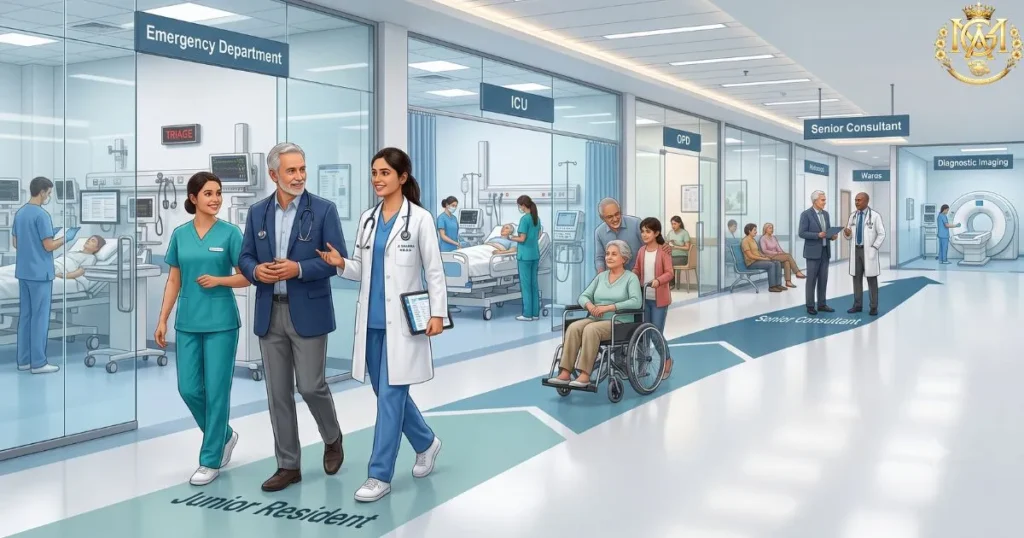
Clinical jobs after MBBS showing a young doctor providing patient care and building a successful clinical medical career in a modern hospital
Learning blogs

Clinical Jobs After MBBS: Build a Successful Clinical Career

Clinical Jobs After MBBS: Complete Guide to Building a Clinical Medical Career Completing an MBBS degree marks the beginning of a doctor’s professional journey, but deciding what comes next is often one of the most challenging career decisions. While some graduates immediately prepare for postgraduate entrance examinations, many doctors choose to enter clinical practice to gain hands-on experience, strengthen their medical knowledge, and build confidence in managing patients independently. Clinical jobs after MBBS offer an opportunity to apply the knowledge gained during medical school in real-world healthcare settings. From emergency departments and intensive care units to outpatient clinics and hospital wards, these roles expose young doctors to a wide range of medical conditions, helping them develop clinical judgment, communication skills, and decision-making abilities that cannot be learned from textbooks alone. For many MBBS graduates, working in a clinical role is more than just finding employment—it is an important step toward becoming a skilled physician. Whether your long-term goal is to pursue postgraduate specialization, establish a private practice, or work in a super-specialty hospital, early clinical experience plays a significant role in shaping your medical career. However, choosing the right clinical role requires understanding the responsibilities, learning opportunities, career progression, and challenges associated with different positions. Every clinical job provides a unique experience, and selecting the one that aligns with your professional goals can have a lasting impact on your future. This guide explains the clinical career opportunities available after MBBS, how these roles contribute to long-term professional growth, the challenges doctors commonly face in clinical practice, and practical ways to build a successful clinical medical career. What Are Clinical Jobs After MBBS and Who Should Choose Them? Clinical jobs are medical roles that involve direct patient care, including diagnosing illnesses, providing treatment, monitoring recovery, and participating in emergency and preventive healthcare. These positions allow MBBS graduates to work closely with patients while continuously developing their clinical knowledge and practical skills. Unlike administrative or non-clinical careers, clinical practice places doctors at the centre of patient management. Every consultation, emergency case, ward round, and follow-up helps improve diagnostic reasoning and builds the confidence required for independent medical practice. For newly qualified doctors, clinical practice serves as the bridge between medical education and professional responsibility. It transforms theoretical understanding into practical decision-making while exposing doctors to real healthcare challenges. Clinical Careers vs Non-Clinical Careers Many MBBS graduates are unsure whether they should continue in direct patient care or explore alternative healthcare careers. Understanding the difference between clinical and non-clinical roles helps doctors choose a path that aligns with their interests and long-term aspirations. Clinical Careers Non-Clinical Careers Direct patient care Limited or no patient interaction Diagnosis and treatment Administration, research, management Hospital and clinical practice Corporate healthcare, policy, education Hands-on procedural experience Operational and strategic responsibilities Strong foundation for specialization Suitable for healthcare management and allied fields While both career paths contribute to the healthcare system, doctors who enjoy patient interaction, medical procedures, emergency care, and clinical decision-making generally find greater satisfaction in clinical practice. Who Should Choose Clinical Practice? A clinical career is often the right choice for doctors who want to remain actively involved in patient care and continue developing their medical expertise throughout their careers. Clinical practice may be suitable if you: Enjoy diagnosing and managing medical conditions. Want regular interaction with patients and healthcare teams. Prefer practical learning over administrative responsibilities. Plan to pursue MD, MS, DNB, Fellowship, or super-specialty training. Aspire to become a consultant or specialist in the future. Want to strengthen your clinical confidence before choosing a specialization. Many experienced specialists believe that early clinical exposure significantly improves a doctor’s ability to manage complex cases later in their career. Why Clinical Experience Matters After MBBS The first few years after MBBS are often the most important for professional development. During this period, doctors learn skills that influence every stage of their future careers. Clinical experience helps doctors: Improve history taking and physical examination skills. Develop evidence-based clinical decision-making. Manage emergency situations confidently. Build communication and patient counselling skills. Learn multidisciplinary teamwork. Understand hospital workflows and healthcare systems. Gain confidence before pursuing higher specialization. These experiences become valuable regardless of whether a doctor later chooses government service, private practice, postgraduate training, or super-specialty education. Benefits of Starting Your Career in Clinical Practice Working in a clinical environment immediately after MBBS provides far more than a salary. It offers continuous learning through direct patient exposure and prepares doctors for future academic and professional challenges. Some key advantages include: Daily exposure to diverse medical cases. Opportunities to learn from experienced consultants. Better understanding of disease presentation and management. Development of procedural and bedside skills. Improved confidence in handling emergencies. Stronger preparation for postgraduate entrance and residency. Clinical practice also helps doctors identify their areas of interest before committing to a long-term specialization. Clinical Careers at a Glance Aspect Clinical Career Primary Focus Diagnosis, treatment, and patient care Work Environment Hospitals, clinics, emergency departments, ICUs Daily Responsibilities Clinical assessment, treatment planning, patient monitoring Core Skills Developed Clinical reasoning, communication, procedural skills Long-Term Opportunities Residency, specialization, consultancy, private practice Which Clinical Jobs Can You Pursue After MBBS? After completing MBBS, doctors can begin their careers in several clinical roles depending on their interests, workplace preferences, and long-term professional goals. Although these positions differ in responsibilities and learning opportunities, they all share one common objective—developing competent doctors through direct patient care. Unlike career paths focused on administration or healthcare management, clinical roles allow doctors to continuously improve their diagnostic abilities, procedural skills, and confidence while working under experienced specialists. The right clinical role depends on the type of experience you want to gain during the early years of your medical career. Junior Resident A Junior Resident position is one of the most common entry points after MBBS. Junior residents work under senior consultants and specialists while managing inpatient wards, outpatient departments, emergency cases, and routine clinical procedures. This role provides broad exposure to multiple specialties and is often considered the strongest

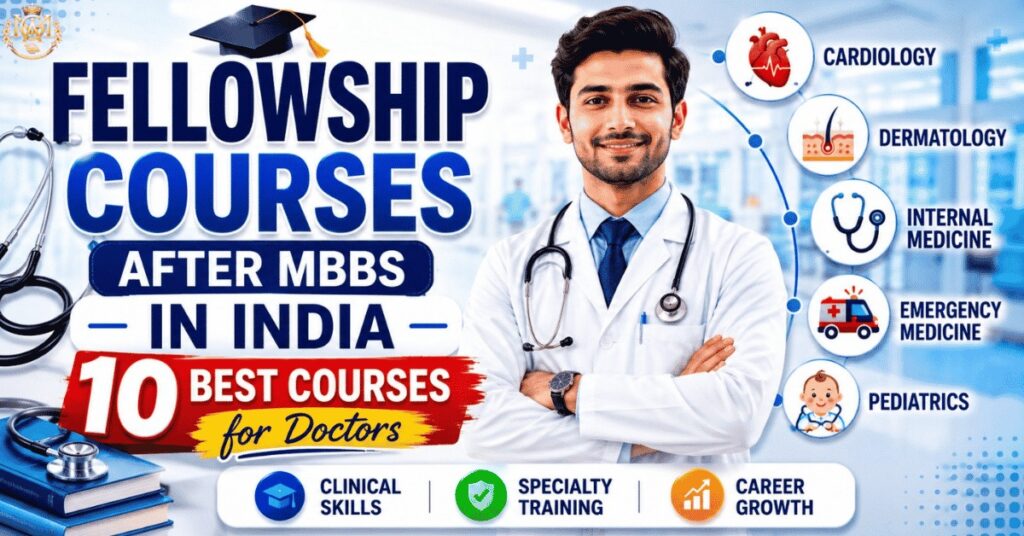
fellowship courses after mbbs in India showing top fellowship programs for doctors including cardiology, Dermatology, Internal Medicine, Emergency Medicine, and Pediatrics
Learning blogs

Best Fellowship Courses After MBBS in India: 10 Fellowship Options Every Doctor Should Explore

 Fellowship courses after MBBS in India have become a popular option for doctors who want to develop specialty-focused knowledge and strengthen their clinical skills. Completing MBBS is a significant milestone in a doctor’s career. After graduation, many doctors face one important question: Which Fellowship Course Is Right for Me After MBBS? Many doctors want to improve their clinical skills, gain specialty-focused knowledge, and continue their professional growth. That is why fellowship courses after MBBS in India have become a popular choice for MBBS graduates. A fellowship offers focused learning in a specific medical specialty and helps doctors develop expertise in areas that align with their interests and career goals. In this guide, we will explore some of the best fellowship courses after MBBS, their scope, key learning outcomes, and important factors to consider before you make a decision. Who Can Benefit From This Guide? This guide is for MBBS graduates who want to explore fellowship programs for specialty-focused learning and clinical skill development. Whether you have an interest in Cardiology, Dermatology, Internal Medicine, Emergency Medicine, Pediatrics, or other specialties, this guide can help you learn about some of the most popular fellowship options available after MBBS. Why Fellowship Courses After MBBS in India Are Becoming Popular Healthcare keeps changing, and doctors need to stay updated with current clinical practices and patient care standards. Many doctors choose post MBBS fellowship courses because these courses help them: Build specialty-focused clinical skills Increase confidence in patient management Learn current medical practices Receive structured specialty training Keep up with healthcare developments Strengthen their professional profile For doctors who want to build expertise in a specific specialty, fellowship programs offer a focused path for learning. Why Structured Fellowship Training Matters Doctors gain valuable experience through daily clinical practice. However, structured fellowship programs offer an organized way to gain specialty-focused learning. A fellowship helps doctors: Learn through a structured curriculum Understand specialty-focused clinical concepts Stay updated with current medical practices Build focused patient management skills Learn from experienced faculty and mentors For doctors who want advanced clinical training after MBBS, structured fellowship programs offer organized and specialty-focused learning opportunities. How We Chose These Fellowship Courses  We selected the fellowship courses in this guide based on: Clinical relevance Strong specialty demand Hands-on learning opportunities Clinical skill development Patient care relevance Long-term career value These factors help identify fellowship programs that remain relevant and useful across different healthcare settings. Which Fellowship Course Fits Your Career Goals? Choosing the right fellowship depends on your interests, the patients you enjoy treating, and your long-term career goals.  If You Enjoy Managing Fellowship Option Heart-related conditions Cardiology Skin disorders Dermatology Broad medical cases Internal Medicine Emergency situations Emergency Medicine Child healthcare Pediatrics Diabetes management Diabetology ICU patients Critical Care Women’s health Obstetrics and Gynaecology Bone and joint disorders Orthopaedics Diagnostic imaging Radiology Best Fellowship Courses After MBBS in India for Doctors 1. Fellowship in Cardiology Cardiovascular diseases continue to be one of the most common healthcare challenges across the world. Because of this, doctors with knowledge of cardiac care continue to play an important role in patient management. What You Learn ECG interpretation Hypertension management Cardiac risk assessment Basics of heart failure Preventive cardiology  Career Relevance Useful for doctors working in: Hospitals Cardiology Clinics Multispecialty Healthcare Centers Preventive Healthcare Programs  Doctors who want to improve their understanding of cardiac care can explore our fellowship in cardiology program. The program helps doctors build focused knowledge in ECG interpretation, hypertension management, cardiac risk assessment, and preventive cardiology. Who Can Consider It?  This fellowship may suit doctors who regularly manage patients with hypertension, cardiovascular risk factors, and heart-related conditions in their daily clinical practice. 2. Fellowship in Dermatology Dermatology is one of the most popular specialties because doctors often see skin-related conditions in clinical practice. What You Learn Acne management Skin pigmentation disorders Psoriasis Fungal infections Common dermatology treatments and procedures Career Relevance Useful for: Dermatology Clinics Hospitals Skin Care Centers Doctors interested in managing common skin conditions can explore our fellowship in dermatology program to build practical knowledge in acne management, pigment disorders, psoriasis, and dermatological care. Who Can Consider It? This fellowship may suit doctors who want to learn more about skin disorders, outpatient dermatology practice, and common dermatological conditions. 3. Fellowship in Internal Medicine Internal Medicine helps doctors improve diagnostic skills and patient management skills across a wide range of medical conditions. What You Learn Diabetes management Hypertension care Infectious disease care Chronic disease management Evidence-based clinical practice Career Relevance Useful in: General medicine departments Hospitals Primary healthcare settings A fellowship in internal medicine can help doctors improve diagnostic skills, manage chronic diseases more effectively, and make evidence-based clinical decisions across a wide range of medical conditions. Who Can Consider It? This fellowship may suit doctors who want to improve their diagnostic skills and manage a wide range of medical conditions. 4. Fellowship in Emergency Medicine Emergency Medicine focuses on quickly assessing and managing patients who need immediate medical care. What You Learn Trauma care Emergency care protocols Medical emergencies Patient stabilization Clinical decision-making skills Career Relevance Useful for: Emergency care departments Trauma care centers Acute care facilities Doctors interested in acute patient care can explore our fellowship in emergency medicine program to strengthen their skills in trauma management, emergency protocols, and patient stabilization. Who Should Consider This?  This fellowship may suit doctors who want to build skills in emergency care, trauma management, and quick clinical decision-making. 5. Fellowship in Pediatrics Pediatrics focuses on the health and medical care of infants, children, and adolescents. What You Learn Childhood illnesses Growth and development Vaccination practices Pediatric emergencies Newborn care  Career Relevance Useful in: Pediatric Departments Children’s Hospitals Community Health Programs A fellowship in pediatrics can help doctors develop expertise in child healthcare, vaccination practices, growth assessment, and pediatric patient management. Who Can Consider This?  This fellowship may suit doctors who enjoy caring for infants, children, and adolescents. 6. Fellowship in Diabetology The rising burden of diabetes has increased the need for doctors

what to do after mbbs career options for doctors in india 2026
Learning blogs

What to Do After MBBS in India? 8 Career Paths, Salary Data & Honest Advice

Quick Answer After MBBS, doctors can pursue MD/MS via NEET PG, fellowship courses, PG diploma programs, certificate courses, government jobs, hospital jobs, private practice, or an international career. The right path depends on your specialty interest, clinical experience, and long-term career goals. Completing MBBS is a significant milestone — but for most doctors, the real question begins right after graduation: what to do after MBBS? Should you prepare for NEET PG? Pursue a fellowship? Start working in a hospital? Apply for government jobs? Or explore specialisation through a PG diploma or certificate course? Every year, thousands of newly qualified MBBS doctors face this exact decision. The challenge is not a lack of options — it is too many options without a clear way to compare them. NEET PG preparation takes 6–12 months with no guarantee of a seat in your preferred specialty. Fellowship and diploma programs offer specialisation but vary widely in quality and recognition. Government jobs offer stability but limited specialty growth. And private practice sounds appealing but requires years of groundwork. This guide covers every major career path after MBBS in India — with real salary data, eligibility requirements, duration, and honest advice on who each path suits best. No vague recommendations. No filler. Just the information you need to make a clear, informed career decision. 8 Career paths covered ₹5L–2Cr Annual salary range 60+ MGA specialisation programs What this guide covers Why doctors feel confused after MBBS All 8 career paths compared — salary, duration, eligibility NEET PG — the traditional route Fellowship courses after MBBS PG diploma programs after MBBS Certificate courses after MBBS Government jobs after MBBS Hospital jobs after MBBS Clinical career after MBBS Non-clinical career after MBBS Private practice after MBBS Career abroad after MBBS MBBS doctor salary — what to expect Specialisation without NEET PG 5 common mistakes doctors make after MBBS Year-wise career planning after MBBS How to choose the right path Why doctors feel confused after MBBS MBBS trains you to practise medicine. It does not train you to choose a career path. That confusion is completely normal — and almost every fresh graduate experiences it. The core problem is that MBBS is a generalist degree. It gives you a broad foundation across anatomy, physiology, pharmacology, surgery, medicine, paediatrics, and obstetrics — but it does not point you toward a specific clinical career. You leave the programme knowing a little about everything and not enough about any one thing to build a specialised practice around it. The questions that follow are predictable. Is NEET PG the only serious option? Can I specialise without spending three more years in full-time education? What actually pays well in the first five years? Should I take a job first and study later, or study first and earn later? How do I choose between 50+ specialties when I have not had deep exposure to any of them? The honest answer is that there is no single best path. Every career option involves trade-offs — in time, money, salary potential, and lifestyle. What matters is choosing the path that matches your specific goals, your financial situation, and how quickly you need to start earning. This guide exists to help you make that decision with clarity rather than guesswork. All 8 career paths after MBBS — compared Before going deeper into each option, here is a side-by-side comparison of every major career path available after MBBS in India. Career path Duration Avg. annual salary Best suited for NEET PG needed? MD / MS (NEET PG) 3 years ₹12–40 lakhs Full specialisation Yes Fellowship courses 1 year ₹8–25 lakhs Working doctors No PG diploma programs 1 year ₹7–20 lakhs University qualification No Certificate courses 3–12 months ₹6–15 lakhs Quick skill upgrade No Government jobs — ₹6–14 lakhs Stability seekers No Hospital jobs — ₹5–12 lakhs Experience builders No Private practice — ₹8–30 lakhs Independence seekers No Career abroad Varies ₹30L–2 crores International goals No (licensing exams) 1. NEET PG — MD/MS after MBBS NEET PG remains the most recognised formal specialisation route after MBBS. Clearing NEET PG opens admission to MD, MS, and DNB programs across government and private medical colleges in India. The appeal is clear — MD/MS is the gold standard of medical specialisation. It gives you a fully recognised specialist qualification, eligibility for super-specialisation later, and access to academic and teaching careers in medicine. No other pathway currently matches the credential weight of an MD or MS degree. Who should choose NEET PG Doctors who want a full, formally recognised specialist qualification Those planning an academic or teaching career in medicine Doctors targeting surgical specialties or super-specialisation (DM/MCh) Salary after MD/MS (2026) Junior consultant (0–3 years post MD): ₹12–25 lakhs/year Senior consultant (4–10 years): ₹25–50 lakhs/year Department head / senior expert (10+ years): ₹40 lakhs–1 crore/year Key challenges NEET PG is extremely competitive. The number of aspirants far exceeds the available government seats, especially in popular specialties like dermatology, radiology, and surgery. Preparation typically requires 6–12 months of intensive study. Even after clearing the exam, three additional years of full-time postgraduate training follow before independent practice begins. For doctors who cannot clear NEET PG or prefer a faster route to specialisation, a complete guide to courses after MBBS without NEET PG covers every available alternative — from fellowship to PG diploma to certificate programs. Doctors already working in clinical roles can also explore the Fellowship in Internal Medicine at MGA as a structured one-year specialisation option. 2. Fellowship courses after MBBS Fellowship programs are one of the fastest-growing career choices for MBBS doctors in India. They offer specialty-focused clinical learning in a structured one-year format without requiring NEET PG qualification. At Medical Global Academy, fellowships are CPD accredited with international recognition through applicable UK accrediting bodies. Classes run in the evening after OPD hours, allowing working doctors to continue earning while they learn. Assessment includes approximately 100-page assignments during the academic year where applicable, and recorded lectures are available for flexible review. Who should

Scroll to Top