
Quick Answer
After MBBS, doctors can pursue MD/MS via NEET PG, fellowship courses, PG diploma programs, certificate courses, government jobs, hospital jobs, private practice, or an international career. The right path depends on your specialty interest, clinical experience, and long-term career goals.
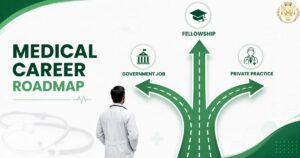
Completing MBBS is a significant milestone — but for most doctors, the real question begins right after graduation: what to do after MBBS?
Should you prepare for NEET PG? Pursue a fellowship? Start working in a hospital? Apply for government jobs? Or explore specialisation through a PG diploma or certificate course?
Every year, thousands of newly qualified MBBS doctors face this exact decision. The challenge is not a lack of options — it is too many options without a clear way to compare them. NEET PG preparation takes 6–12 months with no guarantee of a seat in your preferred specialty. Fellowship and diploma programs offer specialisation but vary widely in quality and recognition. Government jobs offer stability but limited specialty growth. And private practice sounds appealing but requires years of groundwork.
This guide covers every major career path after MBBS in India — with real salary data, eligibility requirements, duration, and honest advice on who each path suits best. No vague recommendations. No filler. Just the information you need to make a clear, informed career decision.
What this guide covers
- Why doctors feel confused after MBBS
- All 8 career paths compared — salary, duration, eligibility
- NEET PG — the traditional route
- Fellowship courses after MBBS
- PG diploma programs after MBBS
- Certificate courses after MBBS
- Government jobs after MBBS
- Hospital jobs after MBBS
- Clinical career after MBBS
- Non-clinical career after MBBS
- Private practice after MBBS
- Career abroad after MBBS
- MBBS doctor salary — what to expect
- Specialisation without NEET PG
- 5 common mistakes doctors make after MBBS
- Year-wise career planning after MBBS
- How to choose the right path
Why doctors feel confused after MBBS
MBBS trains you to practise medicine. It does not train you to choose a career path. That confusion is completely normal — and almost every fresh graduate experiences it.
The core problem is that MBBS is a generalist degree. It gives you a broad foundation across anatomy, physiology, pharmacology, surgery, medicine, paediatrics, and obstetrics — but it does not point you toward a specific clinical career. You leave the programme knowing a little about everything and not enough about any one thing to build a specialised practice around it.
The questions that follow are predictable. Is NEET PG the only serious option? Can I specialise without spending three more years in full-time education? What actually pays well in the first five years? Should I take a job first and study later, or study first and earn later? How do I choose between 50+ specialties when I have not had deep exposure to any of them?
The honest answer is that there is no single best path. Every career option involves trade-offs — in time, money, salary potential, and lifestyle. What matters is choosing the path that matches your specific goals, your financial situation, and how quickly you need to start earning.
This guide exists to help you make that decision with clarity rather than guesswork.
All 8 career paths after MBBS — compared
Before going deeper into each option, here is a side-by-side comparison of every major career path available after MBBS in India.
| Career path | Duration | Avg. annual salary | Best suited for | NEET PG needed? |
|---|---|---|---|---|
| MD / MS (NEET PG) | 3 years | ₹12–40 lakhs | Full specialisation | Yes |
| Fellowship courses | 1 year | ₹8–25 lakhs | Working doctors | No |
| PG diploma programs | 1 year | ₹7–20 lakhs | University qualification | No |
| Certificate courses | 3–12 months | ₹6–15 lakhs | Quick skill upgrade | No |
| Government jobs | — | ₹6–14 lakhs | Stability seekers | No |
| Hospital jobs | — | ₹5–12 lakhs | Experience builders | No |
| Private practice | — | ₹8–30 lakhs | Independence seekers | No |
| Career abroad | Varies | ₹30L–2 crores | International goals | No (licensing exams) |
1. NEET PG — MD/MS after MBBS
NEET PG remains the most recognised formal specialisation route after MBBS. Clearing NEET PG opens admission to MD, MS, and DNB programs across government and private medical colleges in India.
The appeal is clear — MD/MS is the gold standard of medical specialisation. It gives you a fully recognised specialist qualification, eligibility for super-specialisation later, and access to academic and teaching careers in medicine. No other pathway currently matches the credential weight of an MD or MS degree.
Who should choose NEET PG
- Doctors who want a full, formally recognised specialist qualification
- Those planning an academic or teaching career in medicine
- Doctors targeting surgical specialties or super-specialisation (DM/MCh)
Salary after MD/MS (2026)
- Junior consultant (0–3 years post MD): ₹12–25 lakhs/year
- Senior consultant (4–10 years): ₹25–50 lakhs/year
- Department head / senior expert (10+ years): ₹40 lakhs–1 crore/year
Key challenges
NEET PG is extremely competitive. The number of aspirants far exceeds the available government seats, especially in popular specialties like dermatology, radiology, and surgery. Preparation typically requires 6–12 months of intensive study. Even after clearing the exam, three additional years of full-time postgraduate training follow before independent practice begins.
For doctors who cannot clear NEET PG or prefer a faster route to specialisation, a complete guide to courses after MBBS without NEET PG covers every available alternative — from fellowship to PG diploma to certificate programs. Doctors already working in clinical roles can also explore the Fellowship in Internal Medicine at MGA as a structured one-year specialisation option.
2. Fellowship courses after MBBS
Fellowship programs are one of the fastest-growing career choices for MBBS doctors in India. They offer specialty-focused clinical learning in a structured one-year format without requiring NEET PG qualification.
At Medical Global Academy, fellowships are CPD accredited with international recognition through applicable UK accrediting bodies. Classes run in the evening after OPD hours, allowing working doctors to continue earning while they learn. Assessment includes approximately 100-page assignments during the academic year where applicable, and recorded lectures are available for flexible review.
Who should choose fellowship
- Doctors already working who want to specialise without leaving their job
- MBBS graduates with a minimum of 4 years of clinical experience
- Doctors with a clear specialty interest who want focused clinical training
Before choosing between fellowship and other formats, it helps to read a detailed comparison of fellowship vs PG diploma after MBBS — covering credentials, career outcomes, and which format suits different career goals. If you are still deciding on a specialty, our guide on the best specialization after MBBS will help you identify the right clinical area.
Popular fellowship specialties at MGA
Fellowship in Dermatology
Fellowship in Emergency Medicine
Fellowship in Oncology
Fellowship in Critical Care
Fellowship in Internal Medicine
Doctors interested in emergency care can explore the Fellowship in Emergency Medicine at MGA. For those choosing cardiology, the Fellowship in Clinical Cardiology provides structured training in cardiovascular disease management.
3. PG diploma programs after MBBS
PG diploma programs offer structured, university-awarded qualifications in a specific medical discipline. Unlike fellowships which are CPD accredited, PG diplomas carry a university credential — making them particularly valuable for doctors seeking formal academic recognition alongside clinical skill development.
At MGA, PG diploma programs are awarded by recognised partner universities including Sunrise University, OM Global University, Glocal University, Himalayan University, Mind Power University, and IEC University.
Who should choose PG diploma
- MBBS graduates who want a formal university qualification in a specialty
- Doctors looking to strengthen their CV for consultant or non-clinical roles
- Medical professionals who want structured subject knowledge with academic credentialing
For doctors specifically considering radiology or imaging, a detailed breakdown of the PG diploma in ultrasonography guide covers eligibility, curriculum, career scope, and how it compares with other formats.
Popular PG diploma programs at MGA
PG Diploma in Dermatology
PG Diploma in Emergency Medicine
PG Diploma in Critical Care
PG Diploma in Ultrasonography
Doctors entering radiology and imaging can explore the PG Diploma in Ultrasonography — a structured university-awarded program for eligible medical graduates.
4. Certificate courses after MBBS
Certificate programs are the shortest and most flexible route to skill development after MBBS. They focus on a specific clinical skill or sub-specialty area and typically run for 3 to 12 months — allowing eligible doctors to upskill without pausing their career or practice.
Certificate courses are not designed to replace fellowships or PG diplomas. They serve a different purpose — focused skill building in one area, quickly. Many doctors use them as a first step before committing to a longer fellowship in the same specialty.
Who should choose certificate courses
- Doctors who want to add a specific clinical skill to their practice quickly
- Those who want to test interest in a specialty before committing to a full fellowship
- Working doctors with limited time for longer programs
For a ranked overview of which programs deliver the strongest career value this year, the guide to best medical courses after MBBS 2026 compares fellowship, diploma, and certificate options across specialties.
Popular certificate programs at MGA
Certificate in Dermatology
Certificate in Emergency Medicine
Certificate in Internal Medicine
Certificate in Critical Care
Doctors targeting emergency medicine roles can explore the Certificate in Emergency Medicine — a flexible, evening-based program for working medical professionals.
5. Government jobs after MBBS
Government healthcare services attract a large number of MBBS graduates every year because of job stability, structured pay scales, pension benefits, and long-term career progression. State health services, central government departments, and armed forces medical services all recruit MBBS doctors directly — without requiring postgraduate qualifications.
Common government roles for MBBS doctors
- Medical Officer — State Health Services (the most common entry-level government role)
- ESIC Medical Officer — Employee State Insurance hospitals and dispensaries
- Railway Medical Services — Indian Railways health services network
- Armed Forces Medical Services — Army, Navy, Air Force medical corps
- Public Health Programs — district and block-level public health positions
Government doctor salary in India (2026)
- AIIMS Junior Resident: ₹67,700 – ₹85,000/month
- State Government Medical Officer: ₹50,000 – ₹90,000/month
- Army Medical Officer: ₹56,100 – ₹1,77,500/month (plus allowances)
For a complete breakdown of eligibility, application process, and role-wise salary data, read our guide on government jobs after MBBS. Doctors specifically targeting medical officer roles can find detailed requirements in our guide to medical officer jobs after MBBS.
Government doctors looking to strengthen clinical skills alongside their service can explore the Certificate in Family Medicine or the Certificate in Internal Medicine at MGA — both designed for working doctors with flexible evening-based learning.
6. Hospital jobs after MBBS
Many MBBS graduates start their careers in hospital-based roles to build clinical confidence and gain direct patient management experience. These positions provide valuable exposure to a wide range of conditions — from routine OPD cases to acute emergencies — before a doctor commits to a specific specialisation path.
Common hospital roles for MBBS doctors
- Medical Officer — general or department-specific
- Junior Resident — rotating through departments
- Duty Doctor — 24-hour shift-based coverage
- Emergency Physician — casualty and trauma departments
Hospital job salary for MBBS doctors (2026)
- Fresher (0–2 years): ₹40,000 – ₹80,000/month
- Mid-level (3–6 years): ₹70,000 – ₹1,20,000/month
- Senior medical officer (6+ years): ₹1,00,000 – ₹1,60,000/month
For a full breakdown of hospital roles and salary ranges, see our guide to jobs after MBBS and salary. Doctors comparing specific roles can also refer to our ranked overview of best jobs after MBBS in India.
Hospital doctors working in ICU or high-dependency units can upgrade their clinical knowledge with the Certificate in Critical Care. For deeper specialty training, the Fellowship in Critical Care provides a comprehensive one-year program.
7. Clinical career after MBBS
Clinical careers involve direct patient care — OPD practice, hospital jobs, specialty clinics, emergency departments, ICUs, and surgical settings. This is the path most MBBS graduates initially envision when they enter medical school.
Building a strong clinical career requires more than just an MBBS degree. Hospitals and patients increasingly expect doctors to have demonstrable expertise in a specific clinical area. That is why the majority of clinically active doctors eventually pursue additional qualifications — whether through NEET PG, fellowship, or certificate programs — to deepen their clinical competence.
For a detailed breakdown of clinical roles, salary ranges, and how to build a clinical career from the ground up, read our guide on clinical career after MBBS. Doctors in clinical settings targeting emergency medicine can explore the Certificate in Emergency Medicine at MGA.
8. Non-clinical career after MBBS
Non-clinical careers use a medical degree in settings outside direct patient care. Not every MBBS doctor wants to spend their career in a hospital or clinic — and the medical degree opens doors to several professional fields that value clinical knowledge without requiring clinical practice.
Common non-clinical career paths include healthcare management and hospital administration, pharmaceutical and medtech industry roles, medical writing and health communication, clinical research and academic publishing, public health policy and programme management, health insurance and medical auditing, and medical education and faculty development.
For a full overview of non-clinical roles available to MBBS graduates, including salary expectations and qualification pathways, see our guide on non-clinical jobs after MBBS. Doctors considering healthcare management can explore the Fellowship in Hospital Management at MGA.
9. Private practice after MBBS
Some doctors choose to build their own clinical practice rather than working for a hospital or government service. Private practice offers professional independence and strong long-term income potential — but it requires patience, clinical reputation, and often a specialised skill set to attract a consistent patient base.
What private practice requires
- Strong clinical competence in your chosen area — patients need a reason to choose your clinic
- Clear communication skills and patient trust — repeat patients are the foundation of private practice
- Professional reputation built over 3–5 years — this cannot be rushed
- Financial investment in clinic setup, equipment, and running costs
- Continuous learning and skill development to stay current
Many doctors who build successful private practices pursue a fellowship or certificate course to develop a focused clinical expertise — in dermatology, cardiology, diabetology, or family medicine — that differentiates their practice from general practitioners in the same area.
10. Career abroad after MBBS
International medical careers are increasingly considered by Indian MBBS graduates, particularly in the UK, USA, Canada, Australia, and the Middle East. Each country has its own licensing pathway, language requirements, and credential verification process.
Key international pathways
- USA: USMLE (Steps 1, 2, 3) → residency match → licence. Preparation typically takes 1–2 years. Competition for residency spots is intense.
- UK: PLAB exam → foundation training → licence. Relatively faster pathway compared to the USA.
- Australia: AMC exam → internship → registration. Requires clinical skills demonstration.
- Middle East (UAE, Saudi Arabia): Licensing through health authority (DHA, DOH, SCFHS). Indian MBBS degree generally accepted with experience verification.
Salary potential abroad (2026 equivalent in INR)
- UK NHS Doctor: ₹40–90 lakhs/year
- USA (after USMLE + residency): ₹1–2 crores/year
- Middle East (UAE, Saudi Arabia): ₹30–80 lakhs/year
- Australia: ₹60 lakhs–1.2 crores/year
International careers typically require 2–5 years of preparation. Many doctors combine their licensing preparation with a fellowship or certificate course to strengthen their clinical CV for international applications.
MBBS doctor salary in India — what to realistically expect
Salary after MBBS varies significantly depending on the career path, specialty, sector, and city. This table gives you a realistic picture of what each career stage pays in 2026.
| Career stage | Annual salary | Sector |
|---|---|---|
| Fresh MBBS graduate | ₹4.8–9.6 lakhs | Private hospital |
| Government Medical Officer | ₹6–10.8 lakhs | State government |
| After fellowship (1 year) | ₹8–25 lakhs | Private / corporate |
| After PG diploma (1 year) | ₹7–20 lakhs | Private / consultant |
| After MD/MS (3 years) | ₹12–40 lakhs | Specialist / government |
| Career abroad | ₹30L–2 crores | International |
For a full specialty-wise salary breakdown, read our guide to MBBS doctor salary in India. Doctors looking to accelerate salary growth through specialisation can explore the Fellowship in Internal Medicine at MGA.
Specialisation after MBBS without NEET PG
A significant and growing number of MBBS doctors choose to specialise without pursuing NEET PG. Fellowship programs, PG diplomas, and certificate courses all provide structured specialisation pathways — without competitive entrance exams, without leaving your current job, and without the 3-year time commitment of an MD/MS program.
Our complete guide to courses after MBBS without NEET PG covers every available option with eligibility details, duration, and career outcomes.
Specialty-specific guides
- Cardiology courses after MBBS — types, duration, eligibility, and career scope in India
- Gynecology courses after MBBS — fellowship, diploma, and certificate options in women’s health
Doctors considering dermatology can start with the Certificate in Dermatology. For cardiology, the Fellowship in Clinical Cardiology offers structured one-year training. Doctors in women’s health can explore the Fellowship in Cosmetic Gynecology at MGA.

5 common mistakes doctors make when choosing a career after MBBS
1. Following the crowd instead of following their goals. Many doctors pursue NEET PG because everyone around them is doing it — without asking whether a specialist MD/MS is actually what they want. Some doctors are better suited to fellowship-based specialisation, private practice, or non-clinical careers. The right question is not “what is everyone doing?” but “what do I actually want my work life to look like in five years?”
2. Waiting too long to start working. Some graduates spend 2–3 years preparing for NEET PG without attempting or clearing the exam, losing both time and income. Taking a hospital job or government position while preparing — or pursuing a certificate or fellowship alongside clinical work — keeps your clinical skills sharp and your career moving forward.
3. Choosing a specialty based only on salary. High-paying specialties like cardiology and radiology are competitive for a reason. But salary alone does not predict career satisfaction. A doctor who dislikes their specialty will burn out regardless of how much they earn. Choose based on genuine clinical interest first, then optimise for income within that area.
4. Not considering the time-to-earning ratio. MD/MS takes 3 years of study with minimal earning. A fellowship takes 1 year while you continue earning. A certificate course takes 3–12 months. The fastest route to higher income is not always the one with the highest eventual salary — it is the one that gets you earning at a higher level soonest.
5. Ignoring the value of structured credentials. Some doctors try to self-learn specialties through YouTube lectures and conference attendance. While informal learning has its place, it does not give you a verifiable credential that employers and patients can evaluate. Formal programs — fellowship, diploma, or certificate — carry professional weight that self-learning does not.
Year-wise career planning after MBBS
This is a practical timeline for doctors who want to make the most of their first three years after completing MBBS and internship.
| Year | What to focus on | Actions |
|---|---|---|
| Year 1 | Build clinical confidence + choose direction | Take a hospital job or government post. Identify your specialty interest. Start a certificate course in that area if you are clear on the specialty. |
| Year 2 | Specialise while working | Enroll in a fellowship or PG diploma in your chosen specialty. Continue working. Build patient relationships and clinical reputation. |
| Year 3 | Apply your specialisation | Move into a specialty role or start building a specialised private practice. Your fellowship or diploma credential opens doors that an MBBS alone cannot. |
This timeline is not prescriptive — it is a framework. Some doctors move faster, some slower. The key principle is: do not stay still. Clinical stagnation in the first three years after MBBS is the single biggest career risk for most doctors.
How to choose the right path after MBBS
The right choice depends on four factors — your specialty interest, your financial situation, your available timeline, and how much risk you are comfortable with. Use this as a quick decision guide.
| Your goal | Best path |
|---|---|
| Full specialist qualification | MD/MS via NEET PG |
| Specialty learning while working | Fellowship at MGA |
| University qualification in a specialty | PG diploma at MGA |
| Quick, focused skill upgrade | Certificate course at MGA |
| Job security and stability | Government job + skill course |
| Clinical experience first | Hospital job → fellowship |
| Professional independence | Private practice + certificate or fellowship |
| International career | Licensing pathway + MGA fellowship |
Explore MGA fellowship, PG diploma, and certificate programs
Evening classes after OPD hours · CPD accredited · Designed for working doctors
Related guides from this career cluster
Frequently asked questions
What is the best option after MBBS?
There is no single best option. MD/MS via NEET PG is best for full specialisation. Fellowship courses are best for doctors who want specialty learning while working. PG diplomas and certificate courses suit doctors who want structured qualifications in a shorter time. Your career goal should decide the path.
Can I do a fellowship after MBBS without NEET PG?
Yes. Fellowship programs at MGA do not require NEET PG. Eligibility is based on your medical degree and minimum clinical experience. Fellowship programs require a minimum of 4 years of clinical experience after MBBS.
How much does an MBBS doctor earn in India in 2026?
A fresh MBBS graduate earns ₹40,000 – ₹80,000 per month depending on city, hospital type, and sector. With additional qualifications such as a fellowship or PG diploma, earnings typically increase to ₹8–25 lakhs per year within 1–2 years.
Which fellowship course is best after MBBS?
Cardiology, Dermatology, Emergency Medicine, Critical Care, and Internal Medicine are among the most sought-after fellowship specialties. The best choice depends on your clinical interest, your existing patient base, and the specialty’s demand in your area of practice.
Is NEET PG compulsory after MBBS?
No. NEET PG is one option among many. Doctors can choose fellowship programs, PG diploma courses, certificate courses, hospital jobs, government medical jobs, or private practice without taking NEET PG.
What are the career options after MBBS without NEET PG?
Without NEET PG, doctors can pursue fellowship courses, PG diploma programs, certificate courses, government jobs, hospital jobs, and private practice. MGA offers over 60 programs across all three formats for eligible medical graduates.
What is the difference between fellowship and PG diploma after MBBS?
Fellowship programs at MGA are CPD accredited with international recognition through applicable UK accrediting bodies. They focus on clinical skill development and require a minimum of 4 years of experience. PG diploma programs are university-awarded qualifications from recognised partner universities and focus on structured academic learning alongside clinical knowledge. Both are one year in duration.
Can BAMS, BDS, or BHMS graduates pursue fellowship or certificate courses?
MGA programs are open to eligible medical graduates including MBBS, BDS, BAMS, BHMS, BUMS, and MDS depending on the specific program. Eligibility criteria vary by course — check the individual course page for precise requirements.
How long does it take to start earning well after MBBS?
With a hospital job immediately after internship, you start earning ₹40,000–80,000/month from day one. With a certificate or fellowship completed within 1 year while working, your earning potential increases to ₹8–25 lakhs/year. With MD/MS, you earn significantly only after 4+ years (3 years study + 1 year initial practice).
Can I do a fellowship or certificate course while working full-time?
Yes. MGA programs are specifically designed for working doctors. Classes run in the evening after OPD hours. Recorded lectures are available for sessions you cannot attend live. You do not need to pause your career to complete the program.
Medical Global Academy — Editorial Team
This guide is reviewed and updated regularly by MGA’s academic team. All program details reflect current eligibility criteria, accreditation, and course structures. Last reviewed: August 2026.