
One of the important areas of advanced medical education for doctors interested in obstetrics and maternal-fetal care is a fetal medicine course. It focuses on prenatal care, fetal diagnosis, and maternal-fetal health, helping doctors develop a deeper understanding of high-risk pregnancies and fetal conditions. For physicians looking to expand their knowledge in this specialised area, the right programme can support professional development, academic interests, and long-term career planning.
In this blog, you will learn what fetal medicine involves, the key areas covered, its benefits, eligibility requirements, programme structure, career opportunities, and commonly asked questions.
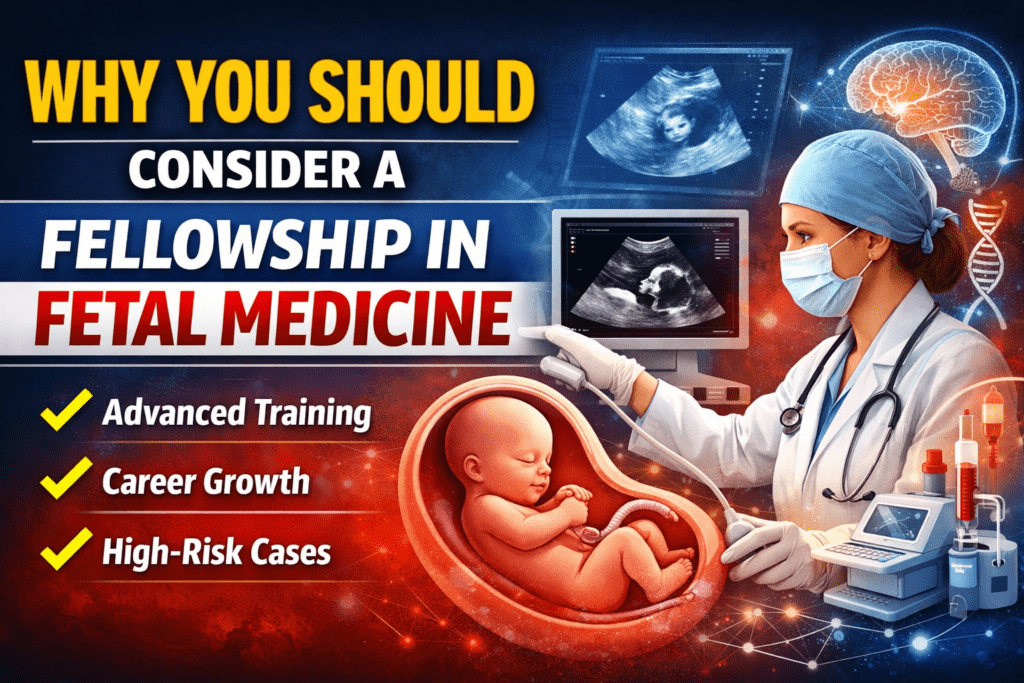
What Is Fetal Medicine?
Fetal medicine is a specialised field concerned with prenatal diagnosis, fetal health, and the management of pregnancies where the mother or fetus may require additional medical attention.
A structured fetal medicine course may cover areas such as:
- Prenatal diagnosis and fetal screening – identifying fetal abnormalities and assessing potential genetic or developmental conditions during pregnancy.
- High risk pregnancy management – understanding maternal and fetal factors that can make pregnancy more complex.
- Fetal therapy and interventions – studying selected medical, surgical, and non-surgical approaches used in appropriate fetal conditions.
- Fetal ultrasound and imaging – understanding advanced imaging techniques used to assess fetal development and wellbeing.
- Genetic counseling in pregnancy – understanding how inherited conditions and screening findings are discussed with expectant parents.
- Maternal-fetal health assessment and multidisciplinary care.
These areas help doctors understand how fetal conditions are identified and managed alongside maternal health during pregnancy.
Major Advantages of Studying Fetal Medicine
There are several reasons why doctors may consider specialised education in this field.
1. Develop Specialised Clinical Knowledge
A structured programme can help doctors strengthen their understanding of fetal ultrasound, prenatal screening, fetal imaging, and the assessment of complex pregnancies. Knowledge of these areas can support more informed clinical evaluation and referral decisions.
2. Better Understanding of Patient Care
Early identification of fetal abnormalities and appropriate assessment of maternal conditions can contribute to better-informed pregnancy management. Understanding high risk pregnancy management is particularly important when maternal or fetal factors require specialist evaluation.
3. Research and Academic Opportunities
Fetal medicine continues to develop alongside advances in prenatal diagnosis, imaging, genetics, and fetal therapy. Doctors interested in research may explore topics such as fetal screening, fetal imaging, genetic conditions, and emerging approaches to fetal interventions.
4. Career Development
Specialised knowledge may support career development in hospitals, fetal medicine centres, academic institutions, and related areas of maternal-fetal healthcare. Doctors may explore roles connected with prenatal assessment, high-risk pregnancy services, research, or teaching, depending on their qualifications and experience.
5. Keeping Up With Advances in the Field
Technologies such as advanced fetal ultrasound, fetal echocardiography, improved prenatal screening, and newer approaches to fetal therapy continue to influence the field. Continuing education can help doctors stay familiar with developments relevant to contemporary fetal medicine.
6. Professional Mentorship and Networking
Specialised medical education can provide opportunities to interact with experienced faculty and other doctors with similar interests. Such professional connections may support academic discussions, research collaboration, and career development.
Fetal Medicine Eligibility
Eligibility varies between programmes and institutions. Depending on the programme structure, applicants may typically require:
- MBBS or an equivalent recognised medical qualification.
- Relevant postgraduate qualification or experience where specified by the programme.
- Interest or prior exposure to obstetrics, gynaecology, ultrasound, or maternal-fetal medicine.
Some programmes may prefer candidates with previous experience in ultrasound or high-risk pregnancy care. Doctors should always review the specific eligibility requirements before applying.
Fetal Medicine Course Length and Structure
The duration and structure vary according to the institution and level of study. Programmes may combine theoretical learning with case discussions, academic sessions, research activities, and subject-specific learning.
Common areas may include:
- Prenatal diagnosis and screening.
- Fetal ultrasound and fetal imaging.
- Fetal echocardiography.
- High risk pregnancy assessment.
- Genetic counseling in pregnancy.
- Fetal therapy and selected fetal interventions.
- Research and academic activities.
The structure should be evaluated based on the curriculum, faculty, duration, eligibility, and overall learning objectives.
Benefits of Specialised Fetal Medicine Education
Doctors may gain several professional benefits from specialised education in fetal medicine:
- Better understanding of prenatal diagnosis.
- Knowledge of fetal screening and imaging.
- Greater familiarity with fetal abnormalities.
- Understanding of maternal-fetal health.
- Exposure to developments in fetal therapy and interventions.
- Broader awareness of high-risk pregnancy management.
- Potential research and academic opportunities.
The actual outcomes depend on the programme, the doctor’s existing qualifications, and how the acquired knowledge is applied within professional practice.
How to Choose a Fetal Medicine Programme
Before selecting a programme, doctors should consider:
- Recognition and credentials of the institution.
- Faculty expertise and academic guidance.
- Curriculum and subject coverage.
- Coverage of fetal ultrasound and imaging.
- Exposure to topics such as fetal echocardiography and prenatal diagnosis.
- Research opportunities.
- Programme duration and learning format.
- Eligibility requirements.
Doctors should compare these factors carefully rather than selecting a programme based only on its title.
Fetal Medicine Career and Scope in India
The growing importance of prenatal diagnosis, fetal screening, high-risk pregnancy services, and maternal-fetal health has increased interest in this specialised field.
A doctor with relevant qualifications and experience may explore opportunities related to:
- Fetal medicine centres.
- Hospitals offering high-risk pregnancy services.
- Prenatal diagnosis and screening services.
- Academic and research institutions.
- Maternal-fetal healthcare settings.
The fetal medicine career pathway depends on the doctor’s primary qualifications, additional training, experience, registration, and applicable professional regulations.
FAQs
1. How long is a Fetal Medicine Programme?
The duration varies between institutions and countries. Some programmes may be designed for one to two years, while others may have different structures and durations.
2. Can International Doctors Apply for Fetal Medicine Programmes?
Some programmes may accept international candidates. However, eligibility, licensing, registration, and language requirements can differ by country and institution.
3. What Skills and Knowledge Are Covered?
Depending on the programme, doctors may study prenatal diagnosis, fetal screening, fetal ultrasound, fetal echocardiography, high-risk pregnancy management, fetal abnormalities, genetic counseling, and related areas.
4. Is Research Included?
Many advanced programmes include a research or academic component. Depending on the institution, doctors may participate in research projects, presentations, publications, or academic discussions.
5. What Are the Career Options After Specialised Fetal Medicine Education?
Career options can include work in appropriate hospital departments, fetal medicine centres, academic institutions, research settings, and high-risk pregnancy services. Career progression depends on the doctor’s qualifications, experience, and applicable regulations.
Conclusion
A fetal medicine course can be considered by doctors who want to develop specialised knowledge in prenatal diagnosis, fetal screening, maternal-fetal health, high-risk pregnancies, and related areas of fetal care. It can also provide exposure to subjects such as fetal ultrasound, fetal imaging, fetal echocardiography, and emerging developments in fetal therapy.
For doctors planning their next professional step, comparing the curriculum, eligibility, faculty, duration, academic opportunities, and career relevance of different programmes can help them make an informed decision. Medical Global Academy offers structured medical education programmes for doctors seeking to expand their knowledge in specialised areas of healthcare.