Medical Global Academy

Author name: admin

sergical oncology
Learning blogs

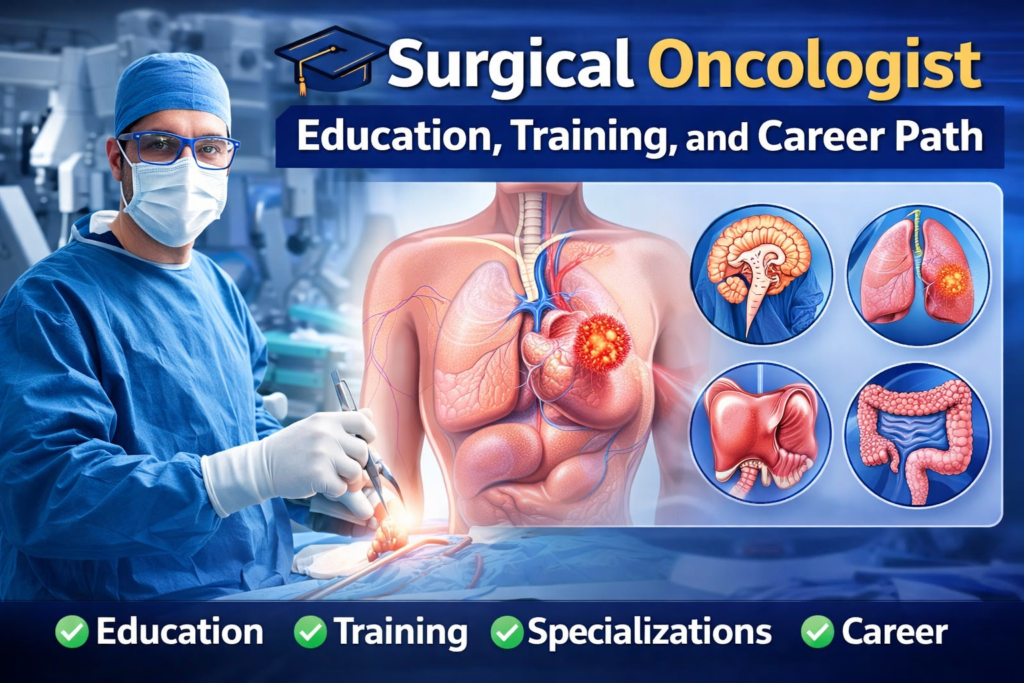
Surgical Oncologist: Education, Training, and Career Path

Cancer is a life altering diagnosis and surgery is the most significant aspect of treatment that is taken by many patients. Here a Surgical Oncologist becomes very important. A surgical oncology is a physician who deals with the treatment of cancer using surgery to remove the tumor. Their job does not only involve accomplishing operations but it involves providing a second opportunity to life to patients. They deal with accuracy, attention and medical expertise to make sure that cancer is removed safely. Surgical oncologists also belong to a bigger cancer care unit comprising medical and radiation oncologists, nurses, and others in health care provision. It is through their collaboration, they develop a treatment plan that can deliver the best to the patients. It is a tough profession and at the same time a noble and well esteemed profession in the medical sector. Who is a Surgical Oncologist A surgical oncologist is a surgical specialist who has been specially trained to cure cancer by surgery. Their major role is to eliminate cancerous tumors without damaging the rest of the healthy tissue. Surgery in most situations is the best mode of treatment particularly when the cancer is at the initial stages. They start their work even preceding surgery. They assist in the diagnosis of cancer through biopsies, or removal of a small sample of tissue in order to test it. Once they are diagnosed, they strategically decide on how to do the surgery depending on the nature, size, and the location of the tumor. Their main tasks are some of the following: The safe and complete destruction of tumors. Conducting biopsies to ascertain cancer. Establishing the cancer level. Organizational planning and conducting cancer surgeries. Promoting postoperative patient care. Their job should be patient, attentive and good surgical operation abilities. Prerequisites to the Surgical Oncologist profession. The career of becoming a surgical oncologist is not short and involves hard work. Normally, it requires some 10-14 years of education and training. The process begins with an MBBS degree which lasts approximately 5.5 years. In this period, students get to know the basics of medicine, such as the human anatomy, diseases, and the essential surgery. This phase is the precursor towards the path of a doctor. Once MBBS is completed, the next course is MS in General Surgery that lasts 3 years. In this case, physicians get to know how to carry out various forms of surgery and deal with victims in the operating theatre. They get practical experience and acquire vital surgical skills. After completion of general surgery training, physicians proceed to super specialization in surgery oncology. It is achieved by MCh or DNB in Surgical Oncology that lasts another 3 years. At this time physicians are entirely interested in cancer surgery. They are taught new skills of removing tumors and treating cancer patients without complications. Other doctors even go on to have fellowships in areas that are specialized such as robotic surgery, breast cancer surgery or even brain tumor surgery. This assists them to be masters of their field of choice. Training and Real-Life Experience. Training does not only involve book learning. The surgical oncologists take years to work in hospitals, to help the seniors, and in the process carry out surgery themselves. They get to know how to deal with complicated cancer cases, and make crucial decisions in the course of operation. This form of training will assist them in building the necessary skills that include: Strong surgical precision Capacity to be under pressure. Quick decision-making Vast knowledge on cancer therapy. With time, they are developed into competent and self-assured specialists. Surgical Oncologists and their Work. Different types of cancer may occur in various body parts and therefore surgical oncologists may be specialized in certain fields. A surgical oncologist of the breast specializes in the treatment of breast cancer. They carry out such procedures as lumpectomy, where the tumor is removed only or mastectomy, where the breast is removed in case of need. They also check the lymph nodes to determine whether cancer is spread or not. A surgical oncologist of the head and neck is one that treats cancers in the mouth, throat, and neck. They have very delicate work as they should not lose functions like speaking and swallowing. A gastrointestinal surgical oncologist deals with stomach, liver, pancreatic, and intestinal cancer. They also carry out surgeries to clear tumors and to normalize the digestive system. A thoracic surgical oncologist specializes in lung cancer, esophageal cancer, and chest tumors, particularly lung cancer and esophagus cancer. Such surgeries are complicated and they need skills. Gynecologic surgical oncologists deal with female reproductive organ cancers like ovarian cancer, cervical cancer, and uterine cancer. They are aimed at the elimination of cancer in addition to general health. A urologic surgical oncologist deals with urinary system cancer, such as kidney/bladder/prostate cancer. They are aimed at eliminating cancer without damaging the organs. An orthopedic surgery oncologist is one who treats bone cancers. They even do surgeries on patients to remove tumors and enable them to move around. A brain and spine neurosurgical oncologist will treat tumors of the brain and spine. Such surgeries are very delicate as they deal with the nervous system. A pediatric surgical oncologist is a doctor who provides treatment to cancer in children. They are specially train in order to manage the physical and emotional needs of young patients. A reconstructive surgical oncologist is an oncologist involve with the re-creation of body parts following a cancer surgery. They can use them to illustrate an example of breast reconstruction, which is conduct because of breast cancer surgery to regain the image and self-esteem. Surgical Oncologist Procedures. Depending on the condition of the patient, surgical oncologists carry out very diverse procedures. Biopsy is one of the common procedures that are use to ascertain the existence of cancer. The primary procedure is the tumor removal surgery in which cancerous growth is remove out of the body. Minimally invasive and robotic surgery is also employ by
dermatology courses
Learning blogs

Dermatology Course Career Scope Salary and Opportunities

Dermatology Course Career Scope Salary and Opportunities Dermatology is a very fast developing medical discipline that identifies, treats and controls skin, hair and nail diseases. With the increasing demand to provide the skin care and cosmetic treatments and advanced treatments, the number of qualified dermatology professionals are also in demand. A dermatology courses provides medical practitioners knowledge and clinical expertise required to diagnose skin disorders, perform dermatologic procedures and provide effective patient care. This industry offers great career opportunities, good potentials of earning, and good career growth. What is Dermatology Dermatology is a branch of medicine that deals with skin, hair and nails. Dermatology specialists have various diseases in their diagnosis and treatment, such as acne, skin-related infections, pigmentation changes, hair loss, allergies, and cosmetic matters. The specialty also provides aesthetic surgeries such as chemical peels, laser surgeries, and anti aging surgeries. Dermatologists contribute to the medical and cosmetic condition of the patients. Dermatology Course eligibility. In order to join a professional dermatology course, applicants shall have a set eligibility requirement. Minimum qualification: MBBS degree Preferably valid medical registration Interested in dermatology and skin treatments Good communication skills and patient handling skills Desire to acquire advanced dermatology practices The course is tailored principally to the medical graduates who wish to specialize in dermatology. Course in Dermatology Length. The course period of a dermatology course varies according to the type of course and level of specialization. Certificate course: 3-6 months PG Diploma course: 6 months 1 year Fellowship course: 12 years2 years Such courses involve theoretical study and practical clinical training to equip the professionals with preparation towards real-world practice in dermatology. Career Scope Dermatology Post Course. Profession in dermatology is very good since there is more and more demand in hospitals, clinics and cosmetic centres. Pediatric Dermatology Clinical Dermatologist Cosmetic Dermatologist Aesthetic Physician Dermatology Consultant Skin Specialist One can practice dermatology in hospitals, dermatology clinics, cosmetic centers, healthcare institutions or establish his own practice. Career Opportunities in Dermatology. Upon the completion of a dermatology course, the professionals may be employed in diverse healthcare and cosmetic facilities. Hospitals medical colleges Dermatology clinics Cosmetic and aesthetic centers Skin care clinics Healthcare institutions Private practice The dermatology sector has both job potential and self employment. On-the-job Training Salary After Dermatology Course. Dermatology provides one of the well-paying careers in the medical field. The beginner level is 50,000 to 1,00,000 in average monthly Intermediate level is 1,00,000 to 2,00,000 in average monthly Experienced level is 2,0000 to 3,0000 average monthly or more Pay is based on experience, specialization and based on the workplace. Similar Dermatological Courses. Dermatology professionals can also use several specialized courses to improve their careers. Pediatric Dermatology Course Cosmetic Dermatology Course Clinical Dermatology Course Aesthetic Dermatology Course These courses assist the professionals to be specialized and career opportunities can be enhanced. Future Scope of Dermatology The future projection of dermatology is highly good as there is growing demand for skin care and cosmetic management. Rising skin health issues Expanding cosmetic and aesthetic market Rising skin health awareness Technologies and treatment of dermatology The need for dermatology professionals in the healthcare industry and the cosmetic world will remain great. Conclusion A dermatology course offers good career opportunities, good salaries, and good career advancement to the MBBS graduates in case they want to specialize in the area of skin care and dermatological care. Dermatology is now one of the most fulfilling medical professions as hospitals, dermatology clinics, and cosmetic centers are increasing. Niche training programs provide the doctors with a high level of clinical skills and practical experience to succeed. Medical Global Academy and other institutions provide professional dermatology programs, which integrate both practical and professional training as well as expert advice to help clinicians pursue successful careers with a long-term expansion in the healthcare sector.

How Fellowship in Laparoscopy & Hysteroscopy Can Boost Your Medical Career
Learning blogs

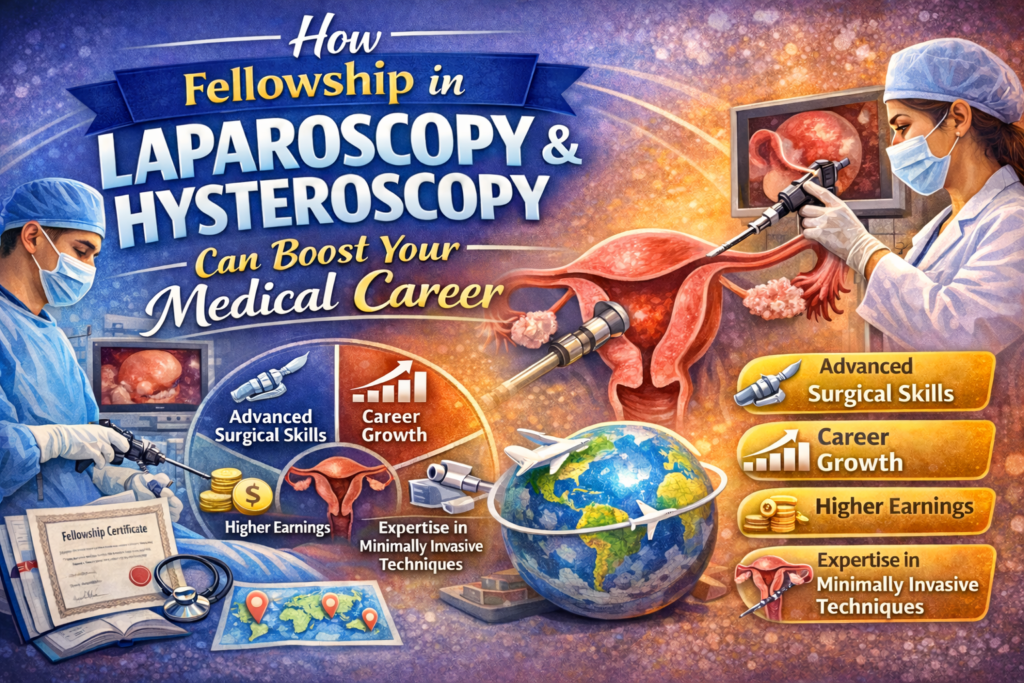
How Fellowship in Laparoscopy & Hysteroscopy Can Boost Your Medical Career

Gynecology and minimal invasive surgery are the areas that are changing rapidly. The patients nowadays opt to have a less painful, safer procedure and also be able to recuperate quickly. This is achieved through a Fellowship in Laparoscopy and Hysteroscopy which teaches doctors the advanced skills. Carrying out a fellowship enhances surgical skills as well as providing new career opportunities, higher incomes and professional reputation. This blog describes how the fellowship has the ability to improve a medical career and the importance of the fellowship to gynecologists and surgeons. What is Fellowship in Laparoscopy and Hysteroscopy? Fellowship in laparoscopy and hysteroscopy refers to a specialized training program of medical professionals particularly gynecologists desiring superior skills in minimally invasive procedures. Primary Elements of the Fellowship: Laparoscopic surgery training. Hysteroscopy procedure training. Practical experience in surgery. Diagnosis and treatment planning of the patient. Mastering the contemporary surgical tools and technologies. This camaraderie is based on skills and life experience on surgery, which is crucial in terms of career development. The importance of Minimally Invasive Surgery in the current world. Laparoscopy and hysteroscopy are used as minimally invasive surgery that is gaining popularity in the world. The advantages of Minimally Invasive surgery are: Smaller incisions. Faster patient recovery. Less pain and complications. Reduced hospital stay. Better surgical outcomes. Due to these advantages hospitals and other medical institutions favor physicians who have undergone these advanced methods. The Benefits of Fellowship in Laparoscopy and Hysteroscopy to Your Medical Prospects. 1. Increases Your Operating Proficiency. Development of the skills is the greatest benefit of the fellowship. You will learn: Hi-tech laparoscopic surgeries. Diagnostic hysteroscopy. Operative hysteroscopy. Minimal invasive surgery procedures. Such competencies render you more competent and confident. 2. Enhances Professional Time. Specialty trained doctors have greater opportunities. Career options include: Consultant Gynecologist. Laparoscopic Surgeon. Expert in fertility clinics. Surgery specialist at the hospital. Private practice owner. Doctors who are trained in a fellowship program are more favored in hospitals as they are capable of carrying out complicated procedures. 3. Grow Your Earning Potential. The special doctors tend to earn higher as compared to the general doctors. Reasons include: Minimally invasive surgeons in demand. Capacity to undertake high-level operations. Prospect of working in private hospitals. There is a possibility of opening your own clinic. This fellowship assists in raising your revenues and monetary development. 4. Establishes Business Credibility. Fellowship enhances your credibility by completing the fellowship. Benefits include: Recognition as a specialist. Better trust from patients. Excellent professional profile. Better job opportunities. Patients want to see specialists who have high training. 5. Makes You Keep abreast of the latest Technology. Medical technology is ever changing. Modern tools and techniques are taught in the fellowship. You will learn about: New laparoscopic equipment. Modernized operating machines. Modern surgical methods. Revised treatment processes. This assists you to be competitive in the field. 6. Offers On-the-job Training. One of the most significant aspects is hands-on training. You will get: Real surgical experience. Hands-on learning experiences. Procedure advice by senior surgeons. Getting to know the actual patients. On-job training instills confidence and enhances skills. 7. Opportunities in India and abroad are opened. Fellowship trained doctors are able to work both in India and abroad. Opportunities include: Private hospitals. Government hospitals. International hospitals. Fertility clinics. Medical educational establishments. This companionship provides international career opportunities to you. 8. Assists You in Starting Your Practice. There are a lot of doctors who want to establish a clinic or a hospital. The fellowship is useful since: You are able to carry out special operations. You are able to appeal to more patients. You have an opportunity to create your reputation yourself. You can increase your income. A successful private practice requires special skills. Competencies Achieved During Fellowship in Laparoscopy and Hysteroscopy. Important skills include: Diagnostic laparoscopy. Operative laparoscopy. Diagnostic hysteroscopy. Operative hysteroscopy. Patient management. Surgical decision‑making. Complication management. These competencies are the key to the contemporary gynecology. Who Will do Fellowship in Laparoscopy and Hysteroscopy? This fellowship suits: MBBS physicians who are interested in gynecology. Menu- Mansfield/DNB Obstetrics and Gynecology physicians. Practicing gynecologists. Surgeons in pursuit of specialization. Physicians who want to develop their careers. It is perfect to people who wish to become gurus in minimally invasive surgery. The following are the career choices after the Laparoscopy and Hysteroscopy fellowship. Upon the completion of the fellowship you are able to work as: Laparoscopic Surgeon (Consultant). Gynecological Surgeon. Fertility Specialist. Hospital Specialist. Private Practitioner. Medical Trainer. Career stability and growth are provided by these roles. Laparoscopy and Hysteroscopy Specialists in Demand. The required number of specialists is growing due to the following reasons: Minimally invasive surgery is more preferred by more patients. Specialists are needed in the hospitals. Growth of fertility clinics. Raising awareness of new treatments. This renders fellowship training very useful. Advantages of Fellowship in Laparoscopy and Hysteroscopy. Summary of key benefits: Improves surgical skills. Creation of more job opportunities. Enhances income potential. Enhances working reputation. Provides hands‑on training. Opens global opportunities. begins private practice. It is a good move towards a career with this fellowship. Frequently Asked Questions. 1. Length of fellowship? The time frame is normally between 3 months up to 12 months depending on the institute and program. 2. Who is qualified to get the fellowship? MBBS, MS, DNB or Diploma in Obstetrics and Gynecology-qualified doctors are allowed. 3. Is the fellowship worth it? Yes, it enhances surgical skills, career possibilities and earning potential. 4. What will I be able to do in my career after the fellowship? As a laparoscopic surgeon, gynecologist, fertility specialist or even own clinic. 5. Is the fellowship practice based? No, majority of the programs will offer practical training and experience in surgery. Conclusion Fellowship in Laparoscopy and Hysteroscopy is a great avenue to the doctors wishing to improve their medical profession. It assists in the enhancement of the level of surgical skills, expands the sphere of work, positively influences the professional image, and allows earning more and finding new possibilities in the world

Certificate in family medicine 2026
Learning blogs

Certificate in Family Medicine Complete Guide 2026

In 2026, the Certificate in Family Medicine will be one of the most viable and career orientated medical qualifications. As the demand for primary health services is increasing, trained family physicians are needed in urban or rural regions. The course will be targeted at medical graduates who are interested in honing their clinical skills and manage the treatment of common diseases, as well as provide holistic care to patients of various ages. This is the full guide where you will get to know about the eligibility, course structure, course duration, career scope, salary, how to apply, and the benefits of the Certificate in Family Medicine. What is Certificate in Family Medicine The Certificate in Family Medicine is a short term medical certification program that emphasizes primary healthcare and general medical practice. It trains doctors to: Diagnose and treat routine diseases. Manage chronic diseases Protection of preventive healthcare. Provide in-service care to the patient. Handle minor emergencies The family medicine physicians deal with children, adults, and the elderly. They are the frontline in the medical service. The importance of Certificate in Family Medicine in 2026 The healthcare systems are turning to preventive medicine and primary services. There is overcrowding in hospitals and specialized doctors are costly. This creates a high demand for trained family physicians. Major causes of the increased demand: Increasing lifestyle diseases (diabetes, hypertension) Increasing rural health requirements. Growth in telemedicine services. Requirement of affordable medical services. Primary care physician shortage. The Certificate in Family Medicine prepares the doctors with the skills to handle the common health-related ailments in an effective manner. Qualifications in Family Medicine Certificate The eligibility can differ in accordance with the institute, and usually: degree in MBBS course in a recognized university. Valid medical registration Completion of internship There are institutes that permit practicing doctors. The primary audience of this course is: MBBS graduates General practitioners Medical officers in government. Private clinic doctors Time spent in Certificate in Family Medicine This typically takes a time span of: 6 months to 1 year Some programs offer: Online learning modules Weekend classes Hybrid training format The exposure presented in hospitals. The adjustable format renders it to be fit to working professionals. Family Medicine Course Curriculum Certificate The curriculum has a focus on practical knowledge and clinical skills. Core Subjects Covered: General Medicine Pediatrics basics Essentials of Obstetrics and Gynecology. Geriatric care Emergency management Chronic disease management Preventive healthcare Community medicine Mental health basics Clinical decision making This course is based on case management in practical life, and not just theory. Process of Certificate in Family Medicine Admission Most institutions have easy admission. Steps: Submit application form Provide academic documents Certificate of medical registration. Interview (in certain institutes) Fee payment and enrollment Typically, there is no entrance exam. Skills You can acquire with Certificate in Family medicine Once the Certificate in Family Medicine has been completed, doctors acquire: Strong diagnostic skills Better communication with patients. Ability to handle chronic diseases. Preventive care planning Basic emergency handling Improved prescription practices. Clinical confidence These competencies have a direct positive impact on patient trust and practice development. Prospective Career After Certificate in Family Medicine Certified in Family Medicine has a broad and stable career. Career Options: General Practitioner Family Physician Healthcare Consultant -Primary Healthcare. Government Medical Officer Rural Health Specialist Telemedicine Doctor Private Clinic Owner Family physicians enjoy long term career stability with the increase in the demand of healthcare. Post-certificate in Family medicine Salary Pay is based on experience, location and type practice. Average Salary in India (2026): Entry level: ₹4–6 lakh per year Experienced: ₹8–15 lakh per year Private practice: Revenue is determined by the number of patients. Physicians who operate their own clinic would be able to make more money depending on reputation and patient base. Advantages of Certificate in Family Medicine Here are the main advantages: Short duration course Hands-on and proficiency based training. Healthcare sector under high demand. Improved livelihood. Privatization opportunity. Flexible learning format Enhanced clinical decision making. Strong career stability It is an inexpensive method of enhancing medical credentials without engaging in specialization on a long-term basis. Family medicine certificate vs MD Family medicine A small number of physicians equate certificate programs to MD. Family Medicine Certificate: Short‑term (6–12 months) Skill‑focused Affordable No entrance exam MD Family Medicine: 3‑year full‑time program Requires NEET PG Increased academic qualification. More specialization depth The certificate program is appropriate in case you need rapid skill improvement and practice development. MD is better in case you are seeking academic specialization. Urban and rural areas Scope Rural Areas High demand for primary care Less competition Government employment opportunities. Strong patient base Urban Areas Multi‑specialty clinics Telemedicine growth Private practice expansion Corporate hospital roles In both settings, family medicine physicians are required. Will Certificate in Family Medicine Be Worth It in 2026 Yes, especially for: MBBS doctors not pursuing PG Physicians who desire to improve competencies. Practitioners who intend to start a clinic. Non-clinical officers are able to apply to obtain a promotion. The primary and preventive care has become the trend in healthcare systems resulting in high relatability of this certification. Who is the one who should use Certificate in Family Medicine This course is ideal for: Fresh MBBS graduates Physicians training to practice on their own. Government doctors Physicians coming back to practice. GPs interested in orderly training. It offers clarity and confidence in daily medical cases. Bright Future of Family Medicine in India The future is sound due to: Government prioritizing primary healthcare. Health insurance expansion A greater sense of preventive care. Increasing the chronic disease burden. Growth of telemedicine In healthcare systems, family physicians will be at the center stage. Conclusion The Certificate in Family Medicine in 2026 is an applied, career-based medical certification aimed at empowering primary healthcare abilities. It assists the MBBS doctors to enhance the clinical knowledge, deal with common illnesses, and establish stable careers in both towns and villages. As the healthcare demand increases, this course offers lasting professional development and pay

India vs usa after md
Learning blogs

Salary Comparison in India and USA After MD

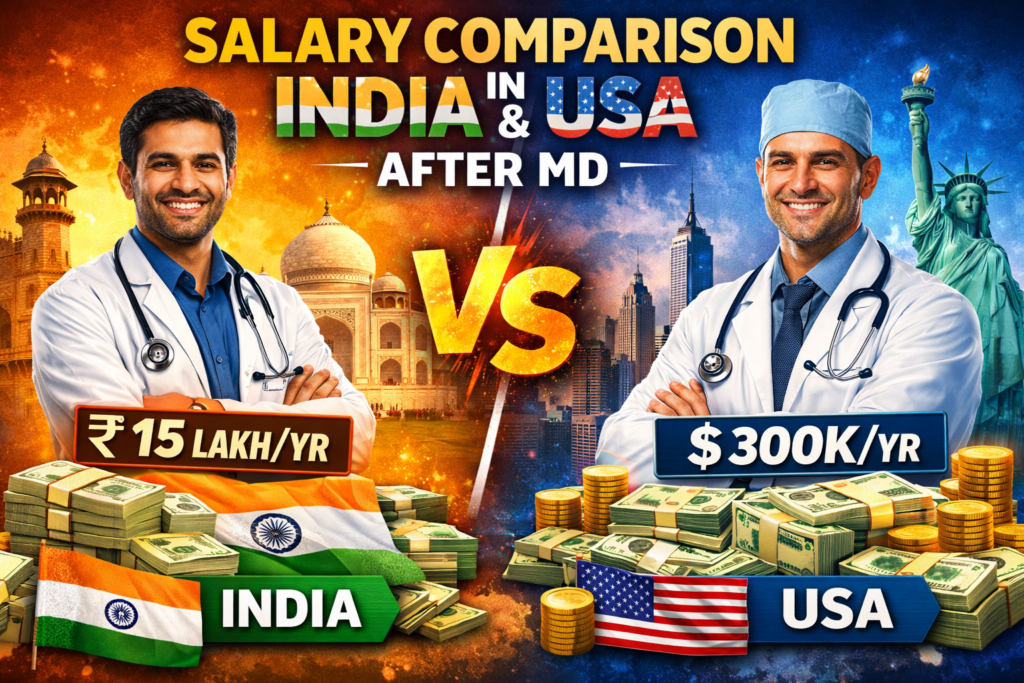
Detailed Guide to Medical Graduates The decision to practice medicine is a decision that changes life after one has successfully completed MD (Doctor of medicine). The most significant influencing factor on this decision is the salary. India vs USA salary after MD is one of the comparisons that many doctors make in order to determine their career choice. This blog discusses the pay gap, living standard, living expenses, job conditions and career advancement in a simple and understandable manner. What Is MD and Why Salary Comparison Is Important MD is a postgraduate medical degree that enables the doctors to specialize in such areas as Medicine, Pediatrics, Radiology, Dermatology, etc. Doctors have high hopes after MD and it includes financial stability, career development, and quality of life. The wage comparison between India and the USA can give an idea to the doctors on the level of gain vs work. Salary After MD in India Indian average salary range Salary is dependent on specialization, experience, hospital type and city after MD in India. Fresh MD graduate: 8-15lakh per annum. 2-5 years of experience: 18-30 lakh/ year. Senior specialist: 0.40 Lakh to 1 crore plus per annum. In India, the factors influencing MD Salary are as follows Specialization (Radiology, Dermatology, Cardiology earn more) Privatized hospital/ governmental hospital. Metro city vs tier-2 city Own hospital or clinic practice. Pros of Working in India No licensing exams after MD Lower education cost Strong patient connection Cultural comfort Cons of Working in India Long working hours Low wages, as opposed to the developed world. High competition Reduced financial growth at the beginning. Salary After MD in USA Average Salary Range in USA In the USA, physicians receive much higher income once they are out of residency (MD specialization). Resident doctor: $60,000–$70,000 per year Specialist doctor: $220,000–$350,000 per year Demand experts: 400,000 and above annually. Salary Comparison in India and USA After MD Medical specialty State of practice Hospital/private practice. Years of experience Pros of Working in USA Very high salary State of the art medical equipment. Better work-life balance Global career recognition Cons of Working in USA USMLE exams required Long training pathway High cost of education Visa and licensing process Cost of Living: India vs USA India Lower rent and food expenses Economical medical services and transport. Increased saving rate during first years of career. USA Expensive rent, insurance and taxes. Expensive lifestyle High income causes high savings. Comparison of Work Environment and Lifestyle India High patient load Work culture, which is driven by emergencies. Strong doctor-patient bond USA Structured working hours Practice based on law and insurance. Advanced support systems Career Advancement and Lifetime Earnings India The higher the income level is in case of private practice. Entrepreneurship opportunities Slower but stable growth USA Faster financial growth Higher retirement savings Academic exposure and improved research. After MD, which is better, India or the USA One right answer does not exist. Select India in case of early practice, family support and reduced risks. Select the USA when you desire higher income, international visibility and modernized health care. The decision will have to depend on goals in career, expectations in finance, and vision. Conclusion The comparison of salary post MD between India and the USA clearly demonstrates that the USA has much better financial benefits, whereas India has a rapid stability and cultural ease. The two roads are not without their own obstacles and advantages and the correct choice lies on personal priorities. To the medical students seeking professional advice on international medical careers, organisations such as the Medical Global Academy are significant in assisting the aspirants in comprehending the international career and make sound-judged choices to achieve a successful future. FAQs 1. What is the mean salary of MDs in India The mean MD salary in India is between 8 lakh and 30 lakh per annum based on experience and area of specialization. 2. What is the average salary of doctors in the USA in the post-MD period Physicians in the USA also receive a payment of between 220,000 to 350,000 dollars annually following a time of residency and specialization. 3. Is MD in India legal in the USA No, Indian MD is not a direct one. Physicians have to pass USMLE and hold a residency in the USA. 4. Which one is the most favorable country to work in as a doctor The general work-life balance provided by the USA is better because of the organized working schedule and developed health care. 5. Should it be a post-MD trip to the USA Not only is it financially worth it, but also necessitates a long preparation, examinations, and dedication.

Fellowship in fetal medicine in india
Learning blogs

Why You Should Consider a Fellowship in Fetal Medicine

One of the most desirable advanced training programs among the obstetrics and gynecology doctors is a Fellowship in Fetal Medicine. It puts emphasis on prenatal care, fetal diagnosis, and maternal-fetal health, providing clinicians with a profound knowledge of high-risk pregnancies and fetal interventions. This fellowship provides an ideal platform of professional excellence to doctors wishing to sharpen their clinical skills, increase their chances of research and further their careers. In this blog, you will see the reasons why you should consider a fellowship in fetal medicine and what it really is, what it consists of, the benefits, the eligibility requirements, structure and address some of the most frequently asked questions. What is Fetal Medicine Fellowship Fellowship in Fetal Medicine is another program that is highly post – residency training of medical practitioners desiring to specialize in the fields of prenatal care and fetal health. This fellowship, unlike in general obstetrics, sensitizes the diagnosis and management of fetal conditions, high – risk pregnancies and pregnancy complications. The doctors also get practical training on: Prenatal diagnosis and screening – the diagnosis and identification of abnormalities and genetic diseases in the child during pregnancy. Management of high-risk pregnancy – taking care of mothers with medical conditions that impact pregnancy. Fetal therapy and interventions – fetal therapy includes both surgical and non-surgical interventions Ultrasound techniques and imaging – applying sophisticated visual imaging to track the progress of the fetus. Genetic counseling and research – learning and providing advice based on inherited conditions as well as participating in medical research. Doctors are capable of dealing with complicated cases of prenatal conditions and giving specialized care to babies and mothers by the end of the fellowship. Major Advantages to a Fellowship in Fetal Medicine It is possible to list a lot of reasons why a fellowship in fetal medicine can transform your career. The most significant ones are the following: 1. Next Level Clinical Skills The fellowship provides you with high-level clinical competencies. You will get to know about intricate fetal ultrasounds, non-invasive prenatal testing, and the treatment of complex pregnancies. These capabilities will make you approach difficult situations with a sense of confidence that is useful during hospital and private practice. 2. Improve Patient Outcomes Physicians who are trained with fetal-medicine will play a significant role in enhancing both maternal and fetal outcomes. Early diagnosis of disorders and close observation minimizes complications, and prepares a better future of motherhood and child. The fellowship equips you with the ability to take the right decisions in time and save lives. 3. Research and Academic Opportunities Several fellowships come with specific research time. You are able to learn about fetal genetics, ultrasound breakthroughs, and new treatments. Doing research will enhance your academic profile and will offer you chances to be employed as a teacher and publish in reputable journals. 4. Extend Workforce Potential The completion of a fellowship increases the employment opportunities. You may practice at prestigious hospitals and fetal medicine centers, academic hospitals, or even in another country. Under developed skills, it is possible to work as a consultant, researcher, or lecturer in maternal-fetal medicine. 5. Keep Pace in an Expanding Discipline The field of fetal medicine is developing fast due to new technologies and research. Since the 3D/4D ultrasounds to the non-invasive prenatal testing and fetal surgery, what is important is to keep up. The fellowship is a way to be exposed to the most recent developments which makes your skills relevant and demanded. 6. Network and Mentorship In fellowship, you are assigned to experienced mentors and you get to work with experts. This mentorship provides career-related insights and research tips as well as long-term professional relationships that can support your career. Fellowship in Fetal Medicine Eligibility To be eligible, applicants typically require: A doctoral degree (MBBS or equivalent) Finished ob gyn residency. Good curiosity in the field of maternal-fetal medicine and prenatal studies. Certain programs might have a preference towards candidates that have pre-existing ultrasound experience or high-risk pregnancy management. Review the requirements of each program and apply. Fellowship Length and Structure The majority of the programs take 1 – 2 years and are a combination of practical and theoretical studies. The usual organization consists of: Clinical rotations – fetal medicine unit, high-risk pregnancy wards, and neonatal care. Practical training – high level ultrasound, fetal echocardiography and invasions. Research projects – the possibilities to do some research and present results. Academic obligations and work in medical institutions, seminars, and discussions of cases. Such a structure guarantees you the technical skills and analytical and academic expertise. Profits of a Fellowship in Fetal Medicine The fellowship has various career and personal development advantages: Higher skills – specialized skills in highly demanded fields. Improved career opportunities – increased possibilities of employment in prestigious hospitals and clinics. International prestige – appreciated everywhere, particularly at the high-profile institutions. Research opportunities – new projects and publications. Effective intervention – directly enhances the health of mothers and children. Comprehensively, the fellowship provides you with a special skill base that will make you stand out in obstetrics. The Opportunity to Select a Fellowship Program In choosing fellowship, it is important to consider the following things: Certification and the status of the institute. Faculty knowledge and mentoring services. Practical clinical experience and mix of cases. Publication and research support. Duration of program and program curriculum. Selecting an appropriate program is the best way to maximize benefits and make you attain your career objectives in a cost-effective manner. FAQs 1. How long is a Fellowship in Fetal Medicine The duration of most programs is 1 – 2 years depending on the institute and country. The fellowship incorporates clinical training and research aspects. 2. Is it possible to apply to be a Fellow in Fetal Medicine by international doctors Yes, there are a lot of programs which take international candidates. Depending on the country, you might have to fulfill the licensing and language criteria. 3. Which are the skills I will acquire on a Fellowship

Fellowship in internal medicine
Learning blogs

Fellowship in Internal Medicine: Complete Guide for MBBS Graduates

Internal Medicine Fellowship. represents a clinically-oriented postgraduate course that aims at graduates of MBBS to enhance their competence in adult medicine. The program focuses more on practical patient care, exposure in hospitals and practical clinical decision-making instead of the learning which is academically based. As the number of chronic and lifestyle diseases increases, the demand of internal medicine physicians trained and working in India is high in both hospitals and clinics. What Is Fellowship in Internal Medicine A Fellowship in Internal Medicine is a well-organized medical training program, which develops advanced clinical skills in the diagnosis, treatment, and management of adult patients with complicated medical conditions. It is a transition between the knowledge of the MBBS level and independent physician practice. The fundamental goals of the fellowship are: Training effective diagnostic skills. Enhancing patient management and planning of treatment. Being exposed to multisystem diseases. Improving the trust in the hospital-based practice. Fellowship in Internal medicine Eligibility requirements The majority of the institutes that have Fellowship in Internal Medicine programs entail the following: MBBS degree in a reputable medical university. University qualification in medicine. Rudimentary clinical experience (desired in most programs) Depending on the training model and institute, the eligibility criteria might have a few differences. Length of Internal Medicine Fellowship The total time spent in the Fellowship in Internal Medicine is generally 1-3 years. Short programs involve high clinical exposure whereas the long program has in-depth subspecialty training and long hospital exposure. Clinical Training and Curriculum The Fellowship in Internal Medicine curriculum is aimed at being practical, patient oriented and clinically relevant. Major Subjects Covered Cardiology fundamentals Respiratory medicine Gastroenterology Management of diabetes and endocrinology Nephrology Neurology   Infectious diseases Components of Clinical Training IPD and OPD management of patients. Ward rounding and discussion of cases daily. Exposure to the emergency room and ICU. Diagnostic research and analysis. This practical training assists physicians to put into practice what they learn in medicine as far as patient care is concerned. The Competencies Developed Post-Fellowship in Internal Medicine Doctors who have completed the Fellowship in Internal Medicine usually develop: High-level clinical and diagnosis skills. trust in the management of acute and chronic illnesses. Appreciation of decisiveness. Better communication with patients. Work experience in multidisciplinary teams at hospitals. Fellowship in Internal Medicine Career Opportunities Its Fellowship in Internal Medicine provides several career opportunities that include: Private or corporate hospital consultant physician. Clinic physician in general practice. Multispecialty hospitalist hospitalist in multispecialty hospitals Emergency and ICU physician Institutional norms of teaching and acting (as per institutional norms) This discipleship is greatly esteemed in personal hospitals where working abilities are considered. Internal Medicine vs MD Medicine Fellowship MBBS graduates tend to weigh the two alternatives before making a choice. Fellowship in Internal Medicine Shorter duration Clinical and competence-based. Rapid access to the labour market. MD Medicine Longer academic duration Admission based on entrance test. Necessary to some academic and government jobs. The fellowship is perfect for doctors seeking real-world clinical development without protracted academic procrastination. Fellowship in Internal Medicine Scope in India The extent of Fellowship in Internal Medicine in India is broadening because of: Rising lifestyle and chronic diseases. Multispecialty hospitals are on the increase. increased urban and semi-urban medical physician demand. This will make internal medicine a reliable and long-term medical career choice. Reasons as to why MBBS Graduates prefer Fellowship in Internal Medicine Faster career progression Wide-ranging practical clinical experience. Improved employment opportunities. Firm knowledge of adult medicine. Underline patient care in reality. FAQs Does India acknowledge Fellowship in Internal Medicine The institute and training structure make recognition. The clinical skills acquired by the fellowship are of great importance to many hospitals and individual healthcare arrangements. Is it possible to be independent after Fellowship in Internal Medicine Yea, the majority of physicians are employed as physicians in hospitals or clinics upon the completion of the fellowship which is further subject to local regulations. Is there a need to have NEET in Fellowship in Internal Medicine NEET is optional in the majority of cases, which makes this fellowship more available compared to MD Medicine. Internal medicine: What is the salary after fellowship Pay is different according to experience and geographical location in addition to type of hospital, yet trained physicians usually have great earning capacity in private practice and hospitals. Conclusion The Internal Medicine Fellowship is an improved and career oriented program to MBBS students who wish to become well trained physicians without using years in training to pass the competitive entrance examination. It increases clinical confidence, patient management skills and the career opportunities are wide in the growing healthcare sector of India. Organizations such as Medical Global Academy also offer systematic training and overall clinical exposure making this fellowship a good move towards a stable and fulfilling medical career.

Fellowship in Dermatology: Scope for International Practice
Learning blogs

Fellowship in Dermatology: Scope for International Practice

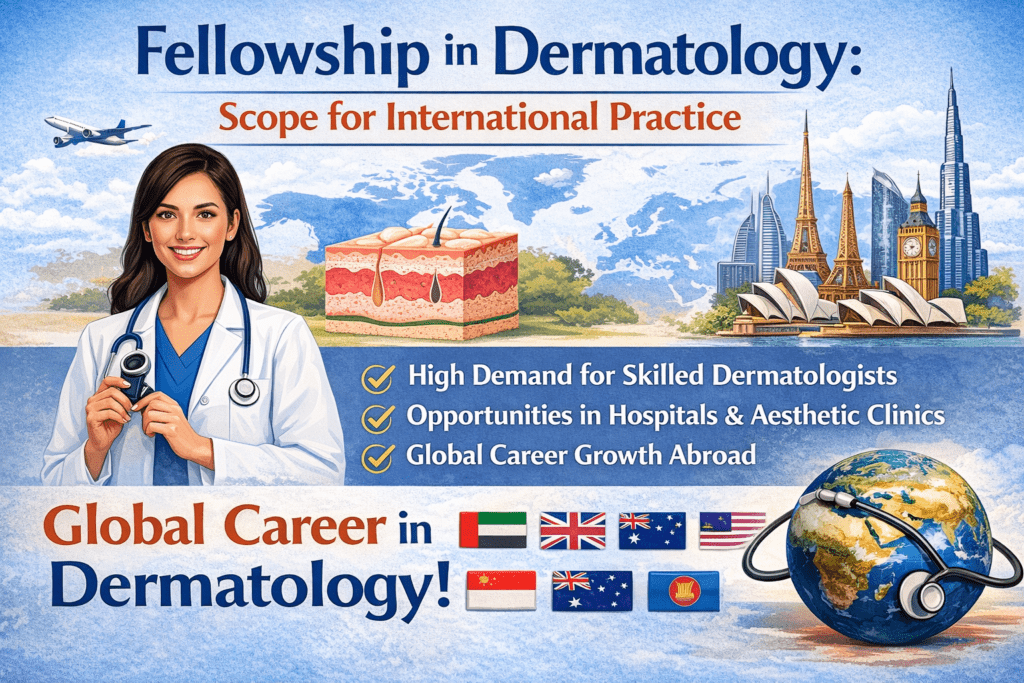
Dermatology is one of the rapidly emerging medical disciplines across the globe. With the growing demand in skin, hair, nail, aesthetic and cosmetic procedures, physicians having advanced dermatology education can be rewarded both at home and internationally. Dermatology fellowship provides the clinician with specialized competence, international experience, and better career opportunities. This article explains the international scope, career opportunities, and requirements, as well as advantages of a dermatology fellowship in simple and understandable language. What Is a Fellowship in Dermatology A fellowship in dermatology is a postgraduate level medical training course offered to physicians who want to learn more and have practical experience in dermatology. Such fellowships can be interested in: Clinical Dermatology Aesthetic Dermatology and Cosmetic Dermatology Trichology – Hair Disorders Dermatosurgery Skin Treatment Laser and Advanced Care. Fellowships can be between six months and two years and are oriented towards practical skills and can be the best choice to the doctor that wants to gain hands-on skills. The reason why the Dermatology field has high demand world over Dermatology is also broad internationally due to the fact that: Skin diseases are very prevalent. Raising societal consciousness on skin and hair health. The cosmetic and aesthetic industry is rapidly developing. The anti-aging treatments are demanded by the aging population. Alteration of lifestyle is a contributor to acne, pigmentation, and hair loss. All these issues make dermatology a medical speciality that is relevant all over the world. International Fellowship in Dermatology Scope of Practice 1. In-demand of skilled dermatologists Asia, Middle East, Europe, Africa, and Australia are in urgent need of dermatologists, especially those who are proficient in cosmetic and laser surgeries. 2. Opportunities in the Several Sectors Following a fellowship, the doctors may practice abroad in: Hospitals and clinics Beauty and cosmetics salons. Skin and laser clinics Medical schools and educational centers. Research organizations 3. Cosmetic Dermatology broadens International Choices The government medical licensing factor is not so crucial in aesthetic dermatology as it is in core clinical practice, thus, it is simple to join the private and cosmetic clinics in other countries. 4. Better Income and Lifestyle Many countries offer: Higher salary packages Better work‑life balance High-tech technology and infrastructure. This renders international dermatology practice rewarding both in terms of finance and profession. Favorite International dermatology practice countries The most favored destinations are: Middle East (UAE, Saudi Arabia, Qatar) – the high demand in aesthetic dermatologists. UK & Europe – post licensing and examination opportunities. Australia/New Zealand – organized careers of experts. Southeast Asia- growing cosmetic dermatology. Africa – general and clinical dermatologists exigence. International Practice licensing and Eligibility Doctors typically require: to practice internationally: MBBS or other equivalent degree in medicine. Dermatology: fellowship or specialization. Registration or country-specific licensing tests. English language proficiency (IELTS/OET where required) Other nations are allowing cosmetic dermatology practice under fellowship training within individual care facilities. Pros of completing Dermatology Fellowship Key Advantages Its high level of clinical and cosmetic skills. Exposure on a global level and reputation. Clinical-aesthetic practice flexibility. Rapid career advancement over extensive degree programs. Good international employability. Conclusion Dermatology fellowship provides the possibility of international medical practice, particularly in the field of clinical specialty, cosmetic and aesthetic specialization. Dermatology boasts of demand levels worldwide, specialized competencies, and career diversification; hence, it is a good option among doctors who want to work in a foreign country. The appropriate choice of the training program is crucial, and Medical Global Academy provides the opportunity to develop a successful international career by offering quality fellowships and international career support.

Average salary of doctor in india 2026
Learning blogs

MBBS vs MD vs MS Salary in India 2026 – Who Earns More?

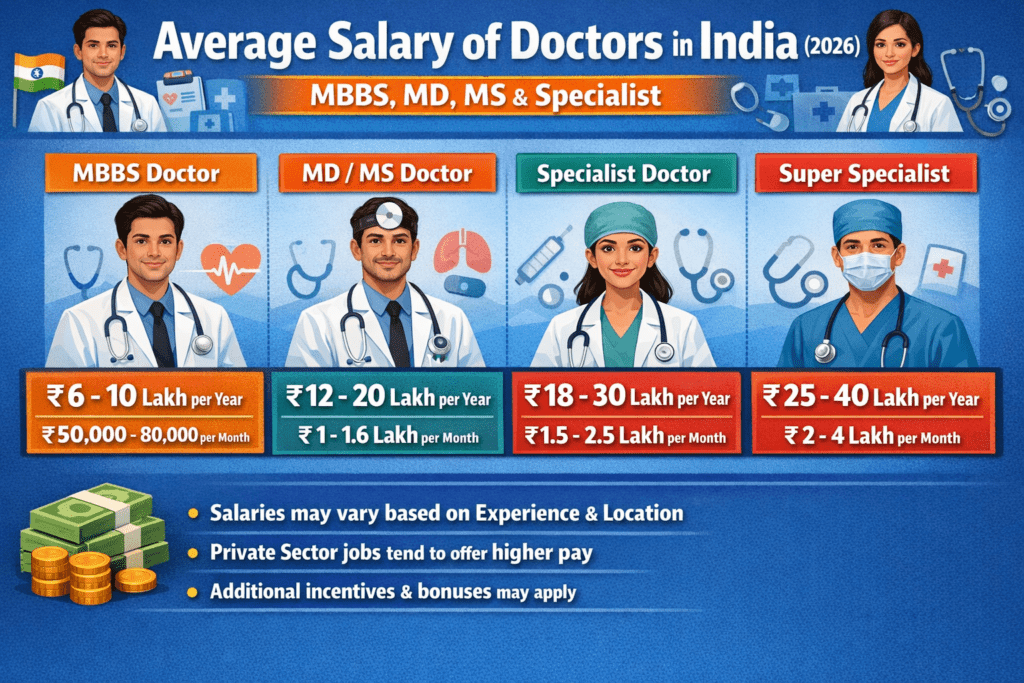
The average salary of a doctor in India in 2026 is between 6 – 10 lakh per annum. MBBS doctors make between 5 – 18 lakhs, MD/MS doctors make 12 – 60 lakhs and super-specialist doctors (DM/MCh) make 30 – 2 crores or more in a year. The pay of doctors in India is also based on their qualification, experience, specialization, location, and whether the doctor is employed in the government or in the private sector. Quick Salary Overview (2026) Qualification- Averaged Salary per year. MBBS Doctor – ₹5 – 18 Lakhs MD Doctor – ₹12 – 40 Lakhs MS Doctor – ₹15 – 60 Lakhs DM / MCh (Super specialist) 30 lakhs -2 crores and above. 1. MBBS Doctor Salary in India An MBBS degree is a gateway to the field of medicine and the foundation of the career of a doctor. Average Annual Salary (2026) Experience & Sector Breakdown Freshers (0–2 years) Government hospitals: 5 – 7 lakhs Private hospitals: 6 – 9 lakhs Training positions typically involve positions of Junior Resident or Medical Officer. Mid‑Level (3–6 years) Government sector: 7 – 10 Lakhs Private sector: 9 – 15 Lakhs Physicians are involved in OPD, emergency, and managing patients on their own. Senior MBBS Doctors (7+ years) Government jobs 10 – 14 lakhs private practice: 12 – 18 lakhs The administrative work and personal consultations are considered to be very profitable. Many MBBS doctors increase their income by enrolling in Fellowship courses for doctors that enhance practical clinical skills. 2. MD doctor salary in India A doctor with an MD degree in areas such as General Medicine, Pediatrics, Dermatology or Psychiatry transforms him or her into a specialist consultant. Average Annual Salary (2026) Experience & Sector Breakdown Junior Consultant (03 years after MD) Government hospitals: 12 – 18 lakhs Private corporate hospitals: 15 – 25 lakhs Early private practice: 10 – 20 lakhs Senior Consultant (4–10 years) Government sector: 18-28 lakhs Private hospitals: 25-40 lakhs Established private practice: 25-50 lakhs Senior Experts / HOD (10+ years) Government institutions: 28 – 40 lakhs Corporate hospitals: 35 – 60 lakhs Best privates: 40 lakhs – 1 crore 3. Salary of an MS doctor in India An MS degree provides the doctors with surgical proficiency in orthopedics, general surgery, ENT, Ophthalmology, and others. Average Annual Salary (2026) Experience & Sector Breakdown Early Career (0–3 years post‑MS) Government hospitals: 15 – 22 lakhs Private corporate hospitals: 18 – 30 lakhs Independent Surgeons (4–10 years) Government sector: 22 – 35 lakhs Private hospitals: 30 – 50 lakhs Own nursing home / practice: 35 – 70 lakhs Lead Surgeons (10+ years) Government hospitals: 35 – 50 lakhs Corporate hospitals: 45 – 80 lakhs High volume private surgeons: 50 lakhs – 1.5 crores 4. Salary of Super Specialist Doctor in India Super-specialisation is the ultimate form of medical field. Mean Annual Wage (2026) Experience & Sector Breakdown New Super‑Specialists (0–5 years) Government institutes at the top: 30 – 50 lakhs Chains of hospitals, private: 40 – 70 lakhs Early specialty centres: 35 – 60 lakhs Established Experts (5–15 years) Government jobs: 50 – 80 lakhs Private jobs: 70 lakhs – 1.5 crores Successful centres: 1– 2 crores Experts at the National Level (15+ years) Government leadership positions: 80 lakhs – 1.2 crores Corporate healthcare: 1.2 – 2 crores Famous private practitioners: 1.5 – 3 crores The Major Trends that will influence Doctor Salary in 2026 Hybrid model of income: Fixed salary + teleconsultation + visiting practice. Tier-2 and Tier-3 urban development: Low competition and high demand. Government vs Private: Stability vs high earning ceiling. Online presence: The online reputation is now directly affecting the income. Doctors with MD, MS, DM, MCh or fellowship programs hasten the rate of salary increase,owing  to the requirement of specialization. Conclusion The yearly wages of an Indian doctor in 2026 do not only indicate the level of academic credentials but also the worth that a physician generates due to his knowledge, experience, and customer loyalty. Although MBBS is the basis, the branching power of MD, MS, DM, or MCh allows much better income. In the current state of healthcare, physicians who deliver clinical excellence and remain engaged in learning and with high professional presence experience the most financial and career development. FAQs -Mean Salary of Doctor in India How much on average does a doctor earn in India monthly Depending on qualification and experience, a doctor makes 40,000 to 5 lakh plus per month. Who is the highest paid doctor in India The best paid super specialists are cardiologists, neurosurgeons and oncologists. Can MBBS assure a good salary in India MBBS is a high-paying degree, but postgraduate specialization raises the salary opportunity by far. Which is better, government or private doctor wages The government has employment security, and benefits, and in private practice, high levels of income are offered. Is it possible that doctors can make more in private practice Yes. Specialization, visiting consultancy and private practice are very effective in increasing earnings. Our Top High Paying Courses Fellowship Fellowship in Interventional Cardiology Fellowship in Neurosurgery Fellowship in Robotic Surgery Fellowship in Cosmetic Surgery Fellowship in Urology PG Diploma PG Diploma in Cosmetology & Aesthetic Medicine PG Diploma in Clinical Cardiology PG Diploma in Emergency Medicine PG Diploma in Reproductive Medicine PG Diploma in Orthopedics Certificate Certificate in Aesthetic Medicine Certificate in Clinical Cardiology Certificate in Diabetology Certificate in Emergency Medicine Certificate in Pain Management

Fellowship in pediatric, Child health
Learning blogs

Fellowship in Pediatric: Opportunities in Government & Private Sector

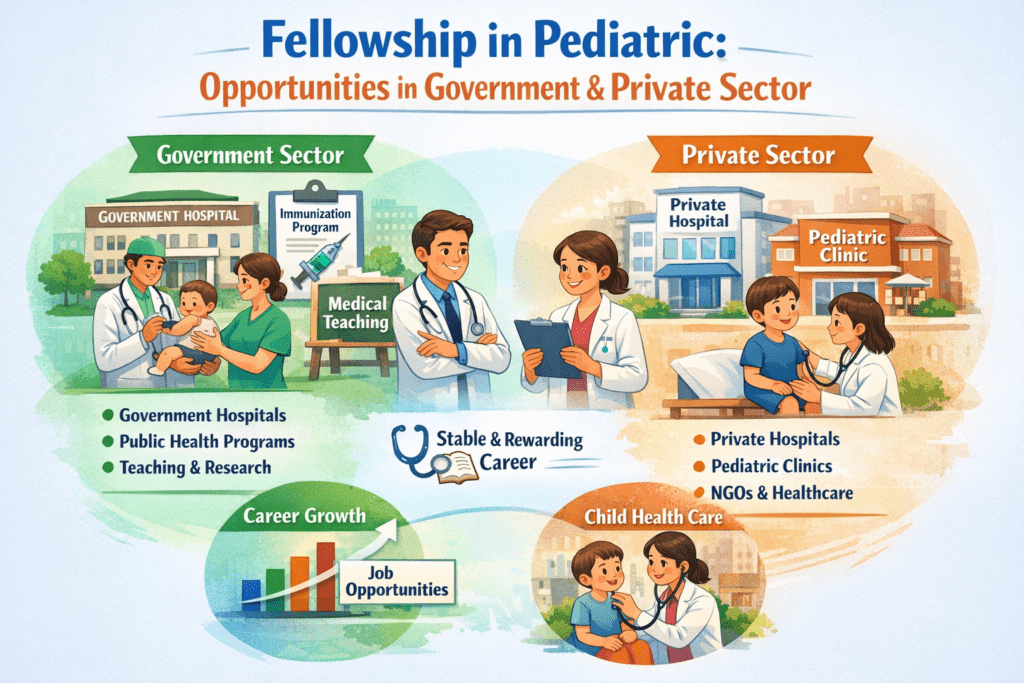
The Fellowship in Pediatric represents a specialized training program that assists physicians in creating sophisticated skills in the diagnosis, treatment, and management of health conditions in infants, children, and adolescents. With the increasing knowledge in child health, nutrition, immunity, and early diagnosis of diseases, the need of specialists in the pediatric field is increasing at an alarming rate. This establishes high career prospects both in government and non-governmental areas of health care. Fellowship in Pediatrics What is Fellowship in Pediatrics Fellowship provides higher level clinical training other than basic medical training. It specializes in practice-based learning, patient care, and the long-term care of children. Key Areas Covered Broad based child health care. Diagnosis and treatment of pediatric disease. Infant and newborn care Developmental evaluation and measurement. Childhood preventive care. Value of Fellowship in Pediatric in Child Healthcare Children require a different medical care as compared to adults. This training program provides physicians with specialized knowledge to address the physical, emotional and developmental health needs of children. The reason why Pediatric Specialists are required Rising child population Rise in lifestyle and genetic children disorders. Preventive care and focus on early diagnosis. Child health programs in the government. Expansion of privately owned pediatrics and clinics. Opportunities in Government Sector Post Fellowship in Pediatric Government Hospitals Pediatric specialists are able to work as doctors in: metropolitan and civil hospitals. Medical colleges of the government. Child health and maternal health care centres. Child and pediatric care units. Child Welfare Programs and Public Health The fellowship equips the professionals to: Take part in country-wide immunization of children. spearhead malnutrition campaigns. Gift to maternal and child care programs. Conduct school health and children welfare programs. Teaching & Academic Roles Faculty jobs in pediatrics. Medical student and healthcare personnel training. Academic child health involvement. Research & Policy Support Partaking in child health research activities. Healthcare planning and data analysis. Public health department advisory roles. Pediatric Fellowship After Private Sector Opportunity Private Hospitals Pediatric consultant roles Special child care services. Pediatric inpatient and outpatient care. Corporate & Multispecialty Hospitals Upper level of exposure to pediatric treatments. Work experience of high patient volumes. Advancement as senior consultant. Child Care Centres and Clinics, Pediatric Stand alone practice pediatrics. Community-based child care. Prolonged relationships with patients. Non Governmental organizations and Health organizations Nutrition and wellness of children programs. Prevention of children’s health programs. Child health, rural and urban activities. Career Advancement and Career Security The fellowship in pediatric care provides a long-term, stable career since the specialists in child care are always needed. Career Advantages Consistent job demand Urban and rural opportunities. Professional recognition An opportunity to practice clinically, academically, or in the field of public health. Skills That are acquired during Pediatric Fellowship Sophisticated clinical judgement in children. Being patient and friendly to children. Emergency care in pediatrics management. Preventive and long service child health planning. Benevolent and caring practice. Future Perspective of Fellowship in Pediatrics The sphere of pediatric care is growing in the sphere of technology and increased attention to preventive health. Growing Scope Includes Via digital consultation Pediatric consultation. Prevention of child healthcare models. Pediatric department growth. International child healthcare system prospects. Conclusion The Fellowship in Pediatric offers a great career opportunity in both government and the non-government sectors since doctors are allowed to play a significant role in the health of children. As the demand of skilled professionals in the field of pediatrics increases, the fellowship guarantees the growth, stability, and professional fulfilment of the career. This is where the role of institutions such as Medical Global Academy comes in as they provide organized programs based on practical training, real-life experience, and career-oriented learning. FAQs 1. The career range after Fellowship in Pediatric The fellowship provides opportunities in government hospitals, private hospitals, pediatric clinics, teaching institutions, and in health programs that are public. 2. Fellowship in Pediatric Doctors Can they work in government hospitals They may, yes, work as government pediatric specialists in hospitals, child health centres and in government health programs. 3. Is Fellowship in Pediatrics helpful in private practice Yes, it assists physicians in opening or expanding independent pediatric practices and employment as consultants in nearby hospitals. 4. What are the skills acquired during Fellowship in Pediatric Physicians acquire new skills in child healthcare, diagnosis of children, knowledge on preventive care, and patient management. 5. What is the demand behind Fellowship in Pediatrics The growing interest in child health, early diagnosis of diseases, nutrition, and preventive care of children has led to the increased need for trained specialists. More Blogs Fellowship in Pediatric: Opportunities in Government & Private Sector Byadmin February 2, 2026 FELLOWSHIP The Fellowship in Pediatric represents a specialized training program that assists physicians in… Read More The importance of Fellowship in Interventional cardiology in the career of a cardiologist Byadmin January 30, 2026 Fellowship in Interventional cardiology One of the most developed and challenging spheres of contemporary medicine is the interventional… Read More Fellowship in Aesthetic Dermatology vs Cosmetology Courses Byadmin January 29, 2026 FELLOWSHIP IN DERMATOLOGY Introduction Many doctors and medical professionals in India often get confused between a Fellowship… Read More CERTIFICATE IN ONCOLOGY Byadmin February 13, 2025 Certificate in Clinical Cardiology CERTIFICATE IN ONCOLOGY With our Certificate program, learn about the field of CERTIFICATE IN… Read More FELLOWSHIP IN ARTHROSCOPY & SPORTS MEDICINE Byadmin February 7, 2025 FELLOWSHIP IN ORTHODONTICS FELLOWSHIP IN ARTHROSCOPY & SPORTS MEDICINE Discover the world of arthroscopy and sports… Read More FELLOWSHIP IN CLINICAL CARDIOLOGY Byadmin February 7, 2025 FELLOWSHIP FELLOWSHIP IN CLINICAL CARDIOLOGY Discover the world of clinical cardiology scholarships with our… Read More FELLOWSHIP IN GASTROINTESTINAL ONCOLOGY Byadmin February 7, 2025 FELLOWSHIP FELLOWSHIP IN Gastrointestinal Oncology Explore the world of Fellowship in Gastrointestinal Oncology… Read More FELLOWSHIP IN HEAD & NECK SURGERY Byadmin February 7, 2025 FELLOWSHIP IN ORTHODONTICS FELLOWSHIP IN HEAD & NECK SURGERY Explore the Fellowship in Head & Neck Surgery, a… Read More FELLOWSHIP IN CLINICAL NEUROLOGY Byadmin February 6, 2025 FELLOWSHIP IN ORTHODONTICS FELLOWSHIP IN CLINICAL NEUROLOGY

Scroll to Top
Chat on WhatsApp