Medical Global Academy

Author name: admin

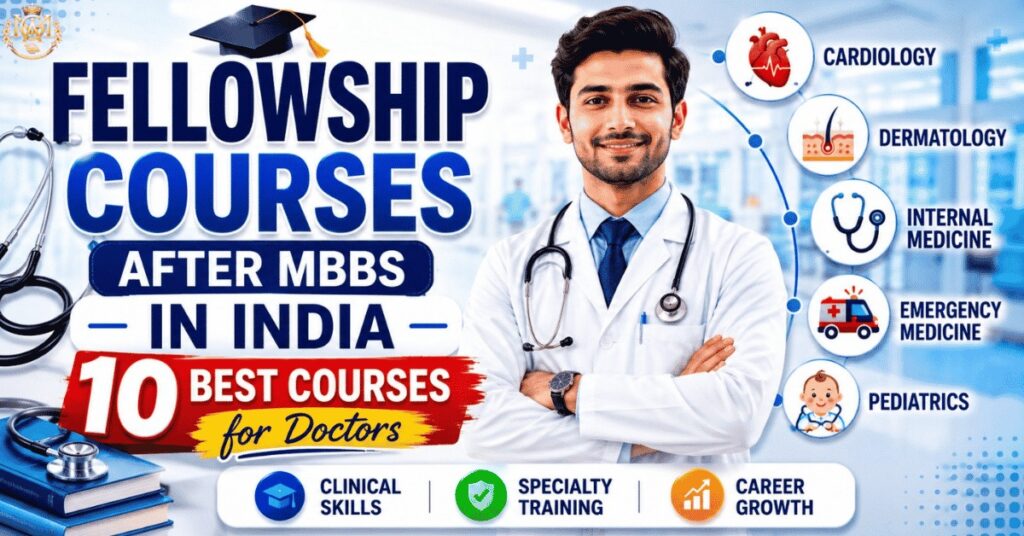
fellowship courses after mbbs in India showing top fellowship programs for doctors including cardiology, Dermatology, Internal Medicine, Emergency Medicine, and Pediatrics
Learning blogs

Best Fellowship Courses After MBBS in India: 10 Fellowship Options Every Doctor Should Explore

 Fellowship courses after MBBS in India have become a popular option for doctors who want to develop specialty-focused knowledge and strengthen their clinical skills. Completing MBBS is a significant milestone in a doctor’s career. After graduation, many doctors face one important question: Which Fellowship Course Is Right for Me After MBBS? Many doctors want to improve their clinical skills, gain specialty-focused knowledge, and continue their professional growth. That is why fellowship courses after MBBS in India have become a popular choice for MBBS graduates. A fellowship offers focused learning in a specific medical specialty and helps doctors develop expertise in areas that align with their interests and career goals. In this guide, we will explore some of the best fellowship courses after MBBS, their scope, key learning outcomes, and important factors to consider before you make a decision. Who Can Benefit From This Guide? This guide is for MBBS graduates who want to explore fellowship programs for specialty-focused learning and clinical skill development. Whether you have an interest in Cardiology, Dermatology, Internal Medicine, Emergency Medicine, Pediatrics, or other specialties, this guide can help you learn about some of the most popular fellowship options available after MBBS. Why Fellowship Courses After MBBS in India Are Becoming Popular Healthcare keeps changing, and doctors need to stay updated with current clinical practices and patient care standards. Many doctors choose post MBBS fellowship courses because these courses help them: Build specialty-focused clinical skills Increase confidence in patient management Learn current medical practices Receive structured specialty training Keep up with healthcare developments Strengthen their professional profile For doctors who want to build expertise in a specific specialty, fellowship programs offer a focused path for learning. Why Structured Fellowship Training Matters Doctors gain valuable experience through daily clinical practice. However, structured fellowship programs offer an organized way to gain specialty-focused learning. A fellowship helps doctors: Learn through a structured curriculum Understand specialty-focused clinical concepts Stay updated with current medical practices Build focused patient management skills Learn from experienced faculty and mentors For doctors who want advanced clinical training after MBBS, structured fellowship programs offer organized and specialty-focused learning opportunities. How We Chose These Fellowship Courses  We selected the fellowship courses in this guide based on: Clinical relevance Strong specialty demand Hands-on learning opportunities Clinical skill development Patient care relevance Long-term career value These factors help identify fellowship programs that remain relevant and useful across different healthcare settings. Which Fellowship Course Fits Your Career Goals? Choosing the right fellowship depends on your interests, the patients you enjoy treating, and your long-term career goals.  If You Enjoy Managing Fellowship Option Heart-related conditions Cardiology Skin disorders Dermatology Broad medical cases Internal Medicine Emergency situations Emergency Medicine Child healthcare Pediatrics Diabetes management Diabetology ICU patients Critical Care Women’s health Obstetrics and Gynaecology Bone and joint disorders Orthopaedics Diagnostic imaging Radiology Best Fellowship Courses After MBBS in India for Doctors 1. Fellowship in Cardiology Cardiovascular diseases continue to be one of the most common healthcare challenges across the world. Because of this, doctors with knowledge of cardiac care continue to play an important role in patient management. What You Learn ECG interpretation Hypertension management Cardiac risk assessment Basics of heart failure Preventive cardiology  Career Relevance Useful for doctors working in: Hospitals Cardiology Clinics Multispecialty Healthcare Centers Preventive Healthcare Programs  Doctors who want to improve their understanding of cardiac care can explore our fellowship in cardiology program. The program helps doctors build focused knowledge in ECG interpretation, hypertension management, cardiac risk assessment, and preventive cardiology. Who Can Consider It?  This fellowship may suit doctors who regularly manage patients with hypertension, cardiovascular risk factors, and heart-related conditions in their daily clinical practice. 2. Fellowship in Dermatology Dermatology is one of the most popular specialties because doctors often see skin-related conditions in clinical practice. What You Learn Acne management Skin pigmentation disorders Psoriasis Fungal infections Common dermatology treatments and procedures Career Relevance Useful for: Dermatology Clinics Hospitals Skin Care Centers Doctors interested in managing common skin conditions can explore our fellowship in dermatology program to build practical knowledge in acne management, pigment disorders, psoriasis, and dermatological care. Who Can Consider It? This fellowship may suit doctors who want to learn more about skin disorders, outpatient dermatology practice, and common dermatological conditions. 3. Fellowship in Internal Medicine Internal Medicine helps doctors improve diagnostic skills and patient management skills across a wide range of medical conditions. What You Learn Diabetes management Hypertension care Infectious disease care Chronic disease management Evidence-based clinical practice Career Relevance Useful in: General medicine departments Hospitals Primary healthcare settings A fellowship in internal medicine can help doctors improve diagnostic skills, manage chronic diseases more effectively, and make evidence-based clinical decisions across a wide range of medical conditions. Who Can Consider It? This fellowship may suit doctors who want to improve their diagnostic skills and manage a wide range of medical conditions. 4. Fellowship in Emergency Medicine Emergency Medicine focuses on quickly assessing and managing patients who need immediate medical care. What You Learn Trauma care Emergency care protocols Medical emergencies Patient stabilization Clinical decision-making skills Career Relevance Useful for: Emergency care departments Trauma care centers Acute care facilities Doctors interested in acute patient care can explore our fellowship in emergency medicine program to strengthen their skills in trauma management, emergency protocols, and patient stabilization. Who Should Consider This?  This fellowship may suit doctors who want to build skills in emergency care, trauma management, and quick clinical decision-making. 5. Fellowship in Pediatrics Pediatrics focuses on the health and medical care of infants, children, and adolescents. What You Learn Childhood illnesses Growth and development Vaccination practices Pediatric emergencies Newborn care  Career Relevance Useful in: Pediatric Departments Children’s Hospitals Community Health Programs A fellowship in pediatrics can help doctors develop expertise in child healthcare, vaccination practices, growth assessment, and pediatric patient management. Who Can Consider This?  This fellowship may suit doctors who enjoy caring for infants, children, and adolescents. 6. Fellowship in Diabetology The rising burden of diabetes has increased the need for doctors
doctor exploring courses after mbbs in India for career growth and specialisation
Learning blogs

Courses After MBBS in India: MD, MS, DNB & Fellowship Guide

Completing MBBS is a major milestone in a doctor’s journey. After years of study, clinical postings, internship, and exams, many doctors face one important question: What after MBBS? Should you prepare for MD/MS, choose DNB, join a fellowship course, enroll in a PG diploma program, or take a certificate course to strengthen specific clinical skills? Today, MBBS graduates have many learning options. The right course depends on your interests, career goals, preferred specialty, and future practice plans. This guide explains the best courses after MBBS, fellowship courses, PG diploma programs, certificate courses, specialisation options, and course selection methods for doctors in India.  If NEET PG isn’t part of your plan, you still have strong options. Explore our complete guide on courses after MBBS without NEET PG, covering fellowships, international qualifications like MRCP and MRCOG, and non-clinical career paths. Many doctors feel confused about their next step after graduation. If you are wondering what to do after MBBS, understanding different career pathways can help you make a better decision. Courses After MBBS: A Quick Overview  Course Type Duration Best For MD/MS 3 Years Full specialisation DNB 3 Years Specialist training Fellowship Courses 6–12 Months Practical specialty skills PG Diploma Courses 1–2 Years Focused clinical learning Certificate Courses Few Months Skill upgrade This table helps doctors compare different learning options and choose the right path. What After MBBS? One of the most common questions medical graduates ask is: What after MBBS? What to do after MBBS? After MBBS what next? Your professional goal will decide the answer. Some doctors choose full specialisation through MD/MS or DNB. Some prefer focused clinical learning through fellowship courses. Others choose PG diploma or certificate courses to gain practical knowledge while continuing their work. Before choosing any course, doctors need to ask: Which specialty interests me the most? Do I want complete specialisation or focused skill development? Do I want to continue studying while working? Which field will have strong demand in the future? Which course aligns with my long-term career goals? Every doctor follows a unique career path. The right course after MBBS depends on your interests, clinical experience, career goals, and the area of practice you want to pursue. Why the Right Course After MBBS Can Shape Your Future  Medical practice continues to change. Patient expectations, disease patterns, technology, and treatment protocols keep evolving. Choosing the right course after MBBS helps doctors: Build specialty knowledge Boost clinical confidence Improve patient care skills Keep up with modern clinical practice Discover better career opportunities Support long-term career growth A good course can help close the gap between MBBS learning and real-world clinical decision-making. Types of Courses After MBBS Doctors can choose from various learning paths after MBBS. 1. MD/MS Programs MD and MS are traditional postgraduate options for doctors who want to pursue full specialisation. These programs offer: Advanced specialty training Enhanced clinical exposure Academic development Hospital-based career opportunities  2. DNB Programs DNB is another specialist training pathway after MBBS. It suits doctors who want structured postgraduate training in recognised hospitals and institutions. 3. Fellowship Courses After MBBS Fellowship courses provide focused learning in a specific specialty. They help doctors who want to: Gain Practical clinical skills Focus on specialty learning Access flexible learning options Enhance knowledge quickly Support Career growth 4. PG Diploma Courses After MBBS A PG diploma after MBBS helps doctors build structured knowledge in a specific clinical field. These courses suit doctors who want stronger subject knowledge without pursuing a full-length postgraduate program. 5. Certificate Courses After MBBS Certificate courses help doctors improve specific skills in less time. They suit doctors who want to learn topics such as ECG interpretation, diabetes management, emergency care, clinical nutrition, or critical care basics. Best Course After MBBS Based on Career Goals The best course after MBBS depends on your career goals. Career Goal Suggested Course Path Full specialist career MD/MS or DNB Practical specialty learning Fellowship Course Focused clinical knowledge PG Diploma Short skill upgrade Certificate Course Cardiac care interest Fellowship in Cardiology Skin care interest Fellowship in Dermatology Adult medicine interest Fellowship in Internal Medicine Child healthcare interest Fellowship in Pediatrics Emergency care interest Fellowship in Emergency Medicine Diabetes care interest PG Diploma in Diabetology This section helps doctors choose the right course based on their career goals instead of making a random choice. Best Fellowship Courses After MBBS The demand for fellowship courses after MBBS is increasing as many doctors seek focused clinical learning and hands-on practical skills. Many doctors prefer fellowship courses after MBBS because they provide focused clinical training in a shorter duration. Fellowship in Cardiology This course is ideal for doctors who want to build their knowledge and skills in cardiovascular care. Doctors can learn about: ECG interpretation Hypertension management Cardiovascular risk assessment Preventive cardiology Cardiac patient care and management See More: Fellowship in Cardiology Fellowship in Dermatology This course helps doctors who want to build skills in skin care and dermatology practice. Doctors can learn about: Common skin disorders Clinical dermatology Dermatoscopy Cosmetic dermatology concepts Skin condition evaluation Learn More: Fellowship in Dermatology Fellowship in Internal Medicine This course helps doctors manage adult patients and chronic diseases.  Doctors can learn about: Adult medicine Clinical decision-making Long-term disease management Evidence-based patient care Complex multisystem disorders  Explore: Fellowship in Internal Medicine Fellowship in Pediatrics This course is ideal for doctors who have an interest in child healthcare. Doctors can learn about: Child growth assessment Pediatric assessment Preventive pediatrics Pediatric emergency care Developmental concerns Learn More: Fellowship in Pediatrics Fellowship in Emergency Medicine This course helps doctors who work in emergency, casualty, ICU, or acute care settings. Doctors can learn about: Emergency assessment Trauma care Acute patient stabilisation Critical care fundamentals Emergency clinical decision-making  See More: Fellowship in Emergency Medicine Best PG Diploma Courses After MBBS A PG diploma after MBBS helps doctors gain structured knowledge in a specific medical field.  Popular PG diploma courses include: PG Diploma in Diabetology This course suits doctors who want to build their knowledge and skills

FELLOWSHIP

FELLOWSHIP IN ROBOTIC GYNECOLOGICAL ONCOLOGY

FELLOWSHIP IN ROBOTIC GYNAECOLOGICAL ONCOLOGY The Fellowship in Robotic Gynecological Oncology at MGA Medical Global Academy is an intensive, specialized training program created for surgeons, gynecologic oncologists and gynecologists looking to master cancer surgery using a robotic platform. . The program focuses on precision surgery, patient safety, evidence-based practice, technological innovation, and research, equipping fellows with a solid foundation for providing high quality cancer care with the most cutting-edge robotic surgical oncology technology. Buy Course Now Get Free Details For Course FELLOWSHIP IN ROBOTIC GYNAECOLOGICAL ONCOLOGY The Fellowship in Robotic Gynecological Oncology at MGA Medical Global Academy is an intensive, specialized training program created for surgeons, gynecologic oncologists and gynecologists looking to master cancer surgery using a robotic platform. The fellowship will involve extensive academic training and clinical experience to gain knowledge of gynecologic malignancies, minimally invasive surgical techniques, robotic technology, perioperative care, and multidisciplinary oncology management. Fellows will actively observe and experience advanced robot-assisted surgery for cervical, endometrial, ovarian, and other gynecologic cancers, and learn from skilled robotic surgeons and experts in oncology. The program focuses on precision surgery, patient safety, evidence-based practice, technological innovation, and research, equipping fellows with a solid foundation for providing high quality cancer care with the most cutting-edge robotic surgical oncology technology. Skills You Will Gain Familiarity with gynecologic oncology, cancer staging, tumor biology and multidisciplinary cancer management. Comprehensive understanding of robotic surgical systems, instrumentation, operating room configuration and robotic workflow. Expertise in patient selection, pre-operative evaluation, surgical planning and peri-operative management of patients with gynecologic cancer. Awareness of fertility preservation surgery for a subset of early-stage gynecologic cancers that can be performed via robot-assisted surgery. Understanding of the use of robotics in complex procedures regarding the bladder, bowel, abdomen and pelvis. Knowledge and understanding of how to anticipate, avoid, and address complications during and after robotic surgery procedures. Knowledge of advanced imaging technology, fluorescence guided surgery, 3D imaging and augmented reality use in the field of robotic oncology. Awareness of the application of robotic surgery in combination with chemotherapy, radiotherapy and multiprofessional cancer treatment. Use of robots for rare gynecological tumors, sarcomas, recurrent and metastatic cancers. Clinical research, outcome analysis, evidence-based decision making, academic presentation skills. Improved patient counseling, communication, psychosocial and fertility preservation counseling skills. Career Outcomes After the Fellowship Develop a niche career in Cancer Surgery in the field of Robotic Gynecological Oncology and Minimally Invasive Surgery. Practice in top oncology hospitals, robotic surgery centers, academic centers, and tertiary care centers. Improve skills in the complex, recurrent, and high-risk Gynecologic Oncology cases. Increase the number of career opportunities in robotic surgery, gynecologic oncology, fertility-sparing cancer surgery and advanced pelvic oncology. Enhance professional recognition as a Robotic Gynecologic Oncologist. Engage with other specialists and multi-disciplinary teams (MDT) such as medical oncologists, radiologists, pathologists, fertility specialists, and palliative care specialists. Earn high-level positions in robotic surgery programs, oncology units, and advanced surgical units. Participate in clinical research, innovation in surgery, medical education and evidence based oncology practice. Be at the forefront of new and revolutionary technologies such as robotic platforms, artificial intelligence, image-guided surgery and digital surgical innovations. Improve academic, teaching, conference presentation and mentorship opportunities in the field of gynecologic oncology. Promote the professional development of one of the most rapidly changing and technologically sophisticated fields in the treatment of women’s cancers. What you will learn Learn from Industry-Leading Gynecologic Oncologists and Robotic Surgery Experts Skill-Driven Workshops on Robotic-Assisted Gynecologic Procedures  Flexible Learning for Today’s Medical Professionals  Future-Ready Robotic Gynecologic Oncology Curriculum  Clinical Training for Real-World Oncologic Practice Course curriculum Introduction to Robotic Surgery and Gynaecological Oncology Objectives:Introduction to robotic surgery: technology, tools, and system setup. Basic principles of gynaecological oncology, including common cancers (ovarian, cervical, endometrial). Surgical anatomy relevant to robotic surgery in gynaecological oncology. Overview of current approaches and technologies in minimally invasive surgery. Key Topics:History of robotic surgery and advancements in gynaecological oncology. Patient selection criteria for robotic surgery in gynaecological cancers. Safety protocols and complication management. Robotic Surgical Techniques for Gynaecological Oncology Objectives:Develop hands-on proficiency in robotic surgical techniques. Learn and practice robotic-assisted procedures such as hysterectomy, lymph node dissection, and tumor excision. Key Topics:Robotic-assisted total laparoscopic hysterectomy (RATH). Robotic lymphadenectomy for endometrial and cervical cancer. Robotic radical surgery for ovarian cancer. Precision in performing pelvic and para-aortic lymph node dissection. Suturing and anastomosis techniques in robotic surgery.   Advanced Robotic Surgery for Complex Gynaecological Cancers Objectives:Master the most complex and challenging robotic procedures for advanced gynaecological cancers. Practice managing extensive pelvic and abdominal tumor resections. Key Topics:Robotic surgery for advanced ovarian cancer with peritoneal metastasis. Robotic management of recurrent cervical cancer. Robotic-assisted multi-organ resections in advanced stage cancers. Advanced techniques in bowel, bladder, and ureteral surgeries via robotic approach. Perioperative Care and Multidisciplinary Management Objectives:Understand perioperative care protocols for robotic gynaecological oncology patients. Collaborate within a multidisciplinary team for optimal patient management. Key Topics:Preoperative assessment, optimization, and patient counseling. Postoperative care, including managing complications such as bleeding, infection, and bowel obstruction. Pain management and rehabilitation in robotic oncology patients. Collaborative approach with oncologists, radiologists, pathologists, and palliative care teams. Robotic Surgery Complications and Troubleshooting Objectives:Develop the skills necessary to troubleshoot technical issues during robotic surgeries. Learn to manage and mitigate complications during and after robotic surgeries. Key Topics:Technical complications: robot malfunction, limited instrument range, visual field issues. Intraoperative bleeding and how to manage it with robotic tools. Bowel and vascular injury management in robotic surgeries. Postoperative complications: infection, wound healing, and adhesions.   Evidence-Based Practice and Surgical Outcomes Objectives:Review and analyze the latest research in robotic gynaecological oncology. Learn to evaluate surgical outcomes and apply evidence-based practices. Key Topics:Review of current literature and clinical trials in robotic gynaecological oncology. Surgical outcome analysis: survival rates, recurrence, and quality of life. Research methodologies and data collection for clinical studies. Critical appraisal of robotic surgery in gynaecological cancer management. Robotic Surgical Research and Innovations Objectives:Conduct research and contribute to innovations in robotic surgery techniques. Present findings at academic forums and conferences. Key Topics:Current advancements in robotic surgery technology. Robotics

FELLOWSHIP

FELLOWSHIP IN GASTROINTESTINAL GI SURGERY

Program overview The Fellowship in Gastrointestinal (GI) Surgery at MGA Medical Global Academy is an in-depth and specialized training program for doctors and surgeons looking to gain expertise in gastrointestinal surgical care. Fellowship training is focused on the diagnosis, surgical treatment and management of a diverse spectrum of gastrointestinal disorders involving the esophagus, stomach, intestine, liver, pancreas, biliary system and abdominal wall. The program is both academic and hands-on and includes open and laparoscopic, robotic, hepatopancreatobiliary (HPB), colorectal, bariatric, emergency and transplant related gastrointestinal (GI) surgical procedures. Participants acquire practical experience by doing clinical attachments, live surgical exposure, have case discussion with senior GI surgeons and get mentored by them, so that they develop high level surgical skills, which are in line with the updated standard and evidence based practices all over the world. Skills You Will Gain Familiarity with Preoperative assessment, surgical planning, Patient optimisation and Perioperative care. Diagnosis and treatment of common and complex gastrointestinal diseases based on evidence. Experiences in open, laparoscopic and robotic gastrointestinal surgical procedures. Specialty in upper GI surgery such as GERD surgery, hiatal hernia repair, bariatric surgery and gastric cancer management. Broad understanding of hepatopancreatobiliary (HPB) surgery including liver resection, biliary surgery and pancreatic surgery. Specialist surgical expertise in colorectal surgery, inflammatory bowel disease, proctology and stoma care. Knowledge of GI trauma management, emergency abdominal surgery and critical post op care. Exposure to GI endoscopy, colonoscopy, ERCP, EUS guided procedures and therapeutic endoscopic interventions. Experience with abdominal wall reconstruction, hernia surgery, management of fistulas and revisional GI surgery. Basic understanding of Liver Transplantation concepts, Portal Hypertension surgery, Advanced HPB surgery. Knowledge of nutritional optimization, enhanced recovery protocols and postoperative rehabilitation. Knowledge of new technologies such as robotic surgery, artificial intelligence, augmented reality, image-guided surgery and 3D surgery planning. Enhancement of surgical decision making, multi-disciplinary collaboration, patient counseling, and clinical research skills. Career Outcomes After the Fellowship Develop a subspecialty of Gastrointestinal Surgery and Surgical Gastroenterology. Operate in top hospitals, GI surgical centers, academic institutions and multispecialty healthcare organizations. Improve skills of managing complicated gastrointestinal conditions and high-risk surgical patients. Increase employment opportunities related to minimally invasive surgery, bariatric surgery, transplant surgery and GI oncology. Develop and consolidate the role of a GI surgeon with advanced clinical and operative skills. Cooperate with various other specialist teams such as gastroenterologists, oncologists, radiologists, endoscopists, nutritionists and critical care specialists. Seek surgical department, gastrointestinal surgery unit and institutional management positions. Support academic teaching, clinical research, surgical innovation and development of evidence-based practice. Keep abreast of advances in robotic surgery, AI-assisted surgery, digital health technologies and modern GI surgical techniques. Set-up and develop an independent surgical practice specializing in gastrointestinal and minimally invasive surgical care. What will you learn Learn from Industry-Leading GI Surgeons and Gastrointestinal Surgical Specialists  Skill-Driven Workshops on Advanced Gastrointestinal Surgical Techniques Flexible Learning for Modern Medical Professionals  Future-Ready GI Surgery Curriculum  Clinical Training for Real-World Surgical Practice Curse curriculum Foundations of GI Surgery Anatomy & Physiology of the GI tract Pathophysiology of GI diseases Preoperative patient evaluation and optimization Surgical instruments, suturing techniques, and energy devices Infection control and patient safety ERAS (Enhanced Recovery After Surgery) protocols Upper GI Surgery Surgical management of GERD and hiatal hernia Achalasia and esophageal motility disorders Gastric cancer – staging and surgical techniques (open/laparoscopic) Peptic ulcer disease and complications Bariatric/metabolic surgery (gastric sleeve, bypass, revision surgeries) Hepatopancreatobiliary (HPB) Surgery Liver resections for benign and malignant diseases Management of liver cysts, abscesses, and hydatid disease Biliary tract surgery (cholecystectomy, bile duct injuries, strictures) Pancreatic surgery (pancreaticoduodenectomy, distal pancreatectomy) Management of acute and chronic pancreatitis Colorectal Surgery Colorectal cancer – workup, staging, surgical approaches Management of IBD (Crohn’s, ulcerative colitis) Diverticular disease and complications Proctology: hemorrhoids, fistulas, fissures, pilonidal disease Stoma creation and care Minimally Invasive & Robotic GI Surgery Laparoscopic techniques: port placement, ergonomics, camera handling Advanced laparoscopic procedures: fundoplication, colectomy, splenectomy Introduction to robotic platforms (e.g., da Vinci, Versius) Simulation-based training and console skills development Indications, contraindications, and outcomes of robotic surgery GI Trauma and Emergency Surgery   Management of blunt and penetrating abdominal trauma Perforation peritonitis Acute appendicitis, bowel obstruction, strangulation Emergency laparotomy protocols Postoperative complications and critical care in GI surgery Transplant and Advanced HPB Surgery Principles of liver transplantation: indications, surgical steps, complications Living donor and cadaveric transplant overview Portal hypertension and shunt surgery Advanced resection techniques (ALPPS, ex-vivo resections) Post-transplant immunosuppression and surgical complications GI Endoscopy and Interventional Procedures Diagnostic upper GI endoscopy and colonoscopy Therapeutic endoscopy: polypectomy, hemostasis, stent placement Endoscopic retrograde cholangiopancreatography (ERCP) basics Endoscopic ultrasound (EUS) guided interventions Role of endoscopy in early cancer detection and management Pediatric GI Surgery Congenital GI anomalies: esophageal atresia, malrotation, Hirschsprung’s Pediatric appendicitis, intussusception, Meckel’s diverticulum Anorectal malformations Pediatric liver and biliary surgery Principles of pediatric laparoscopic surgery GI Physiology and Functional Disorders GI motility studies and manometry Functional bowel disorders (IBS, chronic constipation, dyspepsia) Neuroenteric and neuroendocrine tumors Management of small intestinal bacterial overgrowth (SIBO) Role of biofeedback and neuromodulation Nutrition and GI Surgery Nutritional assessment and optimization for surgical patients Role of TPN and enteral feeding Nutritional needs in cancer, IBD, and short bowel syndrome Impact of malnutrition on outcomes and wound healing Post-bariatric nutritional follow-up and deficiencies Surgical Innovation, AI & Technology Integration Artificial Intelligence in surgical planning and intraoperative assistance Augmented reality, image-guided surgery 3D printing in preoperative modeling and education Smart operating rooms and digital workflow optimization Ethics and limitations of AI in GI surgery Fistulae, Strictures & Complex Abdominal Wall Surgery Management of enterocutaneous fistulae (ECF) and entero-atmospheric fistulae Surgical and non-surgical treatment of GI strictures Reconstructive surgery for complex abdominal wall defects Use of biological and synthetic meshes Principles of component separation techniques Re-operative and Revisional GI Surgery Indications and planning for re-operative abdominal surgery Complication management after GI and bariatric procedures Adhesiolysis techniques and strategies to prevent recurrence Revisional colorectal and HPB surgery Imaging and diagnostic challenges in re-do surgeries Day-Care GI Surgery and Ambulatory Procedures Criteria for day-care surgical case selection Common ambulatory GI procedures

FELLOWSHIP

FELLOWSHIP IN ORAL ONCOLOGY

Program overview The Fellowship in Oral Oncology at MGA Medical Global Academy is a clinical and specialized program that caters to healthcare professionals aiming to gain deeper knowledge in the field of oral oncology and acquire cutting-edge skills and techniques for the diagnosis, treatment, and management of oral cancer. The fellowship is designed to be comprehensive and offers the opportunity to gain in-depth training in the various aspects of oral cancer and its treatment, including oral cancer biology, pathology, diagnostic methods, imaging modalities, surgical oncology, reconstructive procedures, and multidisciplinary cancer management. The program includes a well-designed theoretical component and clinical training in oral cancer screening, biopsy techniques, treatment planning, surgical management, rehabilitation and post-operative follow-up. Fellows are also exposed to the latest advancements in the field of molecular diagnostics, oral cancer research, evidence-based treatment strategies and opportunity to work with the highly experienced oral oncologists, maxillofacial surgeons and multidisciplinary oncology teams.  Skills You Will Gain Thorough knowledge of the biological, epidemiological, risk and disease progression of oral cancer. Knowledge of screening, detection, clinical examination and diagnostic evaluation for oral cancer. Interpretation of diagnostic investigations, such as biopsy reports, histopathology, CT, MRI, PET or molecular diagnostic tests. Oral cancer staging, treatment planning and a multi-disciplinary case management experience. Clinical training in surgical oncology, tumor resection and reconstructive surgery. Understanding of radiation therapy, chemotherapy, targeted therapy, and immunotherapy, and how they are used in the treatment of oral cancer. Advanced imaging technology, tumor mapping and modern diagnostic tools in the field of oral oncology. Post-operative management, rehabilitation, speech and swallowing support and survivorship care skills. Exposure to emerging technologies in oncology: robotic surgery, laser surgery, biomaterials, tissue engineering, nanotechnology and 3D printing. Awareness of molecular biology, genetics, genomics and individualized treatment strategies for managing oral cancer. The ability to develop clinical decision making, patient counseling, research, communication skills and multidisciplinary collaboration skills. Career Outcomes After the Fellowship Establish a career as an oral oncologist, oral cancer specialist and/or a multidisciplinary cancer specialist. Operate in oncology hospital, cancer center, oral and maxillofacial surgery units and specialized oral cancer units. Improve knowledge in the field of oral cancer screening, diagnosis, treatment planning and surgical management. Help achieve better outcomes for patients by use of evidence based oncology practice and whole person care. Increase access to oral cancer surgery, reconstructive surgery, rehabilitation and survivorship care. Develop professional recognition as a specialist in oral oncology and oral cancer management. Work with other specialists (oncologists, surgeons, radiologists, pathologists, rehabilitation, researchers). Seek academic, teaching, research and clinical leadership careers in oncology and oral healthcare institutions. Remain informed of the latest developments in molecular oncology, precision medicine, artificial intelligence and new technologies in cancer treatment. Enhance professional development in one of the most vital and rapidly changing of oral health and cancer specialties. What you will learn Learn from Oral Oncology Specialists  Practical Workshops with Real-World Focus  Clinical Case Discussions  Flexible, Self-Paced Curriculum  Master Diagnostics & Modern Techniques  Clinical & Surgical Exposure  Certification & Career Advancement Course Curriculum Introduction to Oral Oncology Overview of Oral Cancer: Etiology, epidemiology, and risk factors. Basic Pathophysiology: Cellular changes, tumor biology, and metastasis. Types of Oral Cancer: Oral squamous cell carcinoma (OSCC), salivary gland tumors, and rare oral cancers. Early Detection and Diagnosis: Importance of early screening, clinical examination, and diagnostic tools. Preventive Strategies: Tobacco cessation, alcohol consumption reduction, and HPV prevention. Clinical Assessment and Diagnostic Techniques History and Physical Examination: Conducting comprehensive oral exams, identifying clinical signs and symptoms. Diagnostic Imaging: Role of X-rays, CT scans, MRI, and PET in staging and diagnosis. Biopsy and Histopathology: Techniques in tissue sampling, interpretation of histopathological reports. Molecular Diagnostics: Advances in genetic testing and biomarkers in oral cancer. Multidisciplinary Team (MDT) Discussions: Importance of collaboration in diagnosis and planning treatment. Treatment Modalities in Oral Oncology Surgical Management: Surgical techniques for tumor resection, reconstructive surgery, and lymph node dissection. Radiation Therapy: Indications, planning, side effects, and advanced techniques (IMRT, SBRT). Chemotherapy: Chemotherapeutic agents used in oral cancer treatment, combination regimens, and toxicity management. Targeted Therapy and Immunotherapy: Mechanisms of action, current drugs, and clinical applications in oral oncology. Palliative Care: Managing pain, nutrition, and psychosocial support for terminal cases. Advanced Surgical Techniques in Oral Cancer Complex Tumor Resection: Management of large and advanced oral cancers. Reconstructive Surgery: Principles of reconstruction using free flaps, grafts, and prosthetic devices. Mandibulectomy and Maxillectomy: Techniques and functional restoration of speech and swallowing. Vascularized Flaps and Microvascular Surgery: Advanced techniques for improving outcomes in reconstructive surgery. Post-Operative Care: Complication management, wound healing, and rehabilitation. Post-Treatment Management and Follow-Up Care Survivorship: Addressing the physical, emotional, and psychological aspects of life after oral cancer. Long-Term Follow-Up: Surveillance strategies for detecting recurrences and managing late effects of treatment. Speech and Swallowing Rehabilitation: Role of speech therapists and rehabilitation techniques. Nutritional Support: Managing dysphagia, malnutrition, and the role of dietitians. Psychosocial Support: Counseling, patient support groups, and mental health considerations. Research and Innovations in Oral Oncology Current Trends in Oral Cancer Research: Ongoing studies and emerging therapies. Clinical Trials: Understanding the role of clinical trials in advancing treatment. Genomics and Personalized Medicine: Precision medicine approaches for better-targeted therapies. Artificial Intelligence in Diagnostics: AI-based tools for detection and decision-making in oral oncology. Future Directions: Promising technologies, immunotherapy advancements, and the potential for curative therapies. Ethical and Legal Aspects in Oral Oncology Ethical Dilemmas: Decision-making in palliative care, patient autonomy, and informed consent. Legal Aspects: Understanding the legal responsibilities in the diagnosis and treatment of oral cancer. Cultural Sensitivity in Oncology: Addressing the diverse needs of patients from different cultural backgrounds. End-of-Life Care: Ethical considerations in end-of-life decisions, advanced directives, and patient advocacy. Interdisciplinary Collaboration and Multidisciplinary Approach Team-Based Approach: Roles of oncologists, surgeons, pathologists, radiologists, and nurses in oral cancer care. Case Discussions and Tumor Boards: Interactive case studies to encourage collaborative decisionmaking. Communication Skills: Effective communication with patients and families in difficult situations. Multinational Perspectives: Learning from global practices and understanding regional challenges in oral oncology. Advanced Imaging Techniques in Oral Oncology Role of

PG DIPLOMA

PG DIPLOMA IN OTORHINOLARYNGOLOGY

FELLOWSHIP IN otorhinolaryngology Explore the pg-diploma-in-otorhinolaryngology through our practical-based Postgraduate Diploma Program, tailored for medical professionals aiming to excel in diagnostics. This course offers clinical training, expert mentorship, and advanced knowledge to enhance your skills in the field of otorhinolaryngology. Buy Course Now Get Free Details For Course About the Programme The Medical Global Academy (MGA) Otorhinolaryngology (ENT) Fellowship offers a comprehensive and rigorous training programme for healthcare professionals specialising in disorders of the ear, nose, throat, head, and neck. The fellowship runs for 12 months, delivering a powerful blend of clinical exposure, surgical training, research opportunities, and world-class mentorship. Trainees diagnose and manage the full spectrum of ENT conditions — hearing loss, sinusitis, voice disorders, head and neck tumours, sleep-disordered breathing, facial nerve disorders, otitis media, and more. The curriculum emphasises evidence-based practice, endoscopic and minimally invasive techniques, and collaborative care. “Participants are encouraged to pursue research projects that advance understanding of otorhinolaryngology. Upon completion, fellows are fully equipped to provide quality patient care and advance ENT practice across India.” Live & Recorded ClassesAttend live or rewatch anytime Hospital Clinical TrainingArranged at nearest affiliated hospital Free Study MaterialFull notes, recordings and e-library Super-Specialist FacultyIndia’s top ENT surgeons NAAC A+ CertificateRecognised across hospitals 1-Year MentorshipFull year mentorship after registration Skills You’ll Master ENT Diagnosis & Endoscopy95% Rhinology & FESS90% Otology & Hearing Rehabilitation88% Head & Neck Oncology85% Laryngology & Voice Disorders82% Programme Curriculum Fee & EMI Calculator Select certificate, course, mode & EMI ₹1,50,000 CPD · Fellowship · Online 1 · Certificate Type CPD CertificateCPD & Training Council University CertificateUGC Approved 2 · Course Type Fellowship₹1,50,00012-Month Programme PG Diploma₹1,00,00012-Month Programme 3 · Study Mode Online₹1,50,000Full online access Hybrid₹1,80,000Online + Clinical Offline₹1,50,000+1 month training 4 · EMI Plan (0% Interest) FullOne-time0% interest 3Months0% interest 4Months0% interest Monthly EMI₹25,000/mofor 4 months 4 instalmentsEMI Total: ₹1,00,000 Course Fee₹1,50,000 Registration Fee−₹50,000 (paid upfront) EMI on Balance₹1,00,000 Certificate TypeCPD Certificate Study ModeOnline Interest Charges₹0 (0% Interest) Total Payable₹1,50,000 Enroll Now — Pay Securely Discuss Fee on WhatsApp Batch closes in: 00Days 00Hrs 00Min 00Sec Course Details Duration12 Months ModeOnline / Hybrid / Offline BatchJan–Dec / May–Jun LanguageEnglish CertificateUGC / CPD Mentorship1 Year Contact+91 9289994218 Fellowship in Otorhinolaryngology Medical Global Academy In association with NAAC A+ University CPD & Training Council · Mind Power University Download Sample Certificate on WhatsApp Accreditation Partners National International NAAC A+ Accredited 200+ Doctors Trained Clinical Attachment Best Seller 2025 1 Year Mentorship Flexible EMI Plans Live + Recorded Lectures +91 9289994218 NAAC A+ Accredited 200+ Doctors Trained Clinical Attachment Best Seller 2025 1 Year Mentorship Flexible EMI Plans Live + Recorded Lectures +91 9289994218 200+Doctors Trained 12Months Duration 4.6★Student Rating 3Accreditations 100%Online Access Expert Faculty Taught exclusively by qualified specialists — each a leader in their clinical subspecialty. Loading faculty… What Our Fellows Say ★★★★★Very experienced teachers. The LMS portal made it easy to revisit difficult topics.SRDr. Subhraneel RayGeneral Physician ★★★★★Excellent training, great support from my counsellor. Very happy with this choice!DKDr. Dheeraj KumarFinal Year MBBS ★★★★★Weekend classes with recordings — perfect for working doctors. Support has been exceptional.VGDr. Vishal GautamHospital Resident ★★★★★Certificate on time, clinical training arranged at my preferred hospital.AMDr. Ambika MishraClinical Fellow Frequently Asked Questions How do I apply for the otorhinolaryngology? Click “Enroll Now” to proceed directly to our secure Razorpay payment page, or contact us on WhatsApp at +91 9310027474. Is the programme fully online or is physical attendance required? The programme is hybrid — all theory classes are online and clinical attachment is arranged at the nearest affiliated hospital. Which university issues the certificate and is it accredited? The certificate is issued by Infotech Education Society (NAAC A+ graded) university and co-certified by CPD & Training Council. What EMI options are available? We offer flexible EMI plans via Razorpay — pay in full, 3, or 4 equal monthly instalments. Who is eligible to apply? Open to MBBS graduates, MD/MS doctors, and registered medical professionals. Are all courses accredited? Yes, all MGA courses are accredited by recognized institutions.

what to do after mbbs career options for doctors in india 2026
Learning blogs

What to Do After MBBS in India? 8 Career Paths, Salary Data & Honest Advice

Quick Answer After MBBS, doctors can pursue MD/MS via NEET PG, fellowship courses, PG diploma programs, certificate courses, government jobs, hospital jobs, private practice, or an international career. The right path depends on your specialty interest, clinical experience, and long-term career goals. Completing MBBS is a significant milestone — but for most doctors, the real question begins right after graduation: what to do after MBBS? Should you prepare for NEET PG? Pursue a fellowship? Start working in a hospital? Apply for government jobs? Or explore specialisation through a PG diploma or certificate course? Every year, thousands of newly qualified MBBS doctors face this exact decision. The challenge is not a lack of options — it is too many options without a clear way to compare them. NEET PG preparation takes 6–12 months with no guarantee of a seat in your preferred specialty. Fellowship and diploma programs offer specialisation but vary widely in quality and recognition. Government jobs offer stability but limited specialty growth. And private practice sounds appealing but requires years of groundwork. This guide covers every major career path after MBBS in India — with real salary data, eligibility requirements, duration, and honest advice on who each path suits best. No vague recommendations. No filler. Just the information you need to make a clear, informed career decision. 8 Career paths covered ₹5L–2Cr Annual salary range 60+ MGA specialisation programs What this guide covers Why doctors feel confused after MBBS All 8 career paths compared — salary, duration, eligibility NEET PG — the traditional route Fellowship courses after MBBS PG diploma programs after MBBS Certificate courses after MBBS Government jobs after MBBS Hospital jobs after MBBS Clinical career after MBBS Non-clinical career after MBBS Private practice after MBBS Career abroad after MBBS MBBS doctor salary — what to expect Specialisation without NEET PG 5 common mistakes doctors make after MBBS Year-wise career planning after MBBS How to choose the right path Why doctors feel confused after MBBS MBBS trains you to practise medicine. It does not train you to choose a career path. That confusion is completely normal — and almost every fresh graduate experiences it. The core problem is that MBBS is a generalist degree. It gives you a broad foundation across anatomy, physiology, pharmacology, surgery, medicine, paediatrics, and obstetrics — but it does not point you toward a specific clinical career. You leave the programme knowing a little about everything and not enough about any one thing to build a specialised practice around it. The questions that follow are predictable. Is NEET PG the only serious option? Can I specialise without spending three more years in full-time education? What actually pays well in the first five years? Should I take a job first and study later, or study first and earn later? How do I choose between 50+ specialties when I have not had deep exposure to any of them? The honest answer is that there is no single best path. Every career option involves trade-offs — in time, money, salary potential, and lifestyle. What matters is choosing the path that matches your specific goals, your financial situation, and how quickly you need to start earning. This guide exists to help you make that decision with clarity rather than guesswork. All 8 career paths after MBBS — compared Before going deeper into each option, here is a side-by-side comparison of every major career path available after MBBS in India. Career path Duration Avg. annual salary Best suited for NEET PG needed? MD / MS (NEET PG) 3 years ₹12–40 lakhs Full specialisation Yes Fellowship courses 1 year ₹8–25 lakhs Working doctors No PG diploma programs 1 year ₹7–20 lakhs University qualification No Certificate courses 3–12 months ₹6–15 lakhs Quick skill upgrade No Government jobs — ₹6–14 lakhs Stability seekers No Hospital jobs — ₹5–12 lakhs Experience builders No Private practice — ₹8–30 lakhs Independence seekers No Career abroad Varies ₹30L–2 crores International goals No (licensing exams) 1. NEET PG — MD/MS after MBBS NEET PG remains the most recognised formal specialisation route after MBBS. Clearing NEET PG opens admission to MD, MS, and DNB programs across government and private medical colleges in India. The appeal is clear — MD/MS is the gold standard of medical specialisation. It gives you a fully recognised specialist qualification, eligibility for super-specialisation later, and access to academic and teaching careers in medicine. No other pathway currently matches the credential weight of an MD or MS degree. Who should choose NEET PG Doctors who want a full, formally recognised specialist qualification Those planning an academic or teaching career in medicine Doctors targeting surgical specialties or super-specialisation (DM/MCh) Salary after MD/MS (2026) Junior consultant (0–3 years post MD): ₹12–25 lakhs/year Senior consultant (4–10 years): ₹25–50 lakhs/year Department head / senior expert (10+ years): ₹40 lakhs–1 crore/year Key challenges NEET PG is extremely competitive. The number of aspirants far exceeds the available government seats, especially in popular specialties like dermatology, radiology, and surgery. Preparation typically requires 6–12 months of intensive study. Even after clearing the exam, three additional years of full-time postgraduate training follow before independent practice begins. For doctors who cannot clear NEET PG or prefer a faster route to specialisation, a complete guide to courses after MBBS without NEET PG covers every available alternative — from fellowship to PG diploma to certificate programs. Doctors already working in clinical roles can also explore the Fellowship in Internal Medicine at MGA as a structured one-year specialisation option. 2. Fellowship courses after MBBS Fellowship programs are one of the fastest-growing career choices for MBBS doctors in India. They offer specialty-focused clinical learning in a structured one-year format without requiring NEET PG qualification. At Medical Global Academy, fellowships are CPD accredited with international recognition through applicable UK accrediting bodies. Classes run in the evening after OPD hours, allowing working doctors to continue earning while they learn. Assessment includes approximately 100-page assignments during the academic year where applicable, and recorded lectures are available for flexible review. Who should

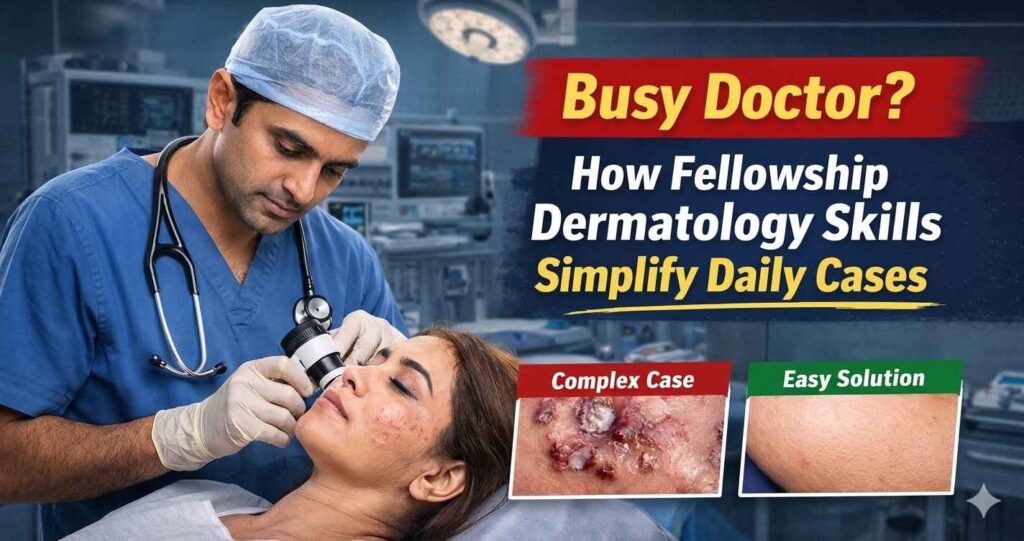
busy doctor how fellowship dermatology skills simplify daily cases
Learning blogs

Busy Doctor? How Fellowship Dermatology Skills Simplify Daily Cases

The Case That Most Doctors Relate To It’s already 6:45 PM and the OPD still hasn’t slowed down. In the middle of the rush, a 32-year-old patient walks in with what looks like a simple rash—red patches with mild itching.  You take a quick look, think of a common fungal infection, write a prescription, and move to the next patient. It feels routine. But two weeks later, the same patient is back—and this time, things are clearly worse. The lesions have spread, there’s noticeable scaling, and the patient is frustrated.  You pause, take a closer look, and it hits you—this isn’t fungal at all. It’s psoriasis. Moments like this are uncomfortable, but they’re real. They don’t happen because you don’t know dermatology; they happen because real-life cases rarely follow textbook patterns, and in a busy setup, that gap becomes very visible. Why MBBS Doctors Struggle with Dermatology in Practice Dermatology looks simple—until it isn’t. In MBBS, dermatology is often limited to theory. You learn definitions, classifications, and textbook images. But real patients don’t walk in with textbook presentations. Here’s where the challenge begins: Skin conditions overlap visually Early-stage diseases look misleading Patients self-medicate before coming Time pressure forces quick decisions In a busy OPD, you rarely get the time to pause and analyse every case in depth. Decisions have to be quick, yet accurate. That’s where clinical pattern recognition and confidence come into play, built only through real exposure. A structured fellowship in dermatology in India helps bridge this exact gap. Why upskilling in dermatology is no longer optional As a general physician or MBBS doctor, dermatology isn’t optional anymore—it shows up in your OPD every single day, whether you expect it or not. 1. Clinical Accuracy Improves Immediately Instead of guessing, you start identifying patterns: Fungal vs eczema Drug rash vs viral rash Acne vs rosacea This reduces repeat visits and treatment failures. 2. Patient Trust Increases Patients notice when you are confident. When your diagnosis is correct the first time: They trust you more They refer others They stick to your treatment 3. Career Growth Becomes Practical With dermatology skills: You expand your OPD services You can start minor procedures You increase per-patient value This is why many doctors now actively look for fellowship after MD dermatology in India or even after MBBS. Types of Dermatology Courses Available Before choosing, it’s important to understand the difference. Certificate Courses (3–6 months) Basic understanding Limited clinical depth Good for quick overview Diploma Courses (6–12 months) More structured Covers theory + some cases Better than certificate, but still limited Fellowship Programs (6–18 months) Case-based learning Real-world clinical exposure Focus on diagnosis + management Often includes cosmetic dermatology basics For a busy doctor, fellowship programs offer the best balance between time and practical learning—especially online fellowship in dermatology options. Dermatology Fellowship for MBBS Doctors in India Many still think dermatology is specialists-only, but daily practice proves otherwise. Today, many structured fellowships are designed specifically for: MBBS doctors Interns General practitioners These programs focus on: Common OPD cases High-frequency conditions Practical diagnosis methods Instead of rare diseases, they teach what you actually see daily: Acne Fungal infections Pigmentation Hair loss That’s why a Dermatology Fellowship for MBBS Doctors in India is becoming a practical career upgrade, not just an academic add-on. Hands-on Training in Dermatology Fellowship One major difference between theory and real learning is hands-on exposure. Good fellowship programs focus on: Case discussions (real patient scenarios) Image-based diagnosis training Treatment planning exercises Procedure basics (peels, lasers, etc.) Even in online fellowship in dermatology, the better programs simulate clinical thinking through: Case libraries Visual diagnosis drills Step-by-step management plans Confidence grows in clinics, not books—seeing, missing, and learning daily. Career Opportunities After Dermatology Fellowship After fellowship, you notice real changes in how you handle cases daily. 1. Stronger OPD Practice You handle skin cases faster and better. 2. Add-On Services You can gradually introduce: Acne treatments Chemical peels Basic cosmetic advice 3. Increased Income Dermatology cases often have: Higher consultation value Better follow-up compliance Procedure-based income 4. Niche Positioning You don’t need to be a full dermatologist. But you can become: “The doctor who is very good with skin cases.” That alone can transform your practice. Accredited Dermatology Training Programs in India Not all courses are equal. When choosing a program, look for: Organised curriculum Modules based on cases Certification that is widely accepted Help from a mentor Focus on the practical Avoid programs that are: Only theory-based Too short with no depth No real-case exposure An Accredited Dermatology Training Program in India ensures that your learning actually translates into practice. Real-World Impact: Before vs After Learning Scenario 1: The Misdiagnosed Rash Before Fellowship: You prescribe antifungal for most red lesions Mixed results Patients return unsatisfied After Fellowship: You differentiate eczema vs fungal vs psoriasis Targeted treatment Faster recovery Scenario 2: Acne Management Before: Generic creams for all acne patients Poor long-term results After: You classify acne type Adjust treatment stage-wise Add lifestyle + procedural advice Outcome? Better results, happier patients. Course Spotlight (Subtle but Important) One example worth mentioning is structured programs like Medvarsity’s e-Dermatology. What makes such programs useful: Case-based curriculum Focus on OPD-ready skills Flexible learning (important for busy doctors) Certification that adds credibility The real value isn’t just in what you study, but how you learn it. Instead of getting lost in heavy theory, the training stays practical—focused on what you’ll actually do when a real patient sits in front of you. Common Doubts Doctors Have “I don’t have time.” Fair concern. But most fellowships today are designed for working doctors: Flexible hours Weekend learning Recorded sessions You don’t need extra time. You need better structured learning. “Is it really worth it?” Ask yourself: How many dermatology cases do you see daily? Even 5–10 cases per day means: Hundreds per month Thousands per year Improving accuracy here has a direct impact on your practice. “Will it actually help in real practice?” Only if the course is practical. If

What Are the Key Benefits of Fellowship in Oncology for Doctors
Learning blogs

What Are the Key Benefits of Fellowship in Oncology for Doctors

There is a fast changing environment in the healthcare market, and as the burden of cancer cases worldwide continues to rise, the demand of well trained oncologists in the market has never been higher. A Fellowship in Oncology is meant to prepare physicians with a high-level of clinical practice, expertise, and practical training in cancer care. This fellowship is an avenue to professional excellence as well as personal fulfillment of medical professionals wishing to have a successful and meaningful career. This blog will focus on the major advantages of Fellowship in Oncology, as well as all the information a doctor should be aware of prior to deciding to get this specialization. What Is an Oncology Fellowship Fellowship in Oncology is a specialized training program that is short term; it concentrates on the treatment, diagnosis and management of different types of cancer. It is usually followed up after MBBS or postgraduate medical degrees including MD/MS/DNB. The fellowship is based on several domains, such as: Oncology: Med. (chemotherapy, immunotherapy) Radiation Oncology Surgical Oncology Palliative Care The main advantages of Fellowship in Oncology among Doctors 1. Higher Specialization and Professionalism The possibility to acquire in-depth specialization is one of the greatest advantages of a Fellowship in Oncology. Physicians go past general practice and become specialists in the treatment of complex cases of cancer. Such specialization improves clinical decision making and outcomes in patients. 2. Career Growth and High Demand The world is experiencing increased cases of cancer which are culminating into the high demand of oncology experts. Having graduated a Fellowship in Oncology, physicians are able to pursue opportunities in: Multi-specialty hospitals Cancer research institutes Oncology clinics Academic institutions This will guarantee a predictable career progression and a secure employment future. 3. Enhanced Earning Potential The ability to earn is a direct influence of specialization in a doctor. Oncology practitioners may be given: Higher salary packages Improved incentives in the private hospitals. Private practice opportunities. Fellowship in Oncology may be of great benefit in terms of finances. 4. Clinical Training This fellowship is not as theoretical as other courses, but it gives more emphasis on exposure. Physicians are provided with practical experience in: Diagnosing cancer stages Administering chemotherapy Treatment complications management. This practical training develops belief and proficiency. 5. Introduced to Hi-tech Technologies Oncology is the most technologically-developed branch of medicine. Doctors are taught during the fellowship about: Targeted therapy Immunotherapy Precision medicine State of the art imaging and diagnostics. This keeps the professionals informed on the latest medical improvements. 6. Research and Innovation opportunities Research based careers are allowed through a Fellowship in Oncology. Doctors can: Be involved in clinical trials. Publish research papers Make a donation towards new treatment of cancer. This suits the people who are interested in academic and research oriented positions. 7. International Career Opportunities Efficiency in oncology is globally known. Doctors who have completed a Fellowship in Oncology can: Enroll in international qualifications. Global healthcare system employment. Work with international oncology teams. This offers international movement and publicity. 8. Multidisciplinary Collaboration The process of cancer treatment must be a team effort. The physicians collaborate with the following in the course of the fellowship: Surgeons Radiologists Pathologists Palliative care experts. This improves total patient management competencies. 9. Recognition and Credibility: Professional Oncology specialization is a sure way of improving the reputation of a doctor. It: Builds trust among patients Increases the level of trust in the medical fraternity. Places physicians as leaders in cancer treatment. 10. Professional and emotional satisfaction The work with cancer patients is complicated, but very fulfilling. Doctors: Be significant in life saving. Offer hope and care to patients and families. Feel a high level of mission. Fellowship in Oncology Eligibility Criteria Applicants in the Oncology field should be Doctors with at least: MBBS degree (mandatory) MD/MS/DNB (desired in most programs) Valid medical registration Clinical experience is also a requirement of some programs. Duration and Course Structure Duration: 1 to 2 years Mode: Online, offline or hybrid. Curriculum includes: Theoretical modules Clinical case discussions During practice at hospitals. Openings in Oncology After Fellowship. Career opportunities after the fellowship Consultant Oncologist Clinical Researcher Associate. Inpatient Specialist in Oncology hospitals. Academic faculty Private practitioner Challenges to Consider Although the benefits are high, doctors should also be conscious of: Stressful work climate. Long working hours On-going learning needs. These obstacles are however overshadowed by the long term payoffs. Conclusion Fellowship in Oncology is a revolutionary move in which a physician intending to major in cancer treatment would undertake. It offers progressive learning, practical education, international exposure and good career opportunities. As the demand of oncology experts increases, this fellowship guarantees career development and contribution to the life of patients. Medical Global Academy provides well-organized fellowship programs that aim to equip physicians seeking a high-quality and career-oriented program to provide practical training, professional mentoring, and knowledge related to the industry. The difference between a successful and unsuccessful oncology career can be in the choice of the right institution. FAQs 1. Who is eligible to apply for a Fellowship in Oncology?  Medical practitioners having an MBBS degree may apply but postgraduate is usually desirable. 2. How long is a Fellowship in Oncology?  The majority of the programs take 1 to 2 years. 3. Does the fellowship have clinical training?  Yes, the majority of the programs offer practical clinical exposure. 4. How much is the pay following a Fellowship in Oncology?  Salary is variable (as a general practice) but usually higher, based on experience and location. 5. Is it possible to have a Fellowship in Oncology online?  Certain institutes also have an online or hybrid form of training though practical training is mandatory.

online Medical Courses in India for Improving Clinical Skills Fast
Learning blogs

Online Medical Courses in India for Improving Clinical Skills Fast

Introduction Online Medical Courses in India for Improving Clinical Skills Fast. The modern, rapidly changing clinical landscape has transformed the need to keep up to date with current trends to be not only safe but also effective in providing care to patients. The gap in theoretical knowledge and the practical clinical application is a challenge to many practising doctors, particularly when they are facing a hectic OPD schedule and emergency calls. This is where online medical courses in India are transforming how doctors learn and upgrade their skills. These programs offer a practical, flexible pathway for fast skill upgrades without leaving practice, enabling clinicians to enhance their expertise while continuing patient care. Why Clinical Skill Improvement is Crucial for Doctors Clinical excellence has a direct influence on patient outcomes. A minimal increase in the accuracy of the diagnosis or treatment planning can have a considerable positive effect on the reduction of complications and a higher recovery rate. In modern healthcare, doctors are expected to: Quickly and accurately make clinical decisions. Keep abreast of the new guidelines and protocols. Administer complicated OPD and ICU matters effectively. As an example, a doctor who has learned to quickly differentiate between cardiac and non-cardiac chest pain in a busy OPD would avoid unnecessary delays and save the lives of patients. On the same note, in the ICU, prompt detection of sepsis may save lives. As the competition and specialisation were growing, continuous improvement of skills is not an option anymore but a professional requirement. Limitations of Traditional Learning for Practising Doctors Traditional medical education methods often fall short for practising clinicians. Some key limitations include: Time: The long working hours do not leave much time to attend the offline course. Minimal practical exposure: Most of the programs are theory-filled. Travel/ relocation concerns: To participate in workshops, one needs time off practice. Modelling learning as a theory: Insufficient pragmatic case discussion and changing clinical situations. Conversely, modern medicine requires active learning that is based on real cases of patients, as opposed to textbook learning. How Online Medical Courses in India Help Doctors Upskill Fast The emergence of online medical education in India has helped deal with most of these issues through the provision of flexible and clinically relevant learning opportunities. Key advantages include: Learning on the go: Doctors are able to work wherever they go or anytime, yet not interfering with the practice. Case-based learning: Real case studies augment real life knowledge. Live and recorded sessions: This allows having intercourse with the experts and revising at any convenience. Certifications earned: Having sources of professional credibility. Notably, these courses are based on application-orientated learning, and doctors can apply new knowledge directly in practice. This makes the process of skill acquisition quicker and more efficient than the conventional strategies. Key Clinical Skills Doctors Can Improve Through Online Courses • Clinical Decision-Making Effective practice is based on strong clinical judgement. The online courses assist the doctors in honing their diagnostic paths, symptom interpretation, and selection of evidence-based treatment, thereby resulting in quicker and more precise decision-making. • Emergency Case Handling Emergency management needs to be fast and sure. Trauma, cardiac emergencies, and critical care training modules enhance the effectiveness of a doctor to react in high-pressure situations, particularly in ICU and emergency departments. • Diagnostic Skills Diagnosis must be done accurately to be treated successfully. The courses in ECG interpretation, radiological imaging, and lab investigations increase the capability of a doctor in detecting conditions in the initial stages and save diagnostic errors. • Patient Management & Communication Efficient management of patients leads to better outcomes and satisfaction. Physicians get to understand how to streamline the OPD processes, deliver the diagnoses in the most effective manner and create trust with the patient, which is an invaluable yet highly important part of any clinical success. Features to Look for in the Best Online Medical Courses in India Not every course has an equal value. Doctors must look at the following features when choosing the appropriate program: Practical training: Case discussion and scenarios. Senior clinicians and specialists: Leadership by experienced faculty. The actual experience in clinical practice: Pay attention to the real patients. Revised instructions: Material conformed to the current medical standards. Certification worth: Official qualifications that improve employment opportunities. Mentorship support: Ongoing instructions and resolution of doubts. The best online medical courses in India are those that go beyond theory and focus on real clinical application. How to Choose the Right Course for Your Speciality It is necessary to make the right decision in a strategic way. Doctors should evaluate: Speciality relevance: Choose courses in your area (e.g., cardiology, radiology, critical care. Course length: short course training to hopefully learn in a short time or long-term specialisation. Learning style: Live, recorded lectures or hybrid. ROI: Clinical practice and career development and income potential. A well-chosen course can contribute to the increase of knowledge as well as improve clinical efficiency and confidence in practice on a daily basis. Conclusion  In this era when medicine is advancing very fast, it is paramount that every practising doctor should continuously learn. Online medical courses in India provide a practical, flexible, and clinically focused pathway to upgrade skills without interrupting professional commitments. These courses enable physicians to provide better care, whether it is through better diagnostic accuracy, better emergency response, better patient management, etc. Now, when you need to keep up with the times in your area, it is the opportunity to pursue the correct path, sharpen your clinical knowledge, and improve practice. Wait no more since in medicine, to be up-to-date is to be up-to-date.

Scroll to Top