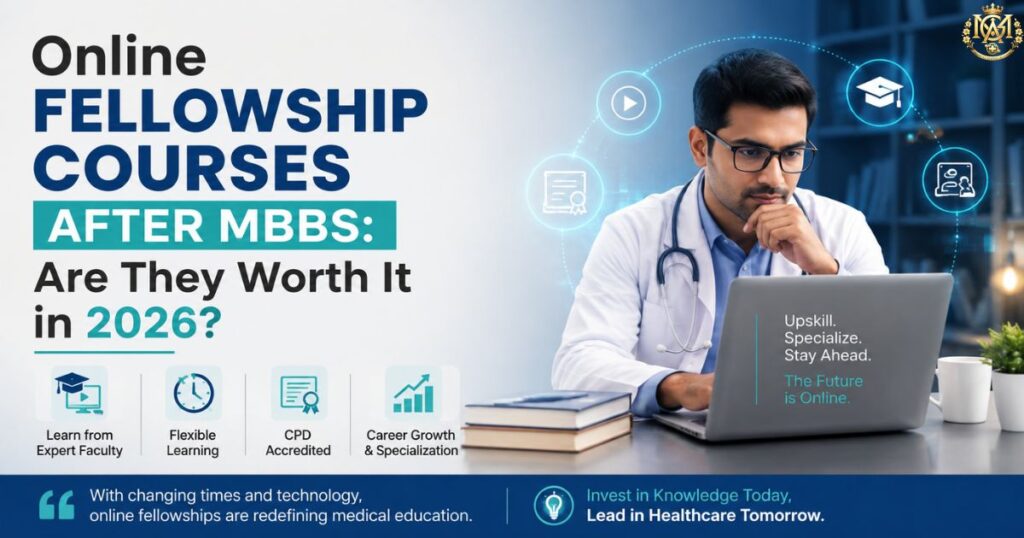
Online Fellowship Courses After MBBS: Are They Worth It in 2026?
Quick Answer Online fellowship courses after MBBS are structured, specialty-focused medical education programs delivered through live evening sessions, recorded lectures, and case-based modules. They allow working doctors to specialise in a clinical area — such as cardiology, dermatology, emergency medicine, or critical care — without pausing their careers. For doctors who cannot attend full-time programs, they are a practical, credible route to professional development. If you are a practising MBBS doctor wondering whether you can specialise without stepping away from your OPD or hospital job, the answer is yes. Online fellowship courses after MBBS have made this possible in a way that traditional postgraduate programs never could. A decade ago, a doctor who wanted a fellowship had two options: either attend a full-time hospital-based program or go without. Neither worked well for someone already in practice. Today, the structure has changed. Evening live sessions, recorded lectures, and case-based online modules have created a genuine third option — one that lets you continue earning while you build clinical expertise in a specific specialty. But with more institutions offering online fellowships, the obvious question follows: are they all worth it? How do you evaluate them? What should you look for in a program? And which specialties translate well to online learning? This guide answers each of those questions honestly, based on how fellowship learning models actually work — without overpromising outcomes. 1 year Typical fellowship duration Evening Classes after OPD hours 60+ MGA specialty programs What this guide covers What is an online fellowship course after MBBS? How online fellowship programs are structured Online vs offline fellowship — honest comparison Which specialties work well in an online format What accreditation actually means for online fellowships Who should consider an online fellowship Who should not How to evaluate an online fellowship program before enrolling MGA fellowship programs — how they are delivered Frequently asked questions What is an online fellowship course after MBBS? An online fellowship course is a structured continuing medical education program that delivers specialty-focused clinical learning through a digital format. Unlike a traditional hospital-based fellowship that requires physical attendance, online fellowship programs use live evening sessions, recorded lectures, case-based discussions, and digital assessments to deliver the same core clinical curriculum to working doctors. The term “online fellowship” covers a wide spectrum. At one end are rigorous, curriculum-driven programs with structured assessments, faculty-led live sessions, and clear accreditation frameworks. At the other end are loosely organised webinar series or short certificate programs that use the word “fellowship” without the structure to support it. The difference matters — and this guide will help you identify which category a program falls into before you enrol. For MGA’s purposes, fellowship programs are CPD accredited with international recognition through applicable UK accrediting bodies. They run for one year, follow a structured curriculum, and include an assessment component of approximately 100 pages of assignment during the academic year where applicable. How online fellowship programs are structured A well-designed online fellowship program is not a set of YouTube videos. It follows a deliberate structure that builds clinical knowledge progressively over the program duration. Here is what that typically looks like: Live evening sessions Most online fellowship programs designed for working doctors schedule their live classes after OPD hours — typically between 7 PM and 9 PM. These sessions are instructor-led and cover specific clinical topics from the fellowship curriculum. They allow real-time interaction with faculty and fellow participants. Recorded lectures Sessions are recorded and made available to participants who cannot attend live. This is especially valuable for doctors with unpredictable schedules — shifts, on-call duties, or emergency responsibilities that occasionally conflict with class timings. Recorded access ensures continuity without penalty for missing a session. Case-based clinical modules The most effective online fellowships include structured clinical case discussions — real patient scenarios presented in a learning format, where participants are asked to work through diagnosis, management, and decision-making. This is where the practical application of theoretical knowledge happens. Assessment Structured programs include formal assessment components — written assignments, case submissions, or end-of-module tests. The assessment process is what separates a credible fellowship from a participation-only webinar series. It ensures the doctor has actually engaged with and understood the curriculum. Faculty Faculty credentials vary significantly between programs. Look for programs where faculty are active clinicians with specialist expertise in the program’s specialty area — not generalist educators delivering broad overviews. Online vs offline fellowship — honest comparison This is the question most doctors actually want answered before they choose. The honest answer is: it depends on what you need the fellowship for. Factor Online fellowship Traditional (offline) fellowship Flexibility High — continue working full-time Low — requires full-time attendance Clinical knowledge depth Strong — if program has structured curriculum and assessment Strong — direct exposure to clinical environment Income during study Uninterrupted — you keep earning Reduced or stopped — depends on program terms Geographic access Available from anywhere in India Requires relocation to program city Accreditation Varies — CPD, UK body, or institution-specific Varies — hospital or institution-specific Peer interaction Limited to live sessions and group discussions Daily in-person interaction with peers and faculty Best for Working doctors building specialty knowledge Doctors prioritising deep immersive clinical exposure Suitability Strong for knowledge-based specialties Essential for procedure-heavy specialties The key insight from this comparison: online fellowships are not inferior to offline fellowships in a general sense. They are the right format for specific situations — primarily doctors who are already in clinical practice and want to build specialty knowledge without interrupting their career or relocating. Which specialties work well in an online fellowship format Not all specialties translate equally well to online learning. The programs that work best are those where the core competency is clinical decision-making, interpretation of investigations, and patient management protocols — skills that can be developed through structured case-based curriculum and faculty-led discussion without requiring physical procedure training. Strong fit for online fellowship Clinical Cardiology ECG interpretation, heart failure management, arrhythmia protocols, cardiac pharmacology —