Medical Global Academy

Learning blogs

Fellowship in Laparoscopy: Skills Every Surgeon Should Master
Learning blogs

Fellowship in Laparoscopy Skills Every Surgeon Should Master

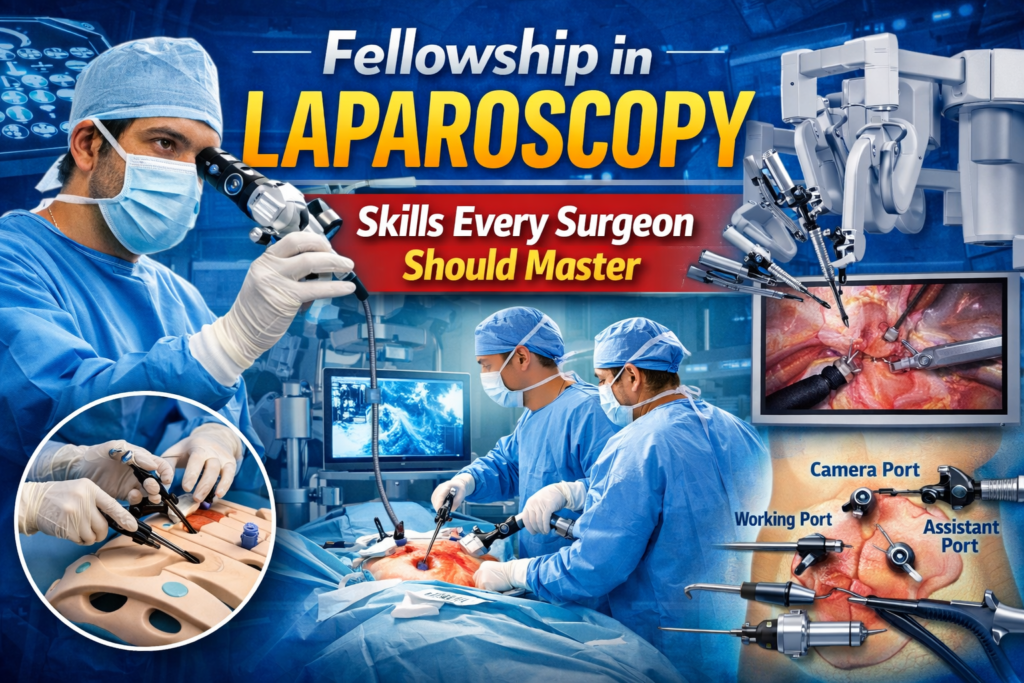
Minimally invasive surgery has experienced an extremely rapid expansion in the last ten years, and Fellowship in Laparoscopy has become one of the most in demand programs among surgeons the world over. This fellowship equips the surgeons with high level skills in surgery, practical experience, and exposure to new advanced methods. This blog will address the most important skills that every surgeon must learn during their fellowship in Laparoscopy, which will not only allow them to grow in their career but also provide the best patient care. Learning Fellowship in Laparoscopy Laparoscopy Fellowship is an advanced training program that targets surgeons that intend to increase their capabilities in minimally invasive procedures. The program has specialized on the technical, theoretical and clinical aspects of laparoscopic surgery. Surgeons have the opportunity to work closely with the mentors, carrying out the procedure of simple diagnostic laparoscopy through very complicated robotic-assisted surgeries. Important Advantages of Laparoscopy Fellowship Experience in the practice of least invasive surgery. Introduction to the latest laparoscopic technologies and tools. Increased accuracy and decreased time of patient recovery. Research and publication in laparoscopic surgery. Greater career opportunities and specialization. The Skills that Every Surgeon Needs To Learn In a Fellowship in Laparoscopy, surgeons should be able to acquire a set of technical, cognitive, and soft skills. These competencies do not only guarantee better surgical results but also make the surgeon more confident and have better judgment skills. 1. High-level Hand-Eye Co-ordination Laparoscopic surgery is an operation where a long procedure is carried out using very small cuts and a monitor is used to view the operation. High-level hand-eye coordination is essential to: Precisely manipulate instruments. Avoid tissue injury Complete complicated suture and knot-tying. 2. Laparoscopic Instruments Knowledge There are also machines like trocars, laparoscopes, graspers, dissectors, and energy devices that the surgeons should be trained to use. The profound knowledge of these tools can guarantee: Dexterous tissue manipulation. Decreased intraoperative complications. Rapid learning of various laparoscopic systems. 3. Mastery of Basic and Advanced Laparoscopy A Laparoscopy Fellowship would expose the surgeon to the following procedures: General Operations: Appendectomy, cholecystectomy, laparoscopic diagnosis. Procedures of the advanced type: Hernia repair, bariatric surgery, colorectal procedures, gynecological surgeries. These procedures are necessary in order to develop competency and confidence in complex cases. 4. Three-Dimensional Pictorialization and Space consciousness Laparoscopic surgery is done as compared to the open surgery being done under a 2D visual field. The surgeons have to learn to: 3D visualization of anatomy. Perceives judge distances and tissue planes perfectly. Adapt to complicated anatomical differences. 5. Handling and Dissection Techniques of Tissues Tissues are delicate and require careful treatment to reduce the trauma and guarantee healing. Surgeons must learn: Sharp and blunt dissection Safe tissue retraction Electrosurgical equipments should be used under controlled consumption. 6. Skills in Suturing and Knot-Tying Laparoscopic knot tying and laparoscopic suture are difficult procedures that need a lot of practice because of the lack of space and the inability to move instruments. Surgeons should master: Knot methods in intracorporeal and extracorporeal. Constant and intermittent suturing. Effective sealing of the superficial and deep tissues. 7. Intraoperative Complications Management A Laparoscopy Fellowship will expose surgeons to complications that include: Vascular and bleeding injuries. Organ perforation Equipment malfunction Conversion to open surgery Ready reserves will guarantee patient safety and minimise postoperative morbidity. 8. Laparoscopic Anatomy knowledge It is essential to have a clear explanation of anatomical landmarks both normal and variant. Surgeons should be able to: Recognize organ and structures during laparoscopy. Be familiar with the anatomy of the vessels and nerves. Make safe dissections and resections. 9. Robotic-Assisted Laparoscopy Robot surgery training is now being incorporated into many fellowships. Surgeons should: Study operator robotic training. Learn the dynamics of instruments. Make minute movements and complicated steps. 10. Research and Academic Skills Participation in research is promoted by a good fellowship. Surgeons should be able to: Carry out clinical trials and research. Share results in peer-reviewed journals. Present at conferences Involvement of the research increases credibility and keeps the surgeons abreast with innovations. 11. Patient Selection and Preoperative Planning Laparoscopic surgery is a type of surgery that needs to be mastered by surgeons in the field of patient assessment. Key skills include: Assessing comorbidities and risk factors. Planning the location of ports and strategy of procedures. Addressing patients about risks, benefits and alternatives. 12. Follow-Up and Care after the Surgery Operative management is no less important than surgery. Surgeons should: Watch out on complications such as infection or bleeding. Recommendations on early mobilization and diet. Make sure that there are appropriate recovery protocols. Tips to Excel a Fellowship in Laparoscopy Laparoscopy practice on Simulators: Laparoscopy Practice Before operating patients, practice laparoscopy on laparoscopic simulators or in animal models. Find Mentorship: Get the guidance of the knowledgeable laparoscopic surgeons that can help with the development of techniques. Attend Workshops: Participate in specialized workshops and conferences to stay updated. Doc. Cases: Keep a journal of processes, problems and results. Keep abreast: Read journals and publications to ensure you are abreast with innovations in laparoscopic surgery. Conclusion There is much more to a Fellowship in Laparoscopy than a certificate, it is a challenging course of skills development, knowledge and experience in surgery. Surgeons are able to learn advanced hand-eye coordination, instrumentation, suturing, tissue handling, complication management, and robotic surgery by mastering all that can help them dramatically better patient outcomes, and increase their career opportunities. To every would-be minimally invasive surgeon, they are not optional but must be skillful. FAQs Q1. How long do Fellowships in Laparoscopy last? A: Generally, the duration of the fellowship is between 6 months and 2 years, but this is program and institution specific. Q2. Who do you qualify to be a Fellowship in Laparoscopy? A: Eligible surgeons are those who have undergone their MBBS and have undergone their residency in general surgery or any other related specialty. Q3. Will laparoscopic fellowships have an international opportunity? A: Yes, there are a lot of countries with a developed laparoscopic
Career Scope After Fellowship in Oncopathology in 2026
Learning blogs

Career Scope After Fellowship in Oncopathology in 2026

It has been observed that cancer is one of the most common causes of death all over the world and proper diagnosis is very important in proper treatment. Oncopathologists would be the next step here. A Fellowship in Oncopathology in 2026 opens the career prospects to specialized work in cancer diagnostics, research and advanced pathology services. The demand for skilled oncopathologist is persistent in 2026 because of the rising cases of cancer, technological developments, and increasing diagnostic healthcare facilities. Such a blog offers a comprehensive summary of the job after Fellowship in Oncopathology, such as job opportunities, remuneration, career development and prospects. Fellowship in Oncopathology What is Fellowship in Oncopathology The special training of pathologists and medical workers who wish to become experts in diagnosing cancer by microscopic analysis of tissues, cells, and molecular markers is called a Fellowship in Oncopathology. Key Skills Learned During Fellowship in Oncopathology Histopathological diagnosis of tumors. Cytopathology and interpretation of biopsy. Immunohistochemistry (IHC) methods. Cancer biomarkers and molecular pathology. Cancer staging and grading Clinical correlation and reporting. Such competencies render fellows very useful in the diagnosis and planning of cancer treatment. Why Fellowship in Oncopathology is Highly Relevant in 2026 Oncopathology has come into relevance to a greater extent because of a number of reasons: 1. Increasing Cancer Incidences in the World. There is a growing cancer incidence in the world, which is leading to high demand in trained oncopathologists in hospitals and diagnostic labs. 2. Expansion of Diagnostic Centers. There is a boom in the growth of the number of private diagnostic laboratories and cancer centers in India and developing countries, in particular. 3. Innovations in Cancer Diagnostics. Contemporary tools like molecular diagnostics, genetic testing, and targeted therapy demand specialized oncopathologists. 4. Rising Demand of Special Pathologists. When, hospitals would choose a specialist who has been trained as a fellow over general pathologists in the diagnosis of cancer. Opportunities after Fellowship in Oncopathology. Doctors are able to work in various sectors of healthcare after having done a Fellowship in Oncopathology. 1. Consultant Oncopathologist It is the most popular and the most rewarding career. Workplaces: Cancer hospitals Multispecialty hospitals Private pathology labs Oncology centers Responsibilities: Determine cancer through biopsy samples. Give correct pathology reports. Aid oncologists during treatment planning. 2. Figure 1 Software developer II programmer Data entry specialist Oncopathologists are needed in diagnostic laboratories to test and report cancer. Roles include: Histopathology reporting Cytology analysis Immunohistochemistry interpretation Diagnostics of molecular pathology. The professional development of chains of diagnostics such as private pathology labs is outstanding. 3. Academic and Pedagogical Career. The doctors who are interested in teaching can join: Medical colleges Training institutes Fellowship programs Positions include: Assistant Professor Lecturer Academic Consultant Research and professional development also occur in the process of teaching. 4. Cancer Research Specialist Oncopathologists are important in cancer research. Research areas include: Cancer biomarkers Molecular pathology Targeted therapy research Cancer prevention studies Doctors can work in: Research institutions Pharmaceutical companies Clinical research organizations 5. Molecular Pathologist Molecular pathology is an emerging discipline with the development of personalized medicine. Responsibilities include: Genetic mutation analysis Identification of biomarkers of cancer. Targeted therapy support It is among the most attractive career opportunities in 2026. 6. Laboratory and Laboratory ownership. Qualified oncopathologists will have the option of opening their own diagnostic laboratories. Benefits: High income potential Professional independence Long-term career stability The opportunities of growth in private practice are excellent. Oncopathology Salary Post Fellowship in 2026. Pay is based on experience, location and place of work. Average Salary in India New fellowship graduate: ₹815 lakh/ year. Experience of 3-5 years: 15- 25 lakh/annum. Oncopathologist, senior: 25-40 lakh/ year. Owners of private practices: 40 lakh and above/ year. Pay Opportunities in Multinational Companies. Other countries such as the USA, UK, Canada and UAE are more salaried and promising. Professional Development and Work Promotion. Fellowship in Oncopathology is a career development program. Career Progression Path Junior Oncopathologist Consultant Oncopathologist Senior Consultant Head of the department of pathology. Laboratory Director It is also through experience that the doctors can be national and international experts. Scope in Cancer Centers and Hospitals. Oncopathologists are needed in hospitals in order to make precise diagnosis and treatment planning. Top Employers Include: Cancer specialty hospitals Multispecialty hospitals Government hospitals Private healthcare chains Oncopathologists are vital professionals in the oncology teams. Scope Diagnostic Laboratories. Laboratories provide great opportunities in terms of diagnostics. Roles include: Histopathology consultant IHC specialist Expert in the field of molecular pathology. Diagnostic chains are growing at an unbelievable pace, which puts pressure on work. International Career Opportunities. The international opportunities also open up to fellowship in Oncopathology. Countries with High Demand United States United Kingdom Canada Australia UAE India Depending on the country, doctors might be required to pass licensing tests. Future Scope of Fellowship in Oncopathology The future of oncopathology is very bright because of: Rising cancer incidence Development of molecular diagnostics. Cancer hospitals expansion. Advantages of personalized medicine. Decades to come Oncopathologists will still be in demand. Skills Required for Career Success In order to achieve success upon completion of Fellowship in Oncopathology, physicians require: Strong diagnostic skills Attention to detail Knowledge of cancer biology Knowledge of molecular procedures. Good communication skills This is a changing discipline that requires continuous learning. The benefits of Doing Fellowship in Oncopathology. Key benefits include: High career demand Excellent salary potential Job stability Indian and overseas opportunities. Hospital and research career development. It is among the finest pathology specializations as of today. Conclusion The 2026 career outlook of an Oncopathologist with Fellowship is very bright as the number of hospitals, diagnostic laboratories, and cancer research centers are in need of qualified experts. Oncopathologists are essential in proper diagnosis of cancer, treatment planning and in promoting personalized medicine. Having great salary perspectives, international opportunities, and career development in the long term, this fellowship is the perfect option to consider for pathologists who need specialization in oncological diagnostics. Such institutions as Medical Global Academy offer systematic training, clinical practice, and professional

fellowship in dermatology after MBBS for clinical practice growth
Learning blogs

Fellowship in Dermatology After MBBS: A Practical Career Roadmap for Doctors in 2026

Introduction Completing MBBS is both satisfying and unsettling. After years of structured learning, postings, and examinations, you suddenly find yourself asking a very simple but difficult question: What next? Some prepare for postgraduate entrance exams immediately. Some join government service. Others enter private practice to gain clinical exposure. Yet many doctors, especially those working in outpatient settings, gradually notice something important — a significant proportion of daily cases involve skin. From recurrent fungal infections to acne, eczema, pigmentation disorders, and hair loss, dermatology is not an occasional subject in practice.It is regular, observable and more topical. In the coming years (2026), the patient interest in skin health, preventive healthcare, and aesthetic procedures will only increase. Teleconsultation paradigms are growing. The expectations are shaped by social exposure. Fellowship in Dermatology post MBBS is one of the programs that many new doctors are considering as an organized skill-development strategy in the changing environment. However, this decision requires clarity — not assumption, not marketing influence, and certainly not unrealistic expectations. Let us examine it practically. Why Dermatology Is Gaining Attention After MBBS During general practice, one realization becomes obvious: dermatological complaints rarely stop. Seasonal fungal infections, steroid-modified tinea, adolescent acne, adult-onset acne, chronic eczema, psoriasis, melasma, and drug eruptions form a steady stream of consultations. Dermatology offers several professional advantages: It is predominantly outpatient-based. Emergencies are relatively limited compared to critical care specialties. It combines clinical reasoning with procedural skills. Treatment outcomes are often visible and measurable. Yet it is essential to remain grounded. Dermatology is not merely aesthetic medicine. It includes autoimmune disorders, pediatric dermatoses, infectious diseases, systemic associations, and chronic inflammatory conditions requiring long-term follow-up. For MBBS doctors, dermatology becomes attractive not because it is “easy,” but because it is practical, clinically engaging, and frequently encountered in real-world practice. What Exactly Is a Fellowship in Dermatology? A Fellowship in Dermatology is typically a 6–12 month structured clinical training program. It is designed to improve focused dermatology skills under supervision. It does not replace MD or DNB Dermatology, nor does it confer specialist equivalence. A credible fellowship usually includes: Supervised OPD exposure Case-based discussions Theoretical teaching modules Introduction to dermoscopy Demonstration of basic procedures Training in documentation and follow-up The training primarily focuses on commonly encountered dermatological conditions and introductory procedural skills. In contrast, MD/DNB Dermatology is a three-year academic residency involving in-depth research training, inpatient exposure, advanced dermatosurgery, and comprehensive subspecialty learning. The academic depth and institutional recognition are significantly broader. Understanding this distinction protects professional credibility and patient safety. Skills Doctors Can Realistically Gain 1. Clinical Competence The greatest value of a structured fellowship lies in improving diagnostic confidence. Doctors commonly strengthen their ability to: Grade and manage acne systematically Plan long-term psoriasis and eczema treatment Use topical and systemic steroids rationally Diagnose fungal and bacterial dermatoses accurately Interpret basic dermoscopic findings Identify lesions that require biopsy or referral Dermatology depends heavily on pattern recognition. Pattern recognition develops through repeated supervised exposure, not through short workshops or online modules. 2. Procedural Foundations Depending on the institute and supervision level, exposure may include: Superficial chemical peels Intralesional injections PRP basics Cryotherapy or cautery Conceptual introduction to laser systems It is important to emphasize: procedural dermatology demands restraint. Complication recognition, aseptic technique, patient selection, and documentation are as important as technical skill. Good training teaches caution before confidence. 3. Clinical Judgment Perhaps the most underrated benefit is improved decision-making: When to manage independently When to refer to a dermatologist How to recognize early adverse drug reactions How to handle patient expectations realistically Clinical maturity is demonstrated not by performing every available procedure, but by understanding professional limits. Can a Fellowship Replace MD Dermatology? This question is frequently asked. The answer is straightforward: No. MD Dermatology offers: Comprehensive academic grounding Research exposure and thesis work Inpatient management of complex cases Advanced dermatosurgery training Institutional academic privileges A fellowship is narrower and more practice-oriented. It is meant to strengthen outpatient-level competence, not create superspecialists. For doctors aiming at academic careers, tertiary care consultancy, or advanced procedural dermatology, postgraduate specialization remains essential. However, for MBBS doctors seeking structured dermatology skill enhancement within defined boundaries, a fellowship can be meaningful and practical. Career Pathways After Fellowship Completion of a fellowship expands options, but success depends on consistent effort and ethical practice. Common pathways include: Hospital Attachment – Additional supervised experience working with a dermatologist. Hybrid Practice Model -Introduction of dermatology-oriented services into general practice. Collaborative Aesthetic Set-up Before proceeding to work independent procedural work, the employee will be working with senior dermatologists. OPD-Based Clinic – The treatment of the well-defined scope of common dermatology conditions. There is a slow growth in financial aspects in dermatology. It relies on patient faith, results, and communication expertise as well as ethical steadfastness rather than on certifications. Medico-Legal and Ethical Responsibilities Dermatology is visually outcome-oriented, and therefore expectations are high. Ethical discipline becomes essential. Every practicing doctor should prioritize: Detailed informed consent Standardized documentation with photographs (where appropriate) Clear explanation of risks and realistic outcomes Transparent cost discussion Timely referral of complicated or systemic cases Avoidance of exaggerated promotional claims Short-term marketing success can damage long-term professional credibility. Responsible dermatology practice is conservative, patient-centered, and legally aware. Continuous medical education and periodic case review strengthen safety. Who Should Consider This Fellowship? A fellowship may be suitable for: MBBS physicians unable to undertake postgraduate entrance exams at once. Doctors who regularly have dermatology cases. Researchers in structured procedure learning. Physicians intending to practice semi-urban or urban based on outpatient. Nurse practitioners who want to enhance dermatology confidence in a responsible manner. It is less suitable for individuals expecting instant specialist recognition without sustained academic effort. 2026 Outlook: The Future of Dermatology Practice Looking ahead, dermatology is likely to expand in three clear directions: Preventive and lifestyle-focused skincare Evidence-based aesthetic interventions Technology-supported consultation and dermoscopic imaging At the same time, regulatory oversight and patient awareness are increasing. Documentation quality, standard treatment protocols, and ethical transparency will define sustainable growth. The future

Fellowship in Critical Care: Complete Guide for Medical Graduates
Learning blogs

Fellowship in Critical Care: Complete Guide for Medical Graduates

Introduction One of the most useful advanced training programs by medical graduates desiring to specialize in management of critically ill patients is a Fellowship in Critical Care. The critical care medicine specializes in the treatment of life-threatening illnesses like respiratory failure, sepsis, trauma, cardiac arrest and dysfunction of multiple organs in intensive care units (ICUs). As the demand of the ICU specialists on a global scale is constantly increasing, a critical care fellowship can boost your career, competency, and salaries significantly. This guide will provide all the information that a medical graduate must be aware of; the eligibility, the time, the admission, the curriculum, the scope of the career, the salary and benefits. What is a Fellowship in Critical care A Fellowship in Critical Care refers to a postgraduate course where specialization in doctors is offered to handle critically ill patients in intensive care units. This fellowship focuses on: Management Intensive Care Unit (ICU). Mechanical ventilation Emergency response Organ support systems Advanced life support Critical patient monitoring. Physicians who go through this fellowship are specialists in medical emergencies and life threatening conditions. Eligibility Criteria for Fellowship in Critical Care   Candidates who wish to apply for the Fellowship in Critical Care have to have some eligibility requirements. Basic Requirements MBBS degree in a registered medical college. MD/DNB (not always but preferable) Valid medical registration Internship completion Preferred Specializations Physicians in such backgrounds have the advantage: Internal Medicine Emergency Medicine Anesthesia Pulmonary Medicine General Medicine There are also institutes which admit MBBS graduates who have clinical exposure. Duration of Fellowship in Critical Care The fellowship time can take between one and three years depending on the type of program and the institute one is in. Typical duration includes: 6 months (short-range certification) 1 year (most common duration) 2 years (advanced fellowship programs) Extensive programs give more knowledge and practical experience in the ICU. Curriculum and Training Structure The curriculum of critical care fellowship is the combination of theoretical and practical training. Core Topics Covered ICU processes and procedures. Ventilation Control of Mechanical Ventilation. Sepsis management Hemodynamic monitoring Trauma and emergency care Cardiac life support Organ failure management Practical Training Includes Rounding ICUs with senior specialists. Patient case discussions Training on emergency response. Ventilator handling Intravenous and extravenous surgeries. This practical training is necessary to acquire practical skills in ICU. Skills You Gain from a Fellowship in Critical Care Doctors acquire necessary ICU skills after the fellowship. Clinical Skills Managing ventilators Critically ill patients Treatment. Management of emergency response. Observing the vital signs and organ functions. Technical Skills Central line insertion Intubation Airway management Use of ICU equipment Decision-Making Skills Quick diagnosis Planning of emergency treatment. Under pressure critical thinking. These competencies render you very useful in the hospitals. Career Scope After Fellowship in Critical Care The shortage of specialists in critical care is growing at a rapid pace owing to the increased healthcare demands. Job Opportunities Upon completion of the fellowship, doctors are allowed to work as: ICU Specialist Critical Care Physician Intensivist Specialized Emergency Medicine. ICU Consultant Employment Areas Government hospitals Private hospitals Super specialty hospitals Trauma centers Emergency departments The critical care specialists are in demand at all times. Salary After Fellowship in Critical Care Salary varies according to the experience, location and the type of hospital. Average Salary in India And entry-level: 8 to 15 lakh annually. Mid-range: 15 lakh to 25 lakh per annum. Experienced: 25 lakh to 40 lakh per year. International Salary The international specialists of critical care have a much better pay. The high demand countries are: UK USA UAE Australia Canada This fellowship gives international career openings. Benefits of Pursuing a Fellowship in Critical Care The benefits of this specialization include a number of aspects. 1. High Demand Career Any hospital that has ICU facilities requires critical care specialists. 2. Career Growth You can become: ICU Head Senior Consultant Medical Director 3. High Salary Potential One of the best-paying branches of medicine is critical care. 4. Global Opportunities Proper licensing allows you to work internationally. 5. Advanced Medical Skills You acquire knowledge in life-saving operations. Admission Process for Fellowship in Critical Care Depending on the institute, the process of admission can be different. Common Steps Submit application form Provide academic documents Attend interview (where necessary) Pay admission fees Start training program There are institutes where admission is through eligibility. Who Should Pursue a Fellowship in Critical Care This fellowship is suited to the doctors who: Want to work in ICU settings Enjoy emergency medicine Want career growth Want higher salary Desire global prospects. It is particularly applicable to doctors of MBBS, MD, and DNB. Future of Critical Care Medicine One of the rapidly developing specialties is critical care medicine. Reasons include: Increase in ICU admissions Rise in chronic diseases Developing healthcare facilities. More requirements for ICU specialists. This renders critical care a career of tomorrow. Conclusion A Fellowship in Critical Care is a great career option to those medical graduates who desire to specialize in the field of intensive care medicine and handle critically ill patients. It offers superior clinical skills, high career development, good remuneration opportunities and international career opportunities. As the need of ICU specialists grows, this fellowship guarantees a stable employment and career growth in the long run. A reputed institute such as Medical Global Academy could offer quality training, on the job experience in the Intensive Care Unit, expert mentoring and effective career management services to doctors to help them establish successful and rewarding careers in critical care medicine. FAQs 1. What is a Fellowship in Critical Care It is an advanced medical training program which trains doctors to handle severely sick patients in ICUs. 2. Who is eligible to take a critical care fellowship MBBS, MD, or DNB doctors having valid medical registration are eligible. 3. How many years of fellowship do you have The term is between 6 months and 2 years based on the institute. 4. Salary post Fellowship in Critical Care Depending on the

Best City for doing Fellowship in Clinical Genetics
Learning blogs

Best City for doing Fellowship in Clinical Genetics

Clinical Genetics becomes one of the sophisticated branches of medicine which is concerned with diagnosis and treatment of genetic disorders. Fellowship in Clinical Genetics assists physicians in gaining skills of genetic diagnosis, genetic counseling and patient management. Selection of the appropriate city matters a lot since it influences the quality of training, clinical exposure, as well as career. There are a number of cities in India, which provide good training facilities, advanced laboratories, and qualified staff to take the Fellowship in Clinical Genetics. The Importance of Making the Right City Choice The purpose of choosing the most appropriate city to Fellowship in Clinical Genetics offers numerous advantages: Better clinical exposure Availability of high-level genetics labs. Working with professional trainers. Real patient cases exposure. Improved career and employment. Cities that have the best hospitals and medical schools offer more learning and career development. Best Cities in India for doing Fellowship in Clinical Genetics Delhi Delhi is among the most perfect medical education cities in India. It possesses the best hospitals, genetics institutions and research centers. Here, doctors will be able to acquire great clinical exposure and career prospects. Chennai Chennai is associated with the developed hospitals and genetics centers. It offers outstanding training, pre-seasoned faculty and quality clinical exposure to genetics. Mumbai Mumbai has a lot of clinical exposure and medical training. It boasts of top hospitals and career prospects in Clinical Genetics are very high. Bangalore Bangalore is a significant biotechnology and healthcare center. It offers better training in genetics and research. Hyderabad Hyderabad is a developing city in medical education. It provides contemporary laboratories, quality hospitals and brilliant training in genetics. Lucknow The city of Lucknow is the seat of the best medical institutes such as SGPGIMS. It has excellent training and clinical exposure in genetics. The considerations to make in the selection of the best city These factors are important before deciding which city to live in: Clinical Exposure Big cities have larger hospitals which are more exposed to patients. Genetics Institutes Select cities where there are genetically-specific academies. Research Opportunities Studies enhance experience and professional development. Faculty and Mentorship More experienced faculty offers superior learning. Career Opportunities The large cities have better working and career opportunities. Fellowship in Clinical Genetics Course Structure The Fellowship in Clinical Genetics typically consists of: Genetic counseling education. Genetic disorder diagnosis Techniques of molecular genetics. Clinical case studies Training on patient management. This training assists the doctors to be Clinical Genetics specialists. Career Opportunities After Fellowship in Clinical Genetics After completing Fellowship in Clinical Genetics they can work as: Clinical Geneticist Genetic Counselor Genetics Consultant Medical Specialist Research Scientist The demand in this field is high because of the increase in genomic medicine. Conclusion The selection of the most suitable city for doing Fellowship in Clinical Genetics is quite crucial to education and career development. Such cities as Delhi, Chennai, Mumbai, Bangalore, Hyderabad and Lucknow offer good training and clinical exposure. Medical Global Academy is the most preferred academy of all academies based on the fact that one receives a structured education, hands-on experience, and professional advice. Obtaining your Fellowship in Clinical Genetics through Medical Global Academy can make you successful in your career in clinical genetics. FAQs Fellowship in Clinical Genetics What Is It It is a specialized medical training course that imparts training on genetic diagnosis and counseling. Fellowship in Clinical Genetics How long is it Most programs are 1 year long. What is the best city for doing Fellowship in Clinical Genetics in India The best cities are Delhi, Chennai, Mumbai, Bangalore, Hyderabad and Lucknow. Who is eligible to apply to Fellowship in Clinical Genetics Applicants are doctors having MBBS, MD, or DNB. Career limitations after Fellowship in Clinical Genetics You may also be a Clinical Geneticist, Genetic Counselor or Genetics Consultant.

Top Benefits of Doing a Fellowship in Cosmetic Gynecology
Learning blogs

Top Benefits of Doing a Fellowship in Cosmetic Gynecology

The subspecialization of cosmetic gynecology is one of the most rapidly developed subspecialties of modern medicine due to greater awareness of the wellness, aesthetic health, and quality of life of females. Gynecologists and other medical practitioners who would like to widen their knowledge in both functional and aesthetic surgeries can use a Fellowship in Cosmetic Gynecology. Benefit of fellowship does not only boost clinical skills but also provides career opportunities, increased potential income and professional development. Today, we are going to discuss the best reasons to pursue a Fellowship in Cosmetic Gynecology, and they comprise career benefits, growth of my skills, financial growth, and future breadth. What is Fellowship in Cosmetic Gynecology A Fellowship in Cosmetic Gynecology is a special medical training course that educates doctors in advanced cosmetic and aesthetic treatments in the area of female reproductive health. The fellowship is aimed at both the functional and aesthetic therapies, which enhance the confidence of patients, comfort, and well-being. Key areas covered include: Plastic surgery of the vagina. Laser vaginal treatments Non-surgical aesthetic gynaecology surgery. Dressing of the lips and cheeks. Sexual wellness treatments Therapy of pelvic floor strengthening. This training assists the doctors to incorporate modern aesthetic procedures in their practice. Increased Demand of Cosmetic Gynecology Experts The high demand of trained specialists is one of the largest advantages of performing a Fellowship in Cosmetic Gynecology. Women are now more conscious of their health, well being and beauty choices. This has greatly increased cosmetic gynecology operations in the world. Reasons for growing demand: Greater awareness of women’s wellness. Increasing tolerance towards cosmetic surgery. The technological procedures in laser and non-surgical processes. Increased demand for post pregnancy and menopause care. Fellowship trained doctors are much sought after in hospitals, cosmetic clinics, and in private practice. Experienced Proficiency and Specialization Fellowship in Cosmetic Gynecology It is a hands-on program that offers training in advanced procedures which are not explicitly taught in conventional gynecology education. Doctors are able to acquire skills such as: Laser vaginal refurbishment methods. Liposuction without injections. Cosmetic labial procedures Assessment and treatment planning of the patient. Application of high-level aesthetic medical equipment. The skills will enable physicians to offer holistic care and enhance patient satisfaction. Greater Professional Development Attaining a Fellowship in Cosmetic Gynecology tremendously increases the career prospects of medical practitioners. Career options include: Gynecologist of cosmetic type in hospitals. Professional in beauty institutions. Gynecology- Cosmetic practice (privately owned). Women wellness center consultant. Medical trainer or educator The fellowship gives the doctors the opportunity to expand their career and venture into the fast-growing aesthetic medicine market. Higher Income Potential Among the most appealing advantages of a Fellowship in Cosmetic Gynecology, one must mention the possibility to gain higher income. Cosmetic procedures are most commonly of a high value service and can be practiced in a private practice or specialty clinic. Financial benefits include: Higher consultation fees Growing procedure-related revenue. Prospects to establish private aesthetic clinics. Additional revenue streams Specialist cosmetic gynecologist doctors can also increase their total earnings enormously. Potential to provide holistic women nursing care Cosmetic gynecology is a kind of Fellowship that enables doctors to deal with functional as well as aesthetic issues. Benefits for patient care: Better patient confidence and quality of life. Functional and aesthetic problem treatment. Improved patient satisfaction and confidence. Capacity to offer advanced treatment opportunities. This assists physicians to shine and have a good reputation in their profession. Medical Practice Competitive Advantage As competition in the healthcare field intensifies, the possession of a Fellowship in Cosmetic Gynecology provides a great edge to the doctors. The benefits to the profession are: Greater credibility and experience. Identification as a professional. Increased patient trust Better professional profile. Fellowship-trained doctors are better in competition in the job market and in private practice. The Chance to Begin your own Cosmetic Gynecology Practice One of the greatest advantages of doing a Fellowship in Cosmetic Gynecology is that you can practice on your own. Advantages of the private practice: Professional freedom and independence. Higher earning potential Capability to provide special services. Opportunities in business growth. After the completion of the fellowship, many doctors set up their own clinic of cosmetic gynecology. Perspectives of Cosmetic Gynecology in the Future The future of cosmetic gynecology is very bright. Technological changes, enlightenment and the demand of the patients are likely to enhance the field tremendously over the next few years. Future trends include: Greater application of laser technologies. Increase in non-surgical operations. Growth of the aesthetic medicine clinics. Increased demand for trained cosmetic gynecologists. Fellowship trained doctors will be in a good position to enjoy this growth. What is the Ideal Person to do a Fellowship in Cosmetic Gynecology This fellowship is ideal for: Gynecologists Obstetricians MBBS physicians who are interested in aesthetic medicine. Health practitioners in women’s health. Physicians wishing to increase their clinical competencies. It is particularly helpful to doctors who want to improve their job and earnings. Conclusion Fellowship in Cosmetic Gynecology is a great choice of such doctors as they have an opportunity to develop their careers, earn more money, and offer their patients modern and comprehensive care. This training also benefits clinical expertise, provides new career opportunities and competitiveness to the doctors in the fast-growing aesthetic medicine field. As the demand in cosmetic gynecology surgeries grows, the success of professionals trained in further education will be long term. Fellowship programs such as Medical Global Academy are provided to offer structured and industry-specific programs to enable doctors with practical skills, advanced knowledge and certification to succeed in cosmetic gynecology, and to establish a successful and future-oriented medical career. FAQs 1. What is a Cosmetic gynecology fellowship A Fellowship in Cosmetic Gynecology is an expert medical education course, which educates physicians on more complicated aesthetic and functional surgeries like vaginal rejuvenation, laser procedures, and women wellness surgeries. It assists the doctors to acquire knowledge in current cosmetic gynecology practices. 2. Who qualifies to do a Fellowship in Cosmetic Gynecology MBBS doctors, gynecologists, obstetricians, and medical practitioners

p g diploma in general medicine enhancing clinical skills and career growth for doctors
Blog, Learning blogs

PG Diploma in General Medicine: Expanding Career Scope & Clinical Practice Growth in India

Introduction – The Clinical Crossroads After MBBS After completing MBBS, many doctors enter a phase of professional uncertainty general medicine. The transition from internship-based learning to independent clinical responsibility can feel abrupt. Simultaneously, the competitive landscape of postgraduate entrance examinations creates pressure to either secure an MD seat or “wait another year.” In real-world practice, however, patients do not wait. A busy outpatient department demands confident decision-making, rational investigations, and structured follow-up planning. Many early-career doctors recognise a clinical confidence gap—especially in managing multisystem cases independently. A PG Diploma in General Medicine emerges in this context as a structured up skilling pathway. Rather than being a shortcut, it is a focused clinical training route aimed at strengthening core internal medicine competencies. For doctors committed to long-term clinical practice, this pathway provides systematic exposure and practical refinement of decision-making skills.   Understanding the Clinical Scope of P G Diploma in General Medicine The adult clinical care is still the General Medicine. A diploma course in the field is usually focused on systematic training in internal medicine focusing on common yet complex clinical scenarios. The extent will often encompass full exposure to: System based assessment (cardiovascular, respiratory, endocrine, renal, neurological) Management of OPD patients and IPD patients. Principles of emergency stabilisation. Monitoring and follow up of chronic diseases. In OPD settings, physicians frequently manage diabetes, hypertension, thyroid disorders, anaemia, and infectious illnesses. In IPD, the responsibility expands to acute exacerbations, metabolic emergencies, and comorbidity coordination. Evidence-based protocols form a critical component of structured training. Doctors refine their ability to apply updated guidelines rather than relying solely on experiential judgment. Multisystem diagnostic reasoning—particularly in elderly or comorbid patients—becomes more systematic. For practitioners seeking depth in internal medicine without immediately pursuing super-specialisation, this diploma builds a strong clinical foundation. Career Scope in India After P G Diploma in General Medicine   Hospital-Based Roles The physicians who are trained in internal medicine are always in demand in secondary and multispecialty hospitals in India. Diploma holders may work as: Junior consultants Advanced responsibility duty medical officers. Inpatient care coordinators. These jobs tend to incorporate autonomous ward rounds, response to emergencies, and multidisciplinary consultations. Training on medicine in a structured manner makes one prepared to handle such duties. Independent Clinical Practice Formal upskilling is the reason many doctors in Tier 2 and Tier 3 cities increase their practice. When establishing a set up, a diploma will enhance credibility: Urban outpatient clinics Chronic disease centres in the community. Practices in the style of family physicians. Patients are on the lookout for doctors who can handle multiple chronic illnesses within one premise. This model is assisted by internal medicine training. Multispeciality Collaboration Modern healthcare is collaborative. A physician trained through a P G Diploma in General Medicine often functions as the central coordinator—referring appropriately while maintaining continuity of care. Additionally, for doctors who later pursue super-speciality pathways, a strong base in internal medicine supports academic and clinical progression. The career scope is therefore not limited to a single setting but spans hospital practice, community care, and collaborative models. Clinical Practice Growth: How It Improves Day-to-Day Decision Making The most practical effect of the structured medicine training is manifested in day-to-day clinical judgment. Take into account polypharmacy among elderly patients. Rationalisation of five to eight drugs involves knowledge of drug-drug interactions, renal dosing methods and risk-benefit evaluation. This analytical approach is improved by structured training. In uncontrolled diabetes, in addition to increasing doses, a physician assesses compliance, dieting, co-morbid infections and cardiovascular risk mapping. Management is all inclusive and not reactionary. The fact that fever of unknown origin reflects the significance of the science of differential diagnosis is demonstrated. Rather than general empirical coverage, selection of the investigation is stepwise and evidence-based. On the same note, hypertension that is accompanied by other chronic illnesses such as kidney disease and coronary artery disease requires protocol-based management. A multisystem lens eliminates incomplete care. Clinical manifestations of geriatric cases are characteristically uncharacteristic. Delirium, falls or unspecified fatigue may conceal a latent metabolic or infectious pathology. Pattern recognition is enhanced by structured exposure. Overall improvements commonly include: Formulation of differential diagnosis is more clear. Rational investigation ordering. Guideline-based and rational prescriptions. Better patient retention by way of regular follow up. Clinical maturity develops not from volume alone, but from structured analysis. Why Practicing MBBS Doctors Consider It a Strategic Upgrade Many practicing MBBS doctors experience a subtle sense of clinical plateau after a few years. While routine cases are handled confidently, complex multisystem patients may still require frequent referrals. Referral dependency may slip beyond control and restrict the growth of practice and continuity of patients. Systematic internal medicine training assists in the minimising of unnecessary referrals and identifying actual red flags. Perceived expertise is closely related to patient trust. Credibility is enhanced when the physicians convey a systematic approach to management, which is backed by evidence-based reasoning. There is also the development of professional identity. The physician also plays a more holistic role in long-term disease management as opposed to acting as a primary contact alone. To a great number of practitioners, the move to take a P G Diploma in General Medicine is not so much of designation, but rather of organised competency development. Comparison Perspective: Diploma vs Waiting for MD The decision of whether or not to wait to receive an MD seat or to undertake a diploma is an individual choice based on life objectives and schedule. An MD program provides a wider academic exposure and can be considered desirable to the interests of the individual who is aiming at tertiary-care-based academic jobs. Preparation cycles and seat availability are however capable of extending timelines. A diploma pathway allows earlier structured skill acquisition and faster re-entry into advanced clinical roles. For doctors focused primarily on clinical practice rather than academic hierarchy, this route may provide timely momentum. The comparison should therefore be goal-oriented rather than hierarchical. Both pathways serve distinct professional objectives. Who Should Consider This Pathway? A P G Diploma

Why Choose Fellowship in Facial Aesthetic & Cosmetology in 2026
Learning blogs

Why Choose Fellowship in Facial Aesthetic & Cosmetology in 2026

Facial Aesthetic and Cosmetology is a sector that has been growing in recent years by a very large margin and 2026 will be one of the most appropriate times that medical practitioners can venture into this sector. As the number of non-surgical cosmetic surgeries is increasing and more people are becoming more aware of their needs, and with the improvement of aesthetic technology, physicians are now seeking out specialized educational programs such as the Fellowship in Facial Aesthetics and Cosmetology as a means of career enhancement. This fellowship equips medical providers with knowledge and practical skills as well as certification needed to carry out complex cosmetic surgery safely and efficiently. Be it an MBBS doctor, dermatologist, dentist or medical practitioner, this course can lead to a high earnings career and professional autonomy. What is Fellowship in Facial Aesthetic & Cosmetology A Fellowship in Facial Aesthetic & Cosmetology is a medical specialty education course which imparts surgeons with advanced procedures in the field of facial enhancements, anti aging treatments, and cosmetic surgeries. Primary Areas of the Fellowship. Dermal filler injections and botox. Skin rejuvenation and chemical peels. Aesthetic apparatus and laser treatments. PRP (Platelet-Rich Plasma) procedure. Anti-aging treatments Non-surgical lift and facial contouring. Treatments of acne scar and pigmentation. This apprenticeship integrates both theoretical and practical training to the clinical field and the doctors become practical and confident. Why Major in Fellowship in Facial Aesthetic and Cosmetology in 2026. It is possible to outline a number of reasons why 2026 is the most appropriate time to pursue this fellowship. 1. The Demand in Aesthetic Treatments is increasing fast. The aesthetic medicine market is growing fast in the world with the rising awareness of individual appearance and non-surgical cosmetic surgeries. The patients are also drawn to less invasive procedures that do not need extensive time to recover and also produce good outcomes. Facial Aesthetics/ Cosmetology Doctors are needed in: Cosmetic clinics Dermatology clinics Hospitals Medical spas Private aesthetic practice This requirement guarantees the stable development of career and economic stability. 2. Financial Growth and High Income. High earning potential is among the greatest benefits of undertaking Fellowship in Facial Aesthetic and Cosmetology. Doctors can earn through: Work full time in aesthetic clinics. Freelance aesthetic performance. Starting up their own cosmetic clinic. Offering professional aesthetic services. Such aesthetic surgery as Botox, fillers, and laser treatments provide the high profit margins, which makes it one of the most lucrative areas of medicine. 3. Possibility to open my own clinic. This fellowship equips the doctors with the knowledge that they need to pursue their own aesthetic practice. However, unlike in other specialties in medicine, aesthetic medicine enables practitioners to start their own clinics with relatively few infrastructural needs. The advantages of establishing your own clinic are: Professional independence Higher income potential Flexible working hours Long-term business growth This makes aesthetic medicine a good career choice to the doctors who want to pursue entrepreneurial capabilities. 4. Minimum Profession with Maximum Benefits in the Career. The period of time spent on a Fellowship in Facial Aesthetic and Cosmetology is shorter than the time spent on a traditional post graduate medical degree but has an impressive career outcome. Typical duration: 3 months- 12 months depending on the program. Although it is less time, the fellowship is a full training course on advanced aesthetic procedures. 5. The Future Of Cosmetic Medicine Is Non-Surgical Procedures. Non-surgical cosmetic operations are preferred by patients of today as they are: Safer Less invasive Affordable Needs only a short time to recover. Such procedures as Botox, fillers, and PRP are getting very popular. Physicians that have undergone specialization training in these procedures will benefit greatly in terms of career. 6. Career Opportunity Expansion both in India and overseas. The doctors are allowed to serve in many capacities after receiving a Fellowship in Facial Aesthetic and Cosmetology, this includes: Aesthetic Physician Cosmetic Consultant Laser Specialist Facial Aesthetic Expert Director of aesthetic clinics, medicine. One can also have the opportunity to work internationally particularly in the countries where cosmetic treatments are high in demand. 7. Development of Professional competencies and Career profile. The fellowship complements the professional profile of a doctor through the addition of a special ability that is highly coveted in the current healthcare system. Skills gained include: High level of anatomy of the face. Consultation and treatment planning of patients. Safe injection techniques Application of contemporary aesthetic devices. Treatment of aesthetic complications. The skills enhance career prospects and professional confidence. Qualification to Fellowship in Facial Aesthetic and Cosmetology. The fellowship is appropriate in: MBBS doctors BDS (Dentists) Dermatologists Ayurvedic doctors (BAMS) Homeopathic doctors (BHMS) Physicians, who are keen on aesthetic medicine. The eligibility condition can change according to the institute. Training Structure and Customization of the course. The fellowship comprises training, both theoretical and practical. Theoretical Training contains: Physiology and anatomy of the face. Principles of aesthetic medicine. Evaluation of patients and consultation. Care and precaution measures and management of complications. Practical Training consists of: Live patient procedures On-the-job Botox and filler injections. Laser treatment practice PRP and chemical peels. Practical training is crucial towards acquisition of real-life clinical skills. Fellowship Career After Facial Aesthetic and Cosmetology. Doctors can also follow a variety of career opportunities after the fellowship. Job Opportunities: Cosmetic clinics Dermatology centers Hospitals Medical spas Aesthetic centers Self-Employment Opportunities: Become an aesthetic clinic proprietor. Provide aesthetic freelance services. Offer consultations and therapies. It is a fellowship that offers employment as well as business. Facial Aesthetic and Cosmetology Future. The future of aesthetic medicine is very bright. Reasons include: Raising the awareness of cosmetic treatments. Rising disposable income The increasing popularity of anti-aging treatment. Aesthetic procedures have improved technologically. Facial aesthetic medicine is projected to expand substantially in the coming decade, and thus it will be a long-term and inexpensive career choice. Doctors who take this fellowship will gain: Doctors pursuing this fellowship will develop: Medical experience in cosmetic surgery. Interpersonal skills and consultation skills. State of the art injection

Fellowship in Interventional Radiology in India: Eligibility & Scope
Learning blogs

Fellowship in Interventional Radiology in India: Eligibility & Scope

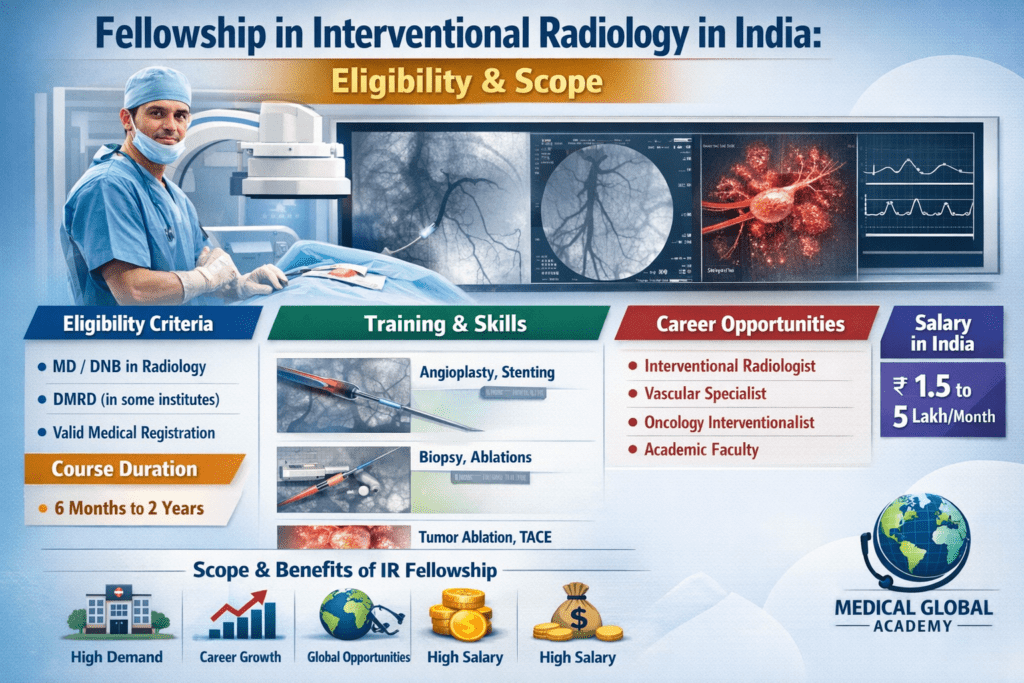
Introduction One of the subspecialties that are growing rapidly in contemporary medicine is the Interventional Radiology (IR). It is a combination of the most sophisticated imaging and minimally invasive procedures to diagnose and treat various medical conditions. Skilled Interventional Radiologists, in India, are in high demand, and this is growing at a very high rate, owing to the rise in technology, and the rising chronic diseases, and the inclination towards minimally invasive procedures. An India Interventional Radiology Fellowship program: It trains radiologists and medical professionals to complete image-guided procedures like angioplasty, embolization, tumor ablation and biopsies, and vascular procedures. This fellowship assists physicians to develop their clinical skills, elevate their employment opportunities and become masters in a very satisfying field of medicine. This blog provides all the information that a doctor must know such as the eligibility, the structure of the course, scope, career prospects, remuneration and future development. Fellowship in Interventional Radiology What is Fellowship Fellowship in Interventional Radiology is a high-level medical education program that aims at acquiring practical experience and comprehensive training in diagnostic and therapeutic interventions, which involve the use of images. Some of the Imaging technologies used in Interventional Radiology include: Ultrasound CT scan MRI Fluoroscopy Digital Subtraction Angiography (DSA) Such imaging techniques assist the physicians to carry out minimally invasive medicinal operations accurately and less risky than the conventional surgery. India Fellowship in Interventional Radiology Eligibility Eligibility requirements can be a little different based on the institute, but overall the eligibility criteria are: 1. Educational Qualification Medical practitioners should possess any of the following degrees: MD in Radiology DNB in Radiology Diploma in medical radiation (DMRD) (admitted in certain institutes) Similar postgraduate qualification in Radiology Other programs can also admit: MD /DNB in General Medicine (specialized interventional programs) 2. Medical Registration Candidates must have: Bonafide registration by the National Medical Commission (NMC) or Registration of the State Medical Council 3. Clinical Experience (Preferred) In all institutes this is not compulsory but the preference is given to doctors with: Diagnostic radiological experience Imaging techniques exposure Clinical experience involving hospital practice 4. Selection Process Selection may involve: Direct admission Interview Merit-based selection Academic and professional experience review Length of Fellowship Interventional Radiology The fellowship period usually is between: 1 year (short term fellowship) 2 years (advanced fellowship) Extensive clinical exposure and practice is offered in longer programs. Training and Curriculum of the Course The Indian Fellowship in Interventional Radiology curriculum is a course that is supposed to equip learners with theoretical and practical expertise. 1. Diagnostic Imaging Training Diagnostic Imaging Training This training allows graduates to be employed in various roles such as diagnostic imagers, ultrasound technologists, teleradiological technologists, and magnetic-resonance-imaging technologists. Doctors are taught advanced imaging interpretation including: CT angiography MR angiography Ultrasound-guided procedures Vascular imaging 2. Vascular Interventions This involves such processes as: Angiography Angioplasty Stenting Thrombolysis Peripheral vascular surgery 3. Non-Vascular Interventions These procedures include: Biopsy Drainage procedures Tumor ablation Image-guided injections 4. Interventional Oncology Cancer related interventions under training include: Tumor embolization Radiofrequency ablation (RFA) Chemoembolization (TACE) 5. Emergency Interventions Doctors are introduced to emergency management including: Internal bleeding Trauma cases Vascular blockages 6. Hands-On Clinical Training This is the most crucial aspect of the fellowship. Physicians carry out operations under the guidance of the experts which provides them with practical experience. Competencies Gained Throughout Fellowship A Fellowship in Interventional Radiology aids physicians to acquire the necessary skills including: Procedural skills Image-guided Clinical decision-making Patient management The interpretation of advanced imaging Minimally invasive methods of treatment Emergency intervention skills These are skills that are very useful in current healthcare. India Scope of Fellowship in Interventional Radiology Interventional Radiology in India is rapidly growing its scope because of the growing interest in minimally invasive treatment. 1. Increased Demand of Interventional Radiologists Minimally invasive procedures are more preferable in hospitals due to their ability to deliver: Faster recovery Less pain Lower complications Shorter hospital stay This has raised the need to have trained Interventional Radiologists in large numbers. 2. Opportunities in Hospitals Doctors can work in: Government hospitals Private hospitals Multi-specialty hospitals Super-specialty hospitals Diagnostic imaging centers 3. Cancer Treatment Opportunities Interventional Radiology contributes significantly to treatment of cancer by: Tumor ablation Chemoembolization Biopsy procedures Cancer hospitals are in need of good Interventional Radiologists. 4. Academic Institutions Opportunity Doctors can work as: Fellowship trainers Assistant professors Academic faculty 5. Opportunities Abroad Interventional Radiologists are in the market in most parts of the world: UK USA UAE Australia Canada An international career is empowered by a fellowship. Opportunities in the Profession Following an Interventional Radiology Fellowship Doctors are able to work in a number of positions such as: Interventional Radiologist Interventional Radiology Consultant Vascular Interventional Specialist Interventional Oncology Specialist Radiology Consultant This specialization provides a good career development. After Fellowship Interventional Radiology Salary in India Wage is based on experience, hospital and location. Average Salary in India: Entry-level: 1.5 to 3 lakh per month Mid-level: 3 to 5 lakh a month Senior-level: ₹5 lakh+ per month One of the highly paid subspecialties of radiology is Interventional Radiology. Fellowship in Interventional Radiology Advantages This fellowship has a number of benefits: 1. High Demand Specialty The interventional radiologists have great demands in the contemporary healthcare environment. 2. High Salary The earning potential of this specialization is great. 3. Advanced Clinical Skills Physicians acquire a high standard of procedure. 4. Career Growth Offers hospital, academic and private practice opportunities. 5. Career Opportunities around the World The fellowship expands the global employment opportunities. Why Fellowship in Interventional Radiology in India The fellowship programs in India are very good because of: Advanced hospitals Experienced faculty Modern imaging technology High patient volume Low cost training as opposed to overseas This renders India a wonderful country to have the fellowship. The Future of Interventional Radiology in India Interventional Radiology in India has a very promising future because of: Accelerating chronic illnesses Rising cancer cases Expanding healthcare facilities Bias towards less invasive operations Technological advancements The field of Interventional Radiology is also

Fellowship in Diabetology After MBBS: Eligibility, Fees & Scope
Learning blogs

Fellowship in Diabetology After MBBS: Eligibility, Fees & Scope

Diabetes is considered one of the most rapidly growing health challenges in the world and India in particular. The millions of patients under long term care create a massive need for doctors who have been trained on management of diabetics patients. Fellowship in Diabetology is an advanced course after MBBS, which is aimed at assisting physicians to acquire advanced knowledge and practical skills in the diagnosis, treatment, and management of diabetes and related metabolic diseases. The blog includes all the details regarding the Fellowship in Diabetology post-MBBS, such as eligibility, fees, scope, career opportunities, and benefits. What is Fellowship in diabetology A Fellowship in Diabetology is a post graduate medical diploma course which specializes in the prevention, diagnosis, and treatment of diabetes. This course can suit those MBBS doctors who are interested in specializing in the field of diabetes care but are not interested in a long-term MD or DNB program. The fellowship imparts to doctors: Type 1 and Type 2 Diabetes Gestational diabetes Insulin treatment and glucose control. Eyelids, nerves, kidneys, heart complications (diabetes) Dietary and lifestyle control. Recent technology of diabetes treatment. This program assists physicians to be assured of their ability to handle diabetic patients on their own. The Reason to Why Fellowship in Diabetology Having graduated with MBBS, most doctors prefer specialization but do not want to take another 3 years in MD or DNB. A post MBBS Fellowship in Diabetology is a more practical and quicker option. Key Benefits 1. Great Demand for Diabetologists  India has been termed as the world capital of diabetes. This demands an enormous supply of trained diabetology specialists. 2. Short Duration Course  A majority of fellowship programs are undertaken in 6 months to 1 year. 3. Career Growth  Physicians can work either in hospitals or clinics or open their own diabetes clinic. 4. Increase in Income  Specialist doctors make higher pay than the general practitioners. 5. Skill Enhancement  Physicians are taught better methods of diabetes management. Fellowship in Diabetology Areas of Eligibility: Post-MBBS The eligibility requirements are easy and can be afforded by the majority of medical graduates. Eligibility Requirements  MBBS degree in a registered medical college. Legitimate medical registration (State Medical Council or NMC) Internship completion Some institutes also accept BAMS BHMS BDS (in selected programs) Who Should Apply This fellowship is ideal for: MBBS doctors General practitioners (GPs) Doctors running clinics Physicians with interest in specialization. Physicians desiring occupational development. Fellowship in Diabetology Duration The fellowship will take different time periods depending on the institute. Typical durations include: 6 months fellowship 9 months fellowship 12 months fellowship The duration of a Fellowship in Diabetology following MBBS is desirable at 1-year since it has all theoretical and clinical training. Curriculum of Fellowship in Diabetology Course The curriculum will incorporate theoretical knowledge and practical skills. Core Subjects Covered 1. Basics of Diabetes Types of diabetes Causes and risk factors Pathophysiology 2. Diagnosis of Diabetes Blood sugar testing HbA1c testing Interpretation of reports 3. Diabetes Treatment Oral medications Insulin therapy Treatment planning 4. Diabetes Complications Diabetic neuropathy Diabetic nephropathy Diabetic retinopathy Cardiovascular complications 5. Lifestyle Management Diet planning Exercise planning Patient counseling 6. Clinical Training Case studies Patient management Real clinical exposure Fellowship in Diabetology Fees Structure Fellowship in Diabetology post MBBS has different fees that differ according to the institute, mode and duration. Average Fees in India Minimum fees: ₹50,000 Average fees: ₹80,000 – ₹1,50,000 Maximum fees: ₹2,50,000 Factors affecting fees Institute reputation Course duration Availability of clinical training. Certification type Online programs tend to cost less than the hospital based programs. After Diabetology Fellowship Career Scope The scope of career available after a Fellowship in Diabetology following MBBS is very good with the increasing population of patients with diabetes. Job Opportunities Upon completion of the fellowship, physicians may practice as: Diabetologist Consultant physician Diabetes specialist Clinical diabetologist Hospital medical officer. Workplaces Doctors can work in: Hospitals Diabetes clinics Private clinics Corporate hospitals Healthcare centers Salary-Post fellowship diabetology Wage is based on the experience, place, and place of work. Average Salary in India Freshers: 14 lakh to 16 lakh per year. Seasoned physicians: 8 to15 lakh per annum. Doctors of private practice: 10-25 lakh per year. Physicians operating their own diabetes clinic will be free to make much more. The benefits of Fellowship in Diabetology Post MBBS Here are the main advantages: 1. Fast specialization  No need to spend 3 years in MD. 2. More improved career prospects  Hospitals favor specialized doctors. 3. Increased patient trust  Specialization among the doctors is desired by patients. 4. Higher income potential  Division of labor enhances profits. 5. Possibility to open your own clinic  Physicians are allowed to commence independent diabetes practice. Fellowship in Diabetology v. MD Medicine Feature Fellowship in Diabetology MD Medicine Duration 6 months to 1 year 3 years Cost Lower Higher Focus Diabetes specialization General medicine Career entry Faster Slower Practical focus High Moderate The fellowship is perfect in physicians wishing to specialize rapidly in diabetes care. India Diabetologist demand There are more than 100 million diabetic patients in India and with each year the number continues to grow. This poses a high demand for trained diabetologists. Reasons for high demand: Rising lifestyle diseases. Aging population Poor lifestyle habits Growing awareness Clinics and hospitals are in the process of recruiting diabetology experts. Skills acquired after Diabetology fellowship Due to the fellowship, doctors acquire: Diabetes diagnosis skills Insulin management skills Patient counseling skills Treatment planning skills Clinical decision-making competencies. These abilities assist physicians in becoming competent professionals. Who is eligible to do a Fellowship in Diabetology This course is best for: MBBS doctors General practitioners Clinic owners Physicians who have ambition to specialise. Physicians with interests in diabetes treatment. Future Prospect of Fellowship in Diabetology It has a high potential in the future given the rising cases of diabetes. Doctors can: Work in hospitals Start diabetes clinics Work internationally Work in telemedicine Become diabetic consultants. The specialty of Diabetology is a developing and stable field of medicine. Conclusion Post-MBBS: Fellowship

Scroll to Top
Chat on WhatsApp