
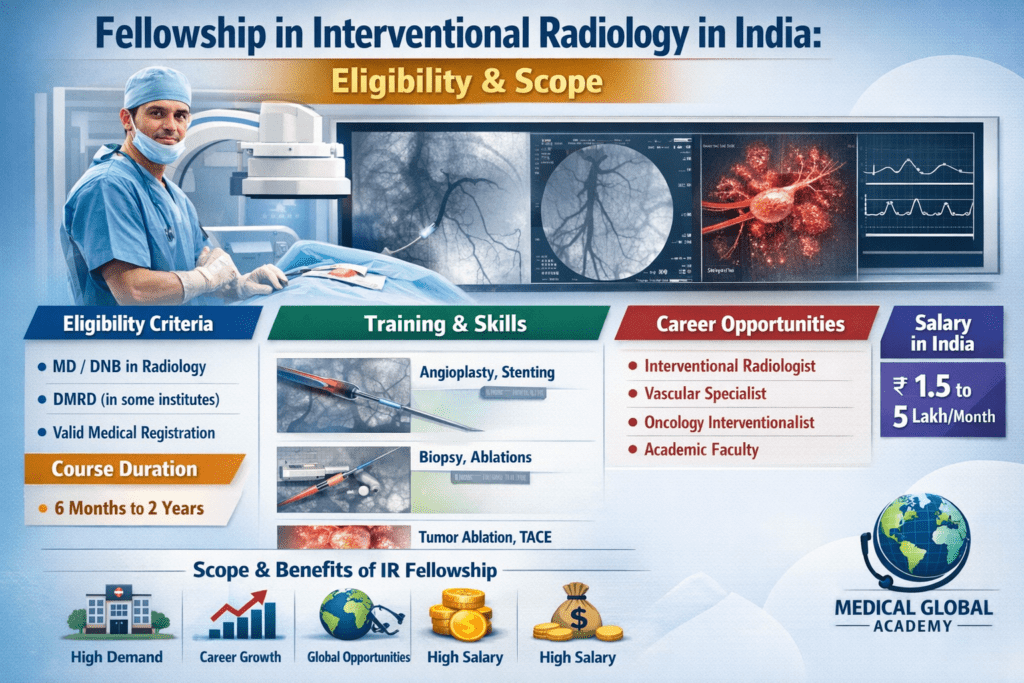
Fellowship in Interventional Radiology in India: Eligibility & Scope
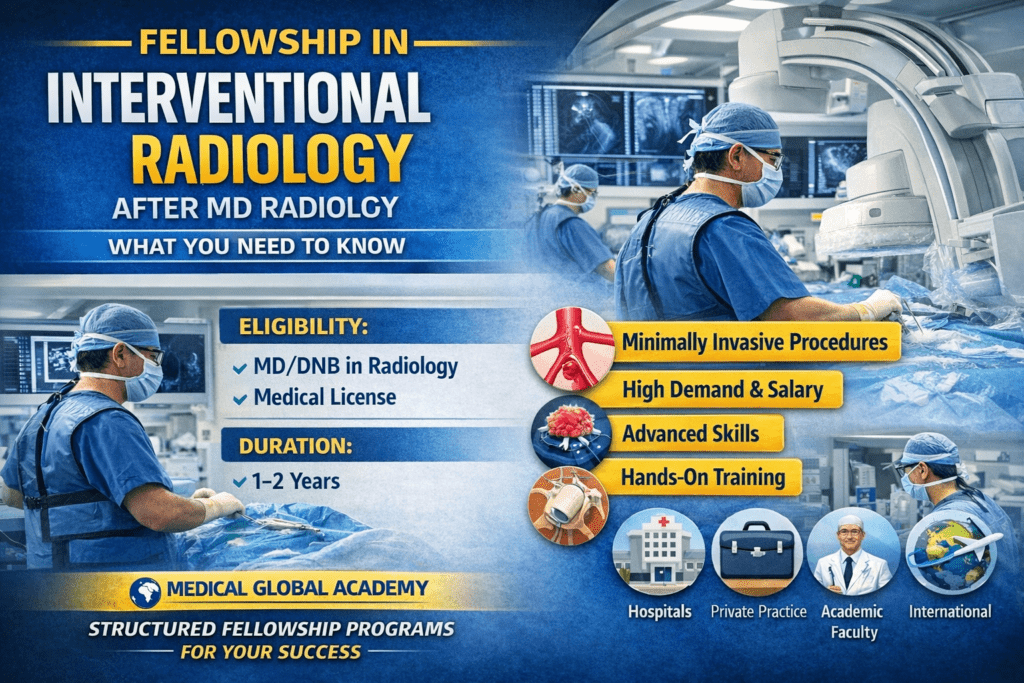
Introduction One of the subspecialties that are growing rapidly in contemporary medicine is the Interventional Radiology (IR). It is a combination of the most sophisticated imaging and minimally invasive procedures to diagnose and treat various medical conditions. Skilled Interventional Radiologists, in India, are in high demand, and this is growing at a very high rate, owing to the rise in technology, and the rising chronic diseases, and the inclination towards minimally invasive procedures. An India Interventional Radiology Fellowship program: It trains radiologists and medical professionals to complete image-guided procedures like angioplasty, embolization, tumor ablation and biopsies, and vascular procedures. This fellowship assists physicians to develop their clinical skills, elevate their employment opportunities and become masters in a very satisfying field of medicine. This blog provides all the information that a doctor must know such as the eligibility, the structure of the course, scope, career prospects, remuneration and future development. Fellowship in Interventional Radiology What is Fellowship Fellowship in Interventional Radiology is a high-level medical education program that aims at acquiring practical experience and comprehensive training in diagnostic and therapeutic interventions, which involve the use of images. Some of the Imaging technologies used in Interventional Radiology include: Ultrasound CT scan MRI Fluoroscopy Digital Subtraction Angiography (DSA) Such imaging techniques assist the physicians to carry out minimally invasive medicinal operations accurately and less risky than the conventional surgery. India Fellowship in Interventional Radiology Eligibility Eligibility requirements can be a little different based on the institute, but overall the eligibility criteria are: 1. Educational Qualification Medical practitioners should possess any of the following degrees: MD in Radiology DNB in Radiology Diploma in medical radiation (DMRD) (admitted in certain institutes) Similar postgraduate qualification in Radiology Other programs can also admit: MD /DNB in General Medicine (specialized interventional programs) 2. Medical Registration Candidates must have: Bonafide registration by the National Medical Commission (NMC) or Registration of the State Medical Council 3. Clinical Experience (Preferred) In all institutes this is not compulsory but the preference is given to doctors with: Diagnostic radiological experience Imaging techniques exposure Clinical experience involving hospital practice 4. Selection Process Selection may involve: Direct admission Interview Merit-based selection Academic and professional experience review Length of Fellowship Interventional Radiology The fellowship period usually is between: 1 year (short term fellowship) 2 years (advanced fellowship) Extensive clinical exposure and practice is offered in longer programs. Training and Curriculum of the Course The Indian Fellowship in Interventional Radiology curriculum is a course that is supposed to equip learners with theoretical and practical expertise. 1. Diagnostic Imaging Training Diagnostic Imaging Training This training allows graduates to be employed in various roles such as diagnostic imagers, ultrasound technologists, teleradiological technologists, and magnetic-resonance-imaging technologists. Doctors are taught advanced imaging interpretation including: CT angiography MR angiography Ultrasound-guided procedures Vascular imaging 2. Vascular Interventions This involves such processes as: Angiography Angioplasty Stenting Thrombolysis Peripheral vascular surgery 3. Non-Vascular Interventions These procedures include: Biopsy Drainage procedures Tumor ablation Image-guided injections 4. Interventional Oncology Cancer related interventions under training include: Tumor embolization Radiofrequency ablation (RFA) Chemoembolization (TACE) 5. Emergency Interventions Doctors are introduced to emergency management including: Internal bleeding Trauma cases Vascular blockages 6. Hands-On Clinical Training This is the most crucial aspect of the fellowship. Physicians carry out operations under the guidance of the experts which provides them with practical experience. Competencies Gained Throughout Fellowship A Fellowship in Interventional Radiology aids physicians to acquire the necessary skills including: Procedural skills Image-guided Clinical decision-making Patient management The interpretation of advanced imaging Minimally invasive methods of treatment Emergency intervention skills These are skills that are very useful in current healthcare. India Scope of Fellowship in Interventional Radiology Interventional Radiology in India is rapidly growing its scope because of the growing interest in minimally invasive treatment. 1. Increased Demand of Interventional Radiologists Minimally invasive procedures are more preferable in hospitals due to their ability to deliver: Faster recovery Less pain Lower complications Shorter hospital stay This has raised the need to have trained Interventional Radiologists in large numbers. 2. Opportunities in Hospitals Doctors can work in: Government hospitals Private hospitals Multi-specialty hospitals Super-specialty hospitals Diagnostic imaging centers 3. Cancer Treatment Opportunities Interventional Radiology contributes significantly to treatment of cancer by: Tumor ablation Chemoembolization Biopsy procedures Cancer hospitals are in need of good Interventional Radiologists. 4. Academic Institutions Opportunity Doctors can work as: Fellowship trainers Assistant professors Academic faculty 5. Opportunities Abroad Interventional Radiologists are in the market in most parts of the world: UK USA UAE Australia Canada An international career is empowered by a fellowship. Opportunities in the Profession Following an Interventional Radiology Fellowship Doctors are able to work in a number of positions such as: Interventional Radiologist Interventional Radiology Consultant Vascular Interventional Specialist Interventional Oncology Specialist Radiology Consultant This specialization provides a good career development. After Fellowship Interventional Radiology Salary in India Wage is based on experience, hospital and location. Average Salary in India: Entry-level: 1.5 to 3 lakh per month Mid-level: 3 to 5 lakh a month Senior-level: ₹5 lakh+ per month One of the highly paid subspecialties of radiology is Interventional Radiology. Fellowship in Interventional Radiology Advantages This fellowship has a number of benefits: 1. High Demand Specialty The interventional radiologists have great demands in the contemporary healthcare environment. 2. High Salary The earning potential of this specialization is great. 3. Advanced Clinical Skills Physicians acquire a high standard of procedure. 4. Career Growth Offers hospital, academic and private practice opportunities. 5. Career Opportunities around the World The fellowship expands the global employment opportunities. Why Fellowship in Interventional Radiology in India The fellowship programs in India are very good because of: Advanced hospitals Experienced faculty Modern imaging technology High patient volume Low cost training as opposed to overseas This renders India a wonderful country to have the fellowship. The Future of Interventional Radiology in India Interventional Radiology in India has a very promising future because of: Accelerating chronic illnesses Rising cancer cases Expanding healthcare facilities Bias towards less invasive operations Technological advancements The field of Interventional Radiology is also