Medical Global Academy

Medical Global Academy

Best Specialization After MBBS in India
Learning blogs

Best Specialization After MBBS in India

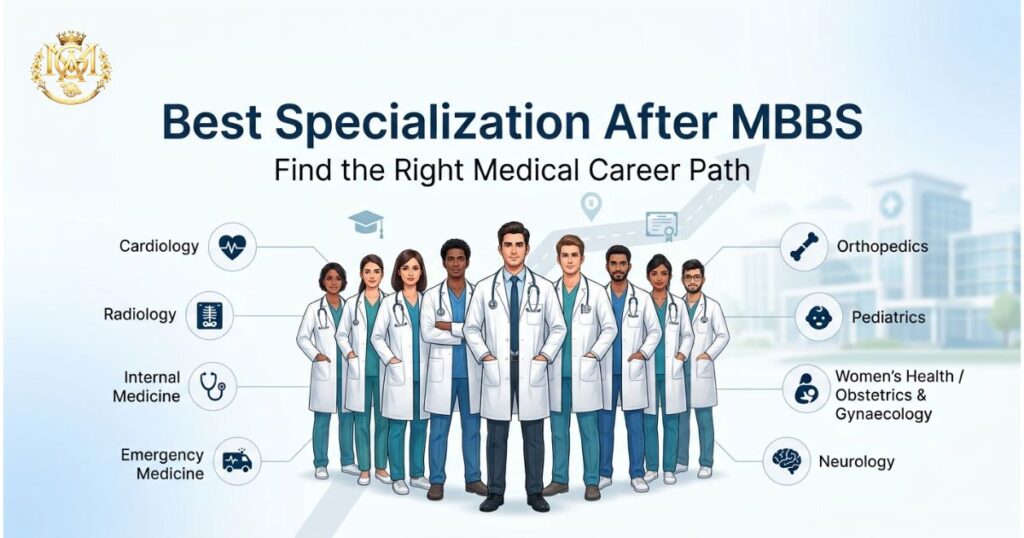
Best Specialization After MBBS in India (Complete Career Guide) Choosing the best specialization after MBBS is one of the most important career decisions for any medical graduate. While an MBBS degree provides the foundation to practice medicine, specialization allows doctors to develop advanced expertise in a particular field, improve patient outcomes, and build rewarding long-term careers. Today, healthcare is evolving rapidly. Advancements in diagnostic technologies, minimally invasive procedures, precision medicine, and multidisciplinary patient care have increased the demand for highly skilled medical specialists across India. Whether your interest lies in medicine, surgery, diagnostics, emergency care, or advanced clinical procedures, selecting the right specialization can significantly shape your professional journey. However, choosing a specialty should never be based solely on salary or popularity. Factors such as clinical interest, lifestyle preferences, future demand, patient interaction, procedural work, and long-term career goals all play an important role in finding the right path. In this guide, we’ll explore the most popular medical specializations courses after MBBS, compare career opportunities, discuss salary prospects, and help you understand which specialty may be the best fit for your future. What is Medical Specialization After MBBS? Medical specialization is the process of pursuing advanced education and clinical training in a specific branch of medicine after completing MBBS. Instead of practicing general medicine, doctors develop expertise in diagnosing and treating conditions related to a particular organ system, patient population, or medical discipline. Specialization is typically pursued through postgraduate programs such as MD (Doctor of Medicine), MS (Master of Surgery), DNB (Diplomate of National Board), and later through super speciality courses or fellowship programs for further clinical expertise. For example, a doctor interested in heart diseases may specialize in Internal Medicine before pursuing Cardiology, while another doctor passionate about women’s healthcare may choose Obstetrics & Gynaecology. Similarly, those interested in imaging may specialize in Radiology, whereas surgeons may pursue General Surgery, Orthopedics, or ENT. Medical specialization allows doctors to provide focused patient care while building expertise in their chosen field. Why Should You Choose a Specialization After MBBS? Many MBBS graduates ask the same question: “After MBBS, what next?” While practicing as a general physician is one option, specialization opens the door to broader career opportunities and advanced clinical practice. Choosing the right specialization helps doctors: Develop expertise in a specific medical field. Manage complex patient conditions with greater confidence. Improve career opportunities in hospitals and healthcare institutions. Build stronger academic and research profiles. Increase long-term earning potential. Stay aligned with evolving medical technologies and treatment protocols. More importantly, specialization enables doctors to practice the branch of medicine they genuinely enjoy. Whether you prefer surgery, emergency care, diagnostics, preventive medicine, or long-term patient management, selecting the right specialty creates a fulfilling and sustainable medical career. Types of Medical Specializations After MBBS After completing MBBS, doctors can choose from a wide range of medical specialties based on their interests, clinical skills, and long-term career goals. Broadly, these specializations can be divided into three categories. Category Focus Area Examples Clinical Specializations Diagnosis and medical treatment Internal Medicine, Dermatology, Pediatrics Surgical Specializations Operative and procedural care General Surgery, Orthopedics, ENT, Obstetrics & Gynaecology Diagnostic & Imaging Specializations Disease diagnosis and interpretation Radiology, Pathology Each specialization offers unique learning opportunities, patient interactions, and career pathways. Understanding these differences can help you make an informed decision before pursuing postgraduate medical education. Top Medical Specializations After MBBS Every medical specialty has its own scope, challenges, and career opportunities. Rather than asking which specialization is “best,” it’s more useful to understand which field aligns with your interests and future aspirations. Cardiology Cardiology is one of the most sought-after medical specialties, focusing on the prevention, diagnosis, and treatment of heart and blood vessel disorders. With the rising burden of cardiovascular diseases in India, trained cardiologists continue to be in high demand across hospitals and specialty heart institutes. Doctors interested in procedures such as angiography, angioplasty, and advanced cardiac interventions often pursue Interventional Cardiology after postgraduate training. Best for doctors who enjoy: Critical patient care Cardiac procedures Long-term patient management Technology-driven medicine Related Program: Fellowship in Cardiology Radiology Radiology combines medicine with advanced imaging technologies to diagnose and monitor diseases. Modern radiologists work closely with almost every medical department by interpreting X-rays, CT scans, MRI, ultrasound, and other imaging studies. The field has expanded significantly with the growth of Interventional Radiology, where specialists perform minimally invasive procedures using image guidance. Best for doctors who enjoy: Diagnostic medicine Medical imaging Technology Precision-based decision making Related Program: Fellowship in Radiology Dermatology Dermatology focuses on diseases affecting the skin, hair, and nails. In addition to managing medical skin conditions, dermatologists are increasingly involved in aesthetic medicine, cosmetic dermatology, and laser-based procedures. Growing awareness of skin health has made dermatology one of the most competitive and rewarding specialties after MBBS. Best for doctors who enjoy: Outpatient practice Cosmetic procedures Long-term patient care Lifestyle-friendly practice Related Program: Fellowship in Dermatology Emergency Medicine Emergency Medicine is designed for doctors who thrive in fast-paced clinical environments. Specialists manage trauma cases, cardiac emergencies, poisoning, stroke, and other life-threatening conditions that require immediate intervention. Strong decision-making skills, teamwork, and the ability to remain calm under pressure are essential for this specialty. Best for doctors who enjoy: Acute patient care Fast clinical decisions Trauma management Emergency procedures Related Program: Fellowship in Emergency Medicine Critical Care Medicine Critical Care specialists manage seriously ill patients admitted to Intensive Care Units (ICUs). They work with ventilators, advanced monitoring systems, organ support therapies, and multidisciplinary teams to provide comprehensive care for critically ill patients. As tertiary care hospitals continue to expand, the demand for Critical Care specialists is steadily increasing. Best for doctors who enjoy: ICU practice Advanced monitoring Multidisciplinary teamwork Managing complex medical cases Related Program: Fellowship in Critical Care Obstetrics & Gynaecology Obstetrics & Gynaecology is one of the most diverse specialties in medicine, combining medical management, surgery, reproductive health, and preventive women’s healthcare. The field now extends beyond pregnancy and childbirth into subspecialties such as infertility management, fetal medicine,
Best Gynecology Courses After MBBS in India (2026)
Learning blogs

Best Gynecology Courses After MBBS in India (2026)

  Advance Your Career in Obstetrics & Gynaecology with the Right Fellowship Program Choosing a career in Obstetrics & Gynaecology (OB-GYN) is more than selecting a medical specialty—it is committing to women’s healthcare across every stage of life. From adolescent health and reproductive medicine to pregnancy, childbirth, menopause, gynecologic oncology, and minimally invasive surgery, the specialty continues to evolve with new technologies and advanced treatment approaches. As healthcare becomes increasingly specialized, many doctors choose to continue their education after MBBS or postgraduate training through gynecologist courses, fellowship programs, and advanced clinical education. These programs help doctors strengthen their practical skills, gain expertise in a focused area of women’s health, and stay updated with modern clinical practices. Whether you are exploring a fellowship in Obstetrics & Gynaecology, looking for advanced training in infertility, fetal medicine, gynecologic oncology, or minimally invasive gynecologic surgery, choosing the right course can significantly influence your clinical practice and long-term career growth. This guide explains the different gynecology courses available after MBBS, how to select the right specialization, and which fellowship pathway may best support your professional goals. Why Choose Gynecology Courses After MBBS Obstetrics & Gynaecology remains one of the most dynamic and rewarding specialties in medicine because it combines preventive care, emergency medicine, surgery, reproductive health, and long-term patient management within a single discipline. Every stage of a woman’s life presents unique healthcare needs, giving gynecologists the opportunity to provide continuous care—from adolescence and family planning to pregnancy, menopause, and beyond. The specialty has also experienced remarkable growth over the last decade. Advances in reproductive medicine, assisted reproductive technology (ART), fetal imaging, robotic surgery, laparoscopic procedures, prenatal diagnostics, and women’s cancer care have transformed the way modern gynecologists diagnose and treat patients. This rapid evolution has created a growing demand for doctors with advanced clinical expertise rather than general training alone. Hospitals, fertility centres, maternal-fetal medicine units, oncology centres, and corporate healthcare institutions increasingly seek specialists who have pursued focused training beyond conventional medical education. For many doctors, continuing education is no longer optional—it has become an important step in delivering evidence-based care while remaining competitive in today’s healthcare environment. Why Are Fellowship Programs Becoming More Important? Completing MBBS provides the foundation for medical practice, but clinical learning does not end there. Modern medicine evolves continuously, introducing new surgical techniques, diagnostic technologies, treatment protocols, and patient care standards. Fellowship programs help doctors bridge the gap between postgraduate education and advanced clinical practice by providing focused training in a specific area of expertise. Unlike broad academic programs, fellowships are designed to strengthen practical knowledge, clinical decision-making, procedural skills, and exposure to complex patient cases. Doctors work under experienced faculty, learn current evidence-based practices, and gain confidence in managing specialty-specific conditions. Depending on individual career goals, fellowship training may help doctors: Develop expertise in a chosen subspecialty of Obstetrics & Gynaecology. Improve clinical and procedural skills through focused learning. Gain exposure to modern technologies used in women’s healthcare. Enhance career opportunities in hospitals, fertility centres, and academic institutions. Continue professional development while adapting to changing healthcare practices. Rather than viewing a fellowship as simply another qualification, many doctors consider it an investment in long-term clinical excellence. Fellowship, DGO, CGO or MS Obstetrics & Gynaecology: Which Path Should You Choose? Doctors often come across multiple qualifications while exploring gynecology courses, including DGO (Diploma in Obstetrics & Gynaecology), CGO, postgraduate degrees, and fellowship programs. Understanding the purpose of each pathway makes it easier to choose the option that aligns with your professional objectives. Qualification Focus Suitable For MS/DNB Obstetrics & Gynaecology Comprehensive postgraduate specialization Doctors planning full specialist training DGO (Diploma in Obstetrics & Gynaecology) Postgraduate diploma in women’s health Doctors seeking structured diploma-based education CGO Foundational gynecology training Healthcare professionals based on program eligibility Fellowship in Obstetrics & Gynaecology Advanced clinical training in focused subspecialties Doctors who want to build expertise in a particular area of women’s healthcare Each pathway serves a different purpose. While postgraduate programs provide comprehensive specialist education, fellowship programs allow doctors to deepen their knowledge in highly focused areas such as reproductive medicine, fetal medicine, gynecologic oncology, minimally invasive surgery, infertility management, and advanced obstetric care. The right choice depends on your current qualifications, professional interests, career aspirations, and the type of clinical practice you wish to build. How Has Modern Gynecology Changed? Today’s gynecologist is no longer limited to routine antenatal care and childbirth. The specialty now includes numerous advanced disciplines that require dedicated clinical expertise. Doctors may choose to focus on: Reproductive Medicine Infertility Management Maternal & Fetal Medicine High-Risk Pregnancy Gynecologic Oncology Clinical Embryology Cosmetic Gynecology Urogynecology Gynae Endoscopy Fetal Echocardiography Advanced Minimally Invasive Gynecologic Surgery Each subspecialty addresses different patient populations, clinical challenges, and procedural skills. As a result, fellowship training has become an increasingly valuable pathway for doctors who want to deliver specialized care while expanding their professional opportunities. In the following section, we’ll explore these fellowship pathways in detail and explain how each specialization contributes to modern women’s healthcare. You’ll also learn which Medical Global Academy fellowship programs align with different career interests, helping you choose the pathway that best supports your future in Obstetrics & Gynaecology. Best Fellowship Courses in Obstetrics & Gynaecology After MBBS Obstetrics & Gynaecology has expanded into multiple subspecialties, each addressing different aspects of women’s healthcare. While some doctors develop expertise in reproductive medicine and infertility, others focus on maternal-fetal medicine, minimally invasive surgery, gynecologic oncology, or advanced diagnostic procedures. Choosing the right fellowship depends on the type of patients you want to treat, the clinical environment you enjoy, and the career you envision for yourself. Instead of asking, “Which fellowship is the best?”, ask yourself: “Which area of women’s healthcare am I most passionate about?” The following fellowship pathways provide advanced clinical exposure and help doctors build expertise in specific areas of Obstetrics & Gynaecology. Reproductive Medicine & Fertility Infertility has become one of the fastest-growing areas within women’s healthcare. Changing lifestyles, delayed pregnancies, endocrine disorders, and reproductive health challenges have

What are the Top Requirements for a Fellowship in Paediatric Medicine
Learning blogs

What are the Top Requirements for a Fellowship in Paediatric Medicine

The global demand for pediatric medicine specialists—from neonatologists to pediatric cardiologists—is at an all-time high. A Fellowship in Paediatric Medicine allows doctors to gain deep clinical expertise, but the entry barriers are rigorous. Whether you are applying for a program in India, the UK (RCPCH), or the USA (ACGME), certain benchmarks remain universal. 1. Educational Prerequisites: The Foundation Before you can specialize, you must have a solid foundation in general medicine. Primary Medical Degree: A recognized MBBS or equivalent degree is mandatory. Postgraduate Qualification: Most fellowship programs require you to have completed a residency or a MD/DNB in Paediatrics. Board Certification: For international programs, holding a membership like the MRCPCH (UK) or passing the USMLE steps for US-based fellowships is often a non-negotiable requirement. 2. Clinical Experience and Competency Fellowships are advanced training phases, meaning you aren’t expected to be a “beginner.” Minimum Residency Years: Typically, 3 to 4 years of general pediatric training is required. Emergency Skills: Certifications in PALS (Pediatric Advanced Life Support) and NRP (Neonatal Resuscitation Program) are almost always mandatory before the start date. Case Logs: Some high-tier fellowships ask for a log of procedures (e.g., intubations, lumbar punctures) you performed during your residency. 3. The Application Portfolio Your paperwork speaks for you before the interview does. A winning portfolio includes: Personal Statement: A deep dive into why you chose this specific subspecialty (e.g., Pediatric Oncology vs. Neurology). Letters of Recommendation (LORs): You usually need 3 letters from consultants or mentors who have supervised your clinical work. Research & Publications: Having a published paper in a PubMed-indexed journal significantly boosts your “academic merit” score. 4. Entrance Examinations and Interviews Many national boards conduct specific entrance tests. FET (Fellowship Entrance Test): In regions like India, the National Board of Examinations (NBE) conducts the FET for subspecialty entry. The Interview: This is where your soft skills are tested. Expect questions on clinical ethics, complex case management, and your long-term research goals. 5. English Language Proficiency If you are moving to an English-speaking country (UK, Ireland, Australia, Canada), you must meet the language requirements: IELTS: Usually a minimum score of 7.0 or 7.5. OET (Medicine): A minimum grade of ‘B’ in all four subsets. Choosing the Right Subspecialty A Fellowship in Paediatric Medicine isn’t a one-size-fits-all. You must decide which niche aligns with your personality: Neonatology: For those who love the high-stakes environment of the NICU. Pediatric Cardiology: For those interested in structural heart defects and imaging. Developmental Paediatrics: For doctors focused on long-term behavioral and growth outcomes. Why Practical Training Matters While theory is vital, pediatric medicine is hands-on. Looking for programs that offer practical clinical exposure is critical. You need a program that allows you to work alongside super-specialists in reputed hospitals to bridge the gap between “knowing” and “doing.” Conclusion Securing a Fellowship in Paediatric Medicine is a rigorous process, but it defines your trajectory as a specialist. From fulfilling the academic criteria to acing the interview, every step requires precision. For doctors seeking a structured, practical-based approach to post-graduate learning, Medical Global Academy offers specialized fellowship programs developed by industry experts, which emphasize hands-on learning and excellence in medicine to prepare you for the challenges of 21st-century pediatric medicine. FAQs: Everything Doctors Ask Q1: Can I apply for a pediatric fellowship immediately after MBBS? No. You must complete a 3-year post-graduate residency (MD/DNB/Diploma) in Paediatrics first. Q2: How long does a typical fellowship last? Most clinical fellowships last between 12 to 36 months, depending on the subspecialty and the country. Q3: Are online pediatric fellowships valid? Hybrid models (online theory + offline clinical training) are highly effective for working doctors. However, a purely online medical fellowship without clinical hours is rarely recognized for specialist roles. Q4: What is the age limit for fellowship applications? Generally, there is no strict age limit, but most candidates apply within 2-5 years of finishing their residency. Q5: Is research mandatory for a fellowship? While not always “mandatory” for entry, having a research background is a “Top Requirement” for academic and competitive university-based programs.

What are the best career paths after a Fellowship in Emergency Medicine
Learning blogs

What are the best career paths after a Fellowship in Emergency Medicine

Moving up the career ladder with a Fellowship in Emergency Medicine is a massive milestone. Think of it this way: while residency gives you the tools to save lives in a chaotic ER. A fellowship turns you into the person others look to for answers—a niche expert, a mentor, or a clinical leader. But once that extra year (or two) of intense training wraps up, what’s next? Transitioning from a fellow to a specialized consultant opens up doors that you simply don’t see when you’re just focused on the bedside. If you’re wondering where this path leads, here is a detailed look at the most rewarding career opportunities waiting for you after a Fellowship in Emergency Medicine. 1. Academic Medicine: Next Generation To most, the primary rationale to become a Fellowship in Emergency Medicine is to remain in the teaching and research universe. With a desire to mentor the residents and be on top of the medical trends, this is the place where you belong. Clinical Assistant Professor: You have the best of two worlds with high-octane ER shifts and teaching in the classroom. Core Faculty Member: The next generation is going to be shaped by you. But you will be working on your particular specialty such as Ultrasound or Toxicology. Research Pioneer: Fellowships provide you with the rigorous training in statistics and methodology that you will need in order to garner NIH grants and be published in major journals such as the Annals of Emergency Medicine. 2. Specialized Clinical Excellence A Fellowship in Emergency Medicine allows you to “own” a specific department or wing of the hospital. Your daily life changes depending on your focus: Pediatric Emergency Medicine (PEM): You’ll lead specialized Pediatric ERs, handling complex cases that generalists might find daunting. Critical Care/Intensivist: This is a popular pivot. It allows you to step out of the ER and into the ICU, managing the hospital’s most vulnerable patients over the long term. EMS & Flight Medicine: You could become the Medical Director for a city’s emergency services or lead a flight medicine team, setting the protocols for care before a patient even reaches the hospital. 3. Hospital Administration and Executive Leadership ER doctors are naturally the best multitaskers in medicine. Because you understand hospital flow better than anyone else, a Fellowship in Emergency Medicine (especially in Admin or Patient Safety) can fast-track you to the “C-suite.” Medical Director: You take charge of the department’s big picture—staffing, budgets, and safety protocols. Chief Quality Officer (CQO): You’ll be the person responsible for reducing medical errors and improving patient outcomes across the entire facility. Chief Medical Officer (CMO): The ultimate leadership goal, where you act as the bridge between the medical staff and the hospital’s board of directors. 4. Health and Humanitarian Work around the World In case your Fellowship in Emergency Medicine was on Global Health, then your office does not need to be a building and may be the world. Disaster Relief: Working on the frontlines with organizations like Doctors Without Borders (MSF) or the Red Cross. International Systems Development: Helping developing nations build their very first emergency response and triage systems from the ground up. Expedition Medicine: As the primary physician of mountaineering expeditions or field research facilities in such locations like the Antarctic. 5. Health Tech and Private Sector Consulting By 2026, the gap between medicine and technology has closed. A Fellowship in Emergency Medicine gives you the “clout” to lead tech innovations. Telemedicine Innovator: Building virtual ER platforms that can diagnose and triage patients remotely. AI Diagnostics: In collaboration with engineers, developing AI to read ECGs or recognize fractures on X-rays better than the human eye. Device Development: Consultation work on the companies that manufacture Point-of-Care Ultrasound (POCUS) and other life-saving technology that are portable. The reason why Specializing is a Game-Changer It is not a question of a fancy new title but the type of quality life you live: Higher Wages: Sub-specialists typically receive higher hourly wages and additional stipends of their specialization. Beating Burnout: Full-time ER shifts are draining. Mixing clinical work with teaching, research, or admin keeps your career fresh and exciting. Indispensable Skillsets: In a crowded job market, having a niche makes you the first person a hospital wants to hire. Conclusion The road through a Fellowship in Emergency Medicine is demanding, but the professional freedom you get at the end is worth every hour of study. Whether you want to run a department, teach at a top university, or build the next big medical app, your specialized training is the key. For doctors looking to navigate these advanced career paths and find the right guidance, Medical Global Academy is your partner in growth. We help you transform from a practitioner into an influential leader in the medical field. Frequently Asked Questions Q1: Does a Fellowship in Emergency Medicine actually increase my salary? Yes. Although this depends on the niche, the doctors who complete the fellowship training usually receive higher salaries by taking leadership positions, niche consulting, or working in an area of high demand such as Critical Care. Q2: How long does it take to transition into a specialist role? Most doctors move into their “dream” specialized position within 1 to 3 years of finishing their fellowship as they build their reputation in that field. Q3: Can I still work “regular” ER shifts? Absolutely. Many specialists keep their skills sharp by working general ER shifts part-time. While spending the rest of their week on their sub-specialty. Q4: Which fellowship is most in demand for 2026? Geriatric Emergency Medicine and Health Informatics (AI) are booming right now due to our aging population and the rapid rise of medical technology

Best Dermatology Courses for Medical Students in 2026
Learning blogs

Best Dermatology Courses for Medical Students in 2026

In 2026, medical education is characterized by a combination of traditional residency, clinical dermatology courses that are more specialized and advanced online learning. To medical students, these  courses are mostly categorized into three: 1. Traditional Postgraduate Degrees (MD/DNB/Diploma) The MD (Dermatology, Venereology and Leprosy) remains to be the gold standard to those who hope to get a full-fledged specialist position in India. MD/DNB in Dermatology: It is a 3-year rigorous residency program in the clinical diagnostic skills, histopathology, and in-patient management. DDVL (Diploma in Dermatology, Venereology and Leprosy): This is a 2 year postgraduate diploma program. Although there has been a great transformation to MD dermatology courses, still there are few good colleges which offer this course. 2. Clinical Fellowships in Dermatology Most MBBS graduates now prefer to undergo a fellowship to get hands-on experience before or even as an alternative to a full-time course in 2026. Medical dermatology: This is a specialty of dermatology related to chronic diseases like psoriasis, eczema, and autoimmune blistering diseases. Pg Diploma in Aesthetic Medicine: This program is aimed at persons willing to learn different procedures like Botox, fillers, and chemical peeling. Pediatric Dermatology: A niche specialty of growing awareness of neonatal and pediatric dermatology. 3. Short-Term Certificate Courses Applicable to GPs or interns that require improvement of their OPD (Outpatient Department) skills. Dermoscopy Training: This is necessary in the non-invasive diagnosis of skin tumor and inflammatory disorders. Laser Therapies: Q-switched, CO2 and Diode Laser Safety Training. Why Dermatology is the Top Choice for Doctors in 2026 Dermatology is no longer superficial but rather has become a technology in itself and needs accuracy in this discipline. Dermatology attracts doctors because of a number of reasons: Work-Life Balance: No emergency cases; outpatient-based practice. Diversity of the Procedures: Simple biopsies, complex hair transplants, laser surgery. High Patient Satisfaction: The outcomes of treating patients are frequently direct and immediate. Entrepreneurial Opportunity: The simplest medical specialty to enter into private practice is Dermatology. What Every Doctor Needs to Know Before Enrolling You should compare the curriculum with the existing 2026 medical standards before choosing a course that you will pursue. A good dermatology program must offer: Clinical Competence over “Aesthetics Only” Look out against courses which just impart cosmetic procedures. A real dermatologist should learn the diagnosis of infectious diseases, systemic manifestation of skin disease, pharmacology (rational application of steroids in particular) first. Hands-On Procedural Training In dermatology, theoretical knowledge is lacking. Provide your course with supervised practical sessions in: Skin biopsies (punch, shave, and excisional). Intralesional injections. Simple chemical peels and cryotherapy. Digital and Teledermatology Skills It is 2026 where AI-assisted diagnosis and remote consultation is the norm. Courses on the use of AI diagnostic tools and legal documentation management of teleconsultations are now the best courses. How to Choose the Right Course for Your Career Goal In the case of NEET PG Aspirants: Major on the so-called Resident Teaching Programs which include the high-yield material of standard text books such as Rooks or Fitzpatrick. In the same case of Aspiring Aesthetic Physicians: Find a fellowship that has a high patient-load and is more practical in injectables. In the case of International Students: Determine accreditation by international organizations such as the EADV (European Academy of Dermatology and Venereology) or local medical councils. Conclusion Dermatology is a challenging profession that provides intellectual as well as quality life. You are choosing your path in 2026, but keep in mind that the principles of clinical excellence are founded on the principles of organised learning and moral practice. No matter what type of program you choose (a long-term residency or a specialized fellowship), make sure that the program focuses on patient safety and evidence-based medicine. To the interested looking to be offered a training that is leading in terms of industry, is practical based, and is offered in a way akin to the needs of the modern medical professional, then Medical Global Academy offers one of the most comprehensive dermatology fellowships and courses available. Their program opens the door between the theoretical information provided at medical school and practical clinical experience. Frequently asked questions Q1: Will I be able to practice dermatology with an online certificate course? No. Online certificates do not provide you with Specialist status. In most places, a known PG degree or diploma is required to identify oneself as a Dermatologist. Q2: How long is the average Dermatology Fellowship? Clinical trainees last between 6 months and one year, based on the subspecialty (e.g., Lasers vs. General Dermatology). Q3: Are NEET PG compulsory to all dermatology courses in India? NMC-recognized MD, DNB, and Diploma seats are compulsory to NEET PG. Nonetheless, privately institutional fellowships of skill improvement usually possess their own entry, which is based on merit. Q4: Is Medical Global Academy pragmatic? Yes, the majority of premium programs at Medical Global Academy are structured with clinical rotation and demonstrations of procedures to make sure that the doctors become practice-ready. Q5: What will be the most demanded subspecialty in 2026? Today, the greatest increase in patient demand is those related to Trichology (hair and scalp) and Aesthetic Dermatology.

Can a Fellowship in Pediatric Dermatology Help You Start Your Own Specialized Clinic
Learning blogs

Can a Fellowship in Pediatric Dermatology Help You Start Your Own Specialized Clinic

Indian healthcare is also changing. The field of general practice is becoming more and more congested and patients, particularly parents, are demanding specialized treatment services in relation to their children. Were you a dermatologist or a pediatrician and wondering how to establish a niche, would you have asked yourself: Can a Fellowship in Pediatric Dermatology really be the basis of a good private practice? The short answer is yes. But it is a mixture of clinical expertise, market positioning and exclusive infrastructure. The Rising Treatment of Pediatric Skin Specialists Children are not miniature adults. Their physiology of skin, immunology and the psychological effect of the skin diseases differ dramatically. In India, trained Pediatric Dermatologists are in short supply by a huge margin. By opening up a specialized clinic, you get a chance to deal with conditions that may be ignored by the general practitioners like: Complex Cabined-in Dermatoses in Neonates. Genodermatoses (Hereditary skin diseases). Vascular Malformations and Pediatric Hemangiomas. Psoriasis in children and severe atopic Dermatitis. With a Fellowship in Pediatric Dermatology, you are not only getting a certificate but you are getting permission to promote yourself as a specialist in a niche that is both high and low demand. How a Fellowship makes your Private Clinic Powered 1. Clinical Trust and Authority A parent who takes a newborn with an unexplainable rash, or a birth mark, is seeking more than a prescription he is seeking certainty. A fellowship gives you the profound clinical experience that you need to make final diagnoses. This is the foundation of the best marketing weapon; word-of-mouth that any new clinic can have. 2. Procedural Expertise A specialty clinic lives off of operation. Pediatric Dermatology A Fellowship in Pediatric Dermatology will train you to do: Minimally scarring pediatric skin biopsies. PWS laser therapy in infants. Alopecia inata in children Intralesional injections. Safe practice guidelines of sedation and minor pain management in pediatric skin surgery. 3. Niche Selling Opportunities Among the mass of Skin and Hair Clinics, one can spot a Pediatric Dermatology and Child Skin Center. It gives you an opportunity to reach a particular demographic. One can cooperate with local pediatricians who rather refer their complicated cases to a specialist and do not want to approach a general dermatologist whose primary specialty is adult aesthetics. Critical Principles to Setting Up Your Pediatric Dermatology Practice The Infrastructure: Making the Environment Kid Friendly A pediatric skin center must feel safe as opposed to adult clinics. The training of your fellowship usually embraces the psychology of child management. This should be demonstrated on your clinic: Waiting Area: Add play areas to eliminate the white coat hypertension among children. Consultation Room: Child-friendly equipment and distractions (toys, computer screens). Safety Procedures: Have all equipment and furniture child safe. Building a Referral Network Having your fellowship credentials, your main so-called customers are other physicians. Reach out to: Neonatologists in NICUs. General Pediatricians. Obstetricians (to consult with neonatals). A specialized fellowship teaches these professionals that you are much more likely to have them trust you with their patients. Legal, Academic Credibility To operate a clinic, you should have unquestioned credentials. Make sure that your fellowship is one which is recognized by an international accreditation body like the CPD (UK) or universities of medicine which are recognized by UGC. This provides the credibility cover required on the nameplate of your clinic. Overcoming the Challenges Changing a hospital structure to a privatized specialized clinic may be overwhelming. Common hurdles include: First Cost: The special pediatric lasers and diagnostic equipment (such as high-res dermoscopes) may be costly. Patient Volume: It might require time to achieve a stable stream of all-pediatric patients. Training of the staff: Your nursing personnel should be specifically trained to deal with children and to counsel anxious parents. These soft skills and practice management can be included in a comprehensive fellowship program, where you become more than a great doctor, but become an effective clinic administrator. Conclusion The idea to create a specialized clinic is a rather risky step, which demands courage and the highest education level. In case you are interested in a program that will provide you with the depth of clinical and freedom to shape your future practice, Medical Global Academy will become your ideal partner. Our Fellowship in Pediatric Dermatology at Medical Global Academy is intended to be used by a modern working professional. Having a CPD Approved (UK) curriculum is recognised by UGC recognised Medical Universities, we guarantee that your entry into the private practice will be supported by international standards. Our course is a way to fill the disconnect between the general-level training and the clinical expertise level required to build your own specialized center and achieve better patient outcomes in your community. Frequently Asked Question Q1: Does the fellowship allow me to open a clinic right after the fellowship? Yes. After you have finished your fellowship and after you have received your certification, you are legally and clinically qualified to present yourself as a pediatric dermatology specialist in your individual practice. Q2: Is Medical Global Academy hands-on trained? MGA provides models of flexible learning models with clinical insights and a procedure guide that make you well prepared to cope with real world challenges of the bedside in your clinic. Q3: Does the Fellowship in Pediatric Dermatology in India have a reputation of having a private practice? Our programs meet UGC accredited university standards and international CPD standards, and as such are well credible to the individual practitioners in India. Q4: What is the role of this fellowship in non-attending modes? The non-attending or hybrid programs at Medical Global Academy are created with the specific aim of serving an already practising doctor. It will enable you to acquire special knowledge without terminating your existing practice, so it will be easier to transfer to a specialized clinic. Q5: What is the greatest benefit of a niche clinic as compared to a general clinic? Increased trust in the patient, reduced domestic competition, and the capacity to

Fellowship in Interventional Radiology in India: Eligibility & Scope
FELLOWSHIP, Learning blogs

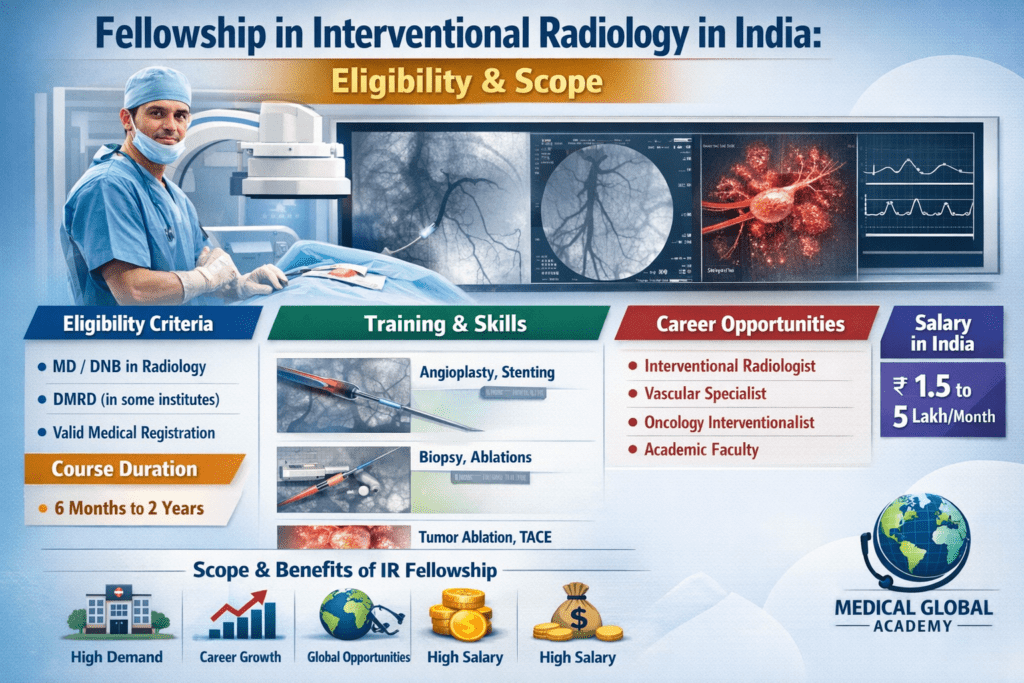
Fellowship in Interventional Radiology in India: Eligibility & Scope

Introduction One of the subspecialties that are growing rapidly in contemporary medicine is the Interventional Radiology (IR). It is a combination of the most sophisticated imaging and minimally invasive procedures to diagnose and treat various medical conditions. Skilled Interventional Radiologists, in India, are in high demand, and this is growing at a very high rate, owing to the rise in technology, and the rising chronic diseases, and the inclination towards minimally invasive procedures. An India Interventional Radiology Fellowship program: It trains radiologists and medical professionals to complete image-guided procedures like angioplasty, embolization, tumor ablation and biopsies, and vascular procedures. This fellowship assists physicians to develop their clinical skills, elevate their employment opportunities and become masters in a very satisfying field of medicine. This blog provides all the information that a doctor must know such as the eligibility, the structure of the course, scope, career prospects, remuneration and future development. Fellowship in Interventional Radiology What is Fellowship Fellowship in Interventional Radiology is a high-level medical education program that aims at acquiring practical experience and comprehensive training in diagnostic and therapeutic interventions, which involve the use of images. Some of the Imaging technologies used in Interventional Radiology include: Ultrasound CT scan MRI Fluoroscopy Digital Subtraction Angiography (DSA) Such imaging techniques assist the physicians to carry out minimally invasive medicinal operations accurately and less risky than the conventional surgery. India Fellowship in Interventional Radiology Eligibility Eligibility requirements can be a little different based on the institute, but overall the eligibility criteria are: 1. Educational Qualification Medical practitioners should possess any of the following degrees: MD in Radiology DNB in Radiology Diploma in medical radiation (DMRD) (admitted in certain institutes) Similar postgraduate qualification in Radiology Other programs can also admit: MD /DNB in General Medicine (specialized interventional programs) 2. Medical Registration Candidates must have: Bonafide registration by the National Medical Commission (NMC) or Registration of the State Medical Council 3. Clinical Experience (Preferred) In all institutes this is not compulsory but the preference is given to doctors with: Diagnostic radiological experience Imaging techniques exposure Clinical experience involving hospital practice 4. Selection Process Selection may involve: Direct admission Interview Merit-based selection Academic and professional experience review Length of Fellowship Interventional Radiology The fellowship period usually is between: 1 year (short term fellowship) 2 years (advanced fellowship) Extensive clinical exposure and practice is offered in longer programs. Training and Curriculum of the Course The Indian Fellowship in Interventional Radiology curriculum is a course that is supposed to equip learners with theoretical and practical expertise. 1. Diagnostic Imaging Training Diagnostic Imaging Training This training allows graduates to be employed in various roles such as diagnostic imagers, ultrasound technologists, teleradiological technologists, and magnetic-resonance-imaging technologists. Doctors are taught advanced imaging interpretation including: CT angiography MR angiography Ultrasound-guided procedures Vascular imaging 2. Vascular Interventions This involves such processes as: Angiography Angioplasty Stenting Thrombolysis Peripheral vascular surgery 3. Non-Vascular Interventions These procedures include: Biopsy Drainage procedures Tumor ablation Image-guided injections 4. Interventional Oncology Cancer related interventions under training include: Tumor embolization Radiofrequency ablation (RFA) Chemoembolization (TACE) 5. Emergency Interventions Doctors are introduced to emergency management including: Internal bleeding Trauma cases Vascular blockages 6. Hands-On Clinical Training This is the most crucial aspect of the fellowship. Physicians carry out operations under the guidance of the experts which provides them with practical experience. Competencies Gained Throughout Fellowship A Fellowship in Interventional Radiology aids physicians to acquire the necessary skills including: Procedural skills Image-guided Clinical decision-making Patient management The interpretation of advanced imaging Minimally invasive methods of treatment Emergency intervention skills These are skills that are very useful in current healthcare. India Scope of Fellowship in Interventional Radiology Interventional Radiology in India is rapidly growing its scope because of the growing interest in minimally invasive treatment. 1. Increased Demand of Interventional Radiologists Minimally invasive procedures are more preferable in hospitals due to their ability to deliver: Faster recovery Less pain Lower complications Shorter hospital stay This has raised the need to have trained Interventional Radiologists in large numbers. 2. Opportunities in Hospitals Doctors can work in: Government hospitals Private hospitals Multi-specialty hospitals Super-specialty hospitals Diagnostic imaging centers 3. Cancer Treatment Opportunities Interventional Radiology contributes significantly to treatment of cancer by: Tumor ablation Chemoembolization Biopsy procedures Cancer hospitals are in need of good Interventional Radiologists. 4. Academic Institutions Opportunity Doctors can work as: Fellowship trainers Assistant professors Academic faculty 5. Opportunities Abroad Interventional Radiologists are in the market in most parts of the world: UK USA UAE Australia Canada An international career is empowered by a fellowship. Opportunities in the Profession Following an Interventional Radiology Fellowship Doctors are able to work in a number of positions such as: Interventional Radiologist Interventional Radiology Consultant Vascular Interventional Specialist Interventional Oncology Specialist Radiology Consultant This specialization provides a good career development. After Fellowship Interventional Radiology Salary in India Wage is based on experience, hospital and location. Average Salary in India: Entry-level: 1.5 to 3 lakh per month Mid-level: 3 to 5 lakh a month Senior-level: ₹5 lakh+ per month One of the highly paid subspecialties of radiology is Interventional Radiology. Fellowship in Interventional Radiology Advantages This fellowship has a number of benefits: 1. High Demand Specialty The interventional radiologists have great demands in the contemporary healthcare environment. 2. High Salary The earning potential of this specialization is great. 3. Advanced Clinical Skills Physicians acquire a high standard of procedure. 4. Career Growth Offers hospital, academic and private practice opportunities. 5. Career Opportunities around the World The fellowship expands the global employment opportunities. Why Fellowship in Interventional Radiology in India The fellowship programs in India are very good because of: Advanced hospitals Experienced faculty Modern imaging technology High patient volume Low cost training as opposed to overseas This renders India a wonderful country to have the fellowship. The Future of Interventional Radiology in India Interventional Radiology in India has a very promising future because of: Accelerating chronic illnesses Rising cancer cases Expanding healthcare facilities Bias towards less invasive operations Technological advancements The field of Interventional Radiology is also

PG DIPLOMA

PG DIPLOMA IN ECHOCARDIOGRAPHY

PG DIPLOMA IN ECHOCARDIOGRAPHY Discover PG diplomas in echocardiography and aesthetic medicine with a practical graduate degree program. Our courses are ideal for healthcare professionals who want to distinguish themselves in diagnostic imaging, providing practical training and professional instructions. Buy Course Now Get Free Details For Course About the Programme The MGA Medical Global Academy offers a specialty and comprehensive program called the PG Diploma in Echocardiography that is designed to accommodate healthcare professionals who would like to acquire advanced skills in heart imaging and diagnostics. The course is aimed at developing a good clinical knowledge base and practical skills necessary in order to perform and interpret echocardiograms in an effective manner. The program addresses key areas which include cardiac anatomy and physiology, the principles of ultrasound imaging, Doppler studies, cardiac pathology, and advanced echocardiographic techniques including 3D imaging and transesophageal echocardiography (TEE). In the combination of theoretical knowledge and practical clinical exposure, the participants will have real-world experience on how to deal with different cardiac cases. The diploma equips professionals to provide accurate diagnostic assistance, enhance clinical decision-making, and help achieve improved patient outcomes in cardiovascular care. “The PG Diploma & Fellowship in Echocardiography will enable you to become a confident, skilled cardiac imaging specialist, possessing strong clinical expertise, practical exposure, and the capability to manage complex cardiac diagnostics in contemporary healthcare environments.” Attending / Non-Attending ClassesFlexible class formats to suit busy schedules Clinical TrainingClinical training at nearest hospitals/clinics Free Study MaterialRecorded lectures, full notes and e-library access Super-Specialist FacultyIndia’s best echocardiography & cardiology specialists NAAC A+ UniversityRecognised across hospitals and institutions 1-Year MentorshipFull year mentorship after completion Skills You’ll Master Various modes of echo & knobology95% Valve abnormalities & assessment93% Echo in ischemic heart disease / MI90% Overview of congenital heart disease88% Echo in pulmonary embolism85% Doppler Hemodynamics & 3D TEE87% Programme Curriculum Fee & EMI Calculator Echocardiography Programme ₹1,00,000 PG Diploma · CPD · Online 1 · Course Type PG Diploma₹1,00,00012-Month Programme Fellowship₹1,50,00012-Month Advanced Programme 2 · Certificate Type CPD CertificateCPD & Training Council University CertificateUGC Approved 3 · Study Mode Online₹1,00,000Full online access Hybrid₹1,40,000Online + Clinical Offline₹1,30,000+1 month training 4 · Coupon Code Apply Use coupon code: ECHO10K to get ₹10,000 OFF! 5 · EMI Plan (0% Interest) FullOne-time0% interest 3Months0% interest 4Months0% interest Monthly EMI₹12,500/mofor 4 months 4 instalmentsEMI Total: ₹50,000 Course Fee₹1,00,000 Coupon Discount (ECHO10K)-₹10,000 Registration Fee−₹50,000 (paid upfront) EMI on Balance₹50,000 Course TypePG Diploma Certificate TypeCPD Certificate Study ModeOnline Interest Charges₹0 (0% Interest) Total Payable₹1,00,000 Enroll Now — Pay Securely Discuss Fee on WhatsApp Batch closes in: 00Days 00Hrs 00Min 00Sec Course Details Duration12 Months ModeOnline / Hybrid / Offline BatchJan–Dec / May–Jun LanguageEnglish CertificateUGC / CPD Mentorship1 Year Contact+91 9289994218 PG Diploma in Echocardiography Medical Global Academy In association with NAAC A+ University CPD & Training Council · Mind Power University Download Sample Certificate on WhatsApp Accreditation Partners National International PG Diploma in Echocardiography This is a commercial course page for PG Diploma in Echocardiography. The audience is doctors who want to build expertise in non-invasive cardiac imaging. Your Outcome and Career Opportunities sections are good structurally, but they sound like a checklist. We can make them more professional and aligned with modern cardiology practice while keeping the same format and length. Outcome of the Program Upon successful completion of the PG Diploma in Echocardiography, you will be able to: Perform and interpret transthoracic echocardiography (TTE) with confidence. Understand cardiac anatomy, physiology, hemodynamics, and echocardiographic principles. Analyze Doppler studies to evaluate blood flow, valve function, pressure gradients, and cardiac performance. Identify normal and abnormal cardiac findings, including structural and functional heart diseases. Develop practical knowledge of basic transesophageal echocardiography (TEE) and its clinical applications. Integrate echocardiographic findings into evidence-based clinical decision-making. Prepare accurate and comprehensive echocardiography reports. Follow patient safety standards, ethical practices, and quality protocols in cardiac imaging. Career Opportunities After completing the PG Diploma in Echocardiography, you can pursue opportunities in: Multispecialty hospitals as an echocardiography or cardiac imaging specialist. Cardiology departments, diagnostic centres, and advanced imaging laboratories. Clinical teams working alongside cardiologists in non-invasive cardiac diagnostics. Intensive Care Units (ICUs) and emergency cardiac care services. Heart institutes and preventive cardiology clinics. Clinical research and advanced cardiovascular imaging programs. Further specialization in cardiology and cardiovascular diagnostics. Download Brochure in Whatsapp Course Curriculum Introduction to Cardiac Anatomy and Physiology Overview of the cardiovascular system Cardiac chambers, valves, and vascular anatomy Electrical and mechanical cardiac function Hemodynamics and the circulatory system Normal physiological changes in the heart Basic understanding of cardiac pathology Fundamentals of Echocardiography Introduction to ultrasound physics and principles Echocardiographic equipment and transducers Image acquisition techniques: 2D, Doppler, and 3D echocardiography Cardiac imaging views: parasternal, apical, subcostal, and suprasternal Measurement techniques in echocardiography Understanding image quality and optimization Doppler Echocardiography Basics of Doppler ultrasound: continuous and pulsed wave Colour Doppler: technique and interpretation Spectral Doppler: velocity, pressure gradients, and flow measurements Assessment of cardiac valve function Quantification of blood flow, regurgitation, and stenosis Evaluation of diastolic function and filling pressures Cardiac Pathology and Disease Diagnosis Heart failure: systolic and diastolic dysfunction Valvular heart disease: mitral, aortic, tricuspid, and pulmonic valves Coronary artery disease and myocardial infarction Cardiomyopathies: dilated, hypertrophic, and restrictive Pericardial disease: pericarditis, pericardial effusion, and tamponade Congenital heart defects and their echocardiographic diagnosis Advanced Imaging Techniques 3D echocardiography and its clinical applications Strain and strain rate imaging: assessing myocardial deformation Contrast echocardiography for enhanced imaging Tissue Doppler imaging: assessing myocardial motion Speckle tracking echocardiography for assessing heart function Ultrasound contrast agents and their safety considerations Echocardiography in Clinical Practice Performing echocardiograms in various patient populations Patient preparation and managing clinical scenarios Echo in the emergency setting: acute coronary syndrome and trauma Preoperative and postoperative assessment: valve surgery, bypass, and heart transplant Integrating echocardiography findings with clinical history Clinical decision-making and reporting protocols Quality Control, Ethics, and Professionalism in Echocardiography Quality assurance in echocardiographic imaging Safety protocols and infection control Ethical considerations in echocardiography practice Communication and interdisciplinary collaboration in cardiac care Legal aspects of echocardiographic practice and

FELLOWSHIP

FELLOWSHIP IN CLINICAL CARDIOLOGY

FELLOWSHIP IN CLINICAL CARDIOLOGY Discover the Fellowship in Clinical Cardiology, a clinically focused program designed to strengthen your skills in cardiovascular diagnosis and patient management. Gain structured learning, real-case insights, and expert guidance to enhance your clinical decision-making in cardiology practice. Buy Course Now Get Free Details For Course MGA Clinical Cardiology Programme About the Programme The Fellowship in Clinical Cardiology offered by MGA Medical Global Academy is an advanced clinical training course for MBBS doctors and healthcare professionals aiming to enhance their skill set in the diagnosis and management of cardiovascular diseases. This is a 12-month structured fellowship that offers a solid foundation for evidence-based cardiology practice, combining academic learning with practical clinical exposure. The programme covers prevention of coronary artery disease, acute coronary syndrome, heart failure, cardiomyopathies, arrhythmias, valvular heart disease, and cardiovascular emergencies. Participants are also introduced to state-of-the-art cardiac imaging, echocardiography, cardiac MRI & CT, electrophysiology, intensive cardiac care, and current patient-centred treatment strategies. “Participants are encouraged to engage in cardiovascular clinical research and innovation. Upon completion, fellows are fully equipped with critical thinking, clinical decision-making and patient care skills to advance cardiology practice across India.” Attending / Non-Attending ClassesAttend live or rewatch at your own pace anytime Clinical Training in Nearest HospitalsHands-on clinical attachment arranged near you Free Study MaterialFull notes, recorded lectures and e-library included Best Faculties (Super Specialists)India’s top cardiologists from premier institutions NAAC A+ University CertificateRecognised across hospitals and institutions in India Library & Q&A SessionsDedicated doubt-clearing and full e-library access 1 Year Mentorship & Updated CurriculumEvidence-based curriculum, continuously updated Skills You’ll Master Cardiovascular Diagnosis & Patient Management95% CAD, ACS & Interventional Cardiology92% Heart Failure & Cardiomyopathies88% Arrhythmias & Electrophysiology85% Advanced Cardiac Imaging (Echo, MRI & CT)90% Programme Curriculum Fee & EMI Calculator Select course, certificate type, mode & EMI plan ₹1,50,000 Fellowship · CPD · Online 1 Course Type Fellowship ₹1,50,000 12-Month PG Diploma ₹1,00,000 12-Month Certificate ₹80,000 Short Programme 2 Certificate Type CPD CertificateCPD & Training Council University CertificateUGC Approved 2 Certificate Type CPD Certificate₹80,000 · CPD Council 3 Study Mode Online Hybrid Offline Certificate programme is available in Online mode only. 4 EMI Plan Full 1 mo 2 mo 3 mo 4 mo One-time 0% int. 1 Month 0% int. 2 Months 0% int. 3 Months 0% int. 4 Months 0% int. ₹ EMI available for courses above ₹1,00,000 Total Amount ₹1,50,000 Full payment Pay in full No EMI — single payment Course Fee₹1,50,000 Registration Fee−₹50,000 EMI on Balance₹1,00,000 Certificate TypeCPD Certificate Study ModeOnline Interest Charges₹0 (0% Interest) Download Brochure Total Payable₹1,50,000 Enroll Now — Pay Securely Discuss Fee on WhatsApp Batch closes in: 00Days 00Hrs 00Min 00Sec Course Details Duration12 Months ModeOnline + Hybrid LanguageEnglish CertificateCPD Certificate Contact+91 9289994218 Fellowship in Clinical Cardiology Medical Global Academy In association with NAAC A+ University CPD & Training Council · UGC Approved Universities Accreditation Partners International National Download Brochure NAAC A+ Accredited 200+ Doctors Trained Clinical Attachment Best Seller 2025 1 Year Mentorship Flexible EMI Plans Live + Recorded Lectures +91 9289994218 NAAC A+ Accredited 200+ Doctors Trained Clinical Attachment Best Seller 2025 1 Year Mentorship Flexible EMI Plans Live + Recorded Lectures +91 9289994218 200+Doctors Trained 12Months Duration 4.6★Student Rating 3Accreditations 100%Online Access Expert Faculty Taught exclusively by qualified specialists — each a leader in their clinical subspecialty. Loading faculty… What Our Fellows Say ★★★★★Very experienced teachers. The LMS portal made it easy to revisit difficult topics.SRDr. Subhraneel RayGeneral Physician ★★★★★Excellent training, great support from my counsellor. Very happy with this choice!DKDr. Dheeraj KumarFinal Year MBBS ★★★★★Weekend classes with recordings — perfect for working doctors. Support has been exceptional.VGDr. Vishal GautamHospital Resident ★★★★★Certificate on time, clinical training arranged at my preferred hospital.AMDr. Ambika MishraClinical Fellow Frequently Asked Questions How do I apply for the fellowship? Click “Enroll Now” to proceed directly to our secure Razorpay payment page, or contact us on WhatsApp at +91 9310027474. Is the programme fully online or is physical attendance required? The programme is online or hybrid — all theory classes are online and clinical attachment is arranged at the nearest affiliated hospital. Which university issues the certificate and is it accredited? The certificate is issued by Infotech Education Society (NAAC A+ graded) university and co-certified by CPD & Training Council. What EMI options are available? We offer flexible EMI plans via Razorpay — pay in full, 3, or 4 equal monthly instalments. Who is eligible to apply? Open to MBBS graduates, MD/MS doctors, and registered medical professionals. Are all courses accredited? Yes, all MGA courses are accredited by recognized institutions.

FELLOWSHIP

FELLOWSHIP IN COSMETIC GYNECOLOGY

FELLOWSHIP IN COSMETIC GYNECOLOGY Discover the world of Aesthetic Gynecology Fellowships A practice-focused postgraduate diploma program. Ideal for medical professionals who want to enhance their diagnostic skills, this course offers clinical training and expert guidance. Course Price ₹ 2,50,000 ₹2,00000 Buy Course Now Get Free Details For Course Batch starts on Jan to Dec/ May to June Course Duration 12 Months Multimodal Program Hybrid Mode & Clinical Attachment Flexible payment financing options available Program overview The Cosmetic Gynecology Fellowship is an advanced course, focused on the clinical aspects of cosmetic gynecology, aimed at medical professionals who want to deepen their knowledge in cosmetic and functional gynecological procedures. This fellowship will be a mix of theory and clinical clinical experience in the fields of non-surgical rejuvenation, intimate aesthetic procedures, regenerative medicine, laser and cosmetic gynecological surgery. The curriculum includes the treatment of vaginal tightening, PRP treatments, fillers, labioplasty, vaginoplasty, intimate dermatology, sexual wellness, menopausal treatment and advanced aesthetic treatments for the vulva and vagina. Fellows also have the opportunity to work with patients, learn about ethical issues, laser safety, digital technologies, patient education in the field of AI in aesthetic practice, and multidisciplinary approaches to wellness. The program is designed to build a new and comprehensive safe, evidence-based and patient-based surgical expertise in cosmetic gynecology. What Skills You Will Gain Knowledge of the structure of female genitalia, functional gynecology and principles of cosmetic gynecology. Patient selection, consultation and counseling, informed consent, and ethical aesthetic practice. Clinical experience with non-surgical, laser, radiofrequency, HIFU and energy-based vaginal rejuvenation procedures. Proficient at PRP treatment, dermal fillers, fat grafting, regenerative medicine, and intimate rejuvenation procedures. Knowledge of cosmetic gynecological procedures such as labioplasty, vaginoplasty, clitoral hood reduction and perineoplasty. Knowledge of intimate dermatology treatments such as pigmentation correction, scar management, and laser treatments. Understanding of sexual wellness, urinary incontinence management, hormonal support and menopausal aesthetic care. Skill in dealing with complications, procedural safety and adherence to medico-legal recording procedures. Experience of aesthetic technologies with AI support, teleconsultation and digital aesthetic practice management. Awareness of psychosocial, cultural, nutritional and wellness considerations of intimate aesthetic procedures. Career Outcomes After the Fellowship Gain a solid understanding of cosmetic gynecology, intimate wellness and aesthetic gynecological treatments. Provide work within Cosmetic Clinics, Aesthetic Centers, Gynecology Centres, Wellness Institutes. Improve laser gynecology, rejuvenation for intimate parts and non-surgical rejuvenation. Establish a reputation in aesthetic and functional gynae practice. Enhance patient results with customized, evidence-based cosmetic gynecology procedures. Become more confident in handling aesthetic consultations, patient expectations and sensitive clinical situations. Investigate avenues in private aesthetic and medical practices, women’s wellness clinics and multi-disciplinary cosmetic medicine. Keep abreast of new technologies, new medicine that regenerate the body, new Aesthetic systems involving AI and today’s new intimate wellness innovations. Download Brochure in Whatsapp What you’ll learn Introduction to Cosmetic Gynaecology Anatomy and Cosmetic Classification of the vulval complex Ethics and legal implications in Cosmetic Gynaecology Setting up practice Patient Selection and Counselling Genitourinary Syndrome of Menopause Key Features Attending /Non-Attending Classes Clinical Training in Nearest Hospital/Clinics. Free Study Material with recorded lectures Best Faculties (Super Specialists) of India 5. Library Access & Question & Answer Session 6. NAAC A+ University 7. 1 Year of Mentorship 8. Updated Curriculum Course Curriculum Fundamentals of Cosmetic Gynecology Introduction to Aesthetic and Functional Gynecology. Female Genital Structures Anatomy and Physiology. Selection and Consent of Patients and Ethics. Psychological Processing and Psychological Counseling on Intimate Aesthetic Procedures. Clinical Photography/ Documentation Standards. Non-Surgical Rejuvenation Techniques Laser and Radiofrequency vaginal tightening. Use of High-Intensity Focused Ultrasound (HIFU) Carboxytherapy and Electromagnetic Pelvic Floor Stimulation Genital Skin Lightening and Pigmentation Treatment Safety Procedures and Calibration of Energy-based Devices. Injectable and Regenerative Therapies Platelet-Rich Plasma (PRP) in Vaginal Rejuvenation. A-Spot, G-Spot and O-Spot Augmentation Techniques. Application of Dermal Fillers in Labia Majora, Clitoral Area. Fat Grafting and Use of Autologous Tissues. Biologic Innovations and Stem Cell Therapies. Cosmetic Gynecology Surgery Labiaplasty: Surgery and Indications. Clitoral Hood Reduction Vaginoplasty and Perineoplasty Hymenoplasty: Cultural, Ethical, and Technical. Hymenoplasty: Technological, Ethical, and Cultural. Complications and Management of Surgery. Intimate Area Dermatology and Laser Applications Vulvar Laser Hair Removal. Scar, Stretch Mark, Skin Texture Treatment. Vulvar and Perianal Aesthetics Chemical Peels. Use of Intense Pulsed Light (IPL) in Pigmentation Issues Intimate Skin Care Cosmetics. Sexual Wellness and Functional Gynecology Female Sexual Dysfunction Assessment. Vaginal Dryness and Atrophy. Urinary Incontinence: Non-surgical Management. Combinations of Sexual Wellness and Aesthetic Practices. Hormonal Support and Menopause-Related Changes. Advanced Vulvo-Vaginal Aesthetic Techniques Labia Majora Augmentation (Advanced) Vulvar Fat Transfer Techniques GSM Radiofrequency Micro-needling of Genital Skin. Tissue Tightening Genital PDO Thread Lifting. Combination Therapies Laser + PRP or Fillers. Global Trends and Cultural Sensitivity Aesthetic Preferences and Trends around the world. Aesthetic Requests in Intimacy. Cultural Techniques of Communication. Dealing with Expectations and Beauty Ideals. Cross-Cultural Cosmetic Practice Ethical Iss. Postpartum and Menopausal Aesthetic Care Mommy Makeover: Genital Restoration Post-Delivery. Vaginal Laxity and Atrophic Vaginitis Post-Menopausal Vulvar Rejuvenation. Hormonal and Nutraceutical Support. Lifestyle Changes to Improve. Scientific Research and Innovation in Cosmetic Gynecology Interpretation of Scientific Literature and Clinical Trials. Writing and Presenting Case reports and Studies. Advocates in Biomaterials and Regenerative Medicine. Ethics and Design of Clinical Studies. Publication of Journal articles, Conferences and CME. Legal, Ethical, and Risk Management International Guidelines and Standards (e.g., ISCG, ACOG) Informed Consent and Medico-Legal Documentation Risk Assessment and Managing Complications Cosmetic Gynecology Insurance and Liability. Ethics of Advertising and Patient Testimonials Digital Technologies and AI in Cosmetic Gynecology The use of Artificial Intelligence in Aesthetic Diagnosis. Remote Intimate Care and Teleconsultation. Planning of Imaging Technologies and Augmented Reality. EHRs, CRM Tools and Digital Documentation. Cybersecurity and privacy of patients in Aesthetic Practice. Nutrition, Wellness & Anti-Aging in Intimate Health Nutrition and the Mucosal Health of the Genitals. Hormonal Balance and Sexual Wellness nutraceuticals. Vaginal Health: Detox and Anti-Inflammatory Diets. Intimate Care Strategy of Anti-aging. Whole Person Wellness in Female Patients. Laser Science and Safety in Intimate Procedures Mechanism of Action of Laser Devices Physics. Interaction of Tissues with various wavelengths. Laser Room Set-Up

Scroll to Top