Medical Global Academy

Learning blogs

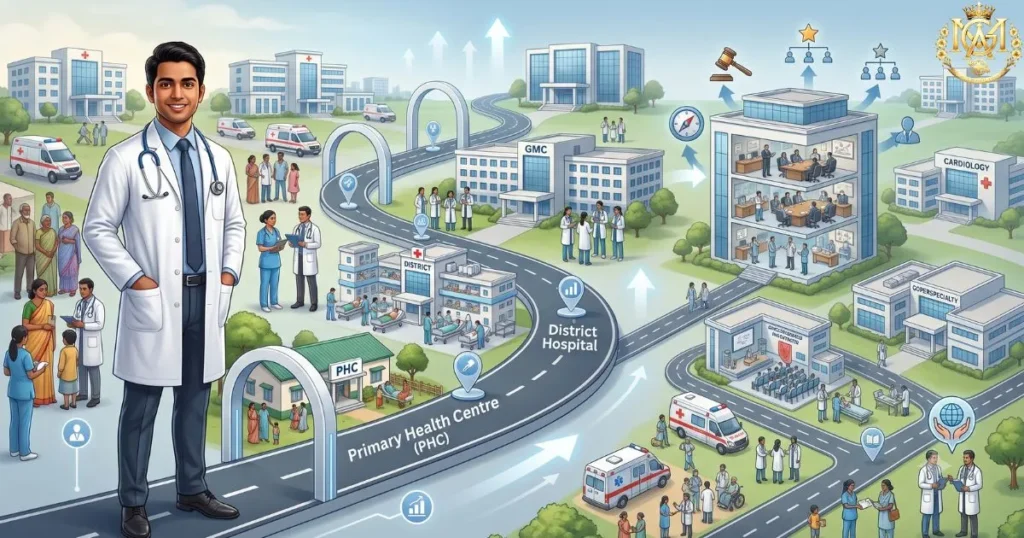
Government jobs after MBBS showing a doctor's career journey from Medical Officer to leadership in India's public healthcare system
Learning blogs

Government Jobs After MBBS in India: Full List & Guide (2026)

Government Jobs After MBBS: Complete Guide to Government Medical Careers in India Completing an MBBS is a significant milestone, but for many graduates, it also marks the beginning of an important career decision. While some doctors prepare for NEET PG, others enter private hospitals or start clinical practice. At the same time, a large number of MBBS graduates actively search for government jobs after MBBS because they are looking for something beyond an attractive salary—they want job security, structured career growth, diverse clinical exposure, and the opportunity to contribute to public healthcare. Government healthcare in India continues to be one of the largest employers of medical professionals. From Primary Health Centres (PHCs) and Community Health Centres (CHCs) to AIIMS, Railways, Armed Forces Medical Services, ESIC hospitals, and Central Health Services, doctors have access to multiple career pathways depending on their interests and long-term goals. These roles not only provide financial stability but also expose doctors to a wide variety of medical cases that strengthen clinical decision-making and professional confidence. However, one common misconception is that every government job follows the same recruitment process or offers identical career opportunities. In reality, each role has different eligibility criteria, selection procedures, responsibilities, and growth prospects. Understanding these differences helps doctors choose a path that aligns with their professional aspirations rather than simply applying for the first available vacancy. This guide explains how MBBS graduates can begin a government medical career, explores the major government job opportunities available in India, and provides practical insights to help doctors build a successful long-term career in public healthcare. Can You Start a Government Medical Career Immediately After MBBS? The short answer is yes. After completing your MBBS degree and compulsory rotating internship, you are eligible to apply for several government medical positions across central and state healthcare services. For many graduates, this becomes an excellent opportunity to gain structured clinical experience while earning a stable income. Before applying, there are a few essential requirements that every MBBS graduate should understand. Complete Your Internship Successfully The compulsory rotating internship is not merely a graduation requirement—it serves as your first exposure to independent patient care under supervision. During this period, doctors gain experience across multiple departments, develop clinical judgment, and become familiar with hospital protocols. Most government recruitment bodies require candidates to have successfully completed their internship before joining service. Obtain Permanent Medical Registration After internship completion, doctors must obtain permanent registration from the National Medical Commission (NMC) or the respective State Medical Council. This registration legally authorizes doctors to practice medicine in India and is mandatory for almost every government medical recruitment process. Without valid registration, applications for Medical Officer positions, UPSC Combined Medical Services (CMS), Armed Forces Medical Services, and many state-level recruitments are generally not accepted. Is NEET PG Required for Government Jobs? One of the biggest concerns among MBBS graduates is whether qualifying for NEET PG is necessary before entering government service. The answer is not always. Many government positions recruit doctors directly after MBBS without requiring postgraduate qualifications. Roles such as Medical Officer, General Duty Medical Officer (GDMO), contractual doctors under the National Health Mission (NHM), and several state health service positions primarily require an MBBS degree, internship completion, and valid registration. Postgraduate qualifications become increasingly important for specialist positions, teaching appointments, and higher administrative roles later in a doctor’s career, but they are not mandatory for many entry-level government jobs. Common Misconceptions About Government Medical Careers Many fresh graduates delay applying for government positions because of misinformation. Understanding the facts can help doctors make more informed career decisions. Common Misconception Reality Government jobs require an MD/MS degree. Many entry-level government roles recruit MBBS graduates directly. NEET PG is compulsory before joining government service. Several Medical Officer and public health positions only require MBBS and registration. Government hospitals provide limited clinical exposure. Government institutions often handle a high patient load, offering extensive hands-on clinical experience. Career growth is slow in government healthcare. Promotions, higher studies, administrative roles, and specialist positions provide multiple growth opportunities over time. Government Medical Career Pathways After MBBS Government healthcare offers multiple entry routes depending on your career interests. Some positions are recruited through national-level competitive examinations, while others are filled by state governments or healthcare institutions. Career Pathway Minimum Eligibility Recruitment Authority Typical Entry Role UPSC Combined Medical Services (CMS) MBBS + Internship + Registration Union Public Service Commission General Duty Medical Officer State Health Services MBBS + Registration State Public Service Commission Medical Officer National Health Mission (NHM) MBBS + Registration State NHM Authorities Medical Officer / Public Health Roles Armed Forces Medical Services (AFMS) MBBS + Registration Armed Forces Medical Services Commissioned Medical Officer AIIMS & Government Medical Colleges MBBS Individual Institutions Junior Resident / Medical Officer Recruitment criteria and vacancies may vary depending on the recruiting authority and official notifications. Career Insight Many MBBS graduates believe they must choose between preparing for postgraduate entrance examinations and starting a government job. In reality, these two goals are not always mutually exclusive. Several doctors gain valuable clinical experience through government service while simultaneously preparing for NEET PG or planning future specialization. Early exposure to diverse patient cases often strengthens both clinical confidence and long-term career planning. What Government Career Opportunities Are Available for MBBS Graduates? Government healthcare in India offers far more opportunities than many doctors initially realise. Beyond traditional Medical Officer roles, MBBS graduates can pursue careers in central government departments, defence services, public health programmes, premier teaching institutions, and specialised healthcare organisations. Choosing the right opportunity depends on your professional interests, preferred work environment, and long-term career goals. Medical Officer in State Health Services Medical Officer positions remain one of the most sought-after government jobs after MBBS. Doctors appointed as Medical Officers work in government hospitals, Primary Health Centres (PHCs), Community Health Centres (CHCs), district hospitals, and various public healthcare institutions. Their responsibilities include outpatient consultations, emergency care, inpatient management, preventive healthcare, and implementation of government health programmes. These roles provide exceptional clinical exposure because

Doctor salary in India showing career growth from MBBS internship to specialist doctor with increasing earning potential
Learning blogs

Doctor Salary in India: Understanding How Doctors Build Long-Term Income

Doctor Salary in India: What Really Shapes a Doctor’s Earnings Throughout Their Career? Every year, thousands of MBBS graduates search for one simple question: “What is the doctor salary in India?” At first glance, it seems like a straightforward query. However, what doctors are really trying to understand is something much deeper. They want to know whether pursuing an MD or MS is financially worthwhile, whether government hospitals offer better long-term stability than corporate hospitals, why two doctors with the same MBBS degree can have vastly different incomes, and how they can build a financially rewarding career without compromising patient care. The truth is that there is no single salary for doctors in India. A doctor’s income is influenced by multiple factors, including qualifications, clinical expertise, years of experience, specialty, workplace, location, and professional reputation. While some doctors earn a modest stipend during internship, others build highly successful practices through years of continuous learning, specialization, and patient trust. Rather than focusing only on salary figures, this guide explains what truly determines a doctor’s earning potential, how income evolves throughout different career stages, and the practical decisions that can shape long-term financial growth. Why Do Some Doctors Earn Significantly More Than Others Despite Having the Same Medical Degree? One of the biggest misconceptions among medical graduates is that completing an MBBS automatically guarantees a fixed salary. In reality, two doctors with the same qualification can have completely different incomes within a few years of graduation. For example, one MBBS graduate may work as a Medical Officer in a government hospital, while another joins a corporate hospital, gains advanced procedural skills, completes a Fellowship Program, and eventually establishes a successful private practice. Although both started with the same degree, their career choices lead to very different earning trajectories. Understanding these factors helps doctors make informed career decisions rather than comparing salaries alone. Qualification Opens Doors, but Skills Create Opportunities An MBBS degree is the foundation of a medical career, but higher qualifications often expand professional opportunities. Doctors who pursue MD, MS, DNB, DM, or MCh become eligible for specialist roles, consultant positions, academic appointments, and advanced clinical responsibilities. However, qualification alone does not guarantee higher earnings. Employers increasingly value doctors who demonstrate strong clinical judgment, procedural competence, and evidence-based decision-making alongside academic credentials. Experience Builds Professional Value A doctor’s income generally increases with experience because years of clinical practice improve diagnostic accuracy, decision-making, patient management, and procedural confidence. Experienced doctors also develop: Better clinical efficiency Stronger patient relationships Higher consultation demand Greater referral networks Leadership responsibilities within healthcare teams Over time, these factors contribute significantly to career progression and earning potential. Clinical Skills Often Matter More Than Degrees Modern healthcare increasingly rewards doctors who can perform specialized procedures, manage complex cases, and confidently apply practical clinical skills. For example, expertise in emergency medicine, critical care, ultrasonography, endoscopy, aesthetic procedures, or interventional techniques may create additional professional opportunities beyond routine clinical practice. This is why many working doctors invest in continuous medical education, Fellowship Programs, and skill-based training throughout their careers. Reputation and Patient Trust Influence Income In medicine, reputation is one of the most valuable long-term assets. Doctors who consistently provide ethical care, communicate effectively, and achieve positive patient outcomes naturally build trust within their communities. Over time, this trust leads to: Higher patient retention More referrals from colleagues Increased consultation demand Better professional recognition Unlike many professions, a doctor’s reputation often becomes a stronger driver of career growth than salary negotiations alone. Workplace and Location Also Shape Earnings Income can vary depending on where and how a doctor practices. Government hospitals generally provide structured pay scales, job security, and long-term benefits, while private hospitals may offer performance-based compensation, incentives, and opportunities to work with advanced medical technologies. Similarly, doctors practicing in metropolitan cities often encounter larger patient volumes and greater demand for specialist services. On the other hand, many doctors establish highly successful practices in Tier-2 and Tier-3 cities where competition may be lower and long-term patient relationships are easier to build. What Has the Greatest Impact on a Doctor’s Income? Factor Influence on Income Why It Matters Qualification High Opens opportunities for specialist and consultant roles. Clinical Skills Very High Practical expertise often increases professional value more than qualifications alone. Experience Very High Builds confidence, efficiency, and patient trust over time. Medical Specialty High Certain specialties involve advanced procedures and greater clinical demand. Hospital Type Moderate to High Government and private institutions follow different compensation structures. Practice Location Moderate Patient volume, healthcare demand, and cost of living influence earnings. Professional Reputation Very High Strong patient trust and referral networks contribute to sustained career growth. How Does a Doctor’s Salary Evolve from Internship to Specialist Practice? Many MBBS students assume that doctors begin earning high salaries immediately after graduation. In reality, a medical career develops gradually. Each stage brings new responsibilities, clinical experience, and opportunities for professional advancement. The first few years are primarily focused on learning, refining practical skills, and gaining confidence in patient care. As doctors progress through residency, specialization, and independent practice, their earning potential generally increases alongside their expertise. Rather than expecting immediate financial success, it is more realistic to view medicine as a long-term profession where continuous learning leads to both better patient outcomes and improved career prospects. Typical Career Progression Career Stage Primary Focus Typical Monthly Income* MBBS Internship Clinical exposure and supervised training ₹10,000–₹30,000 MBBS Graduate / Junior Doctor Patient care and hospital experience ₹40,000–₹1,20,000 Junior Resident (MD/MS) Specialty training and clinical practice ₹55,000–₹90,000 Senior Resident Advanced patient management ₹80,000–₹1,20,000+ Specialist / Consultant Independent specialty practice ₹1,00,000–₹4,00,000+ Super Specialist Highly specialized procedures and consultations ₹2,50,000–₹10,00,000+ *Indicative salary ranges may vary depending on the institution, specialty, experience, and location. One important lesson every doctor learns is that salary growth follows professional growth. The doctors who continue developing their clinical expertise, build strong patient relationships, and inves Which Career Decisions Have the Greatest Impact on a Doctor’s Lifetime Earnings? Many doctors assume that choosing the

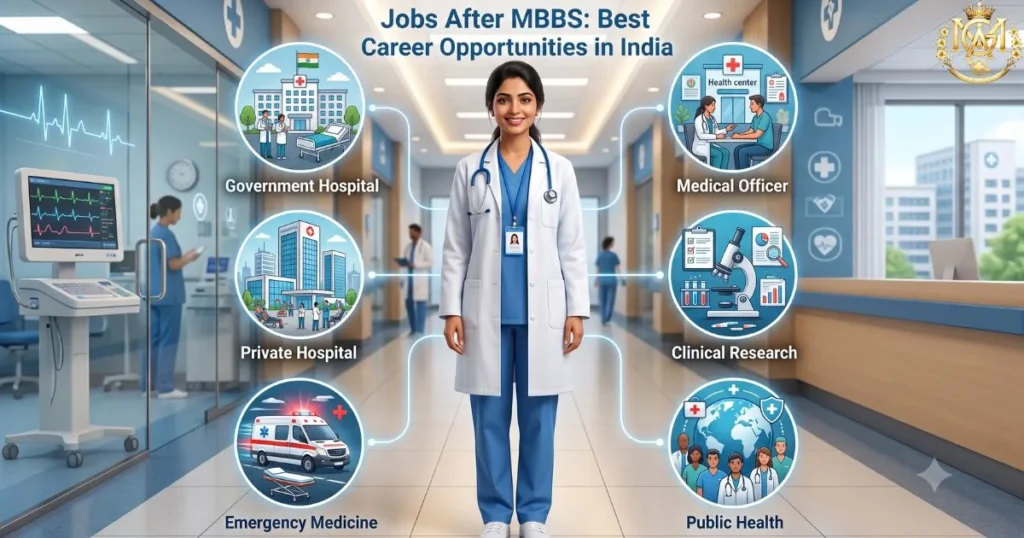
Jobs after MBBS showing clinical, government, private, and non-clinical career opportunities for MBBS doctors in India
Learning blogs

Jobs After MBBS: A Complete Career Guide for MBBS Doctors in India (2026 Guide)

Jobs After MBBS: Career Opportunities for MBBS Doctors in India (2026 Guide) Completing an MBBS degree is a major milestone, but it also marks the beginning of an important career decision. Many graduates ask themselves, “What are the best jobs after MBBS?“ While some doctors prepare for NEET PG and postgraduate specialization, others choose to start working immediately to gain clinical experience, become financially independent, or explore different areas of medicine. Today, MBBS graduates have access to a wide range of employment opportunities across government hospitals, private healthcare institutions, emergency medicine, diagnostic centers, public health organizations, research, and non-clinical sectors. The growing demand for qualified doctors in India, driven by expanding healthcare infrastructure and increasing patient needs, has created multiple career pathways beyond traditional clinical practice. Whether your goal is to work as a Medical Officer, join a leading hospital, prepare for higher studies while gaining experience, or pursue a non-clinical medical career, understanding the available job opportunities can help you make a well-informed decision. In this guide, you’ll learn about the different types of jobs available after MBBS, eligibility requirements, work environments, career prospects, and practical steps to strengthen your employability in today’s healthcare industry. What Job Opportunities Are Available After MBBS? An MBBS degree opens doors to diverse career opportunities in both the public and private healthcare sectors. Depending on your interests, career goals, and future plans, you can begin practicing clinically, join government healthcare services, explore corporate healthcare roles, or build expertise through advanced medical training. Broadly, jobs after MBBS can be categorized into five major career pathways. Clinical Jobs Clinical jobs involve direct patient care and are often the preferred choice for newly graduated doctors who wish to strengthen their practical skills before pursuing specialization. Common clinical roles include: Junior Resident Doctor Medical Officer Duty Medical Officer Emergency Medicine Doctor ICU Resident General Physician (under supervision) Hospital Resident Doctor These positions provide valuable hands-on experience in diagnosis, treatment planning, patient management, and multidisciplinary collaboration. Government Jobs Government healthcare services offer stable employment, structured career progression, and opportunities to serve diverse communities across India. Popular government employment options include: State Government Medical Officer UPSC Combined Medical Services (CMS) ESIC Hospitals National Health Mission (NHM) Railway Medical Services Armed Forces Medical Services Many MBBS graduates choose government jobs because they provide extensive clinical exposure, job security, and opportunities to work in public healthcare systems. Private Sector Jobs Private hospitals and healthcare organizations provide excellent opportunities for doctors seeking advanced infrastructure, exposure to modern medical technology, and multidisciplinary practice. Private employment options include: Corporate Hospitals Multi-specialty Hospitals Specialty Clinics Diagnostic Centers Day Care Hospitals IVF and Fertility Centers Emergency Care Centers These roles often expose young doctors to complex clinical cases while allowing them to work alongside experienced specialists. Non-Clinical Jobs Not every MBBS graduate chooses direct patient care. Several healthcare industries value medical knowledge and offer rewarding non-clinical careers. Examples include: Clinical Research Medical Writing Pharmacovigilance Healthcare Management Health Insurance Medical Advisor Roles Public Health Programs Medical Coding and Documentation These careers combine medical expertise with research, administration, communication, or healthcare policy. International Career Opportunities Many MBBS graduates also explore employment opportunities abroad after completing the required licensing examinations and registration processes. Countries offering opportunities include: United Kingdom Australia United States Canada United Arab Emirates New Zealand Working internationally often requires additional licensing examinations, language proficiency requirements, and regulatory approvals, but it can provide broader clinical exposure and global career development. Comparison of Major Job Categories After MBBS Career Path Primary Work Environment Direct Patient Care Ideal For Clinical Jobs Hospitals, Emergency Departments, Clinics Yes Doctors interested in practical clinical experience Government Jobs Government Hospitals, Public Health Centers Yes Those seeking stable employment and public service Private Sector Jobs Corporate Hospitals, Specialty Centers Yes Doctors looking for advanced infrastructure and faster learning Non-Clinical Jobs Research Organizations, Healthcare Companies Limited Professionals interested in research, management, or healthcare consulting International Opportunities Overseas Hospitals and Healthcare Systems Yes Doctors planning a global medical career Best Clinical Jobs After MBBS Clinical practice remains one of the most valuable career paths immediately after MBBS. Working directly with patients helps doctors strengthen diagnostic reasoning, improve clinical decision-making, develop procedural skills, and gain confidence before pursuing postgraduate education or specialization. The following clinical roles are among the most common and rewarding job opportunities for MBBS graduates. Junior Resident Doctor A Junior Resident Doctor works under the supervision of senior consultants and specialists in teaching hospitals and multi-specialty healthcare institutions. This role provides intensive exposure to inpatient care, emergency cases, ward management, and multidisciplinary teamwork. Key responsibilities include: Examining and assessing patients Preparing treatment plans under supervision Monitoring admitted patients Assisting during medical procedures Maintaining clinical documentation Participating in ward rounds and case discussions This role is ideal for doctors preparing for postgraduate entrance examinations while continuing to build strong clinical experience. Medical Officer Medical Officers play a vital role in delivering primary and secondary healthcare services in government hospitals, community health centers, private hospitals, and industrial healthcare facilities. Typical responsibilities include: Diagnosing common illnesses Managing outpatient departments (OPD) Providing emergency medical care Supervising healthcare teams Promoting preventive healthcare Managing public health programs Medical Officer positions offer diverse clinical exposure and are often considered one of the most stable employment options after MBBS. Emergency Medicine Doctor Emergency departments require doctors who can make quick, evidence-based decisions while managing critically ill or injured patients. Doctors working in emergency medicine commonly manage: Trauma cases Cardiac emergencies Stroke patients Poisoning cases Acute respiratory emergencies Medical and surgical emergencies The role demands excellent communication, rapid clinical judgment, and the ability to perform effectively in high-pressure environments. ICU and Critical Care Resident Critical care units provide an excellent learning environment for doctors interested in managing seriously ill patients. Responsibilities include: Monitoring critically ill patients Interpreting laboratory and imaging findings Managing ventilated patients Performing emergency procedures Coordinating multidisciplinary patient care This experience builds a strong foundation for future specialization in critical care, emergency medicine, anesthesiology, and internal medicine. Hospital Duty Doctor

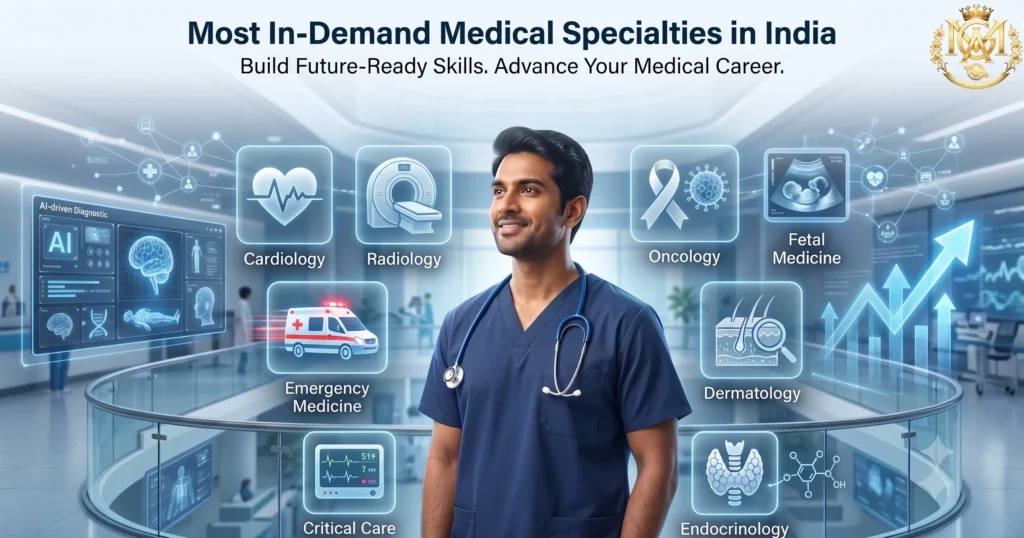
Doctor exploring the most in-demand medical specialties in India for future career growth after MBBS.
Learning blogs

Most In-Demand Medical Specialties in India: Complete 2026 Demand Guide

Most In-Demand Medical Specialties in India (2026 Guide) India’s healthcare landscape is changing rapidly. An aging population, rising lifestyle-related diseases, increasing awareness of preventive healthcare, and advances in medical technology have significantly transformed the demand for specialist doctors. While MBBS remains the foundation of a medical career, healthcare institutions today increasingly seek doctors with specialized clinical expertise to manage complex medical conditions and deliver quality patient care. However, choosing a specialty should not be based solely on popularity. A specialty becomes “in demand” when there is a growing need for skilled professionals who can address specific healthcare challenges, improve patient outcomes, and meet the evolving needs of hospitals and communities. Whether you are planning your postgraduate education or exploring advanced clinical training after MBBS, understanding current healthcare trends can help you make informed career decisions. In this guide, we’ll explore the medical specialties that are experiencing the highest demand in India, the factors driving this growth, and how doctors can prepare for future opportunities in an evolving healthcare system. What Makes a Medical Specialty High in Demand? The demand for a medical specialty is shaped by much more than the number of doctors practicing in that field. It reflects the healthcare needs of the population, disease patterns, technological advancements, and the availability of trained specialists. As India’s healthcare system continues to expand, hospitals, diagnostic centers, and specialty clinics require doctors who possess advanced clinical knowledge and the ability to manage increasingly complex medical conditions. Specialties that address common chronic diseases, emergency care, cancer treatment, and critical illnesses naturally experience higher demand because they directly respond to some of the country’s most pressing health concerns. Several factors contribute to the growing need for specialists across different branches of medicine. Growing Burden of Chronic Diseases India has witnessed a significant rise in non-communicable diseases such as cardiovascular disease, diabetes, chronic kidney disease, cancer, obesity, and respiratory disorders. These conditions often require long-term specialist care, regular monitoring, and multidisciplinary treatment. As the number of patients living with chronic illnesses continues to increase, the need for specialists in fields such as Cardiology, Endocrinology, Nephrology, Oncology, and Critical Care Medicine continues to grow across both public and private healthcare sectors. Aging Population and Changing Healthcare Needs People are living longer than ever before, and with increasing life expectancy comes a higher prevalence of age-related health conditions. Older adults are more likely to require specialized care for heart disease, neurological disorders, joint problems, kidney disease, cancer, and multiple chronic conditions. This demographic shift is increasing the demand for specialists who can provide comprehensive, long-term care while working collaboratively with multidisciplinary healthcare teams. Lifestyle Disorders and Preventive Healthcare Urbanization, sedentary lifestyles, unhealthy dietary habits, stress, and environmental factors have contributed to a sharp increase in lifestyle-related diseases across India. Healthcare is gradually shifting from treating diseases after they occur to preventing them through early diagnosis, regular screening, and timely intervention. This has strengthened the role of specialists involved in diagnostics, preventive medicine, imaging, and chronic disease management. As awareness grows among patients, specialists who can identify diseases early and provide evidence-based treatment are becoming increasingly important. Advances in Medical Technology Modern medicine is evolving rapidly with innovations such as artificial intelligence, robotic-assisted surgery, advanced imaging, minimally invasive procedures, molecular diagnostics, and precision medicine. These technologies have expanded the role of many specialties, particularly Radiology, Emergency Medicine, Critical Care, Fetal Medicine, and Interventional specialties, where advanced diagnostic tools and image-guided procedures are now part of routine clinical practice. Doctors who remain updated with emerging technologies and evidence-based practices are better positioned to meet future healthcare demands. Specialist Shortage Across India Although India produces thousands of medical graduates each year, access to specialist healthcare remains uneven. Many rural districts, Tier-2 and Tier-3 cities, and government healthcare facilities continue to face shortages of trained specialists in critical areas such as Emergency Medicine, Radiology, Oncology, Critical Care, and several superspecialties. As healthcare infrastructure expands beyond metropolitan cities, hospitals are actively seeking specialists who can deliver high-quality care across diverse clinical settings. This growing gap between patient demand and specialist availability is creating new opportunities for doctors willing to pursue advanced training and specialized clinical expertise. Top 10 Most In-Demand Medical Specialties in India The demand for medical specialists continues to evolve alongside changing disease patterns, healthcare infrastructure, and patient expectations. While every medical specialty contributes significantly to patient care, some branches are witnessing faster growth because they address critical healthcare needs and support advanced diagnosis and treatment. The following specialties are among the most in-demand medical fields in India, offering doctors diverse clinical opportunities across hospitals, specialty centers, academic institutions, and private practice. Cardiology Cardiology remains one of India’s most sought-after medical specialties due to the rising incidence of cardiovascular diseases. Heart disease continues to be one of the leading causes of illness and mortality, increasing the need for specialists who can diagnose, manage, and treat complex cardiac conditions. Cardiologists work in multispecialty hospitals, cardiac institutes, emergency departments, and catheterization laboratories. As preventive cardiology, interventional cardiology, and advanced cardiac imaging continue to expand, the demand for skilled cardiologists is expected to remain strong for years to come. Emergency Medicine Emergency Medicine has become an essential specialty as hospitals focus on providing immediate care for trauma, accidents, strokes, cardiac emergencies, and other life-threatening conditions. Emergency physicians are trained to make rapid clinical decisions while coordinating care across multiple specialties. They work in emergency departments, trauma centers, disaster response units, and critical care settings. With increasing road traffic injuries, urban healthcare demands, and expanding emergency services, this specialty continues to experience significant growth throughout India. Radiology Radiology has become the backbone of modern diagnosis. Almost every medical specialty depends on imaging for accurate diagnosis, treatment planning, and disease monitoring. Radiologists work in hospitals, diagnostic centers, cancer institutes, and interventional radiology units, interpreting imaging studies such as X-rays, CT scans, MRI, ultrasound, and PET scans. The integration of artificial intelligence, advanced imaging technology, and image-guided interventions is further increasing the need for skilled

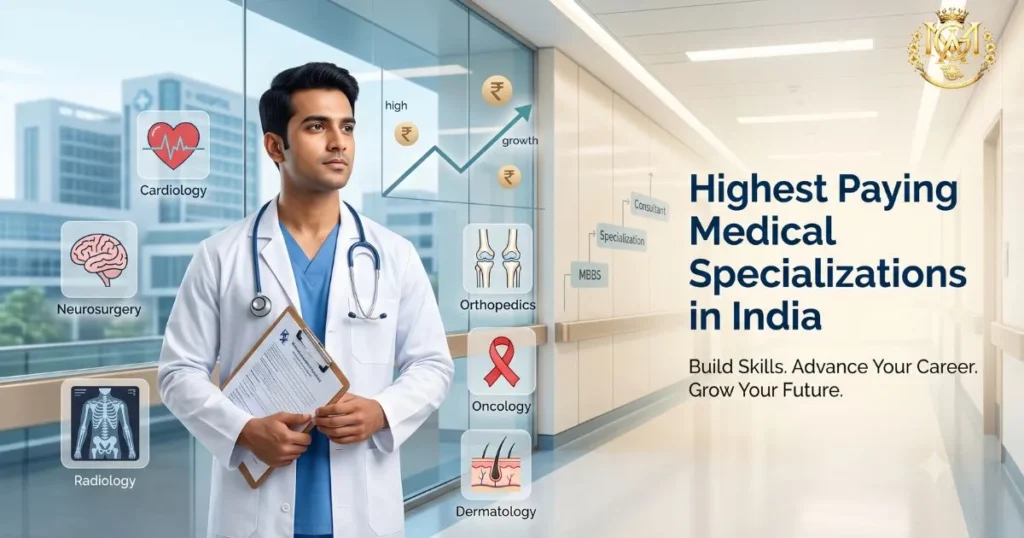
Doctor exploring the highest paying medical specializations in India for career growth after MBBS.
Learning blogs

Highest Paying Medical Specializations in India: Salary Guide for Doctors (2026)

📅 Updated August 2026 ⏰ 16 min read 🎓 MBBS · MD · MS · Specialist Doctors 💰 Salary Data — mid-2026 ⚡ Quick Answer — Highest Paying Medical Specializations in India Which medical specialization has the highest salary in India (2026)? #  Specialization Typical Annual Salary Demand Practice Type 1Neurosurgery ₹80L – ₹1Cr+ Very High Surgical 2Cardiology ₹60L – ₹80L+ Very High Medical + Procedural 3Plastic & Cosmetic Surgery ₹50L – ₹80L+ High Surgical + Aesthetic 4Radiology ₹40L – ₹60L+ Very High Diagnostic 5Gastroenterology ₹35L – ₹55L+ High Medical + Endoscopy 6Orthopedics ₹30L – ₹50L+ Very High Surgical 7Urology ₹30L – ₹50L+ High Surgical + Robotic 8Oncology ₹25L – ₹45L+ Very High Medical + Radiation 9Dermatology ₹20L – ₹35L+ High OPD + Aesthetic 10Anesthesiology ₹18L – ₹30L+ High Hospital-Based Salary figures above are based on publicly available industry reports and general market data as of mid-2026. Actual pay varies by state, institution, experience, and individual negotiation. 🔗 Also See: Complete Medical Specialization Guide Salary is one factor — but the right specialization also depends on your clinical interests, lifestyle, and long-term career goals. See the complete medical specialization after MBBS guide for a full comparison of scope, demand, qualification pathways, and career fit. Highest Paying Medical Specializations in India (2026 Guide) Choosing a medical specialization is one of the most significant decisions in a doctor’s career. While passion, clinical interest, and patient care should always remain the primary factors, it’s equally reasonable to understand how different specialties vary in earning potential. After years of medical education, postgraduate training, and clinical practice, many doctors naturally want to know which fields offer stronger financial growth alongside professional satisfaction. The truth is that there isn’t a single specialty that guarantees a high income. A doctor’s earnings depend on several factors, including clinical expertise, procedural skills, patient demand, reputation, workplace, and years of experience. Specialists who continuously upgrade their knowledge, perform advanced procedures, and build trust with patients often achieve higher earning potential regardless of their branch. In this guide, we’ll explore the highest paying medical specializations in India, understand what influences a specialist’s income, and discuss how doctors can build a successful and financially rewarding medical career without losing sight of quality patient care. What Makes Certain Medical Specializations More Profitable? Not all medical specialties generate the same level of income because every field differs in complexity, patient demand, procedural work, and the expertise required to deliver care. While academic qualifications are essential, long-term earning potential is usually shaped by the value a specialist brings to patient care. Highly specialized fields often require years of additional training, advanced clinical judgment, and the ability to perform complex procedures. These skills not only improve patient outcomes but also increase professional demand in hospitals, specialty clinics, and private practice. At the same time, income should never be viewed as the only measure of a successful medical career. Doctors who combine strong clinical knowledge with ethical practice, continuous learning, and patient trust are generally more likely to build sustainable and rewarding careers. Skills That Increase a Doctor’s Market Value The medical profession is evolving rapidly, and today’s healthcare organizations look beyond academic degrees. Doctors who consistently develop advanced clinical skills often become more valuable to hospitals, healthcare institutions, and patients alike. Some of the most valuable professional skills include: Strong clinical decision-making and diagnostic reasoning. Excellent communication with patients and multidisciplinary teams. Procedural and intervention-based expertise. Evidence-based clinical practice. Leadership and teamwork in complex healthcare settings. Adaptability to new medical technologies and treatment guidelines. These competencies not only improve patient outcomes but also enhance professional credibility and create opportunities for career advancement. Why Expertise Commands Higher Earnings One of the biggest reasons certain specialists earn more is the level of expertise they develop over time. Doctors who perform advanced diagnostic or therapeutic procedures require years of structured training, clinical exposure, and continuous education before reaching independent practice. Patients and healthcare organizations are willing to invest in specialists who consistently deliver accurate diagnoses, successful procedures, and high-quality patient care. As clinical expertise grows, so does professional reputation, referral volume, and opportunities to work in advanced healthcare settings. Rather than chasing higher-paying specialties alone, doctors should focus on becoming experts in their chosen field. In medicine, long-term professional excellence often creates better financial opportunities than simply selecting a specialty based on income expectations. Top 10 Highest Paying Medical Specializations in India While every medical specialty plays a vital role in healthcare, some fields consistently offer higher earning potential because of increasing patient demand, procedural complexity, advanced technology, and years of specialized training. However, actual income varies depending on experience, city, hospital type, private practice, and professional reputation. Below are some of the highest paying medical specializations in India and why they continue to remain among the most sought-after career paths for doctors. Cardiology Cardiology remains one of India’s highest-paying medical specializations due to the rising burden of cardiovascular diseases and the growing demand for advanced cardiac care. Cardiologists diagnose and manage conditions affecting the heart and blood vessels, while many also perform specialized procedures such as angiography, angioplasty, and cardiac interventions. The specialty combines clinical expertise with procedural skills, making experienced cardiologists highly valued in multispecialty hospitals and cardiac centers. Doctors who pursue advanced fellowship or super-specialty training in cardiology often have excellent opportunities for professional growth, research, and private practice. Neurosurgery Neurosurgery is considered one of the most technically demanding medical specialties. Neurosurgeons manage complex disorders involving the brain, spine, and nervous system, including tumors, trauma, vascular diseases, and neurological emergencies. Because these procedures require exceptional precision, years of specialized training, and advanced surgical expertise, experienced neurosurgeons are among the highest-paid medical professionals. The specialty also offers opportunities to work in tertiary care hospitals, academic institutions, and advanced neurosurgical centers. Radiology Radiology has become one of the fastest-growing and highest-paying specialties due to the increasing use of medical imaging in diagnosis and treatment planning. Radiologists play a crucial role in interpreting X-rays, CT scans, MRI, ultrasound, and

MBBS doctor choosing the right medical specialization for a successful medical career.
Learning blogs

How to Choose the Right Medical Specialization? A Practical Guide for MBBS Doctors

How to Choose Medical Specialization: 7-Step Guide for MBBS Doctors (2026) Career Decision Guide · 2026 How to Choose the Right Medical Specialization: A Practical Guide for MBBS Doctors Salary, ranking, and peer advice are not enough. This step-by-step framework helps you evaluate clinical interests, lifestyle, and long-term goals — so your specialty decision holds up 20 years from now. 10 min read Updated August 2026 MBBS · MD · MS · DGO · NMC-qualified doctors Quick Answer How do you choose the right medical specialization after MBBS? Choose by matching your clinical interests, preferred work style, and long-term career goals — not just salary or popularity. The 7-step framework below covers self-assessment, clinical exposure, mentor conversations, and how to shortlist your best-fit specialty. 1 Know your interests 2 Assess your strengths 3 Learn from internship 4 Identify your practice type 5 Seek mentorship 6 Shortlist & compare 7 Evaluate long-term fit Complete Specialization Guide Explore Every Part of the Medical Specialization Decision Medical Specialization After MBBS Complete overview of the best specialties, scope & career paths Highest Paying Specializations Salary comparison across all major specialties in India Most In-Demand Specialties Where patient demand and hospital hiring is growing fastest MD vs MS vs DNB — Which PG Path? Compare the three qualification routes after MBBS Becoming a doctor is a dream that requires years of dedication, discipline, and continuous learning. However, earning an MBBS degree is not the final destination — it is the beginning of one of the most important decisions in your medical career: choosing the right specialization. Many doctors assume they should select a specialty based on popularity, advice from seniors, or current trends. In reality, choosing a medical specialization is a deeply personal decision that should reflect your interests, strengths, clinical experiences, and long-term professional goals. The specialty you choose will shape the patients you care for, the skills you develop, the lifestyle you lead, and the kind of doctor you become. This guide gives you a structured, honest framework for making that decision — not based on what is trending, but on what fits you. Why It Matters Why Choosing the Right Medical Specialization Matters Choosing a medical specialization is much more than selecting your next academic qualification. It is a long-term career decision that influences your daily responsibilities, clinical expertise, work environment, professional relationships, and future opportunities. Every medical specialty demands a unique combination of knowledge, technical skill, decision-making ability, and patient interaction. Some doctors thrive in fast-paced emergency settings; others prefer building long-term relationships with patients or solving complex diagnostic challenges. Understanding where your interests naturally fit is far more valuable than choosing a specialty simply because it is competitive or high-paying. Rather than asking “Which specialty is the best?”, the more meaningful question is: “Which specialty will allow me to become the kind of doctor I want to be?” That shift in perspective often leads to a far more confident and lasting career decision. For a side-by-side comparison of specialties by scope and career path, see the complete medical specialization guide. Self-Assessment Step 1 — Start with Self-Assessment Before exploring different medical specialties, take time to understand yourself. Self-assessment is one of the most valuable first steps because it helps you identify where your interests, abilities, and professional aspirations naturally align — before external influences pull you in different directions. Identify Your Clinical Interests During MBBS, pay close attention to the departments where you felt genuinely interested and eager to learn, not just the ones where you scored well. Which clinical posting did you look forward to each day? Which cases kept you curious even after duty hours? Did you enjoy diagnosing complex conditions or performing procedures? Were you more interested in acute care or long-term patient management? Step 2 — Understand Your Strengths Every doctor has unique strengths. Recognizing them honestly helps you make realistic career decisions — not to limit your options, but to understand where you can perform at your best. Do I remain calm during emergencies? Am I comfortable making quick clinical decisions? Do I enjoy detailed analysis and diagnostic problem-solving? Can I communicate effectively with patients and families? Do I prefer working independently or in a multidisciplinary team? There are no right or wrong answers here. The goal is to find a specialty that complements your natural abilities while providing room for continuous growth. Internship Insights Step 3 — Learn from Your MBBS and Internship Experience One of the biggest advantages of an MBBS programme is that it exposes you to multiple specialties before you commit to one. Classroom learning provides the theoretical foundation, but clinical postings and internship reveal what daily medical practice actually looks and feels like. Which Clinical Rotations Did You Enjoy Most? Every posting offers a different perspective. Think back and ask yourself: which department made you excited to attend rounds? Which specialty encouraged you to read more after duty hours? Which patient cases stayed in your mind long after your shift ended? The departments you naturally gravitated toward often reflect your genuine clinical interests. What Did Real Patient Care Teach You? Clinical experience also reveals how you respond under different conditions. Some doctors remain calm in emergencies; others excel at building long-term relationships with patients. Some find satisfaction in interpreting investigations; others in performing procedures or assisting during surgeries. These experiences teach empathy, clinical judgment, and teamwork — qualities that shape your career as much as medical knowledge does. How Internship Clarifies Your Career Direction During internship, do not hesitate to ask consultants: “What do you enjoy most about this specialty?” / “What challenges should every new doctor be prepared for?” / “If you could choose again, would you make the same decision?” These conversations provide insights that no career guide can fully capture. Avoid making career decisions based on a single difficult posting — look at the overall experience across your entire MBBS journey rather than isolated moments. Practice Type Step 4 — Identify What Type of Practice Fits

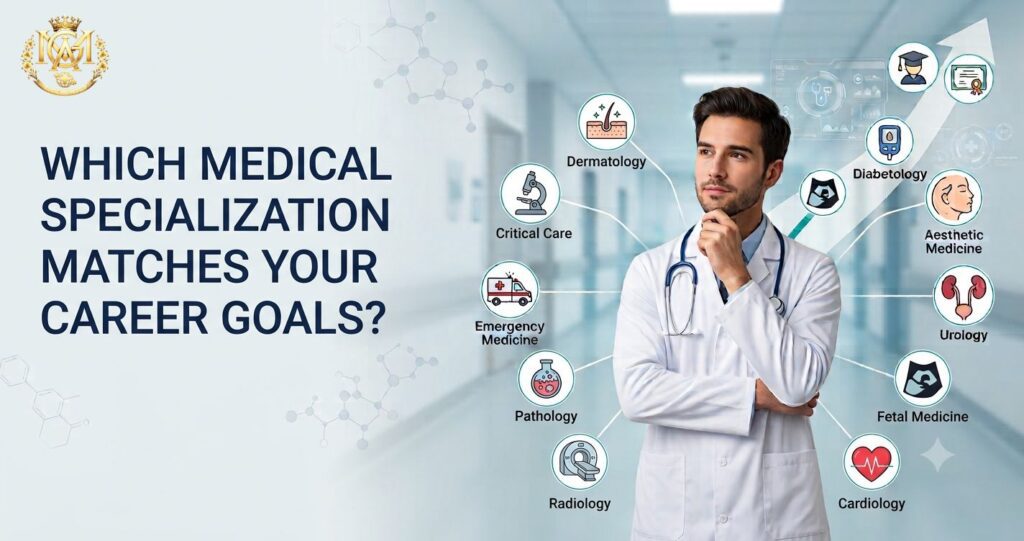
Which Medical Specialization Is Best After MBBS? Career guide comparing medical specialties for doctors.
Learning blogs

Medical Specialization After MBBS: Which Specialty Is Right for You? (2026)

📅 Updated August 2026 ⏰ 12 min read 🎓 MBBS · MD · MS · DGO · NMC Doctors 🌎 Pillar Guide — Specialization Cluster ⚡ Quick Answer Which medical specialization is best after MBBS in India? There is no single best specialization — the right choice depends on your clinical interests, preferred work style, and long-term career goals. Cardiology, Radiology, Dermatology, Emergency Medicine, Critical Care, and Fetal Medicine are among the most sought-after fields in India in 2026, each offering distinct career paths, salary ranges, and lifestyle profiles. Use the complete guide below to compare specialties and find the one that fits you — not just the one with the highest salary. 🔗 Complete Specialization Guide Series Everything You Need to Choose, Compare & Grow in Your Specialty ✅ How to Choose a Specialization 7-step decision framework for MBBS doctors 💰 Highest Paying Specializations Full 2026 salary comparison by specialty 📋 MD vs MS vs DNB — Which PG Path? Compare the three postgraduate qualification routes 📈 Most In-Demand Specialties in India Where patient demand & hospital hiring is growing Completing MBBS is one of the biggest milestones in a doctor’s journey — but it also marks the beginning of the most important career decision you will ever make: choosing the right medical specialization. Questions about career growth, work-life balance, income, future demand, and clinical interest all come together at this crossroads. The truth is that there is no universally “best” specialization. The right choice depends on the kind of doctor you want to become, the patients you enjoy treating, the clinical environment you prefer, and the professional life you envision. This guide compares the most promising medical specializations in India, explains what each one actually demands, and links to focused guides on salary, qualification pathways, demand trends, and more — so you can go as deep as you need on any single question. Why It Matters Why Choosing the Right Medical Specialization Matters Choosing a medical specialization is more than selecting a postgraduate course — it is choosing the direction of your entire professional career. Every specialty offers different learning experiences, patient interactions, responsibilities, and long-term opportunities. Career growth, lifestyle, income, and job satisfaction all vary significantly across specialties. Some offer faster entry into private practice; others provide paths into academic medicine, super-specialization, research, or leadership roles in hospital systems. Long-term success depends far more on clinical competence, continuous learning, and genuine passion for the field than on the specialty name itself. Equally important is lifestyle fit. Some doctors prefer procedure-based specialties with emergency duties; others value predictable schedules and outpatient practice. Choosing a specialty that aligns with your personality, interests, and long-term goals is what makes a medical career truly fulfilling — not just financially rewarding. For a step-by-step framework on how to actually make this decision, see our dedicated guide: how to choose the right medical specialization after MBBS. Key Factors 6 Factors to Consider Before Choosing a Specialization Most doctors make long-term career decisions based on a combination of these six factors — not salary alone: Clinical interests — which departments did you genuinely look forward to during MBBS and internship? Working style — do you prefer diagnostic reasoning, procedures, emergency decisions, or long-term patient care? Lifestyle expectations — are you comfortable with night duties and unpredictable schedules, or do you value OPD-based practice? Future demand — fields like Critical Care, Radiology, Emergency Medicine, and Fetal Medicine have strong structural growth drivers heading into the 2030s Mentorship and clinical exposure — the consultants who inspire you during internship often reveal where you genuinely belong Long-term career satisfaction — can you see yourself practicing and growing in this specialty for the next 25 years? ℹ For the complete self-assessment framework including a decision matrix, practice-type comparison, and checklist see our guide on how to choose a medical specialization. For common pitfalls, see 7 mistakes doctors make when choosing a specialty. Top Specializations Top Medical Specializations After MBBS (2026) The “best” specialization is not the one with the highest salary or most competitive NEET PG cutoff — it is the one that aligns with your interests, strengths, and long-term professional goals. Below are the most promising fields, with salary figures consistent with the highest paying medical specializations guide. ❤ Cardiology Diagnosis and treatment of heart and blood vessel diseases. Combines advanced procedures with critical decision-making. One of the highest-demand specialties across public and private hospitals. 🔥 High Demand Procedural + Medical ₹ 20–50+ LPA 📸 Radiology Advanced imaging — X-ray, CT, MRI, ultrasound — to diagnose disease and guide treatment across every other specialty. Technology-driven with growing interventional procedures. Diagnostic OPD-Friendly Hours ₹ 18–40+ LPA 🌞 Dermatology Skin, hair, and nail diseases alongside aesthetic and cosmetic procedures. Strong outpatient practice, growing cosmetic demand, flexible lifestyle profile. Work-Life Balance Outpatient ₹ 15–35+ LPA 🚑 Emergency Medicine Immediate diagnosis and treatment of acute illnesses, trauma, and life-threatening conditions. Fast-paced, shift-based, high clinical diversity every day. 🔥 Fastest Growing Acute Care ₹ 12–25+ LPA 💊 Critical Care Medicine Advanced management of life-threatening illness in ICUs. Multidisciplinary collaboration, organ support, complex decision-making — one of the most intellectually demanding fields. 🔥 High Growth Hospital-Based ₹ 15–30+ LPA 🔋 Urology Urinary tract and male reproductive system. Combines medical management with robotic and minimally invasive surgery. Rising demand driven by kidney stones, prostate disorders, urological cancers. Surgical Robotic Surgery ₹ 18–40+ LPA 🔬 Pathology Laboratory diagnosis — tissue analysis, molecular testing, blood investigations. Every clinical specialty depends on pathological findings. Strong academic and research track. Analytical Diagnostic ₹ 10–25+ LPA 🤴 Diabetology Prevention, diagnosis, and long-term management of diabetes and metabolic disorders. India’s growing diabetes burden makes this one of the most in-demand outpatient specialties. Work-Life Balance High Demand ₹ 12–30+ LPA 🤣 Fetal Medicine Care of the unborn baby — advanced prenatal imaging, genetic counselling, high-risk pregnancy management. Highly specialized, rapidly growing due to prenatal screening awareness. 🔥 Growing Fast Women’s Health ₹ 18–40+ LPA ✨ Aesthetic Medicine Non-surgical cosmetic procedures

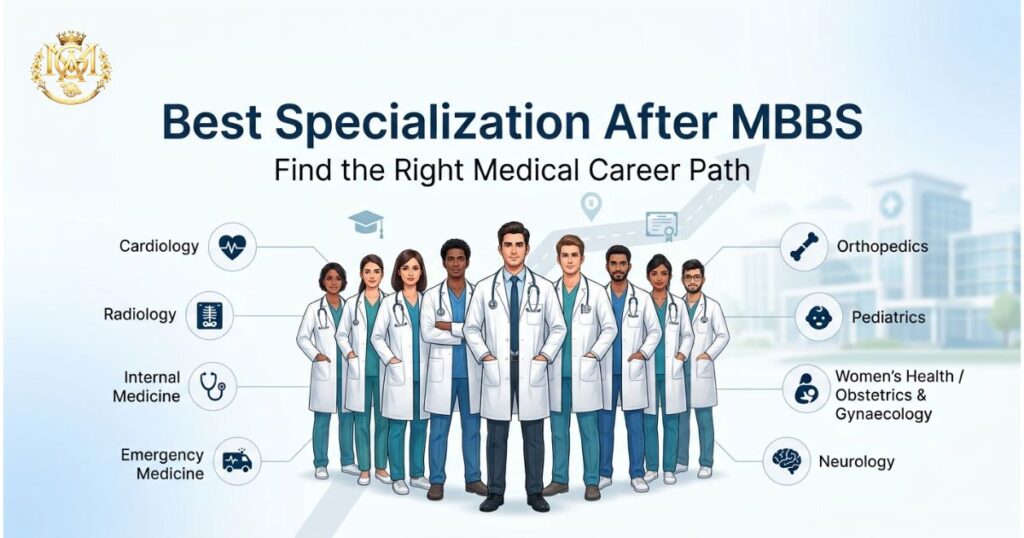
Best Specialization After MBBS in India
Learning blogs

MD vs MS vs DNB After MBBS: Which PG Path Should You Choose? (2026)

Best Specialization After MBBS in India (Complete Career Guide) Choosing the best specialization after MBBS is one of the most important career decisions for any medical graduate. While an MBBS degree provides the foundation to practice medicine, specialization allows doctors to develop advanced expertise in a particular field, improve patient outcomes, and build rewarding long-term careers. Today, healthcare is evolving rapidly. Advancements in diagnostic technologies, minimally invasive procedures, precision medicine, and multidisciplinary patient care have increased the demand for highly skilled medical specialists across India. Whether your interest lies in medicine, surgery, diagnostics, emergency care, or advanced clinical procedures, selecting the right specialization can significantly shape your professional journey. However, choosing a specialty should never be based solely on salary or popularity. Factors such as clinical interest, lifestyle preferences, future demand, patient interaction, procedural work, and long-term career goals all play an important role in finding the right path. In this guide, we’ll explore the most popular medical specializations courses after MBBS, compare career opportunities, discuss salary prospects, and help you understand which specialty may be the best fit for your future. What is Medical Specialization After MBBS? Medical specialization is the process of pursuing advanced education and clinical training in a specific branch of medicine after completing MBBS. Instead of practicing general medicine, doctors develop expertise in diagnosing and treating conditions related to a particular organ system, patient population, or medical discipline. Specialization is typically pursued through postgraduate programs such as MD (Doctor of Medicine), MS (Master of Surgery), DNB (Diplomate of National Board), and later through super speciality courses or fellowship programs for further clinical expertise. For example, a doctor interested in heart diseases may specialize in Internal Medicine before pursuing Cardiology, while another doctor passionate about women’s healthcare may choose Obstetrics & Gynaecology. Similarly, those interested in imaging may specialize in Radiology, whereas surgeons may pursue General Surgery, Orthopedics, or ENT. Medical specialization allows doctors to provide focused patient care while building expertise in their chosen field. Why Should You Choose a Specialization After MBBS? Many MBBS graduates ask the same question: “After MBBS, what next?” While practicing as a general physician is one option, specialization opens the door to broader career opportunities and advanced clinical practice. Choosing the right specialization helps doctors: Develop expertise in a specific medical field. Manage complex patient conditions with greater confidence. Improve career opportunities in hospitals and healthcare institutions. Build stronger academic and research profiles. Increase long-term earning potential. Stay aligned with evolving medical technologies and treatment protocols. More importantly, specialization enables doctors to practice the branch of medicine they genuinely enjoy. Whether you prefer surgery, emergency care, diagnostics, preventive medicine, or long-term patient management, selecting the right specialty creates a fulfilling and sustainable medical career. Types of Medical Specializations After MBBS After completing MBBS, doctors can choose from a wide range of medical specialties based on their interests, clinical skills, and long-term career goals. Broadly, these specializations can be divided into three categories. Category Focus Area Examples Clinical Specializations Diagnosis and medical treatment Internal Medicine, Dermatology, Pediatrics Surgical Specializations Operative and procedural care General Surgery, Orthopedics, ENT, Obstetrics & Gynaecology Diagnostic & Imaging Specializations Disease diagnosis and interpretation Radiology, Pathology Each specialization offers unique learning opportunities, patient interactions, and career pathways. Understanding these differences can help you make an informed decision before pursuing postgraduate medical education. Top Medical Specializations After MBBS Every medical specialty has its own scope, challenges, and career opportunities. Rather than asking which specialization is “best,” it’s more useful to understand which field aligns with your interests and future aspirations. Cardiology Cardiology is one of the most sought-after medical specialties, focusing on the prevention, diagnosis, and treatment of heart and blood vessel disorders. With the rising burden of cardiovascular diseases in India, trained cardiologists continue to be in high demand across hospitals and specialty heart institutes. Doctors interested in procedures such as angiography, angioplasty, and advanced cardiac interventions often pursue Interventional Cardiology after postgraduate training. Best for doctors who enjoy: Critical patient care Cardiac procedures Long-term patient management Technology-driven medicine Related Program: Fellowship in Cardiology Radiology Radiology combines medicine with advanced imaging technologies to diagnose and monitor diseases. Modern radiologists work closely with almost every medical department by interpreting X-rays, CT scans, MRI, ultrasound, and other imaging studies. The field has expanded significantly with the growth of Interventional Radiology, where specialists perform minimally invasive procedures using image guidance. Best for doctors who enjoy: Diagnostic medicine Medical imaging Technology Precision-based decision making Related Program: Fellowship in Radiology Dermatology Dermatology focuses on diseases affecting the skin, hair, and nails. In addition to managing medical skin conditions, dermatologists are increasingly involved in aesthetic medicine, cosmetic dermatology, and laser-based procedures. Growing awareness of skin health has made dermatology one of the most competitive and rewarding specialties after MBBS. Best for doctors who enjoy: Outpatient practice Cosmetic procedures Long-term patient care Lifestyle-friendly practice Related Program: Fellowship in Dermatology Emergency Medicine Emergency Medicine is designed for doctors who thrive in fast-paced clinical environments. Specialists manage trauma cases, cardiac emergencies, poisoning, stroke, and other life-threatening conditions that require immediate intervention. Strong decision-making skills, teamwork, and the ability to remain calm under pressure are essential for this specialty. Best for doctors who enjoy: Acute patient care Fast clinical decisions Trauma management Emergency procedures Related Program: Fellowship in Emergency Medicine Critical Care Medicine Critical Care specialists manage seriously ill patients admitted to Intensive Care Units (ICUs). They work with ventilators, advanced monitoring systems, organ support therapies, and multidisciplinary teams to provide comprehensive care for critically ill patients. As tertiary care hospitals continue to expand, the demand for Critical Care specialists is steadily increasing. Best for doctors who enjoy: ICU practice Advanced monitoring Multidisciplinary teamwork Managing complex medical cases Related Program: Fellowship in Critical Care Obstetrics & Gynaecology Obstetrics & Gynaecology is one of the most diverse specialties in medicine, combining medical management, surgery, reproductive health, and preventive women’s healthcare. The field now extends beyond pregnancy and childbirth into subspecialties such as infertility management, fetal medicine,

Best Gynecology Courses After MBBS in India (2026)
Learning blogs

Best Gynecology Courses After MBBS in India (2026)

Advance Your Career in Obstetrics & Gynaecology with the Right Fellowship Program Choosing a career in Obstetrics & Gynaecology (OB-GYN) is more than selecting a medical specialty—it is committing to women’s healthcare across every stage of life. From adolescent health and reproductive medicine to pregnancy, childbirth, menopause, gynecologic oncology, and minimally invasive surgery, the specialty continues to evolve with new technologies and advanced treatment approaches. As healthcare becomes increasingly specialized, many doctors choose to continue their education after MBBS or postgraduate training through gynecologist courses, fellowship programs, and advanced clinical education. These programs help doctors strengthen their practical skills, gain expertise in a focused area of women’s health, and stay updated with modern clinical practices. Whether you are exploring a fellowship in Obstetrics & Gynaecology, looking for advanced training in infertility, fetal medicine, gynecologic oncology, or minimally invasive gynecologic surgery, choosing the right course can significantly influence your clinical practice and long-term career growth. This guide explains the different gynecology courses available after MBBS, how to select the right specialization, and which fellowship pathway may best support your professional goals. Why Choose Gynecology Courses After MBBS Obstetrics & Gynaecology remains one of the most dynamic and rewarding specialties in medicine because it combines preventive care, emergency medicine, surgery, reproductive health, and long-term patient management within a single discipline. Every stage of a woman’s life presents unique healthcare needs, giving gynecologists the opportunity to provide continuous care—from adolescence and family planning to pregnancy, menopause, and beyond. The specialty has also experienced remarkable growth over the last decade. Advances in reproductive medicine, assisted reproductive technology (ART), fetal imaging, robotic surgery, laparoscopic procedures, prenatal diagnostics, and women’s cancer care have transformed the way modern gynecologists diagnose and treat patients. This rapid evolution has created a growing demand for doctors with advanced clinical expertise rather than general training alone. Hospitals, fertility centres, maternal-fetal medicine units, oncology centres, and corporate healthcare institutions increasingly seek specialists who have pursued focused training beyond conventional medical education. For many doctors, continuing education is no longer optional—it has become an important step in delivering evidence-based care while remaining competitive in today’s healthcare environment. Why Are Fellowship Programs Becoming More Important? Completing MBBS provides the foundation for medical practice, but clinical learning does not end there. Modern medicine evolves continuously, introducing new surgical techniques, diagnostic technologies, treatment protocols, and patient care standards. Fellowship programs help doctors bridge the gap between postgraduate education and advanced clinical practice by providing focused training in a specific area of expertise. Unlike broad academic programs, fellowships are designed to strengthen practical knowledge, clinical decision-making, procedural skills, and exposure to complex patient cases. Doctors work under experienced faculty, learn current evidence-based practices, and gain confidence in managing specialty-specific conditions. Depending on individual career goals, fellowship training may help doctors: Develop expertise in a chosen subspecialty of Obstetrics & Gynaecology. Improve clinical and procedural skills through focused learning. Gain exposure to modern technologies used in women’s healthcare. Enhance career opportunities in hospitals, fertility centres, and academic institutions. Continue professional development while adapting to changing healthcare practices. Rather than viewing a fellowship as simply another qualification, many doctors consider it an investment in long-term clinical excellence. Fellowship, DGO, CGO or MS Obstetrics & Gynaecology: Which Path Should You Choose? Doctors often come across multiple qualifications while exploring gynecology courses, including DGO (Diploma in Obstetrics & Gynaecology), CGO, postgraduate degrees, and fellowship programs. Understanding the purpose of each pathway makes it easier to choose the option that aligns with your professional objectives. Qualification Focus Suitable For MS/DNB Obstetrics & Gynaecology Comprehensive postgraduate specialization Doctors planning full specialist training DGO (Diploma in Obstetrics & Gynaecology) Postgraduate diploma in women’s health Doctors seeking structured diploma-based education CGO Foundational gynecology training Healthcare professionals based on program eligibility Fellowship in Obstetrics & Gynaecology Advanced clinical training in focused subspecialties Doctors who want to build expertise in a particular area of women’s healthcare Each pathway serves a different purpose. While postgraduate programs provide comprehensive specialist education, fellowship programs allow doctors to deepen their knowledge in highly focused areas such as reproductive medicine, fetal medicine, gynecologic oncology, minimally invasive surgery, infertility management, and advanced obstetric care. The right choice depends on your current qualifications, professional interests, career aspirations, and the type of clinical practice you wish to build. How Has Modern Gynecology Changed? Today’s gynecologist is no longer limited to routine antenatal care and childbirth. The specialty now includes numerous advanced disciplines that require dedicated clinical expertise. Doctors may choose to focus on: Reproductive Medicine Infertility Management Maternal & Fetal Medicine High-Risk Pregnancy Gynecologic Oncology Clinical Embryology Cosmetic Gynecology Urogynecology Gynae Endoscopy Fetal Echocardiography Advanced Minimally Invasive Gynecologic Surgery Each subspecialty addresses different patient populations, clinical challenges, and procedural skills. As a result, fellowship training has become an increasingly valuable pathway for doctors who want to deliver specialized care while expanding their professional opportunities. In the following section, we’ll explore these fellowship pathways in detail and explain how each specialization contributes to modern women’s healthcare. You’ll also learn which Medical Global Academy fellowship programs align with different career interests, helping you choose the pathway that best supports your future in Obstetrics & Gynaecology. Best Fellowship Courses in Obstetrics & Gynaecology After MBBS Obstetrics & Gynaecology has expanded into multiple subspecialties, each addressing different aspects of women’s healthcare. While some doctors develop expertise in reproductive medicine and infertility, others focus on maternal-fetal medicine, minimally invasive surgery, gynecologic oncology, or advanced diagnostic procedures. Choosing the right fellowship depends on the type of patients you want to treat, the clinical environment you enjoy, and the career you envision for yourself. Instead of asking, “Which fellowship is the best?”, ask yourself: “Which area of women’s healthcare am I most passionate about?” The following fellowship pathways provide advanced clinical exposure and help doctors build expertise in specific areas of Obstetrics & Gynaecology. Reproductive Medicine & Fertility Infertility has become one of the fastest-growing areas within women’s healthcare. Changing lifestyles, delayed pregnancies, endocrine disorders, and reproductive health challenges have increased

infographic: best courses after mbbs without neet pg with salary and scope 2026
Learning blogs

Best Courses After MBBS Without NEET PG in 2026: Salary, Scope, Eligibility & Career Opportunities

Completing MBBS is a significant milestone, but for many doctors, NEET PG is not the only career option.With rising competition, a limited number of postgraduate seats, and changing opportunities in the healthcare sector, many MBBS graduates are now exploring courses after MBBS without NEET PG.  These alternative pathways can help them gain specialization, grow their careers, and increase their earning potential without spending years waiting for a postgraduate seat. The good news is that NEET PG is not the only path to success. Today, doctors can choose internationally recognized qualifications such as MRCP, MRCOG, and MRCEM, along with specialized fellowship programs, public health degrees, clinical research certifications, and healthcare management programs. These options help doctors build practical expertise, expand career opportunities, and explore professional growth in both India and abroad. Healthcare hiring trends now show a growing demand for doctors with specialized clinical skills, advanced certifications, and focused expertise instead of depending only on traditional degree pathways. The most important step is choosing the option that matches your career goals. This guide covers the best courses after MBBS without NEET PG, including eligibility, career scope, future demand, salary potential, and the best options for different career aspirations. Why Are Doctors Looking for Alternatives to NEET PG? Every year, thousands of MBBS graduates compete for a limited number of postgraduate seats. While NEET PG remains a great option, many doctors choose alternative pathways because they provide: Faster specialization opportunities Hands-on clinical exposure Earlier career growth International career opportunities Greater flexibility in career planning Opportunities in emerging healthcare sectors For many doctors, waiting several years for postgraduate admission does not fit their personal or professional goals. Because of this, fellowship programs and international qualifications have become more popular. What Is the Best Course After MBBS Without NEET PG? There is no one best course that fits every doctor. The right choice depends on your career goals: Want Internal Medicine? → MRCP Interested in Women’s Health? → MRCOG Looking for Emergency Medicine? → MRCEM Planning to work in ICU Practice? → Critical Care Fellowship Interested in Healthcare Leadership? → Hospital Administration Want a Career in Research? → Clinical Research Planning a Career in Public Health? → MPH Instead of asking which course is the best overall, ask which course is the best fit for the future you want. Quick Comparison of Top Courses After MBBS Without NEET PG Course Duration Career Focus Future Scope MRCP 1–3 Years Internal Medicine Excellent MRCOG 2–4 Years Obstetrics & Gynecology Excellent MRCEM 2–3 Years Emergency Medicine Excellent Critical Care Fellowship 1–2 Years ICU Medicine High Emergency Medicine Fellowship 1–2 Years Acute Care High Diabetology Fellowship 1 Year Lifestyle Diseases High MPH 1–2 Years Public Health Growing Clinical Research 6–12 Months Research & Pharma Growing Hospital Administration 1–2 Years Healthcare Management Growing Medical Writing 3–12 Months Medical Communication Growing Top Clinical Courses After MBBS Without NEET PG MRCP (Membership of the Royal Colleges of Physicians) MRCP is one of the most respected international qualifications for doctors who want to specialize in Internal Medicine. It has global recognition and helps physicians develop strong specialist knowledge. Best For Doctors who want to build a career in Internal Medicine and explore international career opportunities. Key Benefits International recognition Strong clinical foundation Advanced specialist medical knowledge Career flexibility across healthcare systems. Career Opportunities Physician Internal Medicine Specialist Consultant Positions Academic Medicine Future Scope Internal Medicine remains one of the most in-demand specialties across the world. Hospitals and healthcare systems consistently look for doctors with advanced medicine expertise. MRCOG (Membership of the Royal College of Obstetricians and Gynaecologists) MRCOG is for doctors who want to build a career in Obstetrics and Gynecology. Best For Doctors who are passionate about women’s healthcare. Key Benefits Globally recognised qualification Clear and structured specialist development High demand across healthcare systems Career Opportunities Obstetrician Gynecologist Women’s Health Specialist Academic & Research Roles Future Scope Growing awareness of maternal health and women’s healthcare continues to increase the demand for specialists in this field. MRCEM (Membership of the Royal College of Emergency Medicine) Emergency Medicine has become one of the fastest-growing medical specialties across the world. Best For Doctors who thrive in fast-paced environments and enjoy acute patient care. Key Benefits Practical emergency care expertise Strong clinical exposure Global recognition Career Opportunities Emergency Physician Trauma Specialist Emergency Department Leadership Roles Future Scope Emergency departments remain critical to modern healthcare systems and ensure long-term demand for qualified professionals. Fellowship in Critical Care Medicine Critical Care specialists manage some of the most complex and critically ill patients. Key Skills Developed ICU Management Ventilator Support Organ Support Systems Advanced Monitoring Career Opportunities ICU Physician Critical Care Consultant Critical Care Specialist Future Demand The growth of critical care facilities continues to increase demand for trained professionals. Fellowship in Emergency Medicine Emergency Medicine fellowships focus on hands-on clinical training and acute patient care. Career Opportunities Emergency Departments Trauma Centers Multi-specialty Hospitals Why It Matters Hospitals increasingly look for doctors with focused expertise in emergency care and strong procedural skills. Fellowship in Diabetology Lifestyle diseases keep rising worldwide and increase the need for specialists in diabetes management. Career Opportunities Diabetologist Lifestyle Disease Specialist Preventive Health Consultant Future Scope The rising number of diabetes cases keeps this highly relevant in the long run. Best Non-Clinical Courses After MBBS Not every doctor wants to stay in direct patient care. Several non-clinical careers offer strong growth opportunities while using medical knowledge. Clinical Research Clinical research helps develop medicines, devices, and treatment protocols. Career Opportunities Clinical Research Associate Medical Reviewer Research Coordinator Pharmaceutical Industry Professional Why Choose Clinical Research? Pharmaceutical and biotechnology sectors keep expanding rapidly. Master of Public Health (MPH) The MPH focuses on healthcare systems, epidemiology, disease prevention, and public health policy. Career Opportunities Public Health Specialist Epidemiologist Health Policy Advisor Global Health Professional Future Scope Public health has grown more important in healthcare planning and policy development. Hospital Administration Hospital Administration brings together medicine, management, and leadership. Career Opportunities Hospital Administrator Operations Manager Healthcare Consultant Quality

Scroll to Top